
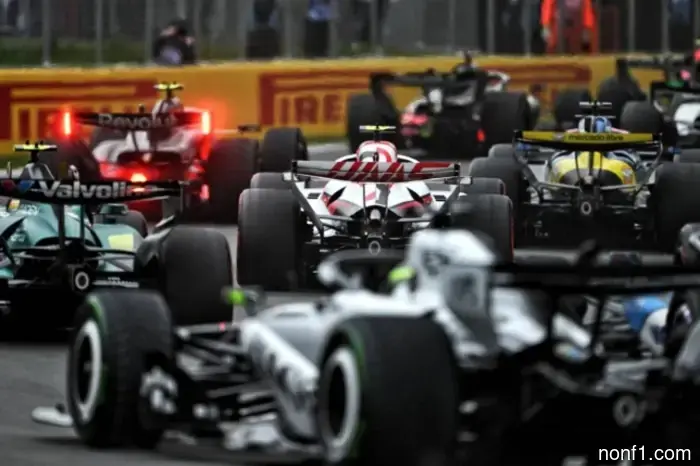
Gary Anderson criticizes the idea of the FIA president.
Gary Anderson, a former racing car designer and now a technical expert for The Race, reacted quite skeptically to the FIA's dreams that with the return of V8 engines to Formula 1, independent engine manufacturers might also return...
When someone in a position of authority makes unexpectedly foolish statements, the old saying comes to mind, which is that before opening one's mouth, it is important not to forget to engage the brain. That was my reaction to the idea of "customer" engines in Formula 1, as it is a good example of something that seems logical at first glance but immediately raises many questions that are difficult to answer.
I fully support the idea of returning to V8 engines in the future. Such engines, along with energy recovery electric systems that serve only as an aid for overtaking, would bring back the sound that everyone misses so much in Formula 1. It would also eliminate the need for DRS or even active aerodynamics.
I have always supported the idea of making cars lighter. Reducing their weight by 100 kg is perhaps too ambitious a task, but I am confident that it is within the capabilities of talented designers in any team. However, the introduction of customer engines in Formula 1, which has essentially long since turned into a championship of car manufacturers, signifies a radical change in direction.
One must think very carefully before making hasty decisions or even making any public statements – like the one made by FIA President Mohammed Ben Sulayem.
Fortunately or unfortunately, I have been involved with this championship for quite some time, so I have seen all of this before. It did not work in the past – it will not work now.
Do you remember when a tender was announced for the supply of engines and gearboxes that would be provided to all teams competing in the World Championship from 2010 to 2012? Probably not – which in itself confirms that it was an unimportant idea, although at that time it was just one of the maneuvers in a large-scale battle for political influence.
The community of engine suppliers for Formula 1 has never been stable. Ferrari is the only team that has always developed and built its own engines throughout the 53 years that I have had some involvement with the World Championship. In the past, we were used to hearing in the mornings how the Scuderia's engines were being warmed up in the pits, as their sound could easily be distinguished from all the others.
Back in 1973, we had 12-cylinder engines built by Ferrari, BRM, and the Italian company Tecno. The other teams could be considered private, and all of them used Cosworth-Ford engines. Moreover, most cars, except for Ferrari and BRM, were equipped with Hewland FG400 gearboxes. In most cases, the tuning of the Cosworth engines was handled by various companies, mostly staffed by former Cosworth employees.
Years passed, and all private companies were squeezed out of Formula 1 by car manufacturers amid rising costs. The last to leave was Cosworth, which supplied engines to the Marussia team until 2013.
Now Formula 1 has become entirely different, and one must remember that car manufacturers like Toyota, BMW, Peugeot, and Honda (and this is far from a complete list) came and went when their boards of directors made corresponding decisions.
Furthermore, in my opinion, the problems with power units that we are dealing with now are 99% created by the FIA, as it is the federation that drafted the technical regulations that led us to this situation. Probably, the remaining percentage should be attributed to requests made by the manufacturers themselves.
Many were against the transition to hybrid power units introduced in 2014; however, the federation pushed this decision through. Even more people were against the transition in 2026 to new generation engines, openly calling the balance between energy recovery and its use erroneous. However, in this case, the FIA also preferred not to listen to criticism.
One can argue and prove that customer engines are a sound idea, as racing engines will always be available, and this will reduce the influence of car manufacturers. In principle, this is true, but if the FIA allows relatively inexpensive engines created by some independent company to emerge, it will immediately lead to a division of the championship into two categories...
Some teams worry that if they do not have factory support, they will be treated as second-class. But all of this is just paranoia, as their task is to work with what they actually have, to maximize the potential of this technology, and to strive for better results. And they should not blame others for their problems.
However, as soon as new independent manufacturers appear who will supply customer engines, one can be sure that they will immediately come under pressure from car manufacturers, who will try to ensure that such engines are inferior to factory ones. After all, why did they spend huge amounts of money if there is a cheaper alternative that is also more efficient?
And all of this will contradict attempts to somehow level the playing field for teams through measures such as budget caps, prize payments, and restrictions on aerodynamic research, which should be in place for many years before all 11 teams reach a similar level. So why create a Formula 1 with two categories of participants?
The return of V8 engines is a good idea, but the FIA should not dismiss another option: to switch to V6 engines with increased displacement but without turbos. Naturally aspirated 2.4-liter V6 engines can provide both the necessary power level and the sound that fans are nostalgic for. And here Mohammed Ben Sulayem is right – the turbo acts as a kind of muffler, reducing the sound level.
In my opinion, it would be best if the FIA and Liberty Media gathered together with engine manufacturers and representatives from two or three high-level independent companies to develop a concept for a new generation power unit that is not as rigidly constrained by regulations as the 2026 engines.
There should be a maximum price cap for engines that does not change throughout the season, and if these independent companies want to engage in the development, production, and promotion of their products, they should be given that opportunity. Of course, if there are clients who want to purchase their engines.
At the same time, each manufacturer should supply its products to at least two, a maximum of three teams.
Currently, Mercedes supplies engines to four teams, Ferrari to three, Red Bull to two; Honda and Audi to one each. But if each manufacturer is required to supply power units to two or three teams, it could provide engines for 10 to 15 teams, and no new manufacturers would be needed. Unless someone invents something that everyone immediately wants to acquire...
However, we all know how to propose various ideas, but, again, as we know, very often no one listens to them.
Other articles
 24 Hours? This Hot Wheels Mazda 787B Has Been Running on a Belt Sander for 11 Days.
What began as a novelty trial has transformed into a genuine toy endurance challenge, as the diecast car has covered a distance equivalent to multiple trips around the Earth.
24 Hours? This Hot Wheels Mazda 787B Has Been Running on a Belt Sander for 11 Days.
What began as a novelty trial has transformed into a genuine toy endurance challenge, as the diecast car has covered a distance equivalent to multiple trips around the Earth.
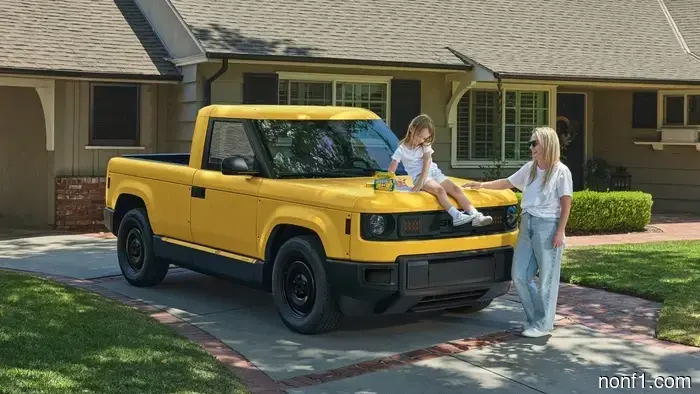 Slate Understands That Gray Is Dull, Therefore It’s Debuting With Authentic Crayola Wraps.
Slate is introducing five new wrap colors inspired by the crayon box.
Slate Understands That Gray Is Dull, Therefore It’s Debuting With Authentic Crayola Wraps.
Slate is introducing five new wrap colors inspired by the crayon box.
 24 Hours? This Hot Wheels Mazda 787B Has Been Running on a Belt Sander for 11 Days.
What began as a novelty experiment has transformed into a genuine toy torture test, as the diecast car has covered more than enough scale miles to lap the Earth.
24 Hours? This Hot Wheels Mazda 787B Has Been Running on a Belt Sander for 11 Days.
What began as a novelty experiment has transformed into a genuine toy torture test, as the diecast car has covered more than enough scale miles to lap the Earth.
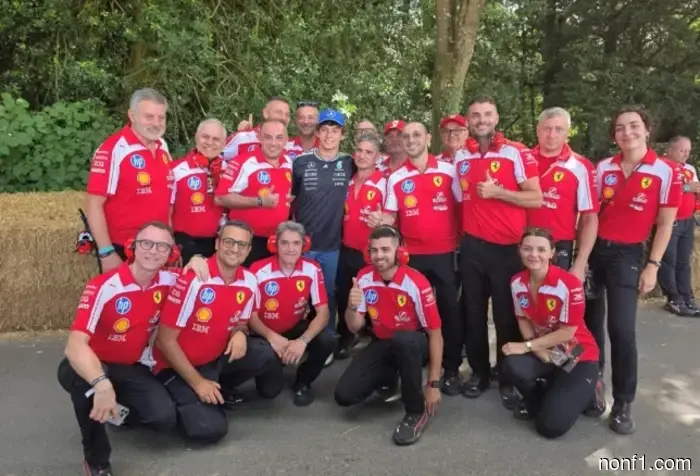 Photo for memory from Goodwood: Antonelli and Ferrari
Kimi Antonelli is participating in the Goodwood Festival of Speed with the Mercedes team, but that didn't stop him from taking a photo with the Ferrari mechanics...
Photo for memory from Goodwood: Antonelli and Ferrari
Kimi Antonelli is participating in the Goodwood Festival of Speed with the Mercedes team, but that didn't stop him from taking a photo with the Ferrari mechanics...
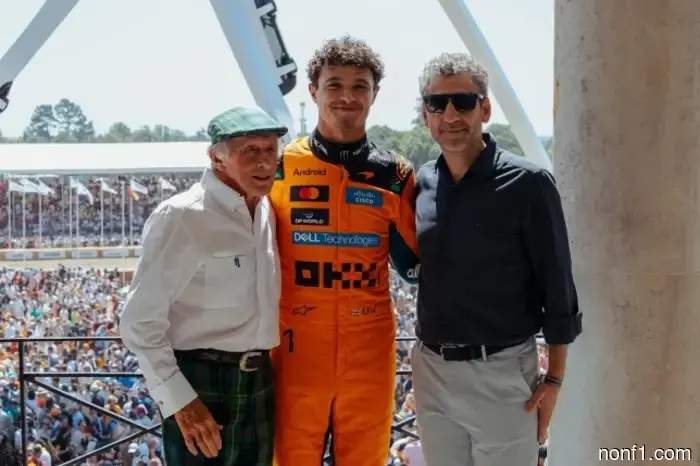 Stella: I prefer Lando to drive on four wheels.
Lando Norris at the Goodwood Festival of Speed admitted that he is considering purchasing a racing motorcycle. The McLaren team principal was asked how he feels about this...
Stella: I prefer Lando to drive on four wheels.
Lando Norris at the Goodwood Festival of Speed admitted that he is considering purchasing a racing motorcycle. The McLaren team principal was asked how he feels about this...
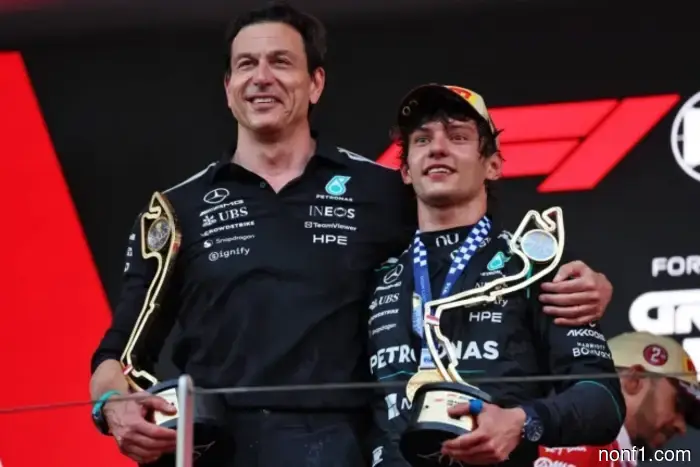 Toto Wolff: Kimi exceeds the boldest expectations
Toto Wolff talked about the help Kimi Antonelli is providing to his son Jack, who is making his first successes in karting, and overall, the head of Mercedes speaks very highly of the championship leader...
Toto Wolff: Kimi exceeds the boldest expectations
Toto Wolff talked about the help Kimi Antonelli is providing to his son Jack, who is making his first successes in karting, and overall, the head of Mercedes speaks very highly of the championship leader...
Gary Anderson criticizes the idea of the FIA president.
Gary Anderson, a former racing car designer, was quite skeptical about the FIA's dreams that along with the return of V8 engines to Formula 1, independent engine manufacturers might also return...