
SRT’s New Quick-Spool Turbo Device Makes the Hurricane I6 Perform Like a V8
Byron Hurd
The most significant car news and reviews, no nonsense.
Our free daily newsletter delivers the most important stories straight to you every weekday.
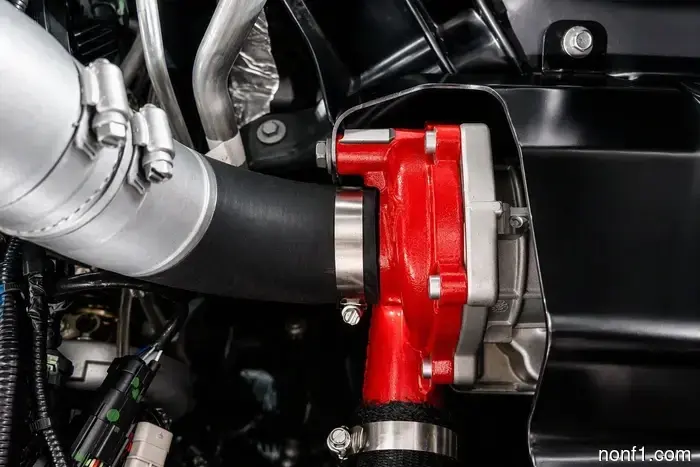
Turbo lag can be intriguing, but it hinders raw performance. While early turbocharged vehicles provided exciting acceleration at high revs, engineers have been working for years to find ways to eliminate this delay in power. There are several methods to address this—such as using sequential turbos or a combination of a smaller and larger turbo for enhanced horsepower—but Stellantis' SRT Performance Division has proposed an alternative. This involves an e-compressor that accelerates larger turbos faster than the flow of exhaust gases can.
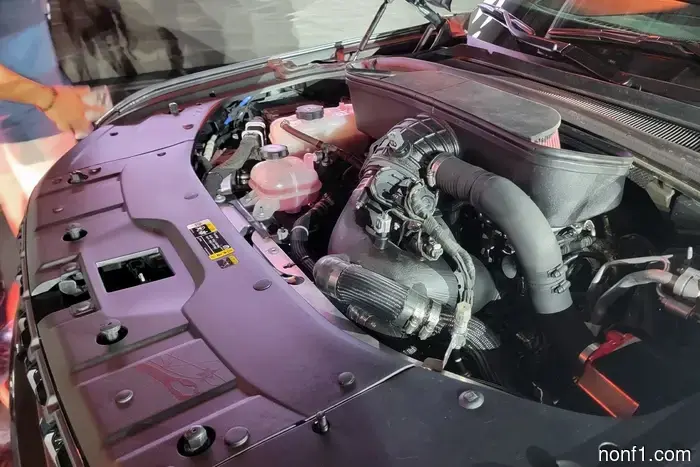
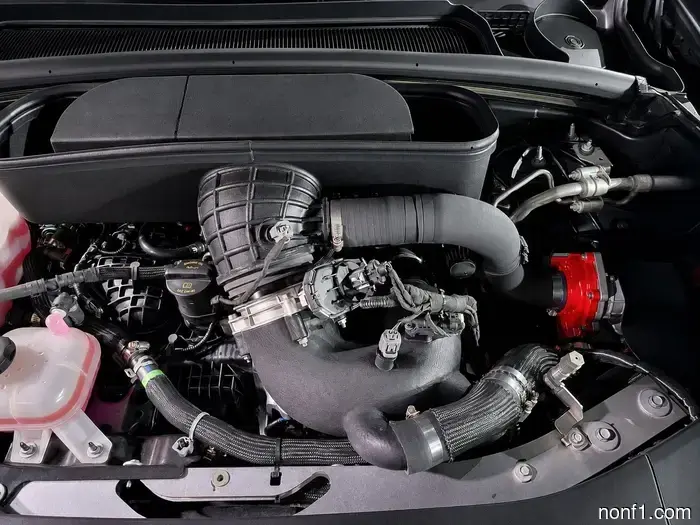
You might be wondering, “Isn’t this already a thing?” It is actually distinct from what Porsche does with the 911. Porsche employs an integrated motor-generator unit between the compressor and inducer, while SRT’s system—known as eBoost Air—is positioned upstream of the Hurricane inline-six's twin turbos. Unlike Porsche’s MGU, which directly spins the turbo, SRT’s device primarily boosts the airflow to the turbos more rapidly.
SRT stated in a press release that the goal is to make the engine feel more like a supercharged V8. Many enthusiasts desire that experience anyway, but Stellantis had a specific vision for the Hurricane engine family. While Ram might be going back to the Hemi, this technology seems likely to find its way into upcoming high-performance Jeep models.
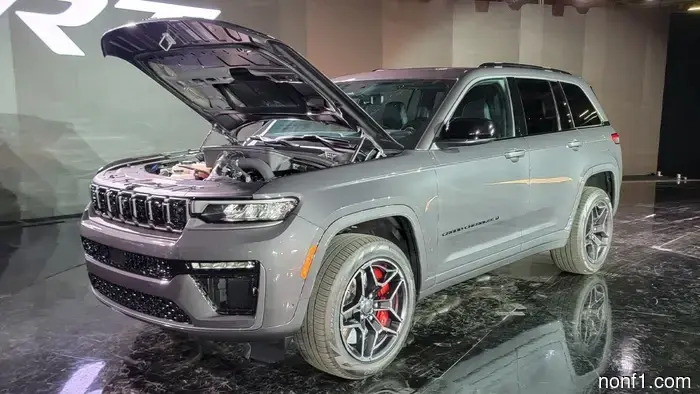
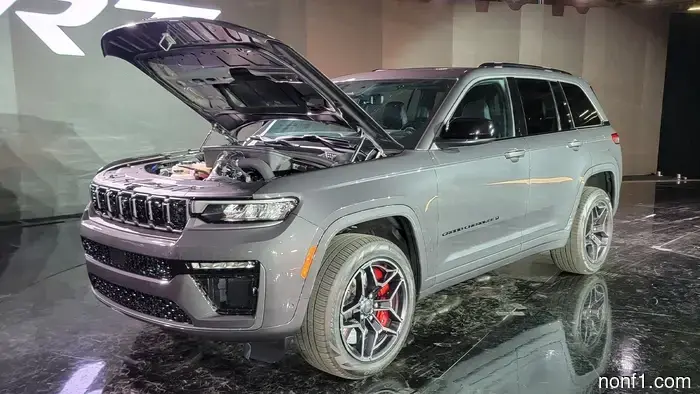
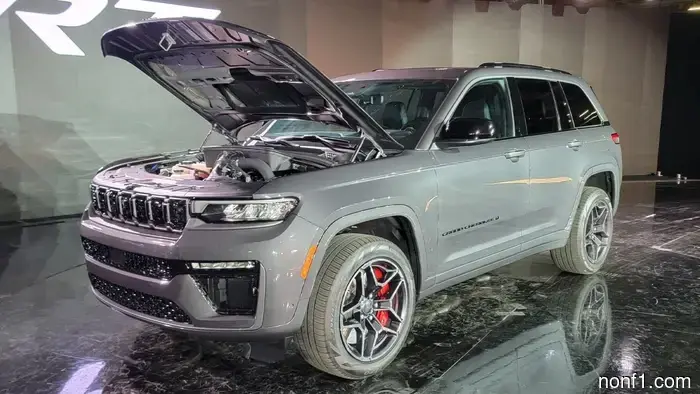
SRT has created a Grand Cherokee prototype featuring the Hurricane inline-six and eBoost Air to showcase this technology.
Once the exhaust gas flow catches up to eBoost Air, the compressor disengages and the feature is completely bypassed. It does not recover any used energy, though it requires a 48-volt electrical system to operate. Currently, eBoost Air is merely a “rapid-development proof of concept,” and Stellantis needs to refine the technology before introducing it in any Hurricane-equipped models in the United States. (At the moment, only selected non-Hurricane Jeeps and Ram 1500s with the Hemi V8 include a 48-volt mild-hybrid eTorque system, so a potential solution could involve an additional battery—though this is unverified and still under consideration.)
Integrating this system into the Grand Cherokee’s engine compartment was challenging. The six-cylinder Hurricane has not yet appeared in a production version of Jeep’s midsize SUV, meaning that foundational issues had to be addressed. Additionally, SRT engineers needed to create room for a third air intake for the small electric compressor. Remarkably, the team managed to complete the project in just seven weeks.
SRT clarifies that eBoost Air does not increase the power of the Hurricane; it merely aids the engine in achieving higher power levels more swiftly. The twin-turbo, 3.0-liter inline-six is already formidable, particularly the high-output variant boasting 540 horsepower and 510 lb-ft of torque. Personally, I appreciated the brief lag when I tested the Ram 1500 Tungsten a couple of years ago, but this eBoost Air feature should provide significant benefits for quarter-mile racing.
Have a tip or question for the author? Reach out directly: caleb@thedrive.com
Other articles
 Dear Car Manufacturers: Remove Your Advertisements from Our Vehicles
It's time to inform your MBAs that certain opportunities are better off not being pursued.
Dear Car Manufacturers: Remove Your Advertisements from Our Vehicles
It's time to inform your MBAs that certain opportunities are better off not being pursued.
 2026 Ferrari 296 Speciale Aperta Review: A Supercar That Would Make Enzo Proud
In the tradition of the enchanting 360 Challenge Stradale, 430 Scuderia, 458 Speciale, and 488 Pista, the Ferrari 296 Speciale lives up to its name with striking aesthetics and astonishing performance.
2026 Ferrari 296 Speciale Aperta Review: A Supercar That Would Make Enzo Proud
In the tradition of the enchanting 360 Challenge Stradale, 430 Scuderia, 458 Speciale, and 488 Pista, the Ferrari 296 Speciale lives up to its name with striking aesthetics and astonishing performance.
 This Ford dealership understands the secret to selling trucks: give them a vintage appearance.
Transforming brand-new pickup trucks to give them an aged appearance is not a novel concept, but occasionally we find an excellent example of a vintage-style Ford. This one is exceptional.
This Ford dealership understands the secret to selling trucks: give them a vintage appearance.
Transforming brand-new pickup trucks to give them an aged appearance is not a novel concept, but occasionally we find an excellent example of a vintage-style Ford. This one is exceptional.
 SRT's Innovative Quick-Spool Turbo Device Allows the Hurricane I6 to Perform Like a V8.
The aim is to eliminate lag in twin-turbo Hurricane inline-six engines.
SRT's Innovative Quick-Spool Turbo Device Allows the Hurricane I6 to Perform Like a V8.
The aim is to eliminate lag in twin-turbo Hurricane inline-six engines.
 A little-known physics simulation game is attracting nearly as many players as Forza Horizon 6 on Steam.
Following a strong launch, FH6's Steam player numbers have plummeted to just a tenth of their highest point, whereas the physics sandbox game BeamNG is rapidly gaining traction. This reflects the current trends.
A little-known physics simulation game is attracting nearly as many players as Forza Horizon 6 on Steam.
Following a strong launch, FH6's Steam player numbers have plummeted to just a tenth of their highest point, whereas the physics sandbox game BeamNG is rapidly gaining traction. This reflects the current trends.
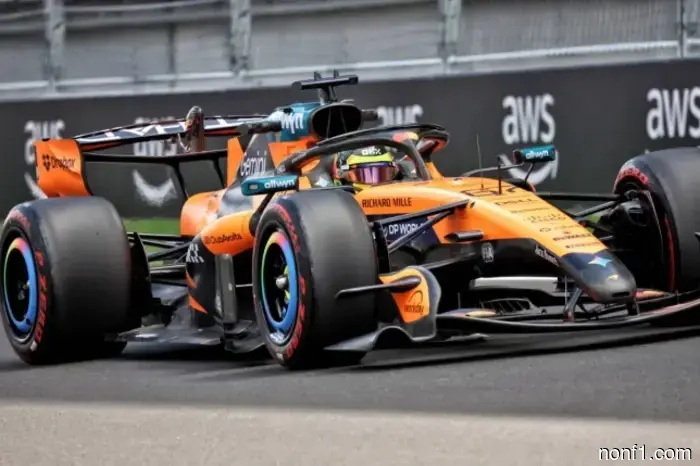 McLaren is preparing to use a rotating wing in races.
At the first Friday practice in Hungary, the McLaren team successfully tested a new movable rear wing – in Formula 1, this is referred to as a "Ferrari-style" wing or Macarena...
McLaren is preparing to use a rotating wing in races.
At the first Friday practice in Hungary, the McLaren team successfully tested a new movable rear wing – in Formula 1, this is referred to as a "Ferrari-style" wing or Macarena...
SRT’s New Quick-Spool Turbo Device Makes the Hurricane I6 Perform Like a V8
The objective is to eliminate lag in the twin-turbo Hurricane inline-six engines.