
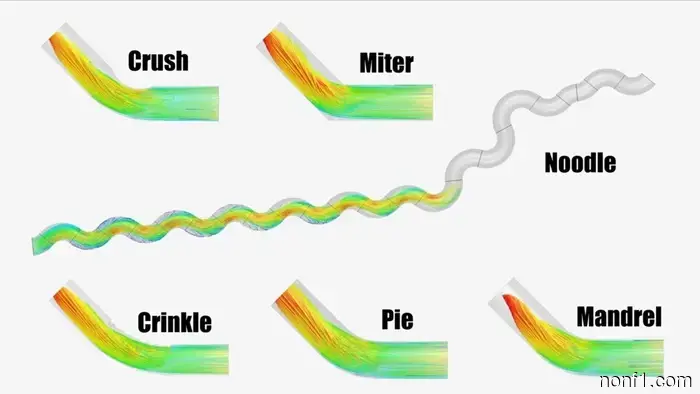
The shape of the exhaust is important, and this dyno test demonstrates why, with visual evidence.
The Fabrication Series on YouTube
The latest automotive news and reviews, straightforward and honest.
Subscribe to our free daily newsletter for the most important stories delivered to your inbox every weekday.
A well-designed exhaust system can enhance your vehicle's power and improve its sound, but what exactly defines a “good” exhaust? It primarily depends on the configuration of the pipes, which should facilitate a minimal-resistance pathway for exhaust gases, allowing the engine to expel them more easily. This design also creates space for sound to resonate, producing an appealing mechanical tone.
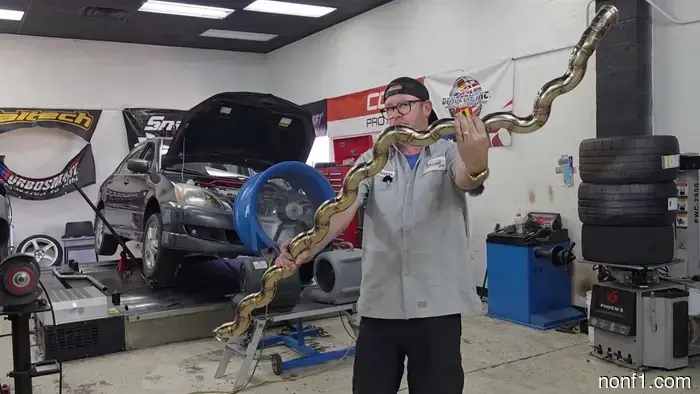
To demonstrate this principle, Justin from The Fabrication Series YouTube channel constructed seven different exhaust systems and evaluated each one using a dynamometer to determine which bend is superior. He assessed everything from the industry-standard mandrel bend to crinkle bends typically found on exhaust pipes sold at auto parts stores, as well as a unique noodle exhaust made entirely from curved sections. For each system, he measured horsepower and back pressure while also employing a thermal imaging camera to identify hot spots.
The mandrel bend serves as the standard because it maintains a uniform diameter between both straight and bent sections of pipe. It was used as a control in this test, yielding a baseline output of 144.8 horsepower (averaged over three dyno runs) in the Mitsubishi Lancer Ralliart test vehicle. Back pressure averaged 1.42 psi, and sound levels averaged 101.4 decibels.
Initially compared was the crinkle bend, which was not expected to perform well. This type of bend narrows the tubing diameter and creates ridges that induce turbulence. Although the average back pressure was higher at 1.71 psi, it produced roughly the same power and was 1.0 decibel quieter, likely due to the bent sections being made from aluminized steel, which absorbs sound better than the stainless steel used in the mandrel bend system.
Crush bends made with a tubing bender also have a reduced diameter, but the team attempted to compensate by using tubing one size larger for the bends, under the assumption that once crushed, it would match the diameter of the straight sections. Two variants were tested—2.0-inch and 2.2-inch—and both generated about 1 hp more than the control system. However, the smaller bend produced significantly more back pressure, while the larger bend had a nicer sound.
Now, what about exhaust systems with no bends? Miter joints and pie cuts both averaged 146.3 hp—the highest in the test. However, back pressure for both was greater than most of the bend options, though the noise levels were similar to the other systems. The distinction between bends and joints was less crucial than simply avoiding bends altogether.
The all-bend, chaotic exhaust pipe had back pressure about twice that of the mandrel-bent system, measuring 2.83 psi. Thermal imaging also indicated that exhaust gases flowed so slowly through it that there were notable temperature variations from one end to the other. Additionally, it was about two feet longer than the other systems. Nevertheless, it only lost 0.4 hp compared to the mandrel-bent system.
If your goal is to maximize power while minimizing fabrication costs, straight pipes are the best option. Cutting the exhaust after the catalytic converter produced the most power—149 hp—but at the cost of significant noise, measuring 110.77 decibels. If you choose this route, ensure that there are no noise regulations in your area.
While the variations in horsepower and sound may seem minor, this is due to the Lancer Ralliart not producing much power or noise initially. These differences would be more pronounced with a louder and more powerful engine. The back pressure figures reveal the true story, as the most unconventional designs showed why they aren't commonly used—higher numbers that hinder airflow and decrease performance.

Other articles
 Laurent Mekis: The team exceeded all my expectations
Laurent Mekies, in an interview with Racer, acknowledged that the Red Bull Racing team, which he has been leading for just a year, has surprised him multiple times during this period and exceeded all his expectations...
Laurent Mekis: The team exceeded all my expectations
Laurent Mekies, in an interview with Racer, acknowledged that the Red Bull Racing team, which he has been leading for just a year, has surprised him multiple times during this period and exceeded all his expectations...
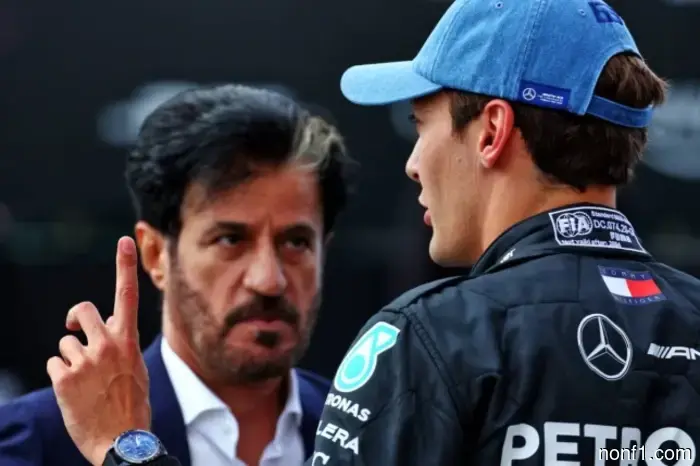 Russell wants to help make Formula 1 safer.
George Russell has been serving as the director of the GPDA since 2021, striving to do everything possible in this position to enhance the safety of racing...
Russell wants to help make Formula 1 safer.
George Russell has been serving as the director of the GPDA since 2021, striving to do everything possible in this position to enhance the safety of racing...
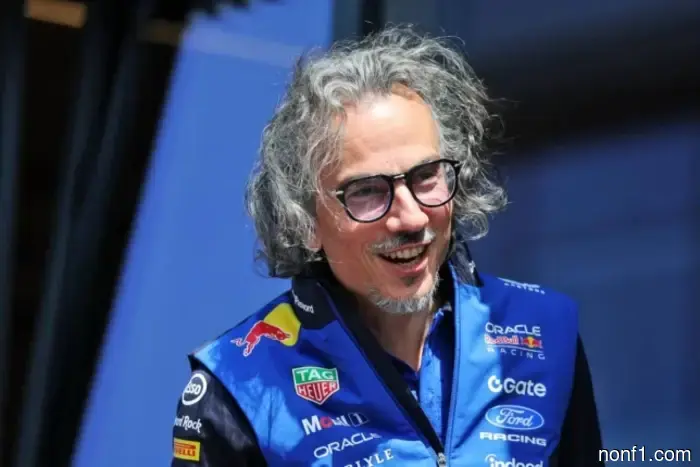 Laurent Mekis: The team exceeded all my expectations
Laurent Mekies, in an interview with Racer, acknowledged that the Red Bull Racing team, which he has been leading for just a year, has surprised him multiple times during this period and exceeded all his expectations...
Laurent Mekis: The team exceeded all my expectations
Laurent Mekies, in an interview with Racer, acknowledged that the Red Bull Racing team, which he has been leading for just a year, has surprised him multiple times during this period and exceeded all his expectations...
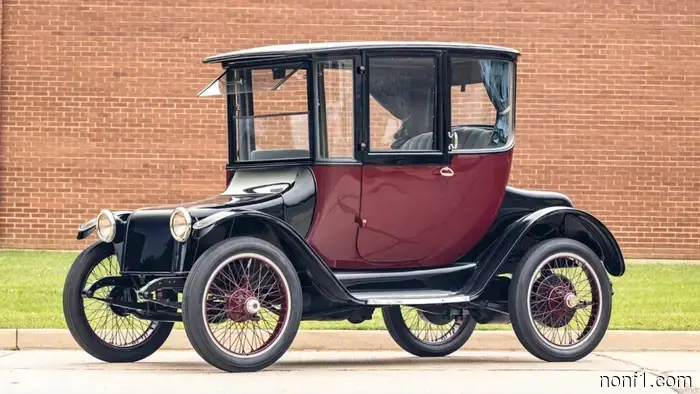 This 1918 Detroit Electric is equipped with modern batteries and is fully operational.
Oh, and it originally had a flower vase long before the VW New Beetle was released.
This 1918 Detroit Electric is equipped with modern batteries and is fully operational.
Oh, and it originally had a flower vase long before the VW New Beetle was released.
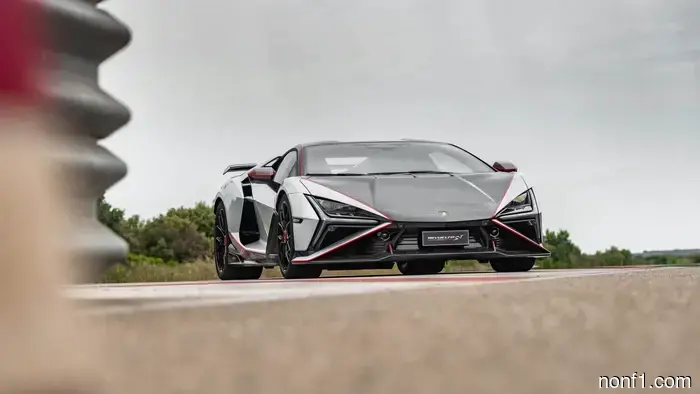 Lamborghini’s CMO States That Emotion Is NotOnly About Sound, But Also About the Sense of Control.
The CMO of Lamborghini informed The Drive that the aspects of braking, shifting, and responsiveness are just as important as engine noise in creating an emotional connection for the driver.
Lamborghini’s CMO States That Emotion Is NotOnly About Sound, But Also About the Sense of Control.
The CMO of Lamborghini informed The Drive that the aspects of braking, shifting, and responsiveness are just as important as engine noise in creating an emotional connection for the driver.
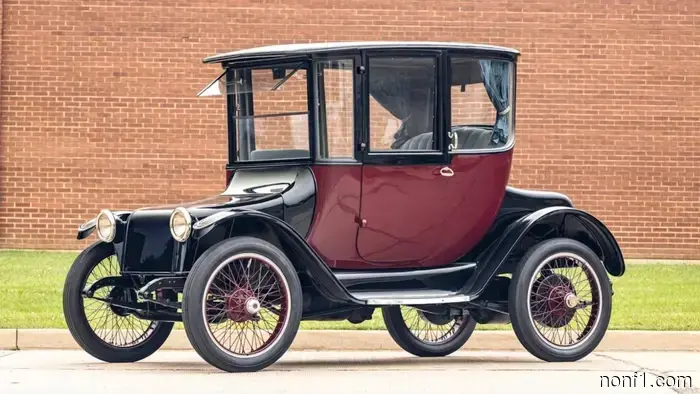 This 1918 Detroit Electric is equipped with contemporary batteries, and it functions properly.
Oh, and it featured an original flower vase long before the VW New Beetle was released.
This 1918 Detroit Electric is equipped with contemporary batteries, and it functions properly.
Oh, and it featured an original flower vase long before the VW New Beetle was released.
The shape of the exhaust is important, and this dyno test demonstrates why, with visual evidence.
Here's the reason why everything you've been told about exhaust systems goes beyond mere conventional wisdom.