
Why Audi Is Unable to Produce the Nuvolari in R8 Quantities at an R8 Price
Audi
The latest news and reviews on cars, without any fluff.
Subscribe to our free daily newsletter, which delivers the most important stories straight to your inbox every weekday.
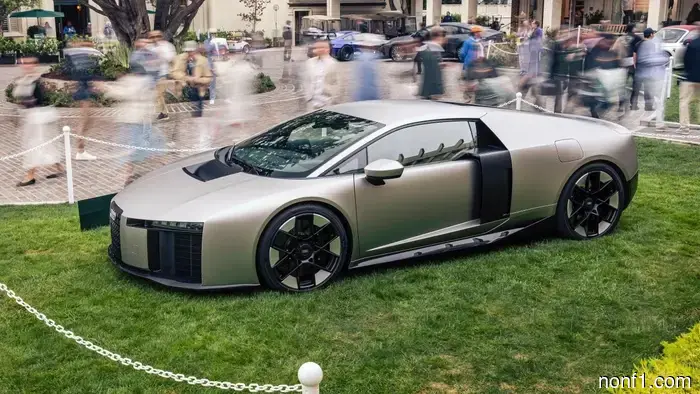
Audi's 1,000-horsepower Nuvolari supercar certainly resembles the old R8. It even shares its foundation with a Lamborghini, similar to the original "everyday supercar." While Audi is keen on developing a third-generation R8, the company has firmly decided against steering the Nuvolari in that direction.
Instead, Audi has positioned the Nuvolari as a more exclusive flagship model. Its emergence seems sudden and unexpected, which contrasts with the careful planning that produced the R8. Is this the reason why the Nuvolari is likely to become a limited-edition footnote rather than a mass-produced supercar?
Kyle Cheromcha, Editor-in-Chief of The Drive, interviewed Rouven Mohr, Audi’s chief technology officer and head of R&D, to understand why this niche offering was created instead of another R8. The explanation is threefold and involves more than just basic manufacturing logistics.
"Firstly, timing was crucial because we wanted to capture the first year of Formula One," Mohr explained.
To achieve this speed, Audi assembled a relatively small, agile team, unlike the large workforce typically involved in a project like the R8. This approach meant sacrificing some of the potential scale associated with larger projects.
"There are elements that enable the short timeline that can't be translated to mass production," Mohr noted. "We opted for a smaller volume to be quicker and accepted higher material costs due to our choice of carbon technology. Carbon technology allows for rapid tooling timelines."
“If you use metal,” Mohr continued, “the time taken to create the tool significantly impacts your industrialization timeline. This method certainly doesn’t lend itself to mass production; it’s just not fast enough.”
Another crucial concern was timing. Missing the intended launch window would have required Audi to redesign the Nuvolari’s powertrain to meet new regulations.
"Secondly, we aimed to hit the regulatory deadline for the transition from Euro 6 to Euro 7, as otherwise, the effort would increase considerably," Mohr said. "That means we must produce the cars for Europe within a specific timeframe; otherwise, we miss the opportunity."
To fully leverage economies of scale, Audi would need to manufacture the Nuvolari in much larger quantities, which poses its own challenges—especially in light of rising prices.
"Reducing the cost of the car is simply not feasible given the material expenses," he remarked.
This indicates that Audi's initial costs are quite high, and expecting customers to pay a premium for a mass-produced vehicle can be problematic. Instead, Audi prefers to rely on the Nuvolari's niche appeal to attract the interest of car collectors. Remove that exclusivity, and the business case for the Nuvolari begins to diminish.
"Our choice of technology is so costly that producing 10,000 units wouldn’t make sense because the market for that volume would dilute the exclusivity," Mohr stated.
"We want to emphasize that it was never intended to be a successor to the R8," Mohr emphasized. "It's fundamentally different as it represents more of a halo brand vision connected to our entry into Formula One."
Have a news tip? Reach out at tips@thedrive.com!
Otros artículos
 Pirelli has announced the tire compounds for Baku, Sepang, and Singapore.
Pirelli today informed the teams about which compounds they will receive for the autumn series of three consecutive races...
Pirelli has announced the tire compounds for Baku, Sepang, and Singapore.
Pirelli today informed the teams about which compounds they will receive for the autumn series of three consecutive races...
 2028 Bentley Torcal First Impressions: A Luxury Electric Vehicle That Dances to Its Own Rhythm
Bentley aims to make a strong impression with its inaugural electric vehicle. I had the opportunity to experience a Torcal, and here are my observations.
2028 Bentley Torcal First Impressions: A Luxury Electric Vehicle That Dances to Its Own Rhythm
Bentley aims to make a strong impression with its inaugural electric vehicle. I had the opportunity to experience a Torcal, and here are my observations.
 Discussions about a 'billion-dollar' deal for Verstappen are intensifying.
Formula 1 | Max Verstappen’s recent contract with Red Bull is being seen as possibly one of the most significant sporting agreements in history, while Laurent Mekies has (…)
Discussions about a 'billion-dollar' deal for Verstappen are intensifying.
Formula 1 | Max Verstappen’s recent contract with Red Bull is being seen as possibly one of the most significant sporting agreements in history, while Laurent Mekies has (…)
 Lawson to continue as Tsolov undertakes first F1 test.
Formula 1 | Liam Lawson appears to be more likely to retain his seat with Racing Bulls for 2027 alongside Arvid Lindblad, despite the presence of Red Bull junior Nikola Tsolov (…)
Lawson to continue as Tsolov undertakes first F1 test.
Formula 1 | Liam Lawson appears to be more likely to retain his seat with Racing Bulls for 2027 alongside Arvid Lindblad, despite the presence of Red Bull junior Nikola Tsolov (…)
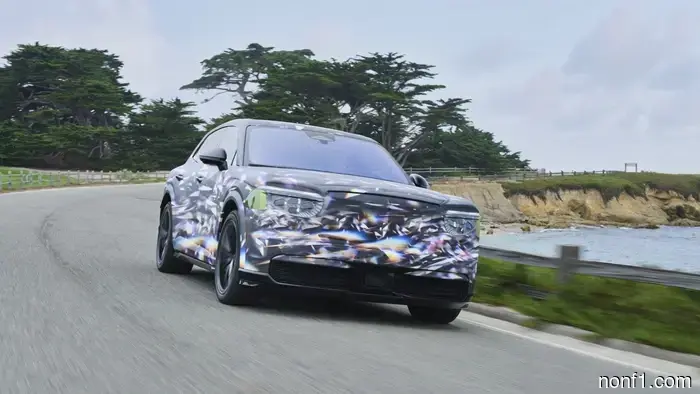 2028 Bentley Torcal First Ride: A Luxury Electric Vehicle That Operates to a Unique Rhythm
Bentley aims to make a strong impression with its inaugural electric vehicle. I had the opportunity to experience a Torcal, and here are my observations.
2028 Bentley Torcal First Ride: A Luxury Electric Vehicle That Operates to a Unique Rhythm
Bentley aims to make a strong impression with its inaugural electric vehicle. I had the opportunity to experience a Torcal, and here are my observations.
 In Imola, they are ready to host the race if necessary.
We have already mentioned that if the conflict in the Middle East continues, Formula 1 will have to cancel races in Qatar and Abu Dhabi, and move the season finale to one of the European tracks. The most likely option is Imola, and Italy is prepared for such a development.
In Imola, they are ready to host the race if necessary.
We have already mentioned that if the conflict in the Middle East continues, Formula 1 will have to cancel races in Qatar and Abu Dhabi, and move the season finale to one of the European tracks. The most likely option is Imola, and Italy is prepared for such a development.
Why Audi Is Unable to Produce the Nuvolari in R8 Quantities at an R8 Price
We long for Audi's "everyday supercar." Here’s why the Nuvolari cannot take its place.