
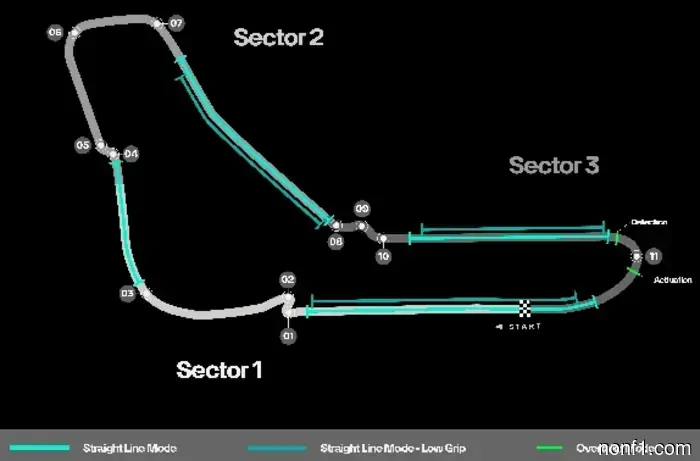
Italian Grand Prix: Track and Statistics
FORMULA 1 PIRELLI GRAN PREMIO D’ITALIA 2026
Date
Track
Lap
Laps
Distance
04-06/09/2026
Monza Autodrome
5793 m
53
306.720 km
Official website
Construction of the Monza Autodrome began in January 1922 when the Milan Automobile Club decided to celebrate its 25th anniversary by building its own track. After considering several projects, they chose a park in Monza, whose terrain suited investors, engineers, and builders. A company called Societa Incremento Automobilismo e Sport was established with entirely private capital, and the architect of the track was Alfredo Roselli. The project included a 14-kilometer track, with costs estimated at six million lira. In February 1922, the leaders of the Milan Automobile Club laid the symbolic "first stone," and work began. In a record time of 110 days, everything was ready – the classic track and a 4.5-kilometer oval with banked turns 2.5 meters high (the calculated speed for those times was 180-190 km/h). The official opening took place on a rainy day, September 3, 1922, with the importance of the event marked by the presence of the Prime Minister. In fact, it was only the third autodrome in the history of motorsport built specifically for racing. In 1928, a serious accident occurred – driver Emilio Materassi crashed into the grandstand, killing himself and 27 spectators. After that, the race was temporarily held on a small section – only the 4.5-kilometer bend of the straight and several turns were retained from the original version.
During the war, the Monza Autodrome was used for other purposes – first, archives were moved here, then animals from the Milan zoo. The surface was finally destroyed by a tank parade in 1945, and the pits and grandstands were damaged even earlier. In early 1948, the Milan Automobile Club decided to restore the track, and once again, in record time – in less than two months, the autodrome was ready to welcome drivers. On October 17, Jean-Pierre Wimille won the Italian Grand Prix in an Alfa Romeo 158. In 1955, builders returned – this time, the work was more extensive. Increased speeds and safety requirements did not match the gravel cushion under the asphalt – a concrete foundation needed to be laid. The length of the oval was reduced to 4250 meters, and the configuration of several sections was changed – a turn with an increasing radius, the Parabolica, was introduced. Drivers could accelerate in Monza to an incredible 285 km/h for those times.
Race organizers could choose the appropriate configuration – with or without the oval, but in 1961, after a terrible accident, the long version was closed to single-seaters – at the entrance to the Parabolica, Wolfgang von Trips lost control of his Ferrari and crashed into the grandstand, killing himself and more than a dozen spectators. Organizers decided to install a metal fence, but during free practice before the Italian Grand Prix on September 5, 1970, it failed as well. Jochen Rindt's Lotus lost brakes in the same Parabolica, the car broke through the weak foundation of the barrier, and the driver died. The track in Monza was built with a focus on record speed, but now the organizers faced the opposite task. Builders reconfigured the layout to reduce speed, while car designers did everything to increase it. Throughout the history of Formula 1 racing, the Monza track has changed nine configuration versions, with the current one dating back to 2000, but safety zones change almost every year. For the 2024 stage, the track was once again significantly upgraded – the budget was 36 million euros. In some sections, the track was widened, new asphalt was laid along the entire length of the lap, a new tunnel was built under the track, and pedestrian crossings were reconstructed. In the spring of 2026, the Monza City Council approved a plan for the next stage of reconstruction, during which the roof of the pit complex will be completely replaced, a new race management building and a new press center will be constructed. The current contract for holding the Italian Grand Prix in Monza is valid until 2031.
Track Features
Previously, the race in Monza was called the most expensive on the calendar. Unique characteristics required a unique approach – in Monza, low downforce and minimal drag are needed, and teams prepared aerodynamic elements that could only be used at the Italian autodrome. In Monza, the downforce provided by aerodynamics at a speed of 250 km/h is about 20% less than in Monaco. The lack of grip needs to be compensated with chassis settings, ensuring necessary stability and efficiency during braking, which is frequent – brakes are used for 15% of the distance, and peak load is comparable to that in Canada. Speeds in Monza are very high, and there is a significant load on the engine and brakes – there are three hard braking points throughout the lap. When setting up the suspension, it is necessary to ensure the ability to attack curbs, which will allow drivers to gain time in the first sector.
Best session results of the Italian Grand Prix 2025
Event
Weather
Driver
Team
Time
First practice
Partly cloudy. Dry
L. Hamilton
Ferrari
1:20.117
Second practice
Sunny. Dry
L. Norris
McLaren
1:19.878
Third practice
Sunny. Dry
L. Norris
McLaren
1:19.331
Qualifying
Sunny. Dry
M. Verstappen
Red Bull
1:18.792
Best lap in the race
Sunny. Dry
L. Norris
McLaren
1:20.901
Weekend Schedule
You can follow all Formula 1 sessions on our live broadcast page.
Italian Grand Prix Schedule. Moscow time
Day
Event
Time
04/09
Formula 3. First practice
09:35-10:20
04/09
Formula 2. First practice
11:00-11:45
04/09
Formula 1. Car presentation
12:00-13:00
04/09
Formula 1. First practice
13:30-14:30
04/09
Formula 3. Qualifying (Group A)
15:00-15:10
04/09
Formula 3. Qualifying (Group B)
15:20-15:30
04/09
Formula 2. Qualifying
15:55-16:25
04/09
Formula 1. Second practice
18:00-19:00
05/09
Formula 3. Sprint (18 laps or 40 minutes + 1 lap)
10:30-11:15
05/09
Formula 1. Third practice
13:30-14:30
05/09
Formula 2. Sprint (21 laps or 45 minutes + 1 lap)
15:15-16:05
05/09
Formula 1. Qualifying
17:00-18:00
06/09
Formula 3. Race (22 laps or 45 minutes + 1 lap)
09:15-10:05
06/09
Formula 2. Race (30 laps or 60 minutes + 1 lap)
10:45-11:50
06/09
Formula 1. Drivers' parade
14:00-14:30
06/09
Formula 1. Italian Grand Prix (53 laps or 120 minutes)
16:00-18:00
Tire sets issued to teams for the weekend
In Monza, teams will receive the "soft" trio of compounds for the seventh time this year – C3, C4, and C5 as Hard, Medium, and Soft. In total, each driver will receive seven sets of slicks for qualifying and the race. At least one set of Hard and one set of Medium must be saved for the Grand Prix. As for the remaining four sets, one must be returned after the first and second practice sessions, and two sets after the third free practice session. It is expected that the load on the front tires this year in braking zones will be somewhat less, as speeds will decrease at the corner entry. However, the load on the rear tires will increase during the acceleration phase when drivers use maximum power from the power units. Stability during braking and good grip of the front wheels on corner exits, especially in the first chicane and Ascari – are two key factors that will determine how much advantage drivers can gain over
Other articles
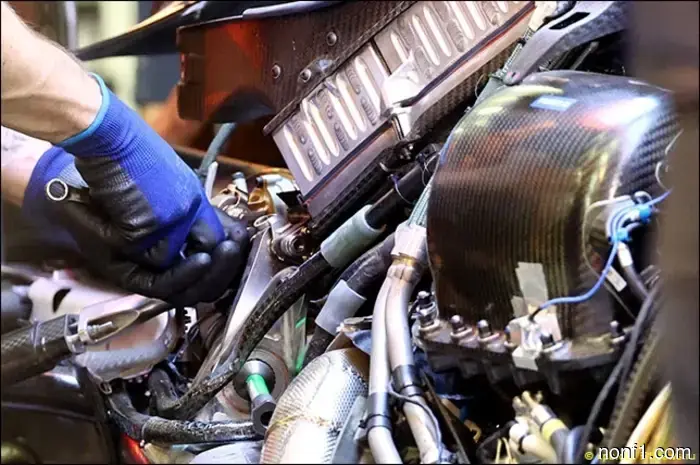 Italian Grand Prix: Power Unit Components
The FIA has published a list of power unit elements installed on cars before the start of the weekend in Monza...
Italian Grand Prix: Power Unit Components
The FIA has published a list of power unit elements installed on cars before the start of the weekend in Monza...
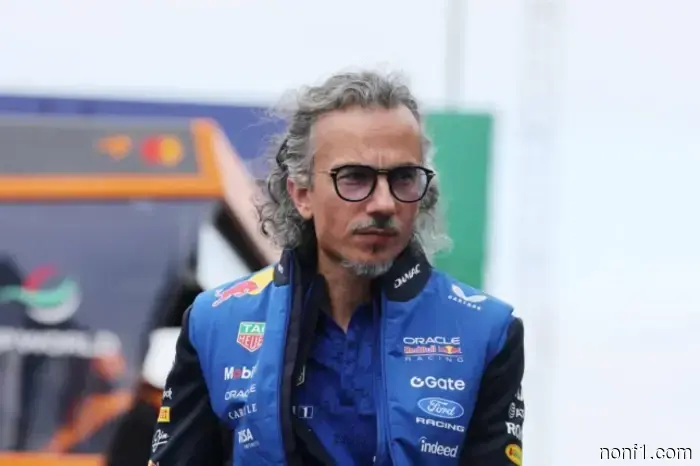 Laurent Mekis: We are satisfied with the decision of the Court of Appeal.
Laurent Mekies and the entire Red Bull Racing team are very pleased that Isaac Hajar has been reinstated to 3rd place in the Monaco Grand Prix results...
Laurent Mekis: We are satisfied with the decision of the Court of Appeal.
Laurent Mekies and the entire Red Bull Racing team are very pleased that Isaac Hajar has been reinstated to 3rd place in the Monaco Grand Prix results...
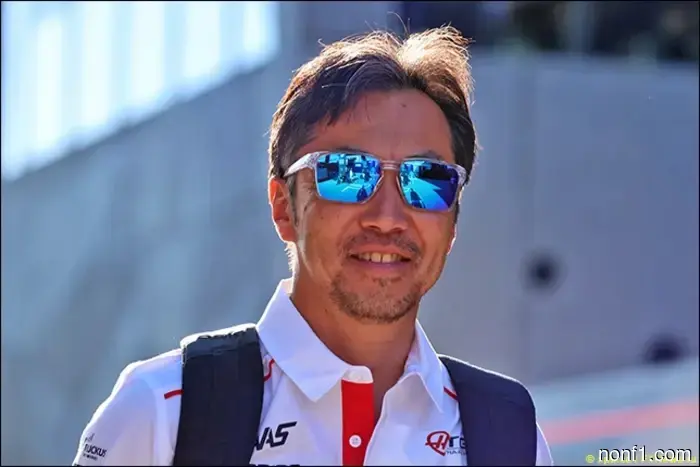 Komatsu on why only Berman received the new engine.
Ayo Komatsu explained why the new power unit from Ferrari, refined for the stage in Monza, was received only by Oliver Berman in his team.
Komatsu on why only Berman received the new engine.
Ayo Komatsu explained why the new power unit from Ferrari, refined for the stage in Monza, was received only by Oliver Berman in his team.
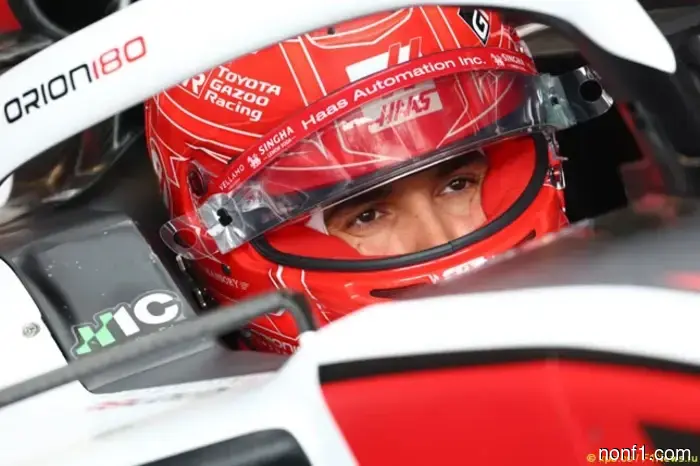 Gabriel Bortoleto: Several interesting tracks ahead
Audi driver Gabriel Bortoleto arrived in Monza in great spirits and is optimistically looking forward to the start of the weekend...
Gabriel Bortoleto: Several interesting tracks ahead
Audi driver Gabriel Bortoleto arrived in Monza in great spirits and is optimistically looking forward to the start of the weekend...
 Photo gallery: 03/09. Italian Grand Prix, Thursday
© F1News.Ru Editorial 1997-2026. Media registration certificate El No. FS77-29173. Registered with the Federal Service for Supervision of Communications, Information Technology and Mass Communications.
Photo gallery: 03/09. Italian Grand Prix, Thursday
© F1News.Ru Editorial 1997-2026. Media registration certificate El No. FS77-29173. Registered with the Federal Service for Supervision of Communications, Information Technology and Mass Communications.
Italian Grand Prix: Track and Statistics
In Monza, the downforce provided by aerodynamics at a speed of 250 km/h is approximately 20% less than in Monaco...