
Honda Aims for Its Vehicles to Assist in Repairing Damaged Infrastructure
**Honda**
The latest automotive news and reviews, straight to the point.
Subscribe to our free daily newsletter, delivering the most significant stories directly to you every weekday.
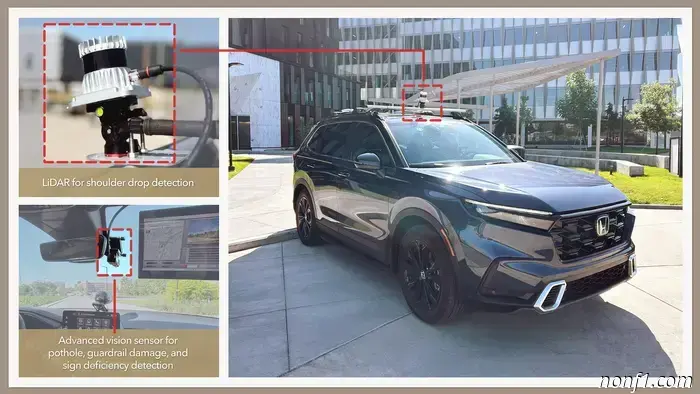
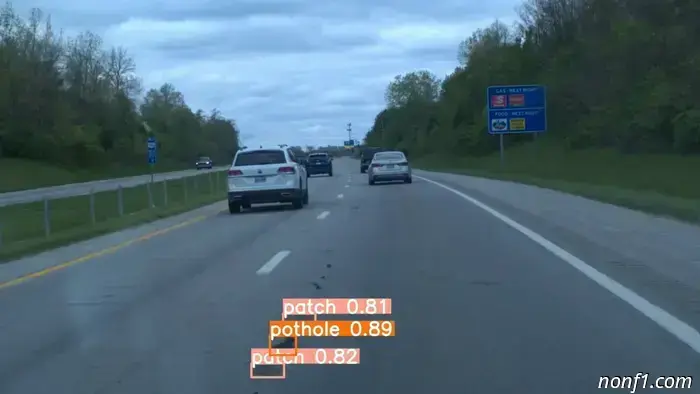
Modern vehicles are equipped with an array of sensors for safety and driver assistance. Honda is leveraging these sensors to enhance road safety and driving experience. The automaker has recently concluded a two-year pilot program for its Proactive Roadway Maintenance System, which employs cameras and lidar to identify potholes, deteriorating signs, damaged guardrails, and other potential issues for highway departments to address (whether they actually act on these findings is a different question).
This initiative was carried out in collaboration with DriveOhio, a division of the Ohio Department of Transportation (ODOT), the University of Cincinnati, and technology companies i-Probe and Parsons. The pilot covered around 3,000 miles of roadways in central and southeastern Ohio. ODOT personnel drove test vehicles across these roads, covering both rural and urban settings under various weather and lighting conditions, as stated by Honda in a press release.
Issues flagged by the sensors were uploaded to an online platform for real-time review by ODOT staff, who could cross-check the automated findings with their own visual inspections. An AI model processed the data and included a feedback loop that allowed ODOT personnel to report errors, helping the model to learn and improve over time, according to Honda.
As Honda highlighted in its press release, the results were promising. The automaker claims the prototype system accurately detected damaged or obstructed signs 99% of the time, recognized damaged guardrails with 93% accuracy, and identified potholes at an accuracy rate of 89%.
Honda intends to expand the Proactive Roadway Maintenance System in a second phase of testing, with the ultimate aim of commercializing this technology. In Ohio alone, this could potentially save $4.5 million annually through reduced manual inspection time, optimized maintenance schedules, and proactive measures that prevent more expensive repairs down the line. It would also enhance safety for road workers, who would spend less time navigating traffic, Honda adds. However, this approach would require customers to consent to sharing data from their vehicles.
“In the future, Honda seeks to enable its customers to help create safer, better roadways through anonymized data sharing from their vehicles,” the release stated. “This community-centered approach fosters a shared sense of ownership at the operational level, allowing drivers not only to use the roads but also to actively contribute to their improvement.”
It remains to be seen whether drivers will choose to participate in significant numbers, although sharing anonymized data might be more acceptable to many than facing increased taxes for road maintenance. It’s also noteworthy that an automaker is taking such an atypical interest in the infrastructure that supports its products, although, unlike the electric vehicle charging infrastructure, the potential revenue from data sales likely outweighs the initial investment needed.

Other articles
 Antonelli discloses that he received psychological support following a challenging rookie season.
Formula 1 | Andrea Kimi Antonelli has disclosed that he collaborated with a psychologist during the winter following a challenging rookie season in Formula 1 that involved a (…)
Antonelli discloses that he received psychological support following a challenging rookie season.
Formula 1 | Andrea Kimi Antonelli has disclosed that he collaborated with a psychologist during the winter following a challenging rookie season in Formula 1 that involved a (…)
 The Bentley Bentayga X Concept is the luxurious off-road vehicle we desire.
Bentley is delving deeper into the realm of off-roading with this elevated Bentayga Speed.
The Bentley Bentayga X Concept is the luxurious off-road vehicle we desire.
Bentley is delving deeper into the realm of off-roading with this elevated Bentayga Speed.
 The Drive Awards: The Top Truck of 2026 Is the Rivian R1T Quad
No vehicle can genuinely accomplish everything—but the Rivian R1T Quad comes remarkably close.
The Drive Awards: The Top Truck of 2026 Is the Rivian R1T Quad
No vehicle can genuinely accomplish everything—but the Rivian R1T Quad comes remarkably close.
 Isola is expected to depart from Pirelli prior to the 2026 season.
Formula 1 | There are rumors suggesting that Mario Isola is likely to depart from Pirelli prior to the commencement of the 2026 Formula 1 season, coinciding with 'shakedown week' in (…)
Isola is expected to depart from Pirelli prior to the 2026 season.
Formula 1 | There are rumors suggesting that Mario Isola is likely to depart from Pirelli prior to the commencement of the 2026 Formula 1 season, coinciding with 'shakedown week' in (…)
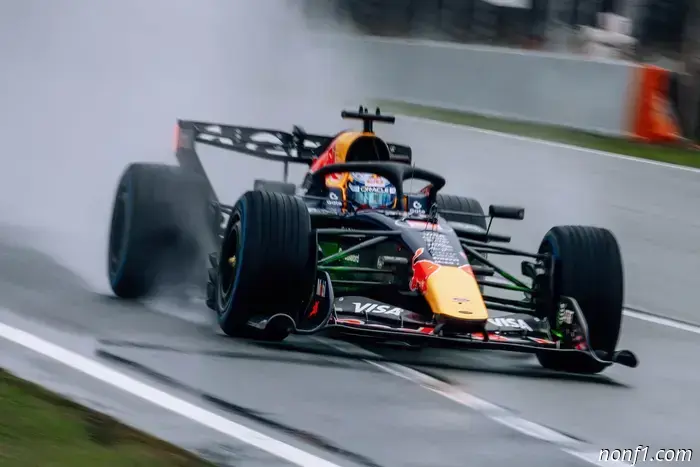 Hadjar's run ends as rain interrupts Barcelona shakedown.
Formula 1 | During the highly secretive Barcelona 'shakedown week,' the first significant incident occurred on Tuesday when Isack Hadjar crashed the new Red Bull car.
Hadjar's run ends as rain interrupts Barcelona shakedown.
Formula 1 | During the highly secretive Barcelona 'shakedown week,' the first significant incident occurred on Tuesday when Isack Hadjar crashed the new Red Bull car.
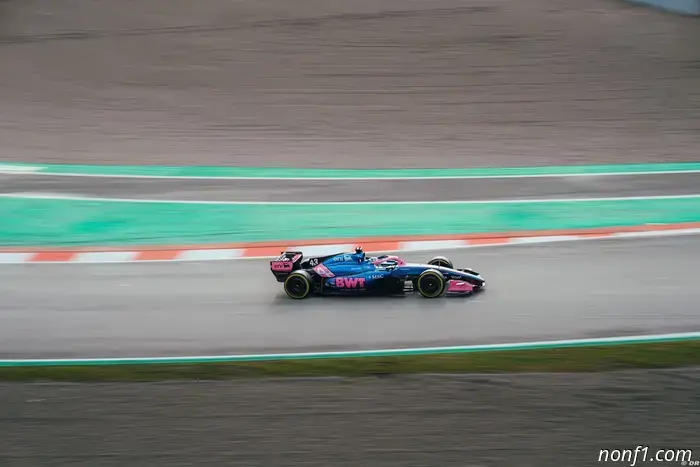 Alpine reaches the 2026 weight limit while competitors face challenges.
Formula 1 | Alpine is reported to have achieved the new minimum weight limit set for 2026 right from the start, indicating a significant technical achievement early on after a (…)
Alpine reaches the 2026 weight limit while competitors face challenges.
Formula 1 | Alpine is reported to have achieved the new minimum weight limit set for 2026 right from the start, indicating a significant technical achievement early on after a (…)
Honda Aims for Its Vehicles to Assist in Repairing Damaged Infrastructure
The car manufacturer aims to ultimately recruit customers to share anonymized information from their cars regarding road conditions.