
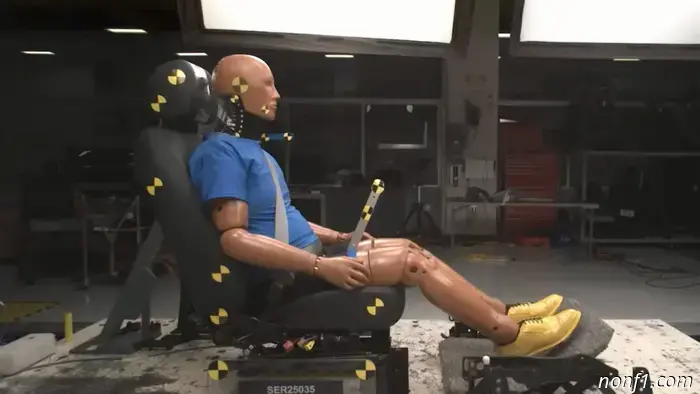
The new IIHS whiplash crash test could protect your neck.
IIHS via YouTube
The most significant news and reviews on cars, no nonsense
Our complimentary daily newsletter delivers essential stories straight to your inbox every weekday.
Neck strains and sprains are the most common injuries reported in auto insurance claims across the United States. Consequently, the Insurance Institute for Highway Safety (IIHS)—the nonprofit safety organization backed by the insurance sector—is implementing a more comprehensive test to tackle the primary causes of these injuries.
The IIHS began assessing seats and head restraints for whiplash prevention alongside crash tests around 20 years ago. In fact, it stopped the original version of the test in 2022 because automakers had enhanced seat designs to the extent that nearly every new car achieved a top rating. However, insurance claim data indicated that whiplash injuries continued to occur and there was still inconsistency among various vehicles, necessitating a new test.
To develop that test, researchers examined seats from 36 late-model vehicles and compared data from crash-test dummies with injury-claim information provided by the IIHS-linked Highway Loss Data Institute. Some criteria from the original test were preserved, including the duration it takes for a head restraint to contact a dummy's head and the acceleration of the T1 vertebra, which is located where the spine meets the neck. The movement of the pelvis and measurements for head tilting and bending relative to the neck were also included.
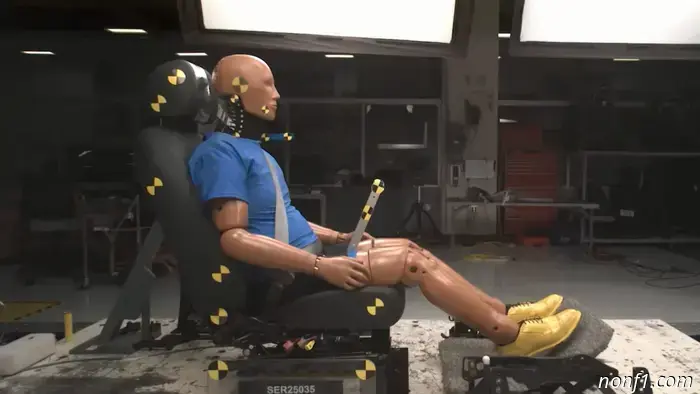
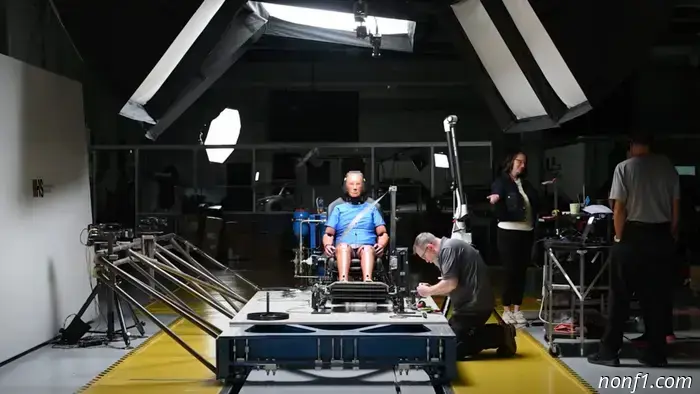
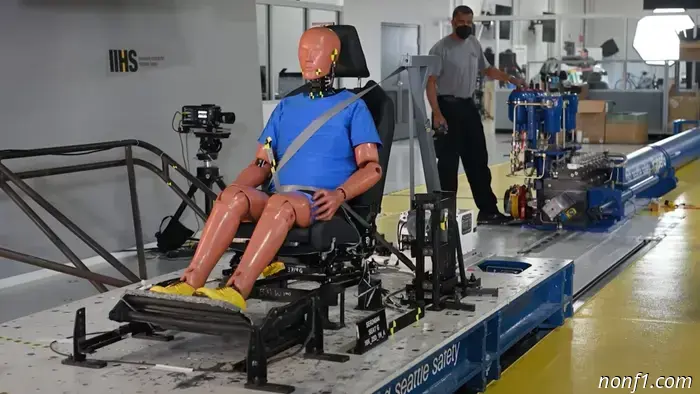
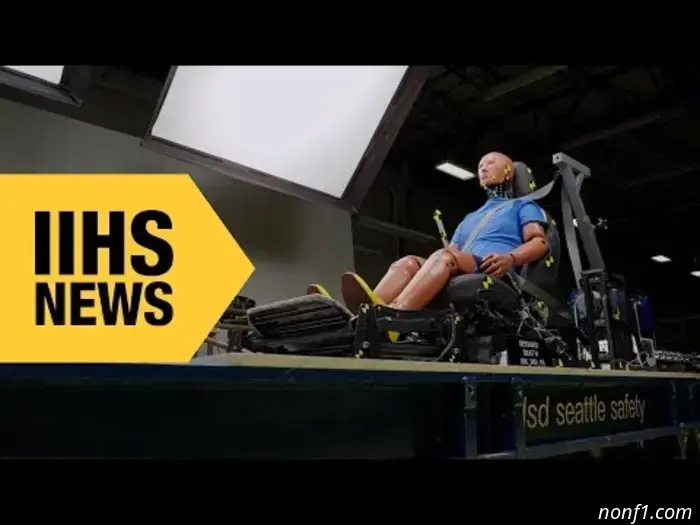
Similar to the original test, the new whiplash prevention test replicates a rear-end crash, as insurance data identify this scenario as the most frequent. The driver’s seat is placed on a sled that delivers acceleration pulses to a midsize male dummy with a movable spine. The previous test simulated a rear impact at 20 mph, but the new protocol also simulates an impact at 30 mph.
In the initial round of testing under this new protocol, the IIHS assessed 18 small SUVs. The Audi Q3, Hyundai Ioniq 5, Subaru Forester, and Toyota RAV4 (the outgoing 2025 model, not the redesigned 2026) received the highest “Good” rating. The Ford Bronco Sport, Hyundai Tucson, and Mazda CX-50 received the lowest “Poor” score, while the BMW X1 and Nissan Rogue were rated “Marginal.” The rest were deemed “Acceptable.”
SUVs rated “Good” had seats that kept the dummy's head and spine aligned, maintaining the natural curve of the spine and limiting head movement. In contrast, the “Poor” rated SUVs allowed the spine to straighten and stretch significantly, leading to considerable head movement. The Tucson's head restraint forced the chin down toward the chest, the CX-50’s permitted the head to slide backward and upward, and the Bronco Sport’s took an unusually long time to contact the head.
IIHS via YouTube
Although they often appear more like headrests than essential safety gear, these results highlight the intended purpose of head restraints. Ideally, they should catch an occupant's head to prevent it from whipping backward during a collision. To function correctly, it's vital to adjust them so they are positioned as close to the head as possible.
Achieving a top safety rating from the IIHS is more challenging than attaining a five-star rating from the federal National Highway Traffic Safety Administration (NHTSA), as the IIHS can adapt its safety criteria. In contrast, the more rigid federal standards cannot be easily modified, and the IIHS has unrestricted access to insurance data to inform its testing methods. Automakers often find themselves surprised by updated IIHS tests like this one, which motivates them to enhance vehicle safety.
Have a tip? Contact us at [email protected]

Other articles
 Vowles responds as competitors continue to race in Barcelona.
Formula 1 | James Vowles, the head of Williams, has taken steps to quell increasing rumors regarding the team's lack of presence at the Barcelona shakedown week, asserting (…)
Vowles responds as competitors continue to race in Barcelona.
Formula 1 | James Vowles, the head of Williams, has taken steps to quell increasing rumors regarding the team's lack of presence at the Barcelona shakedown week, asserting (…)
 Isola is expected to depart from Pirelli prior to the 2026 season.
Formula 1 | There are rumors suggesting that Mario Isola is likely to depart from Pirelli prior to the commencement of the 2026 Formula 1 season, coinciding with 'shakedown week' in (…)
Isola is expected to depart from Pirelli prior to the 2026 season.
Formula 1 | There are rumors suggesting that Mario Isola is likely to depart from Pirelli prior to the commencement of the 2026 Formula 1 season, coinciding with 'shakedown week' in (…)
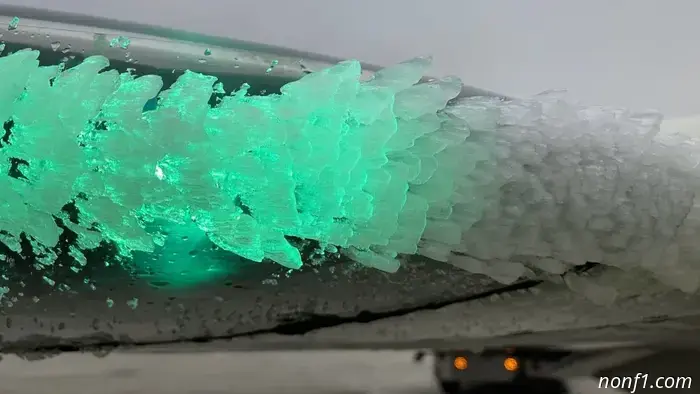 This aerospace technology may assist vehicles in identifying ice and freezing rain before it presents an issue.
The University of Michigan created two sensors to alert drivers about hidden slippery conditions.
This aerospace technology may assist vehicles in identifying ice and freezing rain before it presents an issue.
The University of Michigan created two sensors to alert drivers about hidden slippery conditions.
 Capelli queries the postponement regarding Hamilton's race engineer.
Formula 1 | Former Formula 1 driver Ivan Capelli has raised concerns about the lack of a formal announcement regarding Lewis Hamilton's race engineer at Ferrari, labeling the (…)
Capelli queries the postponement regarding Hamilton's race engineer.
Formula 1 | Former Formula 1 driver Ivan Capelli has raised concerns about the lack of a formal announcement regarding Lewis Hamilton's race engineer at Ferrari, labeling the (…)
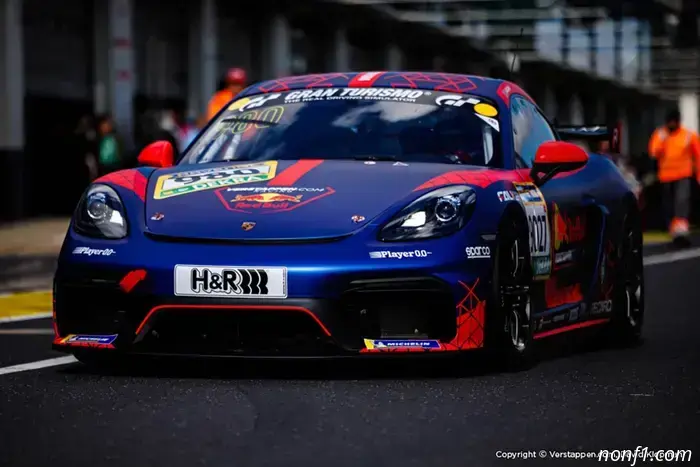 Nurburgring alters NLS schedule to accommodate Verstappen.
Formula 1 | The Nurburgring Langstrecken-Serie organizers have modified their 2026 schedule, creating an opportunity for Max Verstappen to compete in the (…)
Nurburgring alters NLS schedule to accommodate Verstappen.
Formula 1 | The Nurburgring Langstrecken-Serie organizers have modified their 2026 schedule, creating an opportunity for Max Verstappen to compete in the (…)
 Ralf advises Ferrari to 'keep quiet' regarding the dispute over the Mercedes engine.
Formula 1 | Ralf Schumacher, a former Formula 1 driver, has advised Ferrari to remain silent as rumors intensify regarding the Italian team's preparation of an official (…)
Ralf advises Ferrari to 'keep quiet' regarding the dispute over the Mercedes engine.
Formula 1 | Ralf Schumacher, a former Formula 1 driver, has advised Ferrari to remain silent as rumors intensify regarding the Italian team's preparation of an official (…)
The new IIHS whiplash crash test could protect your neck.
The revised test poses a new obstacle for automotive manufacturers, but it may reduce the likelihood of this common injury in future cars.