
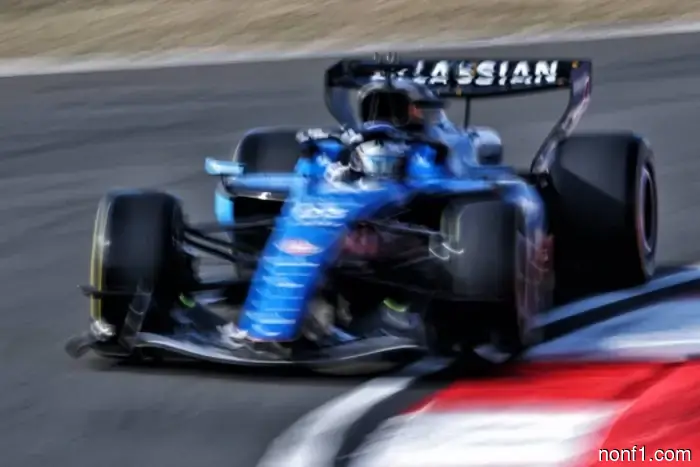
Elbon: We cannot hide behind the problem of chassis weight.
Williams is likely one of those teams that isn't too upset about the bleak news of the cancellation of two April races. The unplanned break in the championship will allow the British team to conduct a detailed analysis of the shortcomings of their car and take at least some measures to address them.
And there are quite a few shortcomings, and it's not just about the excessive weight of the FW48 chassis. Alex Albon, who has yet to score points this year, says that the list is very long, as the car overall lacks both reliability and efficiency.
"We can't hide behind the problem of excess weight," The Race quotes the Williams driver. "There are some oddities with the car. It feels like we can't fix its shortcomings. At the moment, the main issue is that the car periodically runs on three wheels, and we need to sort this out."
This refers to the fact that in corners, one of the car's wheels lifts off the track, usually the rear wheel that is on the inside of the turn. It can't be said that it always completely lifts off the asphalt: but the driver gets the impression that the suspension of that wheel is almost completely unloaded.
At the same time, the contact patch of the tire with the track significantly decreases, the level of mechanical grip drops, but all this also adversely affects the performance of the car's aerodynamic components, and its behavior can become unpredictable.
The causes of this phenomenon can vary depending on the circumstances, but among the factors that cause the car to behave this way, excessive chassis stiffness and aggressive settings, including ride height, are usually mentioned. All of this can affect the behavior of the FW48 when dynamic load redistribution occurs across the different wheels of the car during cornering.
It can be assumed that on a real track, the Williams behaves differently than predicted by the calculations made on the simulator, as the shortcomings mentioned by Albon manifested themselves during pre-season testing.
"There are many questions about the car's balance," he emphasized. "Overall, this is related to a whole combination of factors, including a certain decrease in downforce. Excess weight is just one of the problems. The team plans to reduce the weight of the chassis in conjunction with attempts to improve balance and increase downforce."
By the way, Albon is not the first to mention such shortcomings of the Williams car, which the team also acknowledges: its chassis has suffered from similar problems before. Cars built in Grove have not distinguished themselves by predictable behavior in long corners in previous years, especially if during this process the driver had to work the brake pedal. Loads act on the car both longitudinally and laterally.
Under braking on straights, the car behaves normally, but when braking has to occur inside a corner, difficulties arise. Alex prefers when the front wheels of the car reliably hold the track in long medium-speed corners, while at Williams they acknowledged that the suspension does not work efficiently enough to provide reliable grip.
In particular, the rear wheel that is on the inside of the corner begins to lift off the track. This phenomenon can be attempted to be addressed by changing the differential settings, but this risks exacerbating the lack of turn-in.
When Alex Albon was unable to start the Chinese Grand Prix even from the pit lane, as a hydraulic leak was found in his car, he expressed disappointment not only because the team seemed to have found one of the causes of the problems, but also because they were unable to verify it.
Other articles
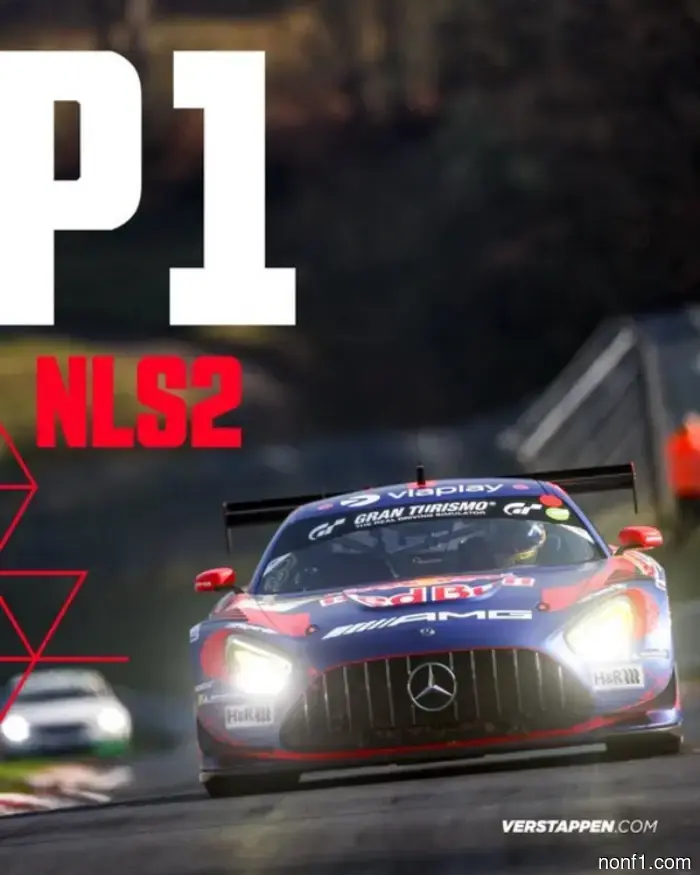 Max Verstappen won the race at the Nürburgring.
Max Verstappen's team achieved a convincing victory in the 4-hour race of the NLS series at the "North Loop" of the Nürburgring...
Max Verstappen won the race at the Nürburgring.
Max Verstappen's team achieved a convincing victory in the 4-hour race of the NLS series at the "North Loop" of the Nürburgring...
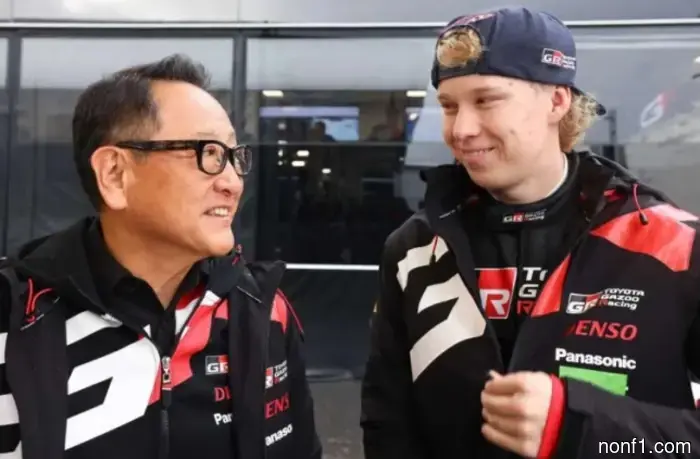 The president of Toyota still believes in Kalle Rovanperä.
Akio Toyoda, president of Toyota Motor Corporation, commented on the news that Kalle Rovanperä had to withdraw from competing in Super Formula in 2026...
The president of Toyota still believes in Kalle Rovanperä.
Akio Toyoda, president of Toyota Motor Corporation, commented on the news that Kalle Rovanperä had to withdraw from competing in Super Formula in 2026...
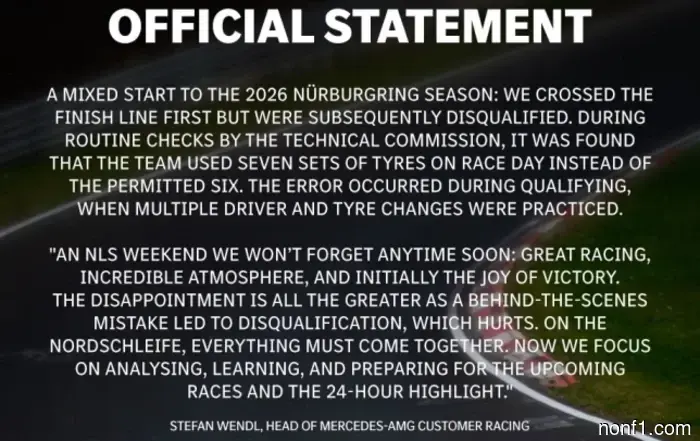 Verstappen's crew was stripped of victory in the NLS2 race.
Max Verstappen's crew crossed the finish line first in the 4-hour NLS2 race at the Nürburgring's "North Loop," but was then disqualified...
Verstappen's crew was stripped of victory in the NLS2 race.
Max Verstappen's crew crossed the finish line first in the 4-hour NLS2 race at the Nürburgring's "North Loop," but was then disqualified...
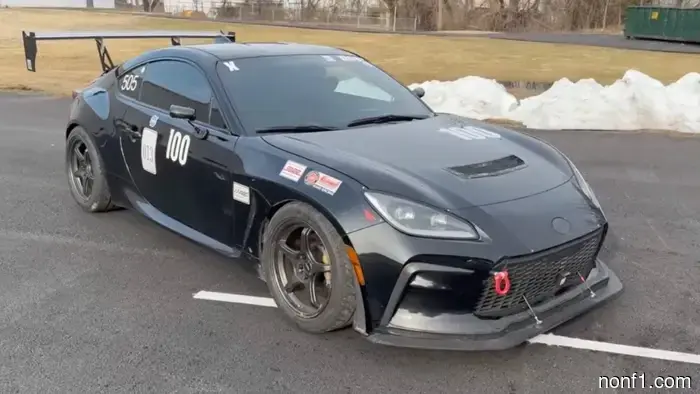 When your Toyota GR86 engine fails after 17,000 miles of intense use, you replace it with an alternative.
If you're determined to monitor your car, a damaged engine won't deter you.
When your Toyota GR86 engine fails after 17,000 miles of intense use, you replace it with an alternative.
If you're determined to monitor your car, a damaged engine won't deter you.
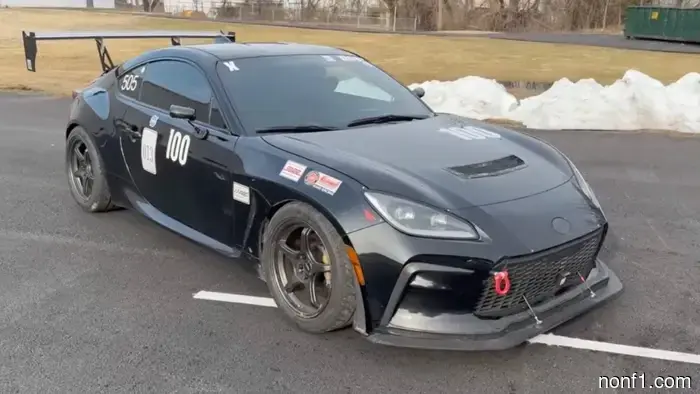 When your Toyota GR86 engine fails after 17,000 miles of intense use, you replace it with a different one.
If you're committed to monitoring your vehicle, you won't allow a broken engine to hold you back.
When your Toyota GR86 engine fails after 17,000 miles of intense use, you replace it with a different one.
If you're committed to monitoring your vehicle, you won't allow a broken engine to hold you back.
 Vowles spoke about Williams' plans for the April break.
James Vowles explained how the April break in the championship should be used at Williams, as the team faced serious difficulties at the beginning of the season.
Vowles spoke about Williams' plans for the April break.
James Vowles explained how the April break in the championship should be used at Williams, as the team faced serious difficulties at the beginning of the season.
Elbon: We cannot hide behind the problem of chassis weight.
The unplanned break in the championship will allow Williams to conduct a detailed analysis of the car's shortcomings and take at least some measures to address them. And there are quite a few shortcomings...