
Screamer Review: A New Standard in Racing Game Artistry
The latest car news and reviews, no fluff
Our daily newsletter is free and delivers the most significant stories straight to your inbox, every weekday.
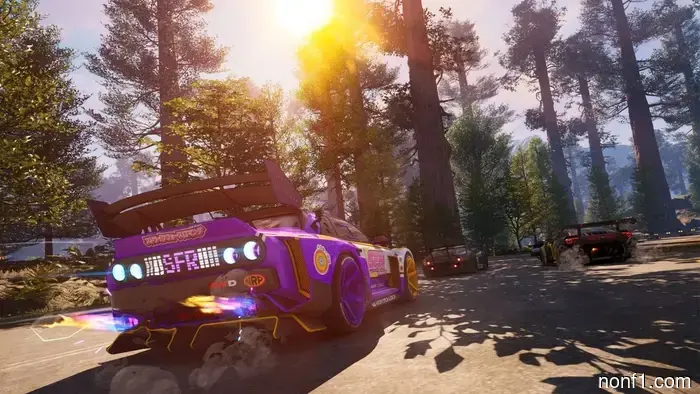
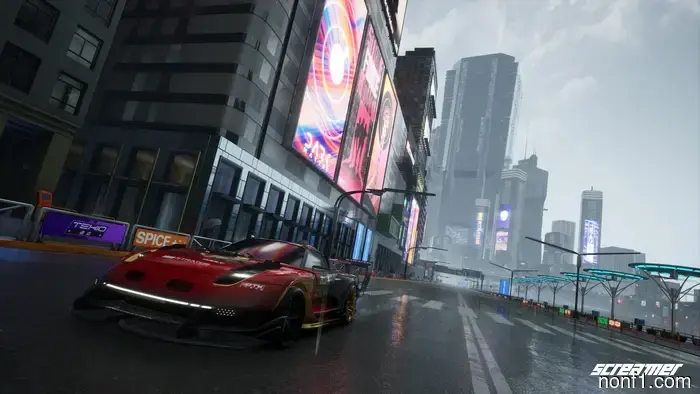
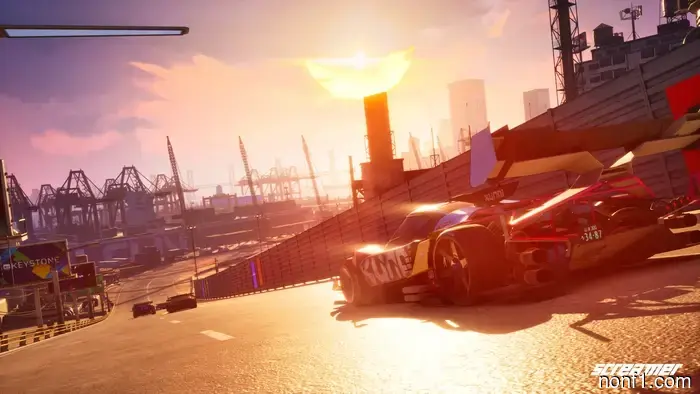
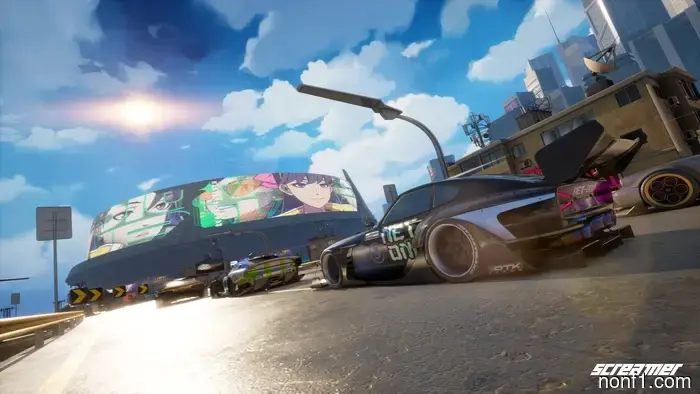
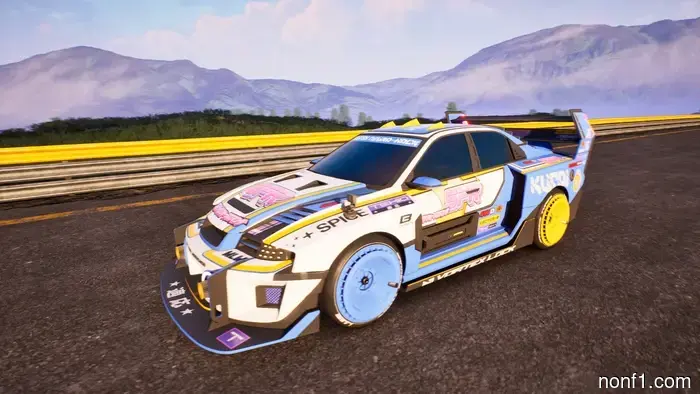
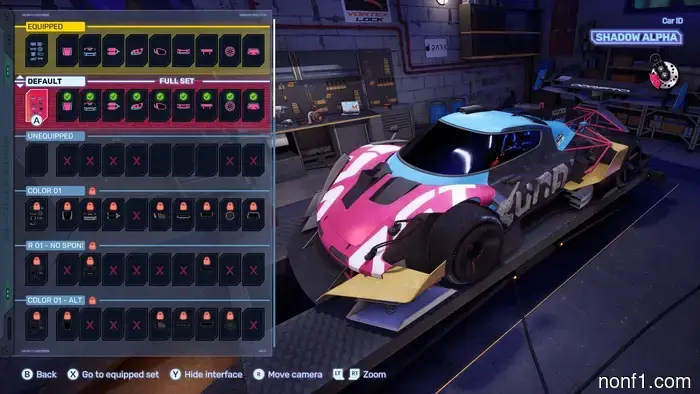
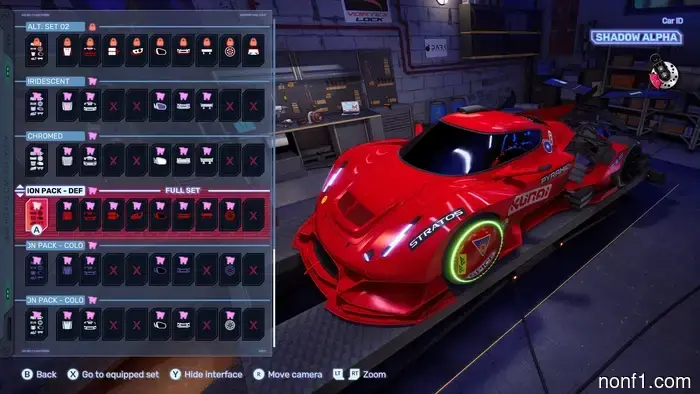
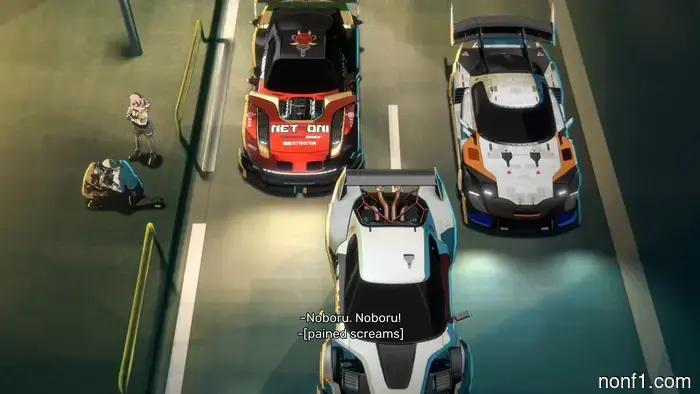
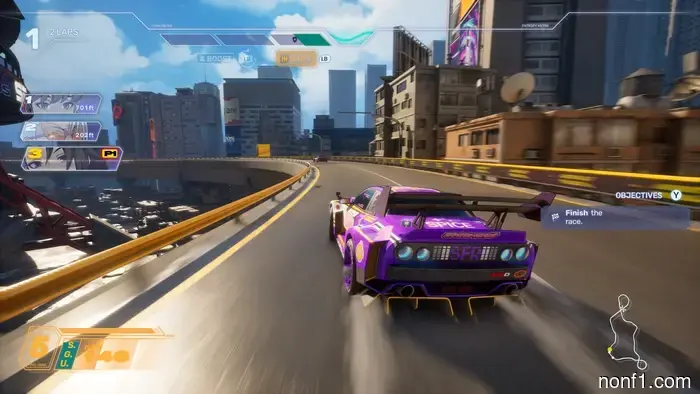
Games like Screamer are rare these days. This narrative-rich, cyberpunk-inspired arcade racer features a wildly unconventional control scheme and lacks an open world. Developed by the team known for Hot Wheels Unleashed and various motorcycle simulators, it’s ideal for competitive play while also offering a substantial single-player campaign. The cars serve as impressive characters in their own right, although they are not licensed. And let’s not forget the fantastic soundtrack! Screamer isn't just a solid game; it’s the most unexpected surprise in racing games in years, and I am thrilled it exists.
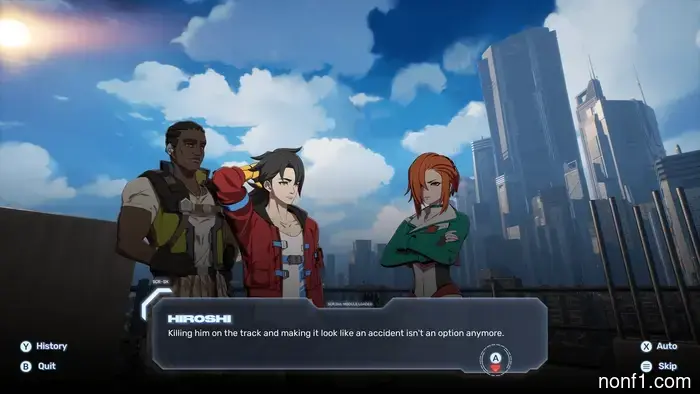
Screamer boasts a striking art direction, incorporating combat elements and intricate lore that I fully anticipate will inspire a fanfiction community. At its core, however, it remains a classic arcade racer. Those who remember the original Screamer from the mid-'90s will recall it as a PC-exclusive, 3D polygonal racing game that provided a solace for those without a PlayStation missing out on Ridge Racer. The same company, originally Graffiti and now Milestone based in Milan, developed this new iteration, but any similarities end there.
What sets the new Screamer apart most notably is its control scheme: you steer with both the left and right analog sticks and use the triggers for gas and brake, just where you’d expect them. The left stick controls steering, while the right stick facilitates drifting, independent of throttle input. We will explore the experience of this setup later.
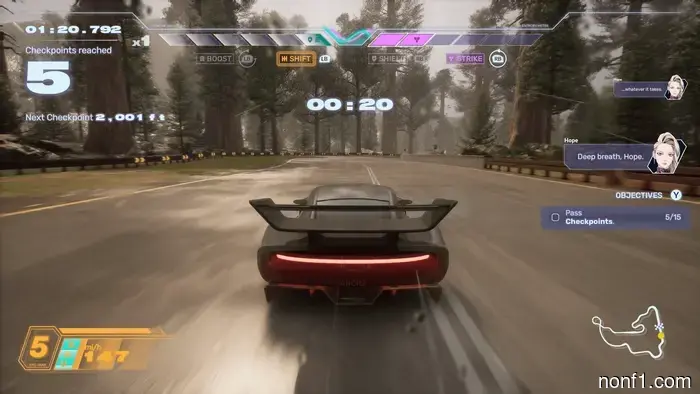
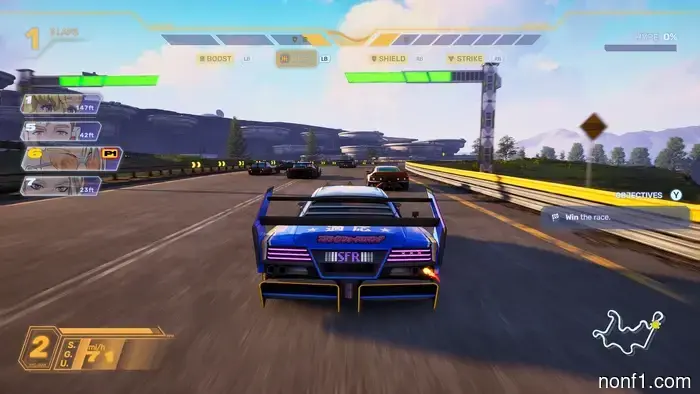
In this video game of 2026, driving alone may not capture everyone’s interest, so players must manage two meters during races: Sync and Entropy. Sync is the Screamer universe’s term for boost and is accumulated not through drifting but via precise shifting and maintaining top speeds. Entropy is introduced later in the story mode and adds a combat element to racing. Using Sync to boost allows you to gain Entropy, which can transform your car into an invulnerable battering ram for a short period, knocking out opponents (who respawn). Successfully knocking out opponents replenishes some Sync, creating a satisfying gameplay loop when everything aligns.
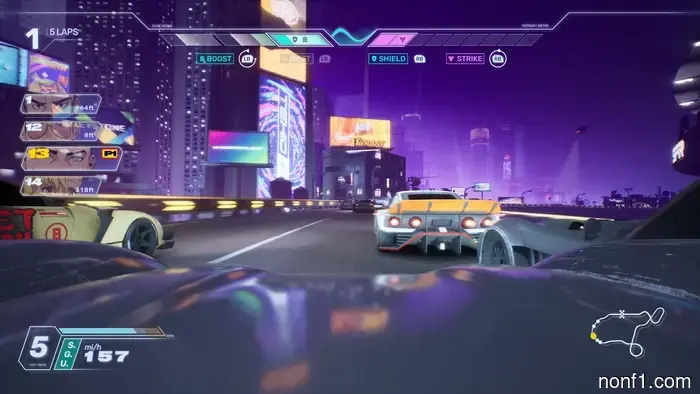
Entropy can also provide a temporary shield from attacks—known as Strikes—and the HUD notifies you of incoming assaults. Strikes can also be canceled just before execution since they require a button hold to initiate. A crafty trailing driver might initiate a Strike to provoke their rival into using their shield, cancel the attack, and then take them out once the shield expires and they become exposed.
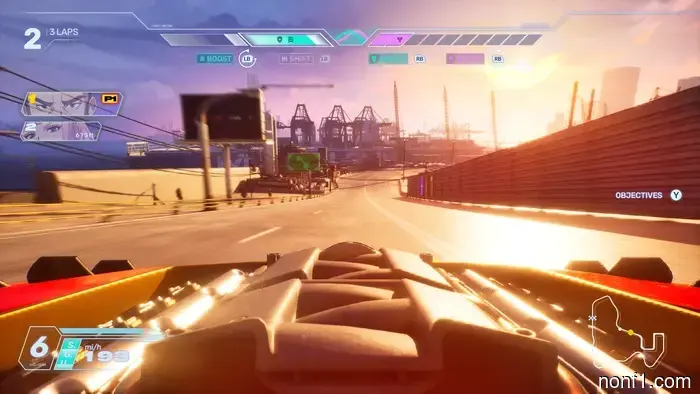
There’s a lot happening here, but the blue section on the left of the top HUD indicates your Sync availability, while the right shows Entropy in pink. The speedometer flashes gold to prompt you to upshift at the ideal moment by hitting the left shoulder button, which enhances Sync generation.
With all these systems and various character and vehicle dynamics, Screamer evolves into a game of strategy as much as it is about classic racing technique. The challenge lies in managing gas, brakes, two sticks, and two shoulder buttons—each serving different functions based on whether you press or hold them. I grew up on Sega Rally and believe that the act of driving alone can be rewarding. Nintendo's recent shifts to make Mario Kart more vertical don’t resonate with me as well as my initial attempts to build a shelter in the midst of a firefight in Fortnite.
Yet, even I, a seasoned gamer, find enjoyment in this. It’s a lot to handle, and during my early hours with the game, I mismanaged my inputs countless times. There’s no moment to catch your breath in Screamer; computer-controlled opponents exhibit Burnout-like resilience, and without nailing your shifts, Sync builds too slowly, leaving you an easy target for trailing drivers. However, drifting from corner to corner feels rhythmic when you master it.
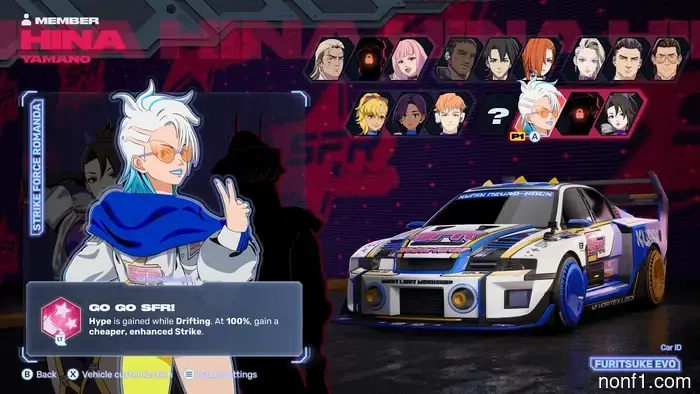
Hina’s car stands out as one of the most intriguing to drive; although its left-stick steering is notably worse than others, it can drift exceptionally well. Drifting fills a separate Hype meter, unique to Hina and her teammates, instantly granting her an additional Strike when filled.
Returning to the physics, I initially disliked Screamer's handling. The left-stick “normal” steering felt heavy and cumbersome—similar to a Criterion Need for Speed Hot Pursuit with cinderblock tires—which forced reliance on the right “drift” stick for positioning the car. However, the left stick isn’t useless; it can fine-tune a drift’s angle. As I grew accustomed to using both sticks in tandem and learned the impact of braking and lifting off the throttle to enhance sharp cornering, everything began to click. Yet, I still struggled with it.
Then I discovered the view change button. I realized I couldn’t handle playing Screamer from the default behind-the-car perspective; it was completely blocked from the back, which is



Other articles
 Vowles spoke about Williams' plans for the April break.
James Vowles explained how the April break in the championship should be used at Williams, as the team faced serious difficulties at the beginning of the season.
Vowles spoke about Williams' plans for the April break.
James Vowles explained how the April break in the championship should be used at Williams, as the team faced serious difficulties at the beginning of the season.
 Vowles spoke about Williams' plans for the April break.
James Vowles explained how the April break in the championship should be used at Williams, as the team faced serious difficulties at the beginning of the season.
Vowles spoke about Williams' plans for the April break.
James Vowles explained how the April break in the championship should be used at Williams, as the team faced serious difficulties at the beginning of the season.
 Leo Turini believes that Lewis Hamilton has started a new life.
Leo Turini, a well-known Italian journalist who always sincerely rejoices in the successes of his favorite team Ferrari, believes that a new stage in Lewis Hamilton's career began in 2026...
Leo Turini believes that Lewis Hamilton has started a new life.
Leo Turini, a well-known Italian journalist who always sincerely rejoices in the successes of his favorite team Ferrari, believes that a new stage in Lewis Hamilton's career began in 2026...
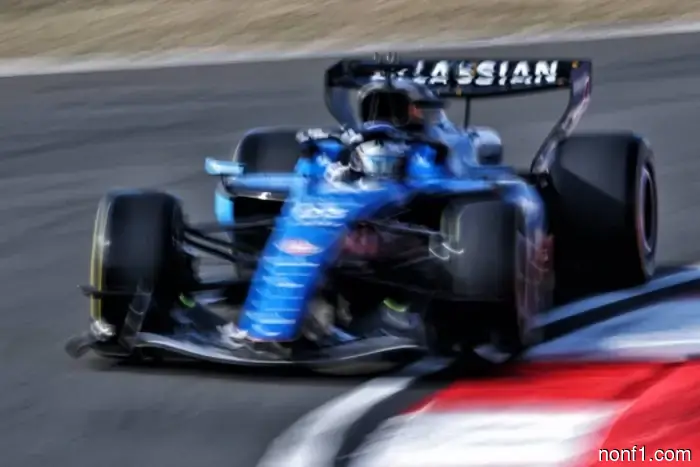 Elbon: We cannot hide behind the problem of chassis weight.
The unplanned break in the championship will allow Williams to conduct a detailed analysis of the car's shortcomings and take at least some measures to address them. And there are quite a few shortcomings...
Elbon: We cannot hide behind the problem of chassis weight.
The unplanned break in the championship will allow Williams to conduct a detailed analysis of the car's shortcomings and take at least some measures to address them. And there are quite a few shortcomings...
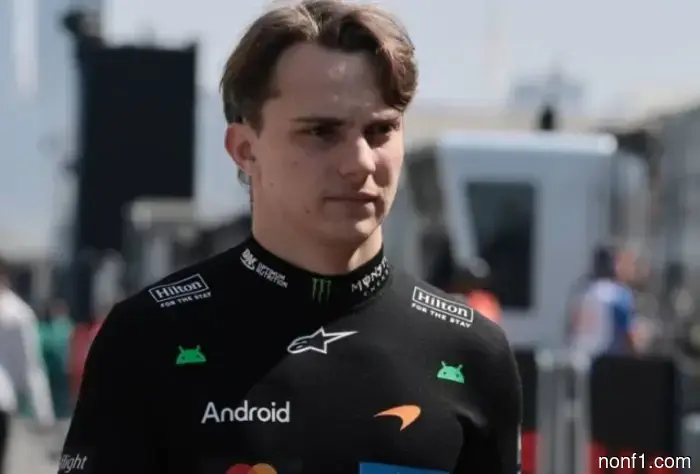 Piastri sent a video message to a young fan.
Oscar Piastri crashed the car even before the start of the race in Melbourne, which greatly disappointed Australian fans, but not all the consequences of this incident became known immediately...
Piastri sent a video message to a young fan.
Oscar Piastri crashed the car even before the start of the race in Melbourne, which greatly disappointed Australian fans, but not all the consequences of this incident became known immediately...
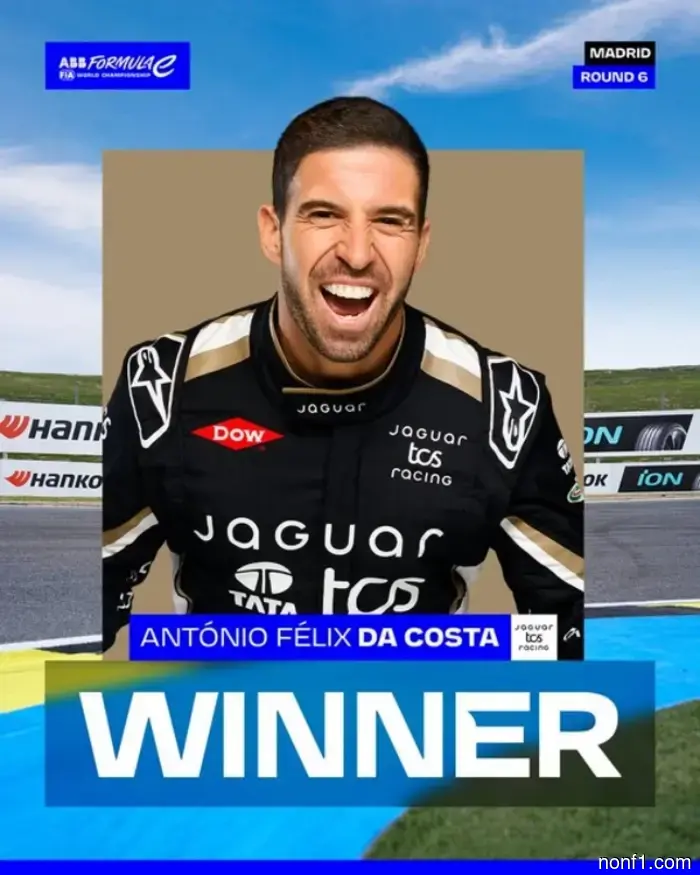 Formula E: Da Costa clinches second consecutive victory
Antonio Félix da Costa won the February race in Jeddah, and today he claimed victory in Madrid, with Mitch Evans finishing second, and the Jaguar team celebrates a winning double...
Formula E: Da Costa clinches second consecutive victory
Antonio Félix da Costa won the February race in Jeddah, and today he claimed victory in Madrid, with Mitch Evans finishing second, and the Jaguar team celebrates a winning double...
Screamer Review: A New Standard in Racing Game Artistry
Screamer is a hyper-stylized, narrative-driven, circuit-based arcade racer unlike anything you've experienced in a long time.