
Chevy Launched a Driving School Due to Concerns About Corvette Drivers Handling 400 HP.
James Tantillo/ReVision Auto Media
The latest car news and reviews, with no nonsense.
Our free daily newsletter delivers the essential stories directly to you every weekday.
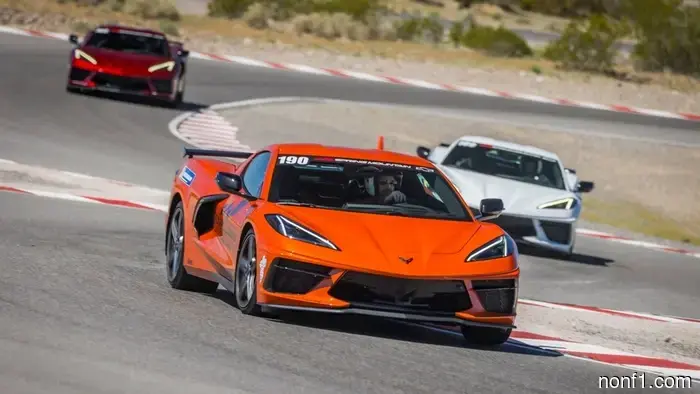
You’ve likely heard the saying: With great power comes great responsibility. When Ron Fellows established his performance driving school in 2008, it stemmed from the belief that 400 horsepower was quite a bit for average street-car drivers to manage. At the same time, Chevy, eager to create a buzz with its new C6 model following the much-publicized C5 Corvette Z06, was concerned about how it might appear if these vibrant performance vehicles started to frequently end up in accidents.
Looking back, this worry seems somewhat dated. In the following decade, horsepower numbers skyrocketed. Chevy’s Corvette ZR1 surpassed that 400-horsepower mark, boasting 638 horsepower, while 2009 marked the debut of the Nissan GT-R, which, with its “mere” 480 horsepower, went on to shatter almost every performance record for an “affordable” supercar. By 2013, the Ford Mustang Shelby GT500 was pushing out 662 horsepower and hitting speeds of 200 mph. It's intriguing to consider how the market might have evolved without the significant recession that began in the late 2000s.
What makes this progression even more astounding is how modest power outputs were in the late ’90s and early 2000s. The Dodge Viper, which made the Corvette seem tame, was over a decade ahead in the horsepower race and only broke the 450-hp barrier in 1996. While the ZR1 was available, Dodge offered that level of power without requiring owners to work their way up the ranks. The Viper’s V10 engine had the power, and its torque made the old LS1 V8 seem insignificant.
The excitement truly began around the turn of the millennium. The 2001 model year saw the return of the Corvette Z06, not just as an option package, but as a standalone model. The newly introduced LS6 engine initially produced 385 horsepower in the C5 Z06, eventually increasing to 405 horsepower, while the Cadillac CTS-V managed an even 400 horsepower. In 2005, Chevy made the 400-horsepower LS2 engine standard for the C6 Corvette, followed closely by the LS7-based Z06, which packed 505 horsepower.
For further perspective, consider that the C4 Corvette—just one generation prior to the 385-horsepower Z06—was launched in 1983 with a mere 205-horsepower 5.7-liter V8. Power gradually increased during the 1980s, but it wasn't until 1992 that the C4 reached the 300-horsepower LT1. This means the C5 debuted with 70% more power than the original C4. Even the exotic ZR1, which arrived in the 1990s, only managed 375 horsepower with its unique, British-influenced, DOHC V8.
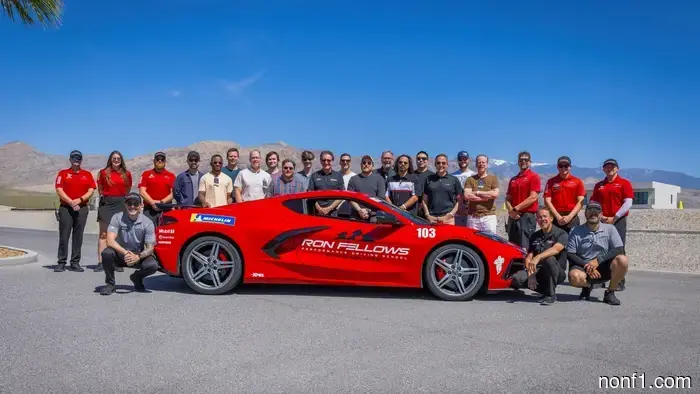
This context illustrates that 400 horsepower was indeed a significant number around 2005, which led Chevy to offer its owners a chance to understand that power in a safe environment, away from roadside hazards. This ultimately resulted in the creation of the Ron Fellows Performance Driving School.
Fellows has more victories behind the wheel of a Corvette than I can recount (including back-to-back class wins at Le Mans in 2001 and 2002), and he remains involved with the Corvette program today as a development consultant, allowing him to drive and provide feedback on the C8 in what essentially acts as a side gig. His job certainly sounds more exciting than mine.
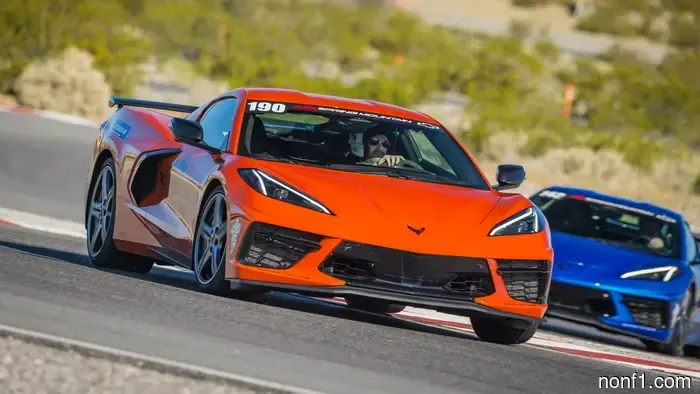
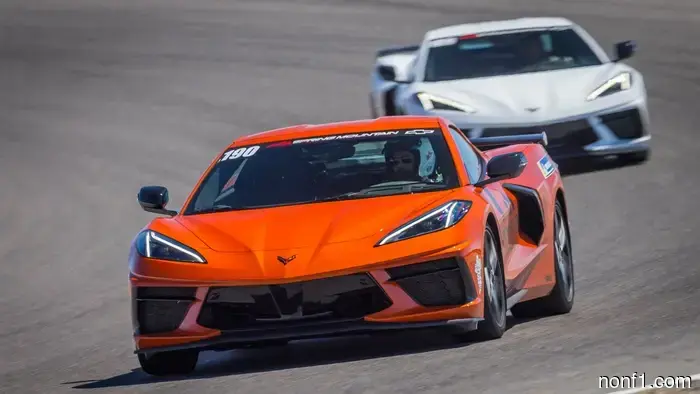
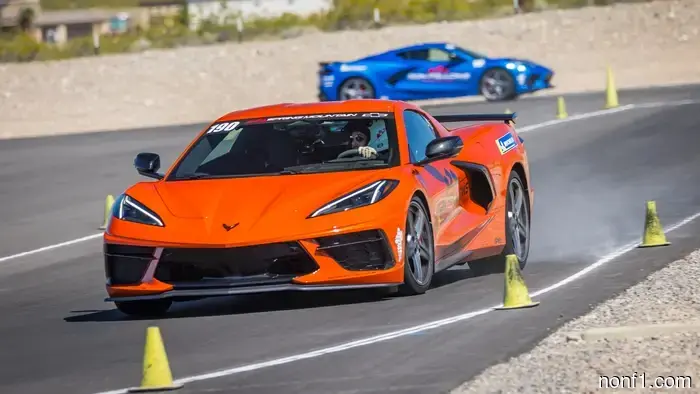
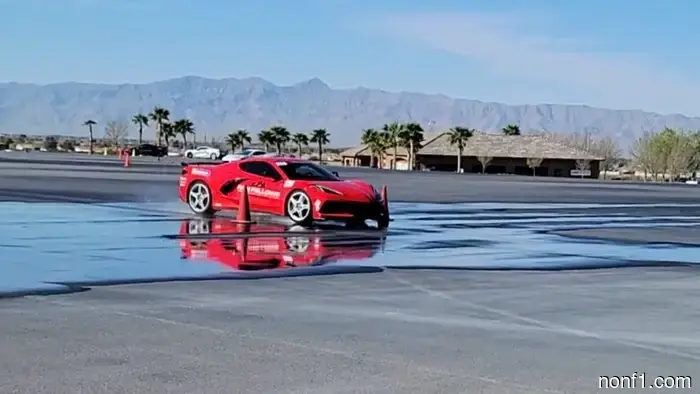
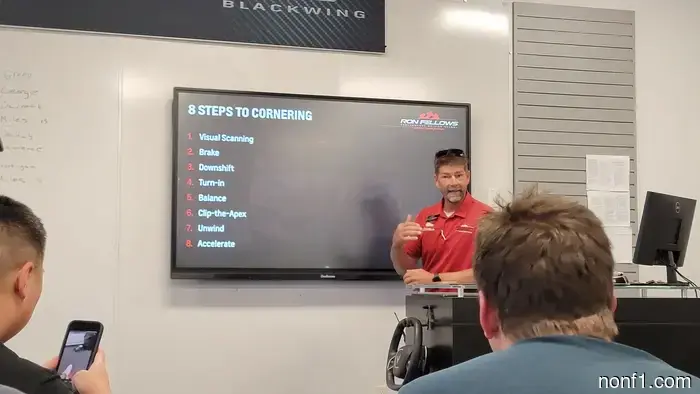
The basic Corvette owner program isn't strictly a racing school, but serves as an introduction to high-performance driving. Like most driving courses, a significant portion of the curriculum takes place in the classroom, where participants learn not only about the essential habits of fast drivers but also how to apply those lessons in daily life, covering everything from emergency lane-change techniques to fundamental maintenance and driver aid set-up. It’s as much an in-depth exploration of Corvette ownership as it is a hands-on track experience.
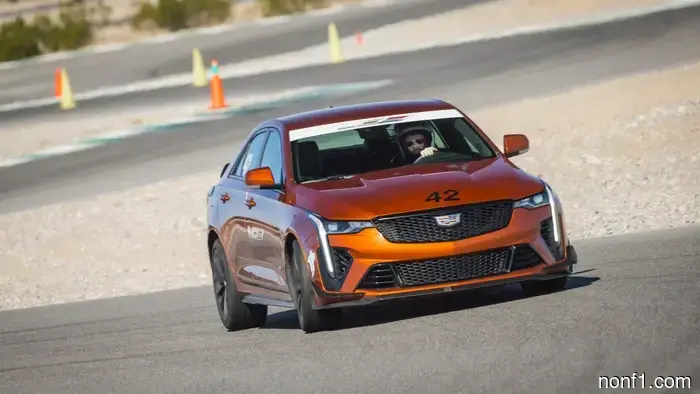
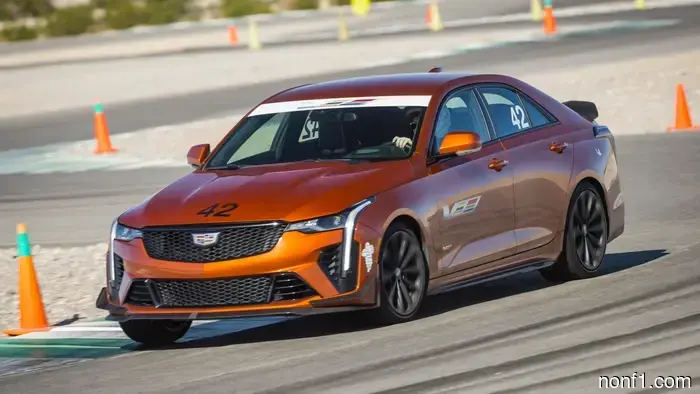
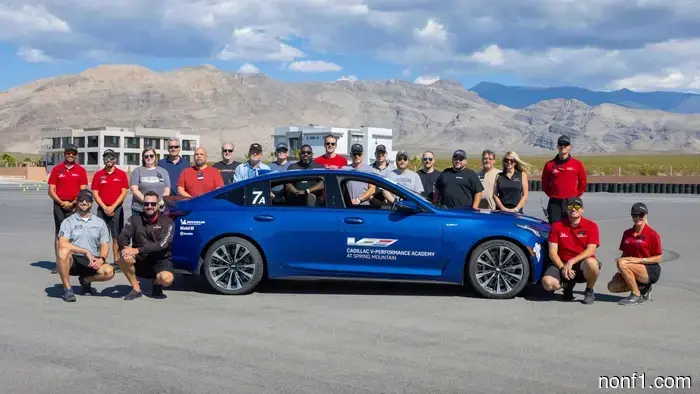
Chevy invited me to participate in a class in conjunction with the launch of the new LS6 V8 and the Corvette Grand Sport. This was a condensed version that omitted most of the car familiarization and some of the standard sessions typically included in the two-day owner program; I know this because I attended the complete version of the school a couple of years ago after purchasing my own CT4-V Blackwing. Cadillac’s V-Performance Academy mirrors the Ron Fellows experience exactly.
Since the launch of the Fellows school, Chevy’s apprehensions about giving regular drivers access to a 400-horsepower car have lessened (though the expression “screw it” may have been used), but the school remains. It’s heavily discounted from its usual lower four-figure price

Other articles
 Vin Diesel revealed the final installment of Fast & Furious before Universal gave their approval.
Cody Walker revealed that when Vin Diesel announced to fans last year that "Fast Forever" was in the works, the studio had not yet approved the film.
Vin Diesel revealed the final installment of Fast & Furious before Universal gave their approval.
Cody Walker revealed that when Vin Diesel announced to fans last year that "Fast Forever" was in the works, the studio had not yet approved the film.
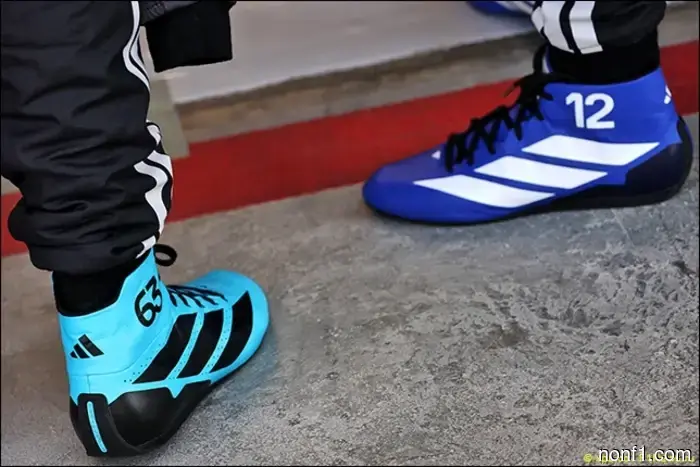 Adidas may become a major sponsor of Red Bull Racing.
For many years, Puma has been a partner and supplier for Formula 1 teams, but recently their competitors from Adidas have been expanding their influence.
Adidas may become a major sponsor of Red Bull Racing.
For many years, Puma has been a partner and supplier for Formula 1 teams, but recently their competitors from Adidas have been expanding their influence.
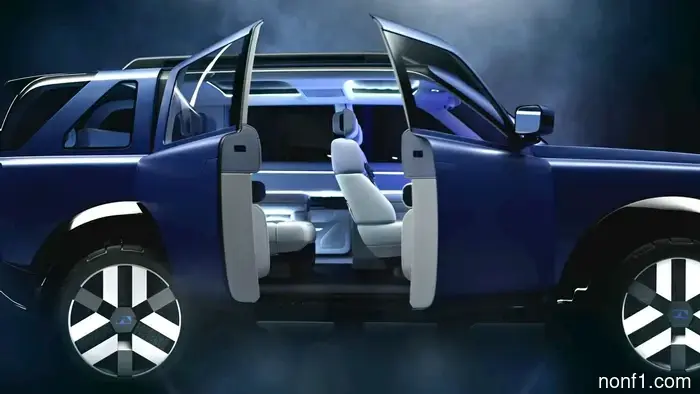 The Freelander SUV from Land Rover is set to make a comeback and it looks impressive.
The new Freelander combines '90s aesthetics with some very smart contemporary features—but what captivates us the most is the door design.
The Freelander SUV from Land Rover is set to make a comeback and it looks impressive.
The new Freelander combines '90s aesthetics with some very smart contemporary features—but what captivates us the most is the door design.
 Floating tracks – the future of Formula 1?
The old idea that the track could move from place to place is being discussed again by the management...
Floating tracks – the future of Formula 1?
The old idea that the track could move from place to place is being discussed again by the management...
 BMW, Senna, and More: The Drive x Blipshift Discontinued Merchandise Release Is Now in Phase 2
Every two weeks, we will unveil a new merchandise drop featuring some of the top Blipshift designs from the past ten years, along with a few new additions.
BMW, Senna, and More: The Drive x Blipshift Discontinued Merchandise Release Is Now in Phase 2
Every two weeks, we will unveil a new merchandise drop featuring some of the top Blipshift designs from the past ten years, along with a few new additions.
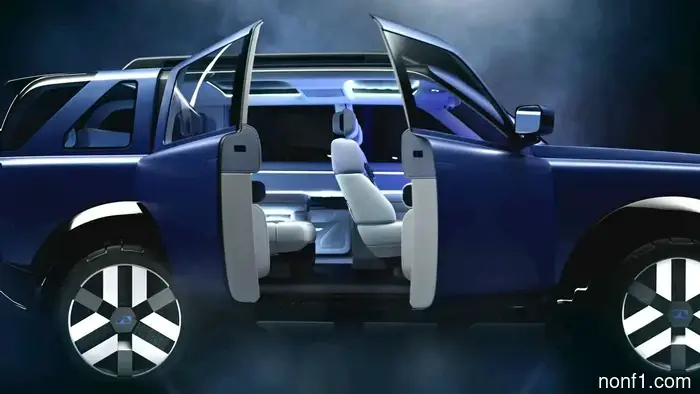 The Freelander SUV from Land Rover is making a return and it's looking impressive.
The new Freelander combines '90s aesthetics with some very smart contemporary features—but what captivates us the most is the door design.
The Freelander SUV from Land Rover is making a return and it's looking impressive.
The new Freelander combines '90s aesthetics with some very smart contemporary features—but what captivates us the most is the door design.
Chevy Launched a Driving School Due to Concerns About Corvette Drivers Handling 400 HP.
Vehicles have evolved significantly since the mid-2000s, yet the Ron Fellows Performance Driving School continues to thrive.