

Floating tracks – the future of Formula 1?
Given the complex political situation and the recent cancellation of two April stages, the old idea that the track could move from place to place is being discussed again by the management. Building new racetracks is an extremely expensive and troublesome endeavor, and not everywhere is there an opportunity to construct a permanent track, partly due to the high cost of land, so compromises are inevitable. This includes any street circuit – from the classic Monaco to the modern Jeddah.
Why not go further? – pondered a group of British engineers, who are clearly restless about the laurels of Hermann Tilke, the chief architect of Formula 1. If land is expensive, then water is immeasurably cheaper, as successfully demonstrated by the Red Bull Racing team, which places its multi-story motorhome Energy Station, famous for its gigantic size, on pontoons moored in the harbor of Monte Carlo among the luxurious yachts of local and visiting millionaires during the Monaco Grand Prix.
What if a whole track could be placed on pontoons? Yes, such a project would also require serious investments, but these costs would mainly be one-time: it is enough to build pontoons of the necessary size and load capacity once, after which they can be assembled in different parts of the planet.
Just think of the possibilities! For example, considering the interest in the American market, one could think about holding the Hawaiian Islands Grand Prix: just tow all this pontoon equipment there, moor it at any point convenient for spectators, a significant portion of whom can be accommodated on the shore, securely anchor it – and the venue is ready.
Certainly, when designing, everything must be carefully calculated and the configuration of the possible track thought through, but at the current level of engineering development, this does not seem to be an insurmountable problem. Among the possible drawbacks is the lack of elevation changes, but from the history of motorsport, we know that races were often held on airfield grounds, and this did not affect the level of interest or spectacle.
A floating track could be towed to the most popular tourist destinations on the planet – to the Canary Islands, to Bali, to the Maldives, and other exotic locations, which would contribute to the development of the hotel business and service infrastructure. Thus, the expansion of the geography of Formula 1 is achieved without mind-boggling costs.
The only factor that is always difficult to deal with is the weather. But if everything is well thought out and the race calendar is tied to the most favorable season, taking into account the wind rose and other meteorological nuances, its impact can be minimized as much as possible.
In developing the engineering part of this bold project, it is proposed to use global experience in the construction of drilling platforms. The opinions of drivers and teams regarding the construction of a track on pontoons are still unknown.
Other articles
 Personnel changes at Aston Martin
There have been personnel changes in the technical staff of the Aston Martin team.
Personnel changes at Aston Martin
There have been personnel changes in the technical staff of the Aston Martin team.
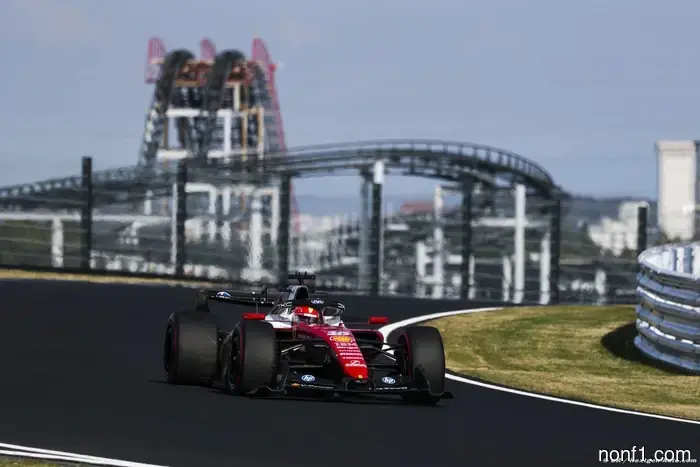 Ferrari plans to utilize the mini pre-season in April to prepare for a fresh start in Miami.
Formula 1 | Ferrari plans to use the unanticipated break in April as a mini pre-season to help bridge the gap to the dominant Mercedes. Following the Bahrain and (…)
Ferrari plans to utilize the mini pre-season in April to prepare for a fresh start in Miami.
Formula 1 | Ferrari plans to use the unanticipated break in April as a mini pre-season to help bridge the gap to the dominant Mercedes. Following the Bahrain and (…)
 Stella: McLaren needs to make up a few tenths.
Oscar Piastri finished second in Suzuka and brought McLaren their first podium in 2026. The team's championship leader Andrea Stella stated that the team needs to make up a few more tenths to regularly compete for victories.
Stella: McLaren needs to make up a few tenths.
Oscar Piastri finished second in Suzuka and brought McLaren their first podium in 2026. The team's championship leader Andrea Stella stated that the team needs to make up a few more tenths to regularly compete for victories.
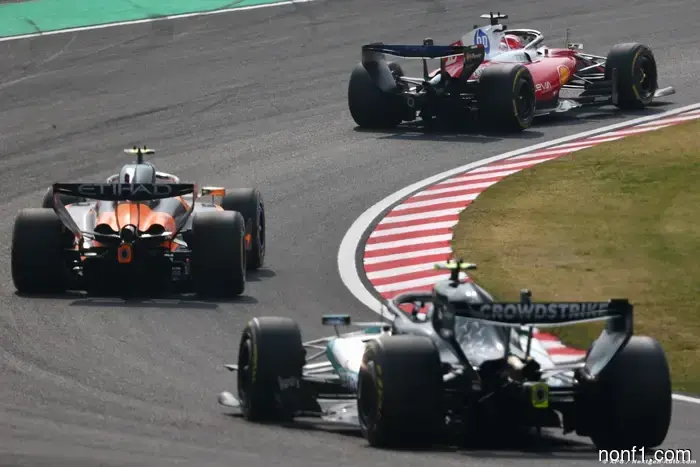 Mercedes and Ferrari plan to oppose the changes to the rules for 2026, despite facing criticism.
Formula 1 | Mercedes and Ferrari are anticipated to oppose significant alterations to the contentious 2026 regulations, even in the face of increasing backlash from drivers and others.
Mercedes and Ferrari plan to oppose the changes to the rules for 2026, despite facing criticism.
Formula 1 | Mercedes and Ferrari are anticipated to oppose significant alterations to the contentious 2026 regulations, even in the face of increasing backlash from drivers and others.
 The Freelander SUV from Land Rover is making a return and it's looking impressive.
The new Freelander combines '90s aesthetics with some very smart contemporary features—but what captivates us the most is the door design.
The Freelander SUV from Land Rover is making a return and it's looking impressive.
The new Freelander combines '90s aesthetics with some very smart contemporary features—but what captivates us the most is the door design.
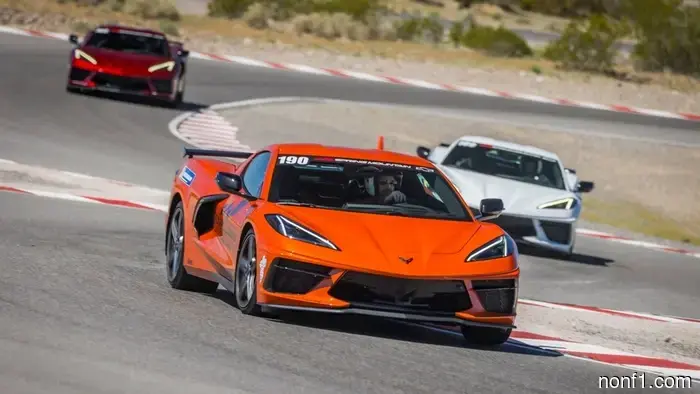 Chevy Launched a Driving School Due to Concerns About Corvette Drivers Handling 400 HP.
Vehicles have evolved significantly since the mid-2000s, yet the Ron Fellows Performance Driving School continues to thrive.
Chevy Launched a Driving School Due to Concerns About Corvette Drivers Handling 400 HP.
Vehicles have evolved significantly since the mid-2000s, yet the Ron Fellows Performance Driving School continues to thrive.
Floating tracks – the future of Formula 1?
The old idea that the track could move from place to place is being discussed again by the management...