
Dodge CEO Questions 'Is a Radio Necessary?' in Effort to Focus on Entry-Level Vehicles
Stellantis
The most significant automotive news and reviews, straightforward and honest.
Dodge is working to pinpoint its role as its main sales vehicle disappears and V8 engines make a surprising return. The Durango has significantly compensated for sales losses. However, the accessible and affordable performance that once defined the brand is becoming less prominent. CEO Matt McAlear suggests that this could change with a “back-to-basics” strategy.
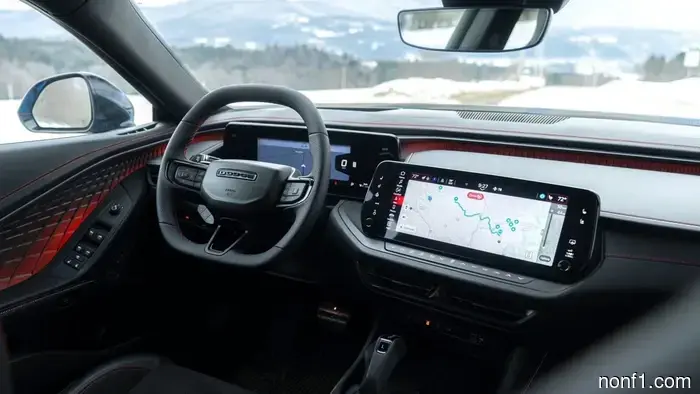
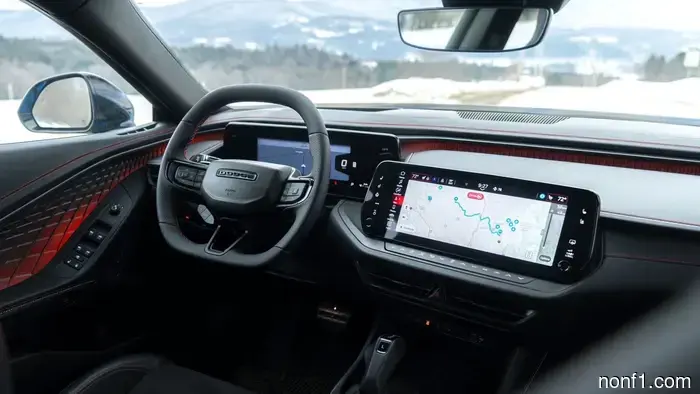
“I believe the key thing we need to start doing is challenging the industry's expectations for an entry-level base vehicle,” McAlear told The Drive’s Joel Feder at the 2026 New York Auto Show. “And I’m not referring to cheap or lesser quality—I’m talking about a ‘back-to-the-basics’ approach. Analog gauges. Is a radio necessary? Would just having Bluetooth-connected speakers suffice?”
“We need to move forward and perhaps make people a bit uncomfortable by offering them something they didn’t realize they wanted,” the CEO added. “I think broadly across the industry, it’s time to evolve—especially in many mainstream segments. But when it comes to brands like Dodge, we have the potential to completely disrupt a segment and introduce something unexpected. We’ve accomplished it in the past, like with the original Viper.”
This conceptual reevaluation of what is essential in a modern vehicle is underway, but at this moment, Dodge is not leading the charge—at least not yet. The forthcoming Slate electric truck aims to reshape customers' expectations of comfort, as the base model will lack a radio and power windows, though it will include a space for a Bluetooth speaker.
Simultaneously, automakers must navigate regulatory requirements. For instance, backup cameras are now common. Two years ago, the National Highway Traffic Safety Administration enacted a rule mandating automatic emergency braking in new vehicles.
While analog gauges might be seen as a low-tech and cost-effective option, many automakers opt for screens instead since they are less expensive than physical components and buttons. Moreover, regulations stipulate at least one in-car screen for mandatory backup camera displays.
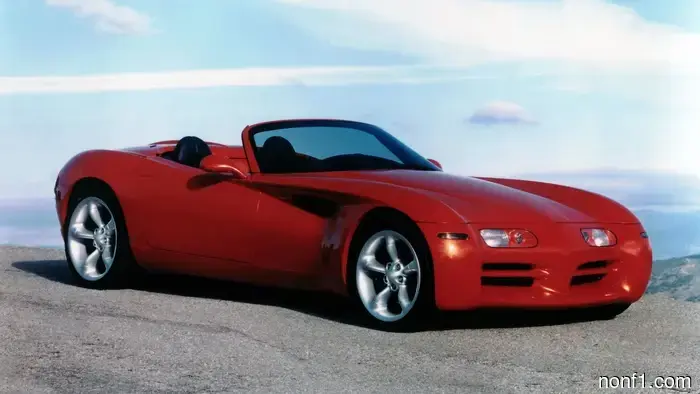
Dodge has had several promising ideas for an entry-level Viper over the years, such as the Copperhead, but those remained merely concepts.
Regarding affordability, unpredictability, and the Viper, it’s worth noting that Dodge has toyed with the idea of an entry-level sports car for decades, but has never fully committed. Sure, there was the enthusiastic Neon SRT-4, and at one point, it seemed like the brand would attempt to recapture that energy with a GLH-badged Hornet. Before that, concepts like the Copperhead—a lightweight, rear-wheel-drive roadster designed for handling, featuring a truly unique design—were proposed but never realized.
The Copperhead should have been produced. Now, 30 years later, Dodge’s emphasis is more on power than on pure enjoyment, but that doesn’t have to be the case. I would even consider one without a radio.
Have a tip? Contact tips@thedrive.com
Other articles
 Artiga, Jacama, Avatar? Check Out the Names That Acura Discarded.
James Cameron ought to appreciate that Honda provided the luxury brand's name with another opportunity for refinement.
Artiga, Jacama, Avatar? Check Out the Names That Acura Discarded.
James Cameron ought to appreciate that Honda provided the luxury brand's name with another opportunity for refinement.
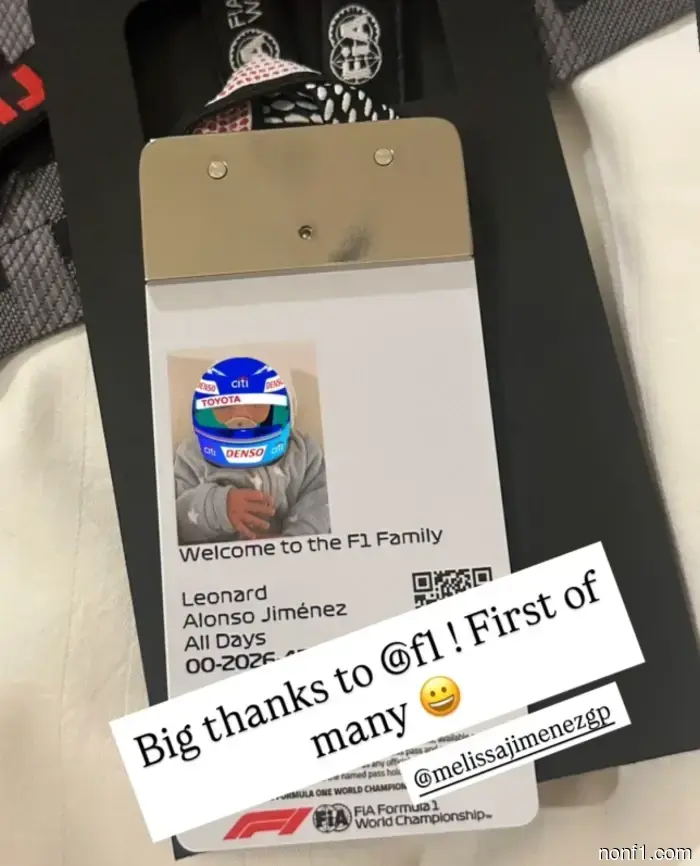 Alonso's son is not named as the press hastily announced.
Last week, several Spanish television channels rushed to announce that Fernando Alonso's newborn son is named... Fernando Alonso. But it turned out that this is not true...
Alonso's son is not named as the press hastily announced.
Last week, several Spanish television channels rushed to announce that Fernando Alonso's newborn son is named... Fernando Alonso. But it turned out that this is not true...
 Gina Schumacher shares insights about her father in a rare new documentary.
Formula 1 | A unique and heartfelt glimpse into Michael Schumacher's life has been revealed, as his daughter Gina-Maria shares openly in a new documentary (...)
Gina Schumacher shares insights about her father in a rare new documentary.
Formula 1 | A unique and heartfelt glimpse into Michael Schumacher's life has been revealed, as his daughter Gina-Maria shares openly in a new documentary (...)
 Artiga, Jacama, Avatar? Check Out the Names Acura Considered and Discarded.
James Cameron ought to be thankful that Honda provided the luxury brand's name with another opportunity for refinement.
Artiga, Jacama, Avatar? Check Out the Names Acura Considered and Discarded.
James Cameron ought to be thankful that Honda provided the luxury brand's name with another opportunity for refinement.
 Gina Schumacher shares her thoughts on her father in a rare new documentary.
Formula 1 | An uncommon and heartfelt glimpse into Michael Schumacher's life has surfaced, as his daughter Gina-Maria shares openly in a recent documentary (…)
Gina Schumacher shares her thoughts on her father in a rare new documentary.
Formula 1 | An uncommon and heartfelt glimpse into Michael Schumacher's life has surfaced, as his daughter Gina-Maria shares openly in a recent documentary (…)
 Ferrari is intensively working on the modernization of the SF-26.
The unplanned April break in the championship is being used by the teams to summarize the first results, and based on this, they are modernizing their cars. This is also being handled by Ferrari...
Ferrari is intensively working on the modernization of the SF-26.
The unplanned April break in the championship is being used by the teams to summarize the first results, and based on this, they are modernizing their cars. This is also being handled by Ferrari...
Dodge CEO Questions 'Is a Radio Necessary?' in Effort to Focus on Entry-Level Vehicles
Dodge CEO Matt McAlear emphasized a "back-to-basics" strategy in automotive production, encouraging individuals to consider what features they actually require from affordable vehicles.