
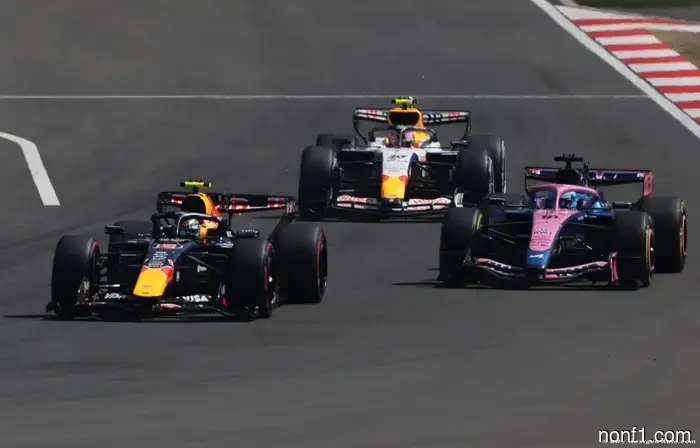
F1 needs to address 'flawed' regulations as engines return.
"In principle, having a 50-50 power distribution seems appealing."
Former Red Bull advisor Dr. Helmut Marko argues that Formula 1 urgently needs to address what he refers to as the "imperfect" regulations of 2026, as the sport begins reverting to traditional engine concepts. In an interview with ORF during ongoing crisis discussions in April, Marko stated that the current regulations were developed under assumptions that are now outdated regarding future mobility.
"Certain aspects were overlooked during the formation of these regulations, but we must remember that they were created at a time when it was believed that electric vehicles were the only route forward," he explained. "However, the landscape has shifted considerably; internal combustion engines are experiencing a resurgence due to new fuels that produce no CO2, rendering them environmentally friendly."
While the long-term vision may be changing, Marko emphasizes that the immediate focus must be on rectifying the current regulations. "Right now, all efforts should be directed toward addressing, what I would call, the deficiencies of these flawed regulations," he commented.
"In theory, a balanced 50-50 power distribution between the electric powertrain and the internal combustion engine sounds ideal. But in practice, this system proves ineffective since the battery requires charging, and there aren't sufficient charging stations at the tracks." He also highlighted safety issues stemming from recent events. "The speed disparity reached 50kph," he noted. "It felt as if the car was stationary—situations like that need to be avoided."
Marko added that the current focus on energy management clashes fundamentally with the essence of Formula 1. "I believe Lewis Hamilton is correct when he says that the one who manages energy most effectively will have the upper hand. However, that notion is quite distant from Formula 1, where the fastest driver in the best or quickest car should prevail."
"In Formula 1, the outcome shouldn’t depend solely on engineers who have optimized their software better than their competitors. It shouldn't operate like this—overtaking should occur because one driver has a charged battery while another has a depleted one. Those aren't genuine overtakes; they are merely passes. That's not right."
Nonetheless, not everyone is as worried. 2016 world champion Nico Rosberg expressed to Bloomberg that he understands why the spectacle might seem odd but prefers to withhold his critique. "I can see why this might look strange to many viewers at home. From their viewpoint, a driver should be pushing full throttle at that moment. After all, these cars are meant to be the fastest in the world," he remarked. "As for me, I'm quite relaxed about it—as long as we witness great battles between the drivers. That's what matters most to me."
Other articles
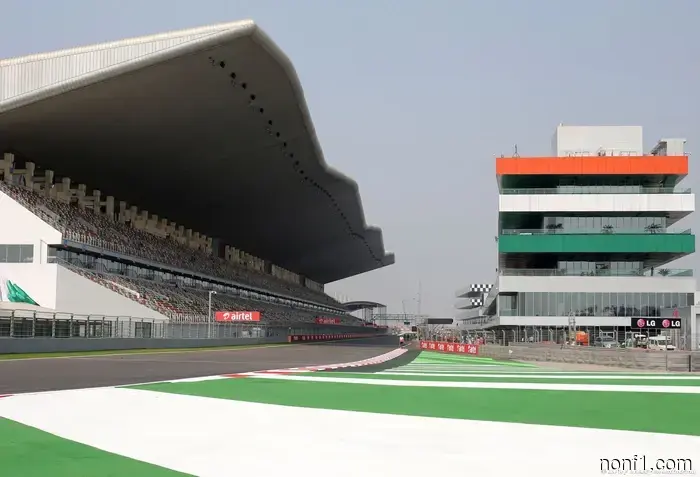 F1 source dismisses claims about a 2027 return to India.
Formula 1 | A source from Formula 1 has rejected assertions that the sport will make a comeback in India by 2027, despite renewed hope from government representatives. (…)
F1 source dismisses claims about a 2027 return to India.
Formula 1 | A source from Formula 1 has rejected assertions that the sport will make a comeback in India by 2027, despite renewed hope from government representatives. (…)
 F1 source dismisses the claim of a return to India in 2027.
Formula 1 | A source within Formula 1 has rejected assertions that the sport will make a comeback in India as soon as 2027, despite renewed optimism from government representatives. (…)
F1 source dismisses the claim of a return to India in 2027.
Formula 1 | A source within Formula 1 has rejected assertions that the sport will make a comeback in India as soon as 2027, despite renewed optimism from government representatives. (…)
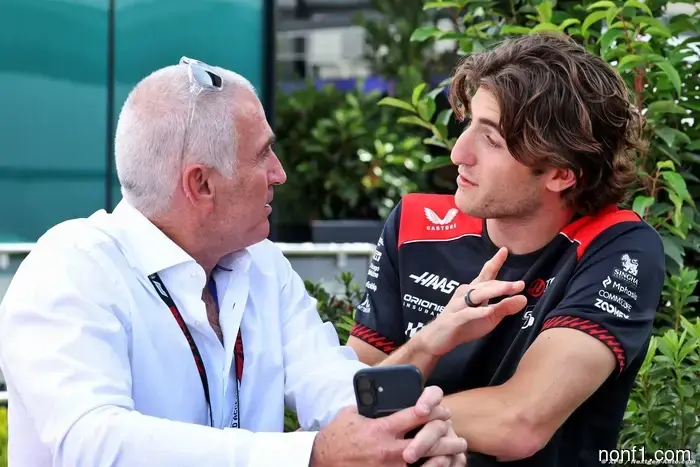 Mick Doohan criticizes Alpine regarding his son Jack's departure from F1.
Formula 1 | MotoGP icon Mick Doohan has expressed his disappointment with Alpine regarding the way his son Jack's Formula 1 career has deteriorated, deeming the circumstances unjust. (…)
Mick Doohan criticizes Alpine regarding his son Jack's departure from F1.
Formula 1 | MotoGP icon Mick Doohan has expressed his disappointment with Alpine regarding the way his son Jack's Formula 1 career has deteriorated, deeming the circumstances unjust. (…)
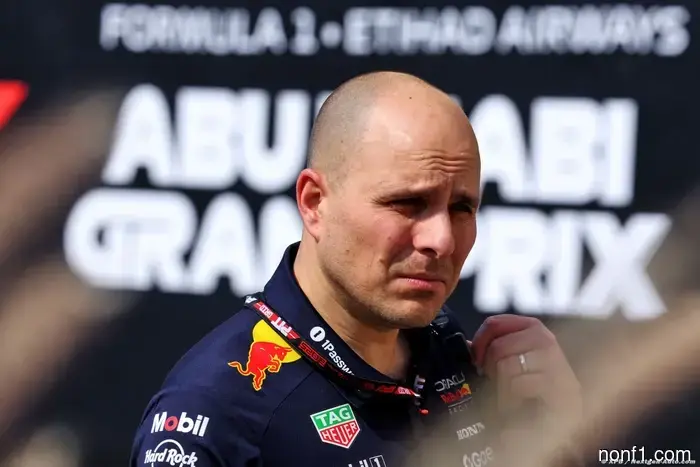 Lambiase had the Aston option while discussions regarding Verstappen's future were ongoing.
Formula 1 | Christijan Albers has announced that Aston Martin was one of several teams pursuing Gianpiero Lambiase, highlighting the high demand for Max (...)
Lambiase had the Aston option while discussions regarding Verstappen's future were ongoing.
Formula 1 | Christijan Albers has announced that Aston Martin was one of several teams pursuing Gianpiero Lambiase, highlighting the high demand for Max (...)
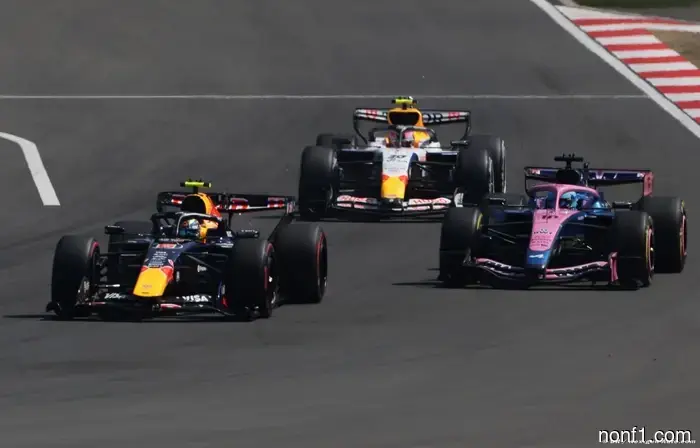 F1 needs to address 'flawed' regulations as engines return.
Formula 1 | Former Red Bull advisor Dr. Helmut Marko states that the sport needs to urgently address what he refers to as the flawed 2026 regulations, as it begins to transition (…)
F1 needs to address 'flawed' regulations as engines return.
Formula 1 | Former Red Bull advisor Dr. Helmut Marko states that the sport needs to urgently address what he refers to as the flawed 2026 regulations, as it begins to transition (…)
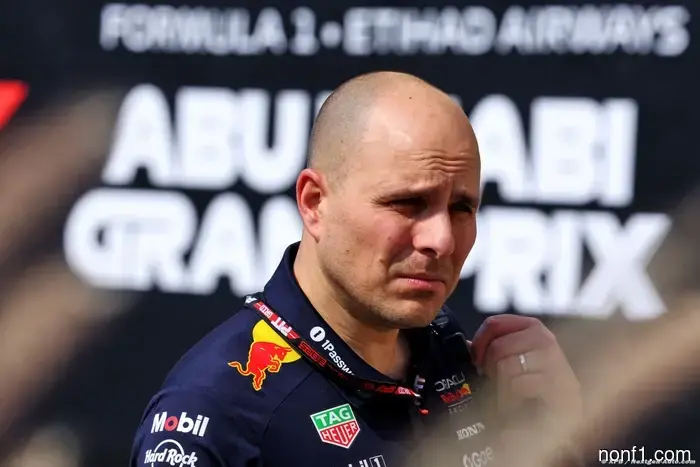 Lambiase had the Aston option while discussions about Verstappen's future took place.
Formula 1 | Christijan Albers has disclosed that Aston Martin was one of multiple teams pursuing Gianpiero Lambiase, highlighting the high demand for Max (…)
Lambiase had the Aston option while discussions about Verstappen's future took place.
Formula 1 | Christijan Albers has disclosed that Aston Martin was one of multiple teams pursuing Gianpiero Lambiase, highlighting the high demand for Max (…)
F1 needs to address 'flawed' regulations as engines return.
Formula 1 | Ex-Red Bull advisor Dr. Helmut Marko emphasizes that the 2026 regulations, which he describes as flawed, need urgent attention as the sport starts to transition (…)