
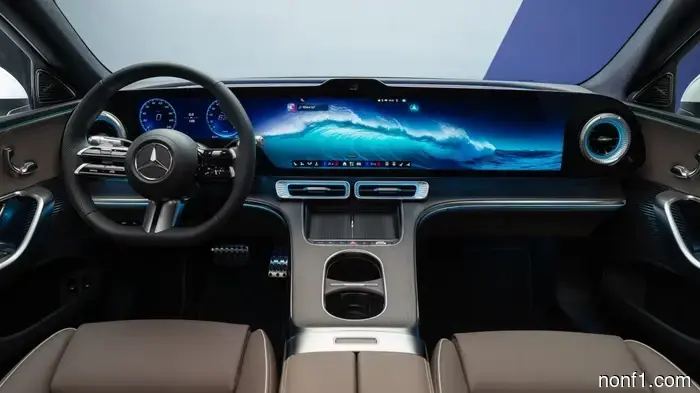
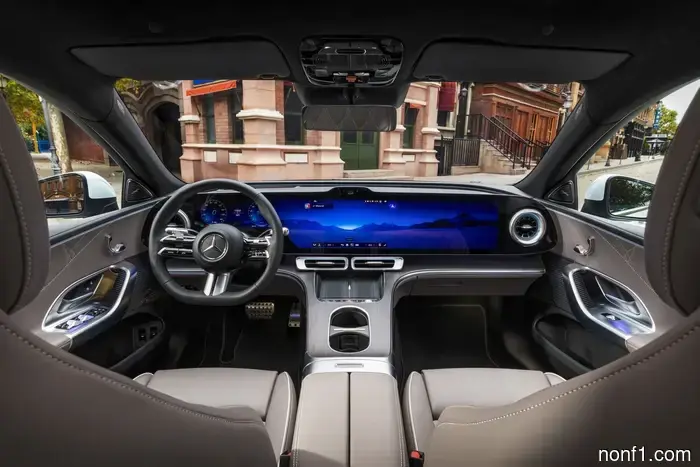
The full dashboard display of the Mercedes C-Class electric vehicle boasts an elegance that is reminiscent of a Dave & Buster's.
Mercedes-Benz
The latest updates and reviews in the automotive world, straight to the point
Subscribe to our free daily newsletter to receive the most important stories delivered to your inbox every weekday.
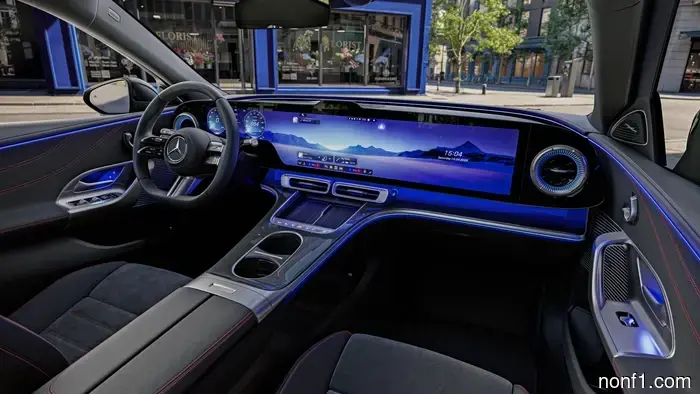
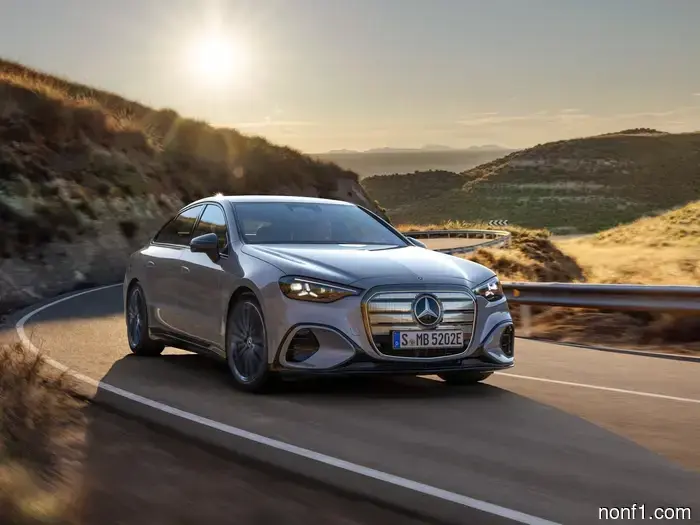
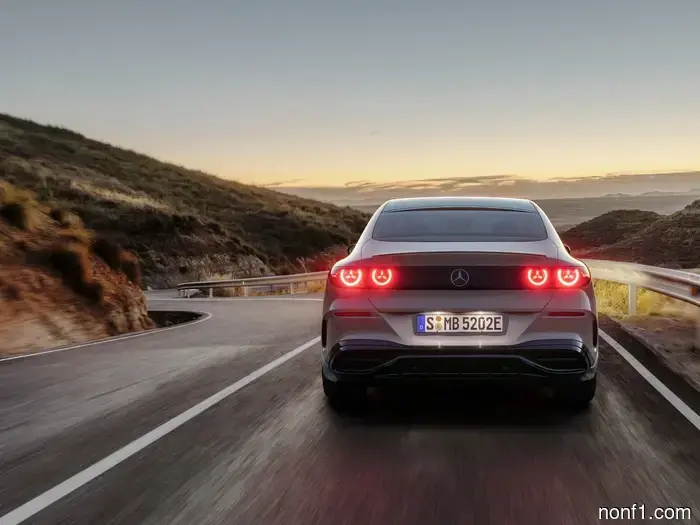
This week saw the release of the new electric Mercedes-Benz C-Class, which features a design infused with more character compared to the recent EV models from the brand. While it still retains a shape reminiscent of melted soap, the front grille and taillights hold more visual interest. Inside the cabin, there are appealing details, although most passengers will likely be oblivious to them due to the overwhelming 39.1-inch display dominating their field of vision.
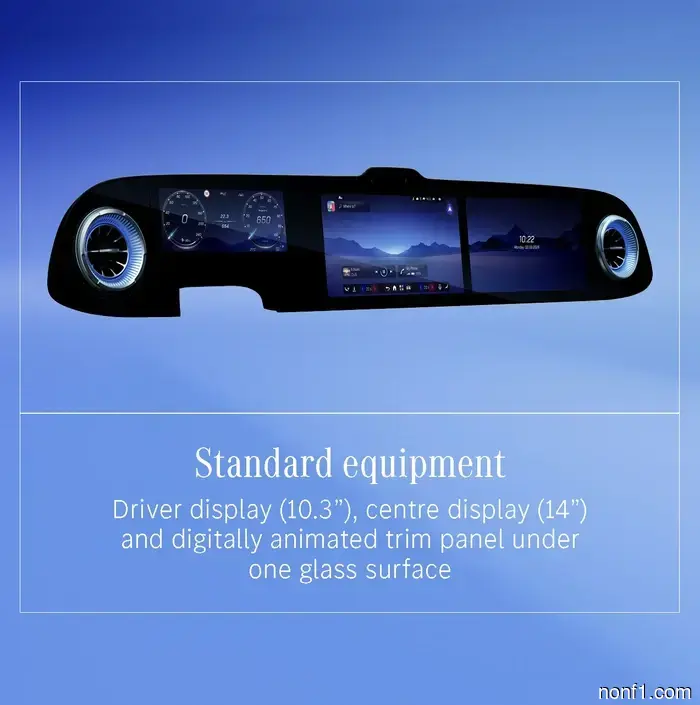
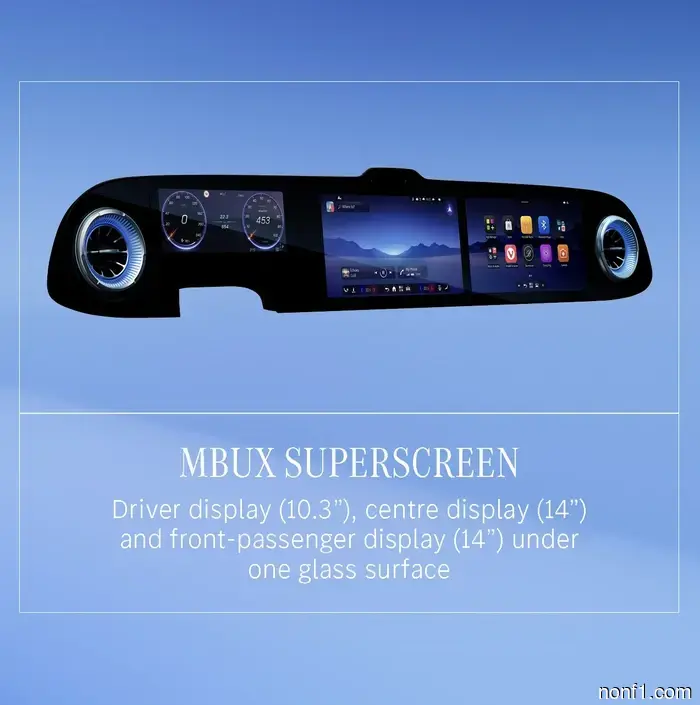
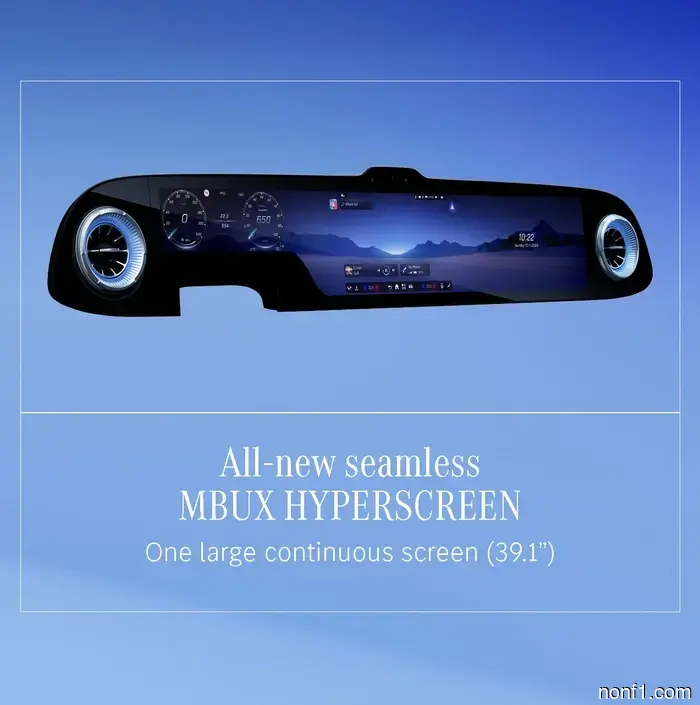
Our correspondent Joel Feder attended the debut of the C400 4Matic Electric and reported that the interior "is almost identical to that of the electric GLC-Class.” The expansive 39.1-inch Hyperscreen is an optional upgrade. Otherwise, you’ll be navigating the inferior “Superscreen” setup, which includes three individual screens under a single piece of glass that covers a 10.25-inch digital gauge cluster, a 14-inch touchscreen for infotainment, and another 14-inch passenger touchscreen.
Please do not take this personally if you were involved in the creation of these vehicles—I recognize that considerable effort went into developing the Hyperscreen. However, as a critic, I must express that this design concept is one of the least appealing I can envision.
Distraction-free driving has become a thing of the past! Mercedes-Benz
There’s a lack of finesse, elegance, and vibrancy in this overly saturated digital display that drivers must look over to view the road. These are characteristics that cannot be captured through visual renderings. In fact, the more colors and animations are integrated into these screens, the less they evoke luxury and the more they resemble cheap toys.
It’s not surprising that Mercedes and other car manufacturers are heading in this direction. A screen-based interface is significantly cheaper and easier to produce compared to a tactile one. Software-defined vehicles offer easier tracking and data extraction than traditional mechanical vehicles. Additionally, there are numerous ongoing revenue possibilities through updates, apps, and additional content. Plus, many consumers are indifferent to cars but enamored with their phones. As a result, it’s only natural for car companies to strive to make driving experience feel more like scrolling through a feed.
Unfortunately, this trend is detrimental for us:
We traded elegant wood grain, chrome finishes, and high-quality materials for… a massive image of a wave.
The seats, steering wheel, and door handles in the C400 are quite stylish, but they are overshadowed by the gaudy aesthetic of the sensory-overloading Hyperscreen.
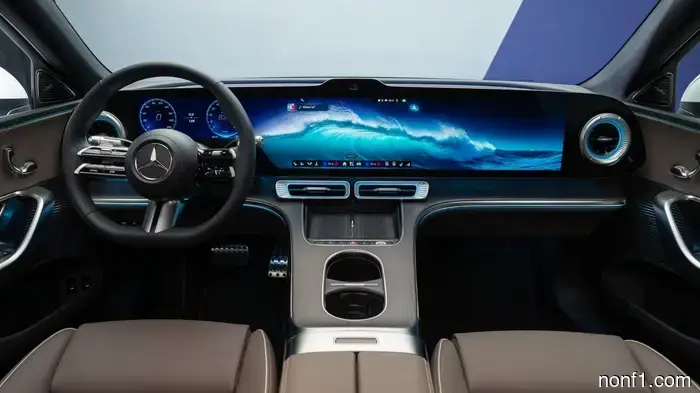
Having driven 40 to 60 new cars annually, I’ve observed that many feature large screens, and they all share the same issue: a significant portion of the screen displays nothing but illuminated empty space. The images from Mercedes’ press release show that the Hyperscreen falls into this category. Take a look at all the blank screen areas being showcased here. While there might be some utility in a 39.1-inch control panel, this design fails to deliver; it's just large for the sake of being large.
It’s genuinely an attractive vehicle, until you sit behind the dashboard.
Passenger screens are particularly egregious when it comes to impractical concepts. Why would I want to struggle with a car's limited operating system while dealing with seat belts and road bumps when I could simply use the personal device (my phone) that I have in hand most of the time?
I realize we may be venturing into a "grumpy old man" territory here. However, it is my duty to critique, and I intend to advocate for a shift away from the race to see which manufacturers can best distract their own drivers. Automotive user interfaces reached their peak about a decade ago— with three-dimensional gauge clusters, phone projection interfaces almost double the size of smartphones, and physical buttons for all vehicle functions. That’s the direction we should aim to return to.
Have a tip? Reach out to us at tips@thedrive.com.
Other articles
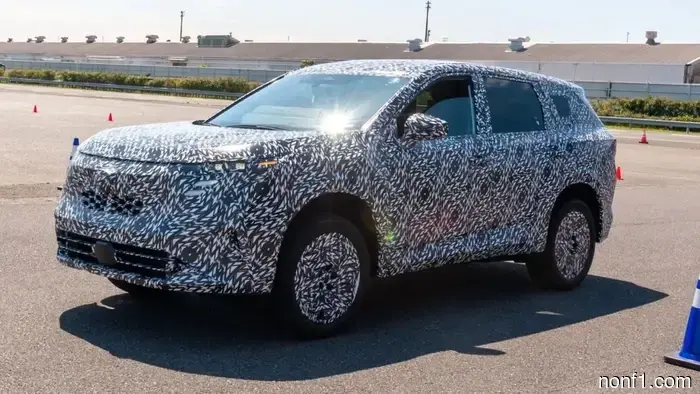 2027 Nissan Rogue Hybrid Prototype Evaluation: Nissan is Now in Action
Nissan aims to revamp its image with a more sophisticated and advanced hybrid Rogue that will compete strongly against its rivals.
2027 Nissan Rogue Hybrid Prototype Evaluation: Nissan is Now in Action
Nissan aims to revamp its image with a more sophisticated and advanced hybrid Rogue that will compete strongly against its rivals.
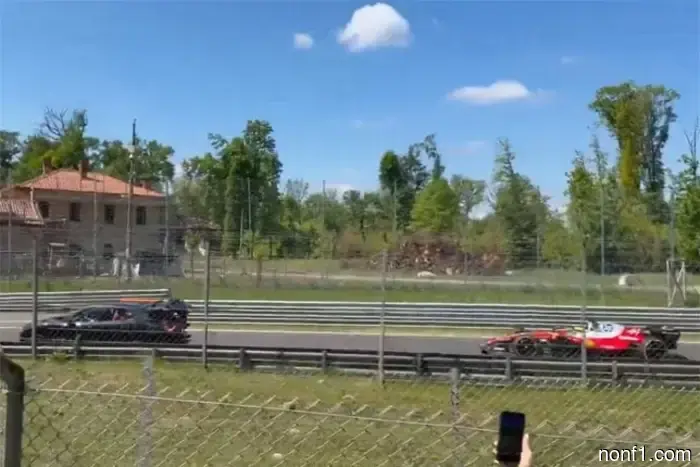 Leclerc and Hamilton finished the filming day in Monza.
On Wednesday, Ferrari held its second filming day of the year at Monza with Charles Leclerc and Lewis Hamilton.
Leclerc and Hamilton finished the filming day in Monza.
On Wednesday, Ferrari held its second filming day of the year at Monza with Charles Leclerc and Lewis Hamilton.
 Leclerc and Hamilton finished the filming day in Monza.
On Wednesday, Ferrari held its second filming day of the year at Monza with Charles Leclerc and Lewis Hamilton.
Leclerc and Hamilton finished the filming day in Monza.
On Wednesday, Ferrari held its second filming day of the year at Monza with Charles Leclerc and Lewis Hamilton.
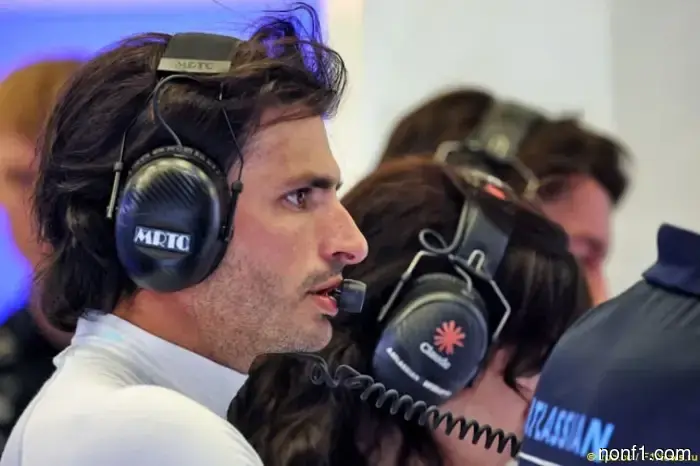 Steiner: Sainz must be ready for a team change.
Former Haas team principal Günther Steiner believes that Carlos Sainz needs to consider leaving Williams and be ready to move to one of the leading Formula 1 teams if a vacancy arises.
Steiner: Sainz must be ready for a team change.
Former Haas team principal Günther Steiner believes that Carlos Sainz needs to consider leaving Williams and be ready to move to one of the leading Formula 1 teams if a vacancy arises.
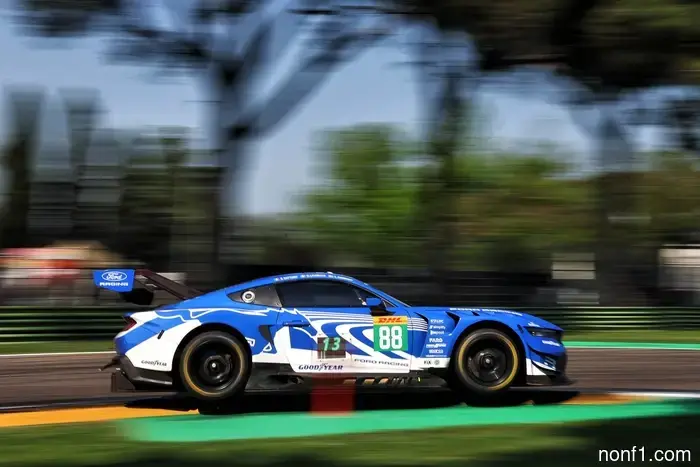 Sargeant feeling 'jaded' following F1 departure as he makes a comeback in WEC
Formula 1 | Logan Sargeant, a former Formula 1 driver, has stated that he grew disenchanted with the sport prior to his departure. The American, who is now 25 years old, lost his position at Williams (…)
Sargeant feeling 'jaded' following F1 departure as he makes a comeback in WEC
Formula 1 | Logan Sargeant, a former Formula 1 driver, has stated that he grew disenchanted with the sport prior to his departure. The American, who is now 25 years old, lost his position at Williams (…)
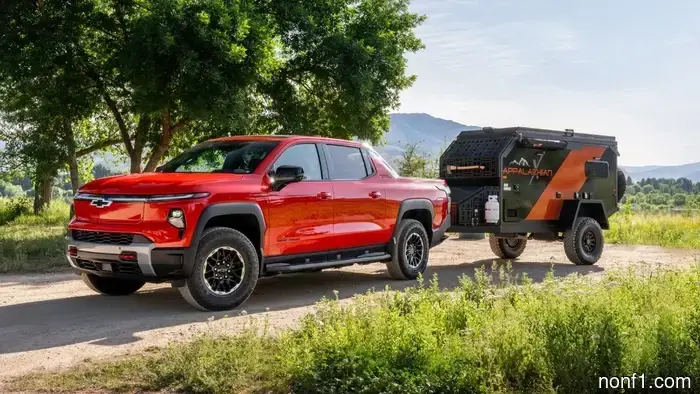 GM Postpones Overhaul of Full-Size Electric Trucks and SUVs: Report
GM has halted the production of new versions of the Chevy Silverado EV, GMC Sierra EV, GMC Hummer EV, and Cadillac Escalade IQ.
GM Postpones Overhaul of Full-Size Electric Trucks and SUVs: Report
GM has halted the production of new versions of the Chevy Silverado EV, GMC Sierra EV, GMC Hummer EV, and Cadillac Escalade IQ.
The full dashboard display of the Mercedes C-Class electric vehicle boasts an elegance that is reminiscent of a Dave & Buster's.
Mercedes appears dedicated to a sensory-overload approach in its interior design with features like the "Hyperscreen" and "Superscreen." My suggestion is: Please reconsider this direction.