
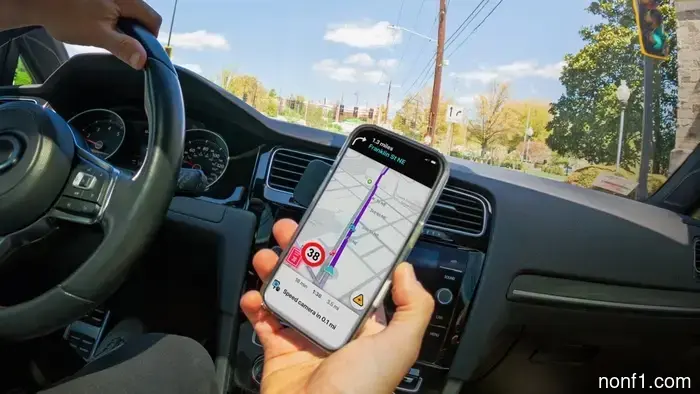
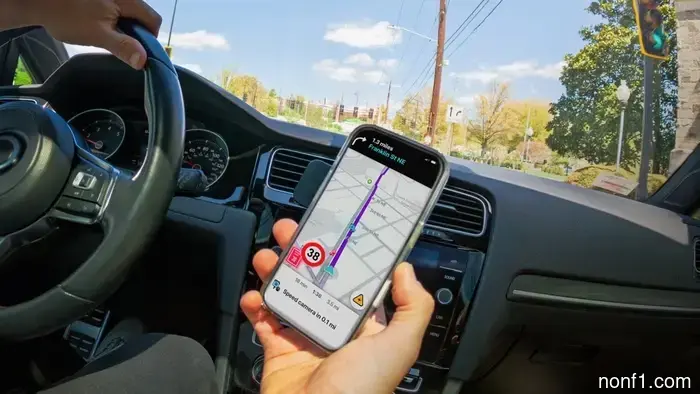
According to IIHS, drivers are more likely to use their phones while speeding.
IIHS
The latest automotive news and reviews, no nonsense.
Our free daily newsletter delivers the most important stories directly to you every weekday.
Speeding and using phones while driving are both common and hazardous. Even though drivers are aware of the rules and potential repercussions, they still frequently engage in these behaviors, often simultaneously, according to a recent study by the Insurance Institute for Highway Safety (IIHS).
“Previously, safety experts thought that drivers primarily used their cellphones when traveling at lower speeds,” stated IIHS president David Harkey in a press release accompanying the study. “However, data from insurance companies’ safe-driving applications indicate that, in smooth traffic conditions, this assumption is incorrect.”
These insurance applications, which offer savings for drivers who sign up and demonstrate what the insurer considers safe driving practices, provided “more detailed insights into driver behavior” than what was previously available, according to the IIHS, which is supported by the insurance sector. The apps utilize phone sensors and GPS to monitor speed, hard acceleration and braking, as well as location and time of day. Phone usage was determined based on “significant rotation” detected by the phone’s gyroscope while the screen was active, while speeding was assessed by correlating GPS data with a speed-limit database.
Getty Images
Researchers examined nearly 600,000 trips taken between July and October 2024 across all U.S. states except Alaska, California, Hawaii, and New York. Only trips lasting a minimum of 18 minutes (including at least two minutes on an interstate highway) were included. Since the research focused on behavior in free-flowing traffic, times spent driving 5 mph or more below the posted limit were excluded.
Using this dataset and approach, researchers discovered that phone usage increased by 12% for every 5 mph drivers exceeded the speed limit on limited-access highways. On other roads, phone usage increased by a smaller margin of 3% for each 5 mph over the limit, likely due to drivers needing to perform more actions at traffic lights, intersections, and stop signs on those roads, as noted by the IIHS.
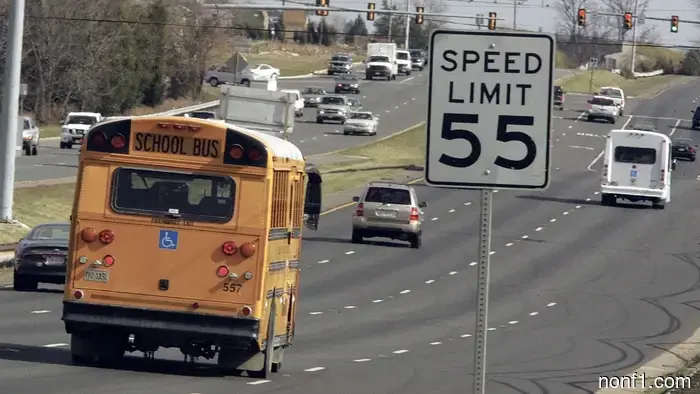
In the analyzed trips, drivers were also more inclined to use their phones on roads with higher speed limits. On limited-access highways with a 70-mph limit, researchers observed a 9% greater rise in phone usage for every 5 mph over the limit than on comparable roads with a 55-mph limit. On other roads, the increase in phone usage was 3% greater (again, per 5 mph over the posted limit) on roads with speed limits of 45-50 mph compared to those with limits between 25 and 30 mph, and 7% higher on roads with a 55-mph limit.
Ricky Carioti/The Washington Post via Getty Images
Several potential factors might influence these findings, according to the IIHS. Drivers who engage in more risky behaviors may not differentiate between different types of risky activities. Stress, which previous research has linked to increased phone usage and speeding, might also play a role. Furthermore, drivers might perceive lighter traffic and the simpler conditions found on higher-speed, limited-access roads (fewer pedestrians and no stoplights) as conducive to reaching for their phones. It's also important to note that while many modern vehicles come equipped with smartphone integration features like Apple CarPlay and Android Auto, this does not guarantee that drivers are using them.
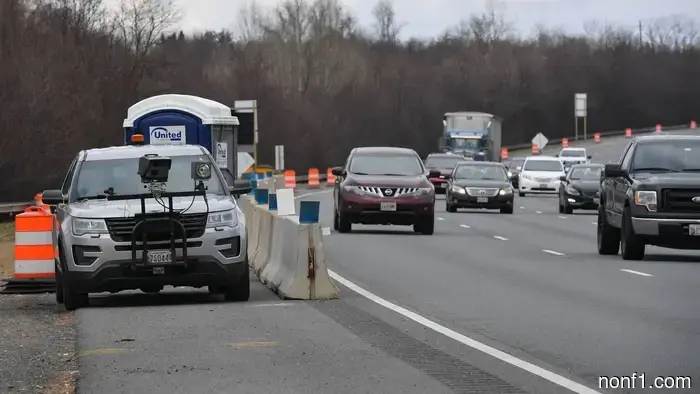
To tackle this issue, the IIHS suggests combining anti-speeding initiatives with warnings about distracted driving to address the connection between the two. However, while speed cameras can be an effective (albeit controversial) means of combating speeding, enforcing rules against phone usage becomes even more challenging on highways, where it is difficult for law enforcement to observe drivers and monitor phone use. Moreover, the insurance-industry apps designed to promote safer driving and lower premiums do not appear to have an impact based on the very dataset that was utilized for this study.
Other articles
 Lindblad: We understood that the race would be challenging.
The Racing Bulls drivers did not earn points in Miami – neither in the Saturday sprint nor in the Sunday race…
Lindblad: We understood that the race would be challenging.
The Racing Bulls drivers did not earn points in Miami – neither in the Saturday sprint nor in the Sunday race…
 Sergio Perez: I enjoyed the battle on the track.
At the home stage in Miami, Cadillac's best result was Sergio Perez's sixteenth place. The Mexican driver is pleased that he was able to compete with his rivals throughout the race.
Sergio Perez: I enjoyed the battle on the track.
At the home stage in Miami, Cadillac's best result was Sergio Perez's sixteenth place. The Mexican driver is pleased that he was able to compete with his rivals throughout the race.
 Science: The first race of the season that brought joy!
In Miami, for the first time this season, both Williams drivers scored points: Carlos Sainz finished in 9th place, just like in Shanghai, while his teammate, Alex Albon, rounded out the top ten...
Science: The first race of the season that brought joy!
In Miami, for the first time this season, both Williams drivers scored points: Carlos Sainz finished in 9th place, just like in Shanghai, while his teammate, Alex Albon, rounded out the top ten...
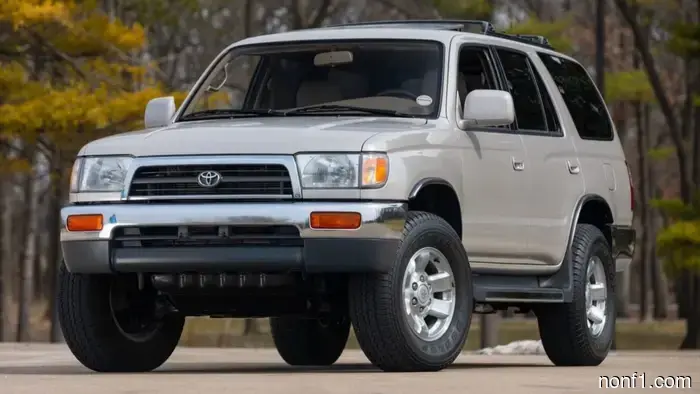 In some way, this 1996 Toyota 4Runner is the vehicle to keep an eye on at Mecum’s Indianapolis auction.
It might be the most impressive third-generation 4Runner out there, but will it lead to a change in the collector-car market?
In some way, this 1996 Toyota 4Runner is the vehicle to keep an eye on at Mecum’s Indianapolis auction.
It might be the most impressive third-generation 4Runner out there, but will it lead to a change in the collector-car market?
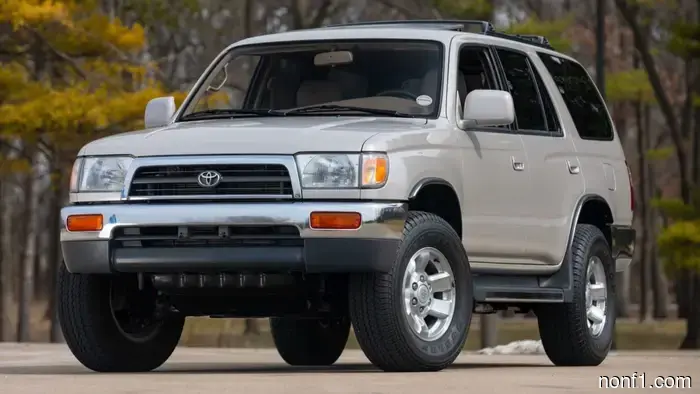 In some way, this 1996 Toyota 4Runner is the standout vehicle to keep an eye on at Mecum’s Indy Auction.
It may be the most impressive third-generation 4Runner available, but will it influence the collector-car market?
In some way, this 1996 Toyota 4Runner is the standout vehicle to keep an eye on at Mecum’s Indy Auction.
It may be the most impressive third-generation 4Runner available, but will it influence the collector-car market?
 These 1970s Snowmobile Conversion Kits Transformed Sleds Into Trikes
Aftermarket companies previously transformed snowmobiles into all-season recreational vehicles.
These 1970s Snowmobile Conversion Kits Transformed Sleds Into Trikes
Aftermarket companies previously transformed snowmobiles into all-season recreational vehicles.
According to IIHS, drivers are more likely to use their phones while speeding.
That is derived from information gathered from insurance company applications designed to promote safe driving, demonstrating their effectiveness.