
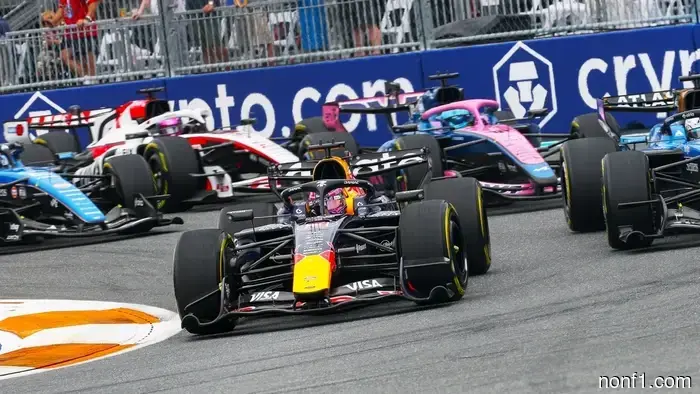
FIA Unveils Initial Information on F1's Transition to V8 Engines: Increased Volume, Reduced Hybrid Use, a 'Logical Choice'
Icon Sportswire via Getty Images
The latest updates in the automotive world, no fluff.
Subscribe to our free daily newsletter to receive important stories directly in your inbox every weekday.
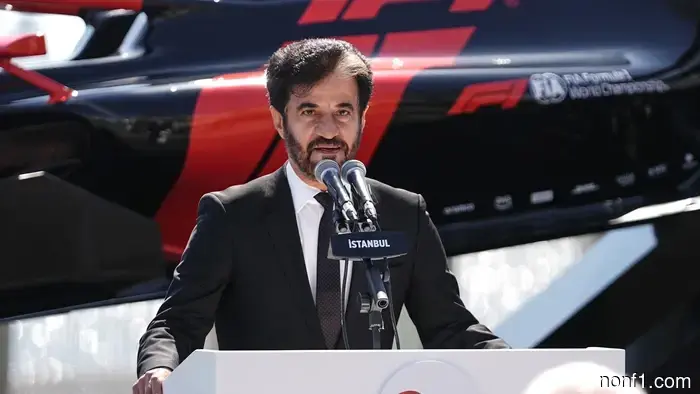
FIA President Mohammed Ben Sulayem's surprising statement just before the Miami Formula 1 Grand Prix regarding the return of high-revving V8 engines by 2030, marking the end of the hybrid V6 era, raised numerous questions over the long weekend. Today, we have some preliminary insights. After the race, Ben Sulayem convened with The Drive to discuss the significant technical changes coming to F1: how this transition will occur, the goals set, and the importance he sees for F1's future.
During the nearly 30-minute conversation, Ben Sulayem articulated that the decision to revert to V8 engines is motivated by three primary factors: cost, weight, and the authentic experience for both drivers and fans. He highlighted that, despite the updates to the regulations coming in 2026, F1's current hybrid V6 powertrain is rooted in a vision from 2013. As technology has evolved, so too have the demands on the sport's manufacturers, along with the feasible pathways for F1 to achieve financial stability, environmental responsibility, and thrilling racing.
“This engine is a 1.6-liter that has fulfilled its role, but here we are in its 14th year,” he noted.
“For the sustainability of the business—cost, efficiency, a lighter weight, and the sound that fans appreciate—the V8 meets many criteria,” he stated. “The MGUH was considered the future at one point, but that’s no longer the case. Now, we rely on the MGUK, which is paired with a battery and a turbo on a 1.6-liter, but this engine is quite complicated and incurs high R&D costs, as well as expenses when sold to customer teams. Simplifying this could make it more affordable for others.”
Getty Images Anadolu via Getty
The upcoming V8 will likely be “somewhat” hybrid, as Ben Sulayem described, but advancements in sustainable fuels have paved the way for larger, less costly engines that align more closely with fan preferences for sound in high-level motorsport. “With due respect, electrification is not the only answer,” he remarked.
Ben Sulayem proceeded to offer some initial technical specifications for the V8, underscoring that this is not a fleeting notion from the FIA in response to critiques of the existing regulations and their equal distribution of gas and electric power which have affected track performance. He discussed potential engine displacement, horsepower ratings, and the target energy distribution. Spoiler alert: It won’t be a 50/50 split.
“First and foremost, you need adequate power,” he explained. “You can’t achieve that with less than a 2.5- or 2.6-liter engine, so we’re looking at displacements between 2.6 to 3.0 liters. With a 10% energy split, you could reach 880 horsepower; however, the gas engine would be around 650 hp, I believe. One key consideration is where the power originates from with a smaller engine. That includes the heads and RPMs, so if the revs are too high, it might be off-putting to younger fans.
“You wouldn’t want it exceeding 15,500 to 16,000 rpm,” he added. “Once you cross that threshold, the frequency can be quite bothersome, necessitating responsibility. Even if higher RPMs are permissible, it’s not just about sound adaptation. More power leads to greater development costs because refinement can get very expensive.”
“It will be at a 10% to 20% electric power split; it won’t exceed that. Not at all,” he concluded.
Despite skepticism from teams regarding the feasibility of V8s, Ben Sulayem expressed confidence that it’s only a matter of when this shift will occur, not if. The new V8 could potentially debut in 2030, contingent on the approval from four out of F1’s six power unit manufacturers—Mercedes-AMG, Ferrari, Honda, Audi, Red Bull Ford, and Alpine Racing. If that threshold isn’t met, Ben Sulayem indicated that the FIA would use its authority to enforce the change for 2031. However, he is optimistic that manufacturers will support the shift after several previously unannounced meetings between the governing body and technical teams.
“Of course they will. It will happen in 2031, but I aim to have it ready a year sooner. In 2031, the FIA can impose any engine it deems appropriate—not merely benefiting one team. We have the broader picture and oversee all F1 teams. Would it benefit everyone? Absolutely, and it will yield equitable results.”
Looking at the bigger picture, Ben Sulayem noted that transitioning to a simpler V8 will
Other articles
 Russell: I haven't forgotten how to pilot.
On Sky Sport F1, George talked about his feelings in the role of the chaser...
Russell: I haven't forgotten how to pilot.
On Sky Sport F1, George talked about his feelings in the role of the chaser...
 Subaru sales continue to fall short, yet the figures don't capture the complete picture.
In April, the WRX marked Subaru's most significant sales recovery, yet it narrowly surpassed the Solterra EV in sales. What’s the explanation for this?
Subaru sales continue to fall short, yet the figures don't capture the complete picture.
In April, the WRX marked Subaru's most significant sales recovery, yet it narrowly surpassed the Solterra EV in sales. What’s the explanation for this?
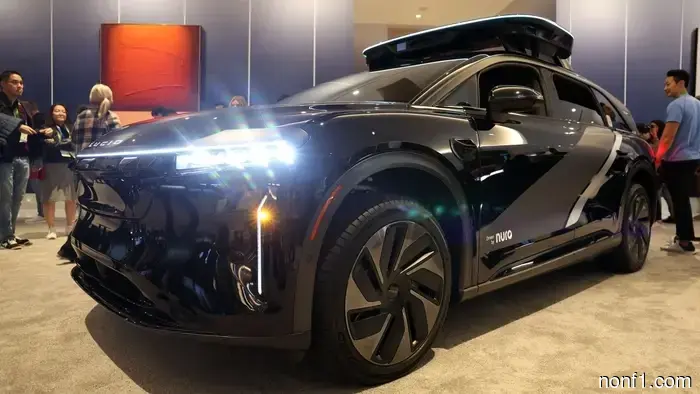 Hertz Moves from AI Scanners to Robotaxis through Partnership with Uber
Hertz will oversee the maintenance and management of Uber's fleet of autonomous Lucid electric vehicles.
Hertz Moves from AI Scanners to Robotaxis through Partnership with Uber
Hertz will oversee the maintenance and management of Uber's fleet of autonomous Lucid electric vehicles.
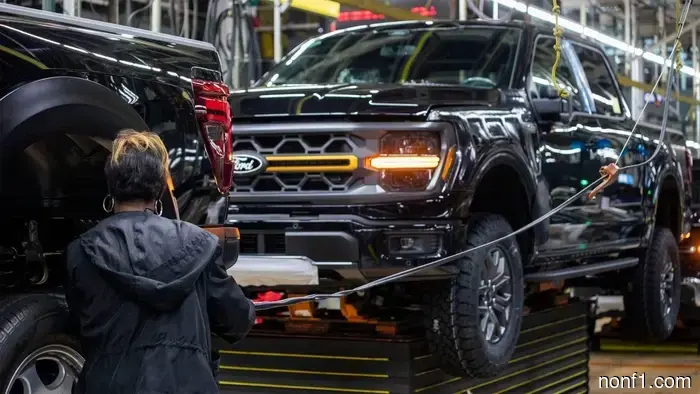 An Ongoing Aluminum Shortage Continues to Disrupt Ford F-150 Production: TDS
Aluminum has been in limited availability for automakers for over six months, significantly affecting the production of Ford's full-size pickup.
An Ongoing Aluminum Shortage Continues to Disrupt Ford F-150 Production: TDS
Aluminum has been in limited availability for automakers for over six months, significantly affecting the production of Ford's full-size pickup.
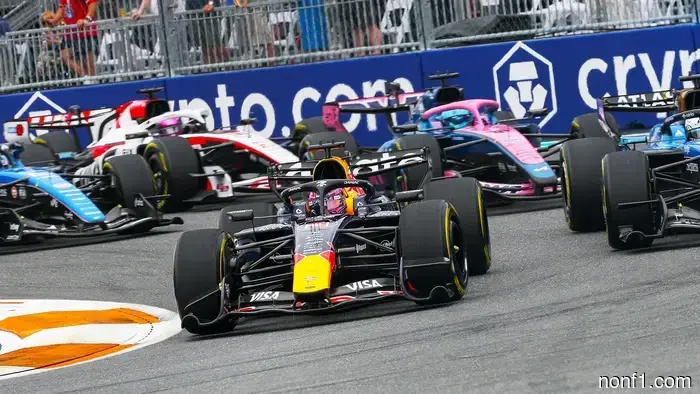
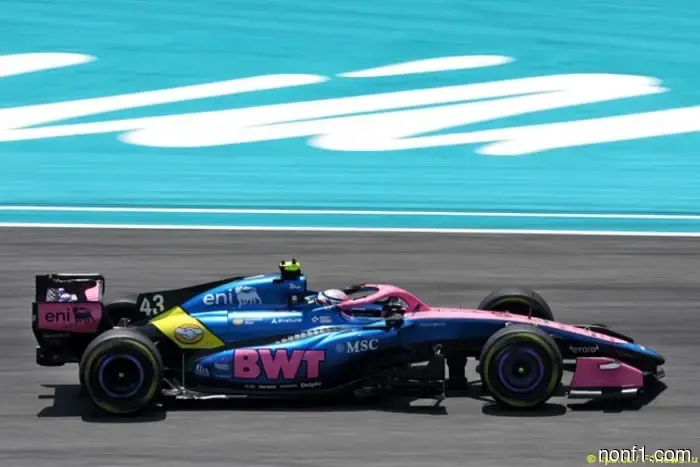 Briatore: We expect that level from Colapinto every weekend.
Franco Colapinto finished eighth in Miami, and after Charles Leclerc's penalty, he moved up to seventh place in the standings, which became his best result in his career. Alpine team principal Flavio Briatore stated that he expects such a level of performance from the Argentine driver at every race.
Briatore: We expect that level from Colapinto every weekend.
Franco Colapinto finished eighth in Miami, and after Charles Leclerc's penalty, he moved up to seventh place in the standings, which became his best result in his career. Alpine team principal Flavio Briatore stated that he expects such a level of performance from the Argentine driver at every race.
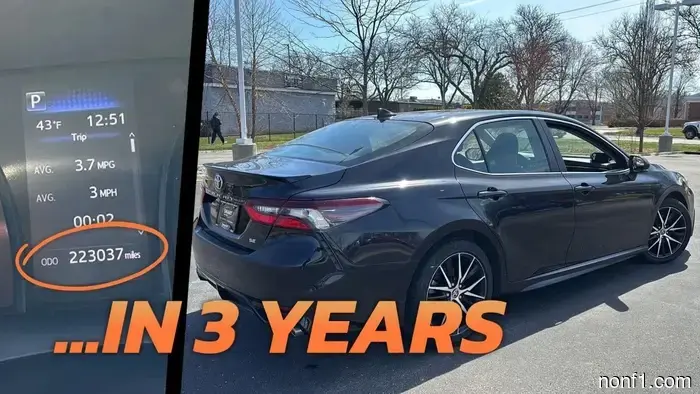 Someone accumulated 223,000 miles on a 3-year Toyota Camry lease and then returned it.
That's more than 200 miles each day or 75,000 miles annually, plus a mileage penalty that could have easily exceeded the original cost of the car.
Someone accumulated 223,000 miles on a 3-year Toyota Camry lease and then returned it.
That's more than 200 miles each day or 75,000 miles annually, plus a mileage penalty that could have easily exceeded the original cost of the car.
FIA Unveils Initial Information on F1's Transition to V8 Engines: Increased Volume, Reduced Hybrid Use, a 'Logical Choice'
FIA President Mohammed Ben Sulayem revealed initial goals for the V8's dimensions, power output, and the division between gas and electric energy as he affirmed F1's intention to eliminate the hybrid V6: “It will happen.”