

Looking to prevent your new car from sharing your personal information? It can be done.
Toyota / Adobe Stock (edited by author)
The major news and reviews in the automotive world, straight to the point
Researchers have extensively discussed connected cars and the associated risks. However, many individuals remain unaware that their everyday vehicles transmit personal data to both insurers and advertisers. Even those who are aware often decide to risk it—unlike security expert Arkadiy Tetelman. He recently extracted all the data transmitters from his 2024 Toyota RAV4 and shared the process to help others disconnect as well.
Tetelman began his guide with several cautions. He referenced previous incidents, such as Tesla staff sharing images of naked customers in 2023, as well as a recent security flaw in Subarus that permitted remote unlocking of cars while allowing access to real-time and historical GPS data. Given this track record, concerns are quite reasonable.
I won't recount Tetelman's blog in detail, but the summary is this: It’s a complicated process, though that shouldn't deter you. He lists all the tools necessary to carry out the task on a RAV4 like his and outlines 13 steps to remove the data communication model. Additionally, he explains how to take out Toyota’s GPS antenna in five steps. Although it requires a few hours, you don’t need to be a mechanic.
With both the DCM and GPS antenna removed, Tetelman’s vehicle no longer sends location or telemetry data to outside parties. He loses connected features like over-the-air updates and SOS calling—a safety function he chose to disable—but that's mostly it. Verifying the success of this process is straightforward; you just need to ensure the car has no internet connection and that the SOS calling light is off. You should still be able to make and receive calls through CarPlay, as the DCM bypass kit allows the in-car microphone to function for such purposes.
To access these data transmitters, you must remove the trim around the shifter and disconnect the infotainment screen.
However, to ensure these modifications serve their intended purpose, Bluetooth should not be used. If you connect to your car wirelessly, your phone will send data to Toyota instead. The solution is simple: you can still link your mobile device using a USB cable.
If you’re worried about your vehicle's warranty after making these changes, rest assured that they cannot deny claims related to the powertrain or other unrelated systems due to the removal of the DCM or GPS antenna. Tetelman clarifies this while referencing the Magnuson-Moss Warranty Act.
Most people may not want to disassemble their vehicle to remove these components, but for those willing to do so, it’s arguably the best way to ensure data privacy. Tetelman cautions, however, that it may become increasingly challenging as manufacturers implement new strategies.
“Unfortunately, I believe it’s just a matter of time before the modem and GPS become more integrated into vehicles (making this guide impractical), or cars may exhibit severe failures if the modem/GPS is removed, or anti-right-to-repair legislation may be enacted to further restrict this behavior,” he stated. “For now, the victory remains—no telemetry leaves the car. Strong federal privacy laws would render posts like this unnecessary; that's the world I’d prefer to live in.”
Do you have a tip or question for the author? Contact them directly: caleb@thedrive.com


Other articles
 Receive two complimentary DeWalt brushless tools with your battery purchase during this Memorial Day sale.
The Home Depot is providing not just one, but two free quality tools with the purchase of a battery-and-charger combo pack. Additionally, there are more deals available on DeWalt products!
Receive two complimentary DeWalt brushless tools with your battery purchase during this Memorial Day sale.
The Home Depot is providing not just one, but two free quality tools with the purchase of a battery-and-charger combo pack. Additionally, there are more deals available on DeWalt products!
 Complimentary Milwaukee Tools: The Top BOGO Offers for Automotive Enthusiasts at The Home Depot's 2026 Memorial Day Sale
This Milwaukee tool bundle is a fantastic Memorial Day sale find for DIY enthusiasts involved in automotive projects.
Complimentary Milwaukee Tools: The Top BOGO Offers for Automotive Enthusiasts at The Home Depot's 2026 Memorial Day Sale
This Milwaukee tool bundle is a fantastic Memorial Day sale find for DIY enthusiasts involved in automotive projects.
 The Electric Ferrari Luce Still Appears Unconventional Just Days Before Its Unveiling
The inaugural electric Ferrari is on the verge of arrival, and it's uncertain whether the legendary brand's EV will have a contemporary or classic appearance.
The Electric Ferrari Luce Still Appears Unconventional Just Days Before Its Unveiling
The inaugural electric Ferrari is on the verge of arrival, and it's uncertain whether the legendary brand's EV will have a contemporary or classic appearance.
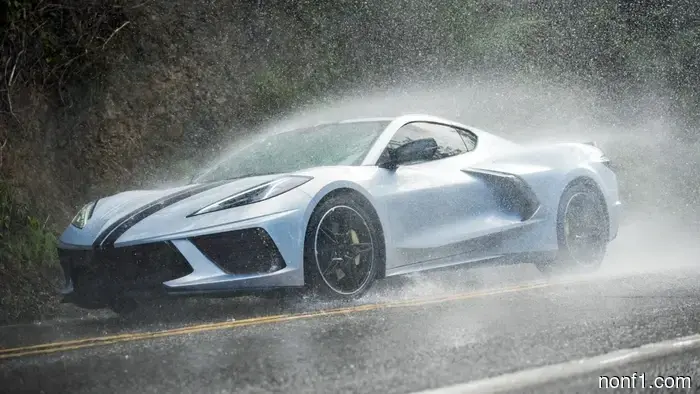 Bridgestone Potenza Sport EVO is a new tire designed for everyday use in contemporary performance vehicles.
Contemporary vehicles require precise steering, good wet traction, adequate tread longevity, and minimal rolling resistance. This tire focuses on achieving a balance rather than emphasizing solely dry grip.
Bridgestone Potenza Sport EVO is a new tire designed for everyday use in contemporary performance vehicles.
Contemporary vehicles require precise steering, good wet traction, adequate tread longevity, and minimal rolling resistance. This tire focuses on achieving a balance rather than emphasizing solely dry grip.
 The Electric Ferrari Luce Still Appears Quirky Days Before Its Unveiling
The debut electric Ferrari is on the horizon, but it's uncertain how contemporary or nostalgic the design of the legendary brand's EV will be.
The Electric Ferrari Luce Still Appears Quirky Days Before Its Unveiling
The debut electric Ferrari is on the horizon, but it's uncertain how contemporary or nostalgic the design of the legendary brand's EV will be.
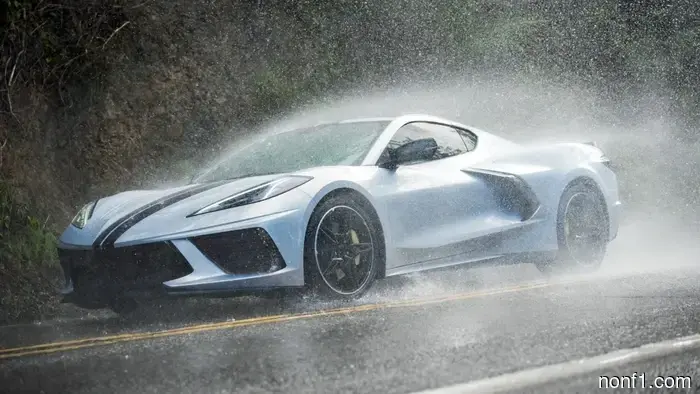 The Bridgestone Potenza Sport EVO is a newly designed daily driver tire for contemporary performance vehicles.
Contemporary vehicles seek precise steering, good wet traction, adequate tread longevity, and reduced rolling resistance. This tire focuses on achieving a balance rather than prioritizing maximum dry grip.
The Bridgestone Potenza Sport EVO is a newly designed daily driver tire for contemporary performance vehicles.
Contemporary vehicles seek precise steering, good wet traction, adequate tread longevity, and reduced rolling resistance. This tire focuses on achieving a balance rather than prioritizing maximum dry grip.
Looking to prevent your new car from sharing your personal information? It can be done.
Contemporary vehicles gather and transmit a vast amount of personal data, but a security researcher has discovered a method to halt this data transmission and safeguard your privacy.