
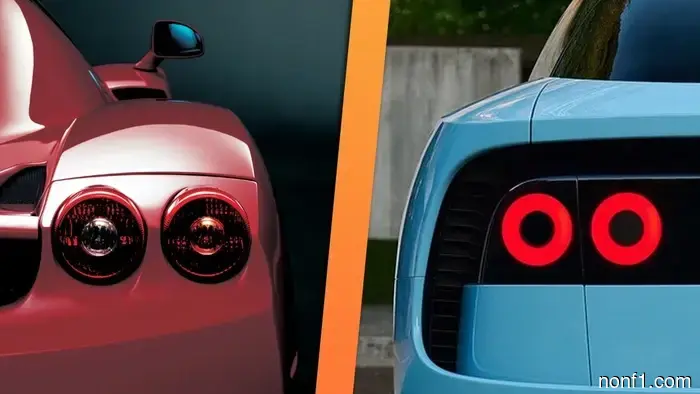
The Ferrari Luce isn't unattractive; it's merely that the future is disappointing.
Everything is simply a contemporary reinterpretation of something we once revered.
The latest in car news and reviews, no nonsense.
Our daily newsletter, free of charge, delivers the stories that genuinely matter to you every weekday.
Photos of the world’s inaugural electric Ferrari, the Luce [“loo-che”], have circulated long enough for both the initial reactions (the company's stock dipped upon the car's unveiling) and a few rebuttals (influencers aligned with corporate interests are publishing lengthy posts on LinkedIn). Most of the responses I’ve encountered within automotive communities suggest sentiments like: “Enzo is rolling in his grave!” However, that's not true. If Ferrari’s founder were alive today and spotted a Luce on the road, he likely wouldn’t even glance at it. That is the real tragedy of this unnecessary car. Ultimately, it mirrors the condition of the entire industry.
The design of the Luce is approachable, neat, tidy, unobjectionable, and unremarkable. As a modern daily commuter, it appears adequate. However, when your brand centers around dramatic aesthetics and your new $600,000 supercar prompts comparisons to a Nissan Leaf, something is amiss. Some commentators are labeling the Luce’s design as “a major risk” or a bold statement, but in truth, it’s quite the opposite. It’s a four-door daily driver—it’s the most broadly appealing product Ferrari could have possibly produced. Sure, it will have enough horsepower to reach the skies and a price tag that ensures only the ultra-wealthy will be its initial owners. Yet every function will be electronically controlled, and every display will be simulated on a screen … much like every Honda and Hyundai. Well, perhaps not exactly—Ferrari has indeed done a commendable job housing its screens in attractive enclosures. Hence, the problem arises—as every car transforms into a computer, all the elements that make cars feel genuinely exceptional become increasingly untranslatable.
There was some fascination surrounding the Luce after its cockpit was unveiled, and I admit I was intrigued myself. “The iPhone guy created a Ferrari;” I even made a TikTok about it. Jony Ive, who worked on numerous Apple products, and Marc Newson, who also contributed to some Apple initiatives and, more relevantly, the Ford 021C concept, are credited with much of the Luce’s presentation. So it’s no surprise that the Luce resembles more of a piece of consumer electronics than a car. Credit goes to the team involved; the Luce does attempt to shift away from the “monolithic black mirror” centered cockpit by incorporating multiple smaller screens instead. But even when the designers of the iPhone actively try to preserve tactile, mechanical knobs, the prevailing truth of the modern EV packaging is still so fundamentally streamlined that the vehicle ultimately feels like an appliance regardless.
This brings me to my main point—this Ferrari isn't unattractive. In fact, it embodies a perfect contemporary vision of what a futuristic Ferrari should resemble. It’s simply that today’s sleek, future-focused aesthetic is a sterile, corporate duplication, sanitized to the point of being lifeless. The intro of Weeds comes to mind.
So, what defines today’s sleek, future-oriented aesthetic? Look at current washing machines, lawnmowers, homes. Almost everything resembles either Call of Duty, EVE from Wall-E, or some hybrid of the two. (The Luce definitely fits into the maternal robot category.)
This isn't solely about the appearance, or even the fact that it’s an EV, or a practical people mover. It’s the combination of these elements. And the realization that it’s not an original concept—it’s a contemporary iteration of something that has already been established. This could essentially be said about every car that has recently generated interest, right? “New Bronco!” “New Defender!” There’s nothing novel, just old concepts reimagined as what feels like an app-icon version.
What the Luce emphasizes is how many facets of consumer experiences have followed this trend. Compare pictures of a McDonald’s exterior from the recent past with today’s. The ones from our childhood were filled with fun and creativity; modern ones resemble external hard drives.
Cars (and, to be honest, all consumer experiences) are becoming so uniform across our landscape that it’s challenging to truly be excited about anything. Each gauge cluster is merely a design overlay. Every vehicle is a crossover SUV-everything. Everything is tailored for sales volume, which is inherently uncool.
What’s particularly disheartening is that, with billions of people now connected globally, one would expect a vast diversity in cars and designs of other products. Yet, things continue to drift toward sans-serif, soft-edged, mass-market aesthetics with competent but characterless foundations and an electronic barrier between you and all of the vehicle’s functionalities. Everything is optimized to reduce production costs and maximize recurring revenue.
It’s somewhat ironic that Ferrari
Other articles
 The Ferrari Luce Isn't Unattractive. It's Simply That the Future Is Dismal.
Why does everything new seem to feel like an algorithmically enhanced version of something that was popular many years ago?
The Ferrari Luce Isn't Unattractive. It's Simply That the Future Is Dismal.
Why does everything new seem to feel like an algorithmically enhanced version of something that was popular many years ago?
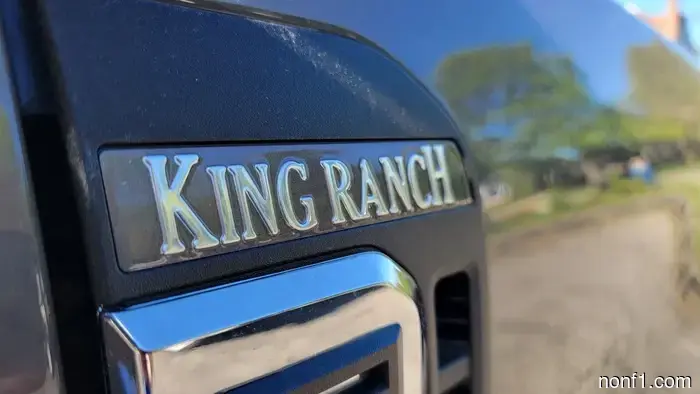 The Ford Super Duty Features an Excessive Number of Badges
Contemporary trucks boast more nameplates than a corporate icebreaker. Go ahead and tally the emblems on this F-250.
The Ford Super Duty Features an Excessive Number of Badges
Contemporary trucks boast more nameplates than a corporate icebreaker. Go ahead and tally the emblems on this F-250.
 Pierre Gasly: Alpine is a long-term project.
On Thursday in Monaco, Pierre Gasly spoke about his two-year contract with Alpine and his future with the team...
Pierre Gasly: Alpine is a long-term project.
On Thursday in Monaco, Pierre Gasly spoke about his two-year contract with Alpine and his future with the team...
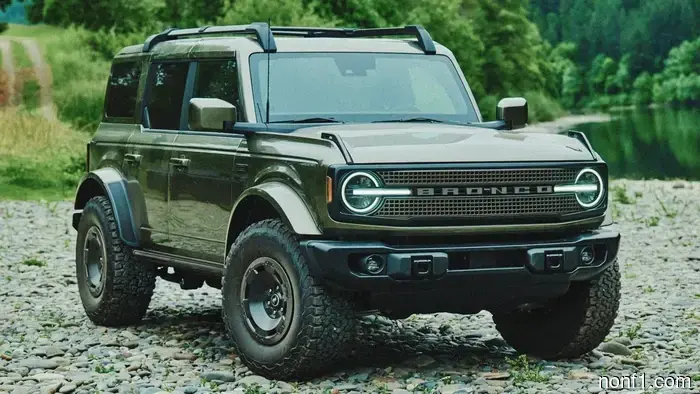 2027 Ford Bronco Filson: An Off-Road Vehicle with a Raptor Engine Designed for Stylish Outdoor Enthusiasts
It's definitely premium—how else can you describe the quilted leather upholstery paired with saddlebags?
2027 Ford Bronco Filson: An Off-Road Vehicle with a Raptor Engine Designed for Stylish Outdoor Enthusiasts
It's definitely premium—how else can you describe the quilted leather upholstery paired with saddlebags?
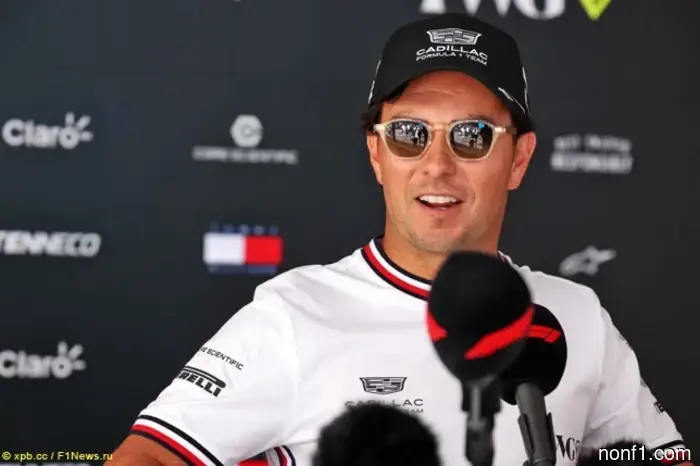 Sergio Perez: In Monaco, we have the best chances.
On Thursday in Monaco, Sergio Perez spoke optimistically about Cadillac's chances this weekend. The Mexican driver believes that his team has the best chances for a good result in the short term on the street circuit.
Sergio Perez: In Monaco, we have the best chances.
On Thursday in Monaco, Sergio Perez spoke optimistically about Cadillac's chances this weekend. The Mexican driver believes that his team has the best chances for a good result in the short term on the street circuit.
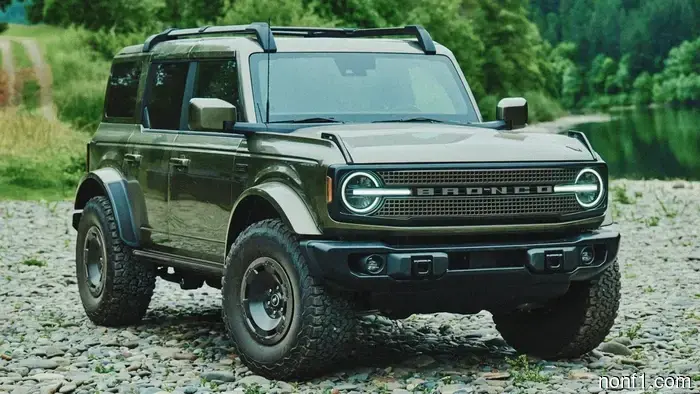 2027 Ford Bronco Filson: A Raptor-Powered Off-Road Vehicle for Stylish Outdoor Enthusiasts
It's definitely premium—what other way can you describe the quilted leather seats paired with saddlebags?
2027 Ford Bronco Filson: A Raptor-Powered Off-Road Vehicle for Stylish Outdoor Enthusiasts
It's definitely premium—what other way can you describe the quilted leather seats paired with saddlebags?
The Ferrari Luce isn't unattractive; it's merely that the future is disappointing.
Why does everything new have to seem like an algorithmically refined take on something that was awesome years ago?