
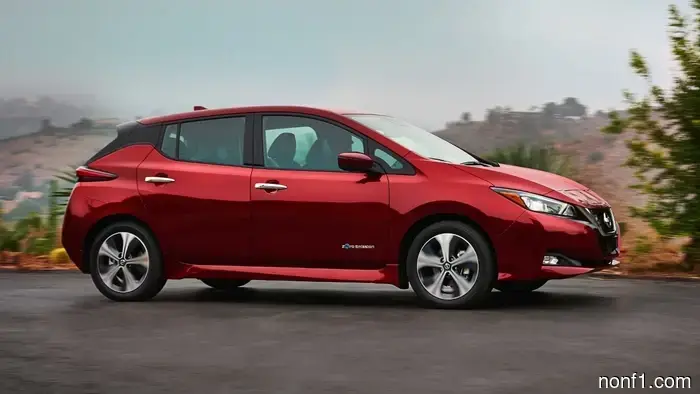
New Colorado Legislation Correctly Mandates Responsible Recycling of EV Batteries
Nissan
The most important car news and reviews, no nonsense
Our free daily newsletter delivers the stories that truly matter straight to your inbox every weekday.
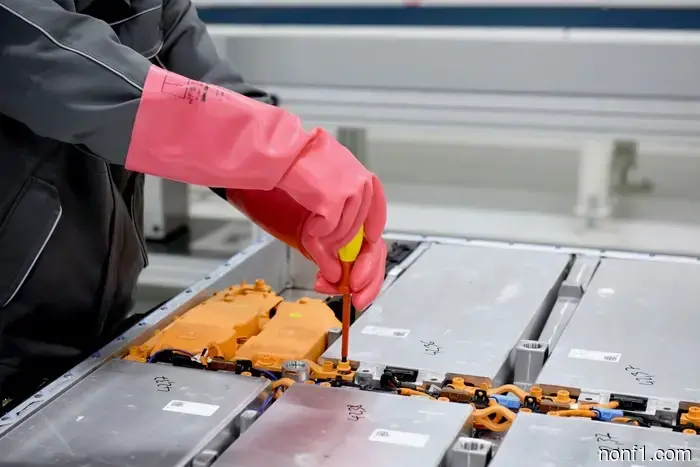
There’s been considerable discussion about EV battery recycling, along with some significant contracts between car manufacturers and recycling firms. This is certainly a positive development, as recycling reduces the need for new raw material mining for batteries, thereby helping to diminish the environmental impact of EVs. However, a good idea alone isn't sufficient to guarantee the success of battery recycling. This is where a new law in Colorado comes into play.
Last week, Governor Jared Polis signed the Promoting Responsible End-of-Life Management of Electric Vehicle Batteries Act into law, marking the first of its kind in the United States. As highlighted in a blog post by the Union of Concerned Scientists (UCS), this law mandates that batteries be recycled if no alternative uses can be found and places responsibility for this on automakers. It also establishes recovery targets for essential battery materials and requires reporting to ensure actual recycling takes place.
Primarily, the law obligates automakers to either reuse or recycle battery packs in their possession, as well as those from third parties. Notably, this means that when an EV is sent to the junkyard, the manufacturer must collect its battery pack at no cost and arrange for recycling or repurposing it for uses like stationary energy storage. End users may choose to retain their batteries, but this legislation guarantees that unwanted batteries won’t simply be discarded.
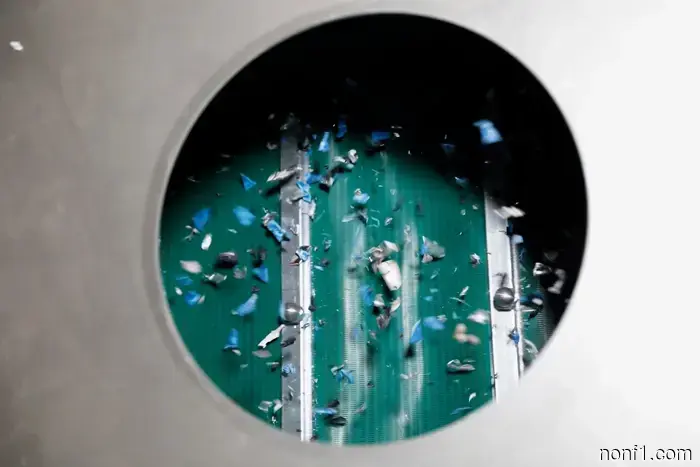
For recycled batteries, the law mandates that 90% of nickel and cobalt and 50% of lithium must be recovered (with the latter increasing to 80% by 2031) in an intermediate form referred to as “black mass” before complete material separation. This effectively rules out smelting, which produces higher emissions for lesser material recovery, according to the UCS.
Automakers are also required to report to the state the number of batteries recovered, the rates of materials retrieved through recycling, and other relevant metrics. New batteries will carry essential information such as chemistry, capacity, hazardous substances, and recall notices to facilitate recycling. Additionally, battery health information will be accessible to third parties for tracking, helping users decide whether to repurpose a battery or recycle it.
Securing a larger supply of batteries is crucial for making recycling feasible. In 2021, research company Wood Mackenzie predicted that there wouldn’t be an adequate supply of used batteries for large-scale recycling until 2030, and a slowdown in EV sales due to the Trump Administration's policies could further delay that timeline. Recently, several automakers—including Audi, BMW, Ford, Toyota, and Volkswagen—have entered into recycling agreements with Redwood Materials, a recycling firm founded by former Tesla CTO JB Straubel. If the supply of recyclable batteries is too limited, the volume of recovered materials won’t significantly impact the need for raw materials for new battery production.
The Colorado law aims to maximize the availability of batteries. While it may not be the largest new-car market, Colorado is relatively accommodating to EVs, which means a substantial number of battery packs will become available as more EVs reach the end of their life cycle. The reporting requirements will also help clarify whether recycling or reusing is more beneficial by providing crucial information rather than allowing advocates to compete over the same battery supply.
Typically, California is at the forefront of EV policy, but this time, Colorado is setting the standard. Similar legislation—Senate Bill 615—was passed by the Colorado legislature in 2024 but was vetoed by Governor Gavin Newsom. Battery-recycling bills have also failed in states like Florida, Massachusetts, Nevada, New Mexico, and Washington. For the time being, it seems unlikely that any significant action will be taken at the federal level. Currently, Colorado is offering a framework for the rest of the country to emulate.
Other articles
 Barcelona Grand Prix: All the quotes from the weekend
All materials of the Barcelona Grand Prix on one page – news, comments, articles, interviews, and results...
Barcelona Grand Prix: All the quotes from the weekend
All materials of the Barcelona Grand Prix on one page – news, comments, articles, interviews, and results...
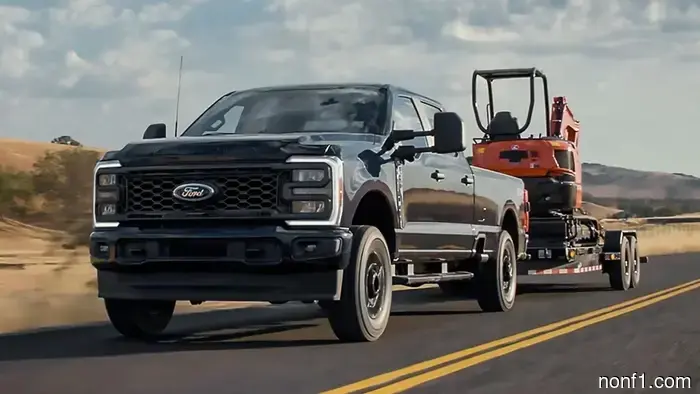 Large Trucks Such as the Ford Super Duty and Ram HD Have Avoided Safety Assessments, Until Now
The IIHS has begun testing commercial vehicles, and the initial results weren't as negative as one might have anticipated.
Large Trucks Such as the Ford Super Duty and Ram HD Have Avoided Safety Assessments, Until Now
The IIHS has begun testing commercial vehicles, and the initial results weren't as negative as one might have anticipated.
 Liam Lawson: We have reasons for optimism
In Barcelona, Racing Bulls scored points for the second consecutive time with two cars – Liam Lawson and Arvid Lindblad finished ninth and tenth, but after Franco Colapinto's penalty, they gained one position each.
Liam Lawson: We have reasons for optimism
In Barcelona, Racing Bulls scored points for the second consecutive time with two cars – Liam Lawson and Arvid Lindblad finished ninth and tenth, but after Franco Colapinto's penalty, they gained one position each.
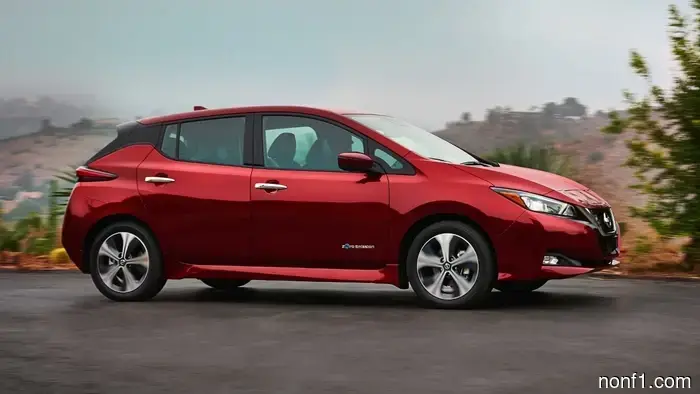 New Colorado Legislation Successfully Mandates Responsible Recycling of EV Batteries
The state is holding automakers accountable for the recycling of any EV batteries that are not reused—and is requiring proof of recycling through receipts.
New Colorado Legislation Successfully Mandates Responsible Recycling of EV Batteries
The state is holding automakers accountable for the recycling of any EV batteries that are not reused—and is requiring proof of recycling through receipts.
 Unfortunately, several Chevy Corvette ZR1 owners have reported issues with paint chipping when driving at speeds of 180 MPH or higher.
GM covered the repair expenses for at least one owner, whose rear wing appeared to generate so much downforce that it caused damage to the paint.
Unfortunately, several Chevy Corvette ZR1 owners have reported issues with paint chipping when driving at speeds of 180 MPH or higher.
GM covered the repair expenses for at least one owner, whose rear wing appeared to generate so much downforce that it caused damage to the paint.
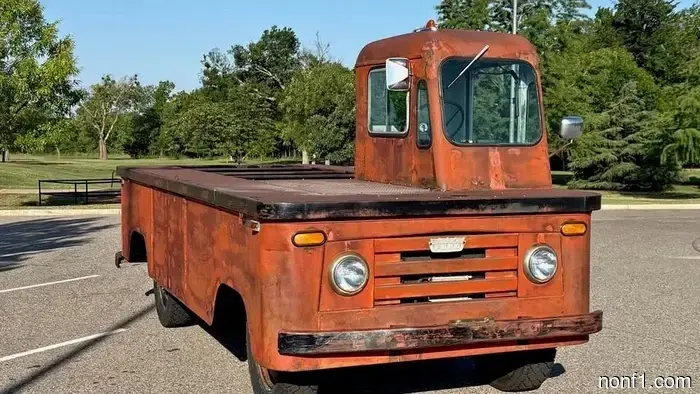 The ultimate single cab truck was designed specifically for transporting construction materials.
The DeKalb Lumberjack transforms contemporary work trucks into the appearance of luxury SUVs.
The ultimate single cab truck was designed specifically for transporting construction materials.
The DeKalb Lumberjack transforms contemporary work trucks into the appearance of luxury SUVs.
New Colorado Legislation Correctly Mandates Responsible Recycling of EV Batteries
The state is requiring automakers to take responsibility for recycling any EV batteries that aren't reused—and is requesting receipts.