
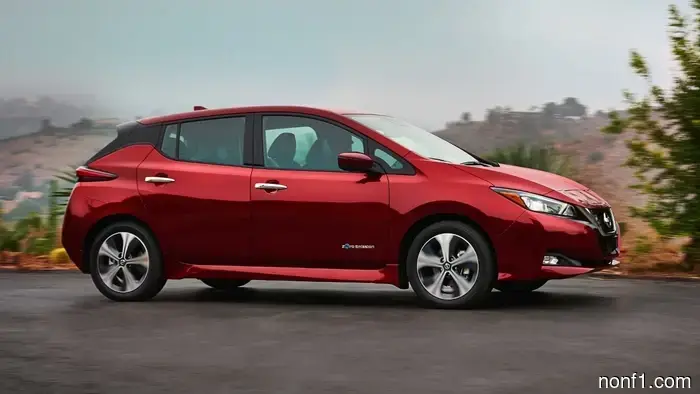
New Colorado Legislation Successfully Mandates Responsible Recycling of EV Batteries
Nissan
The latest automotive news and reviews, without the fluff.
Our daily newsletter delivers the most important stories directly to your inbox every weekday.
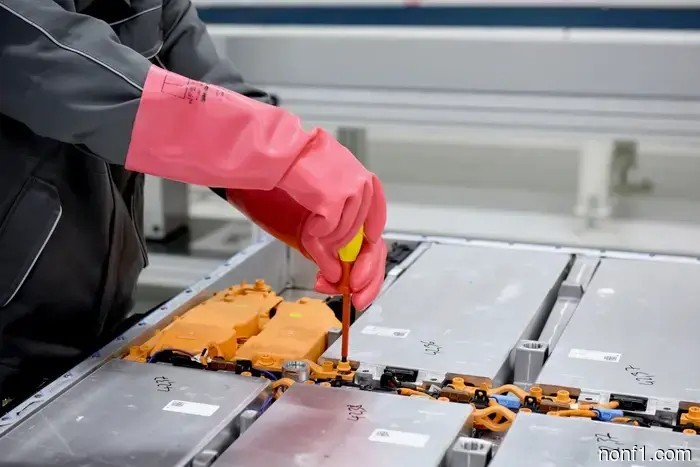
There has been considerable discussion regarding the recycling of EV batteries, along with significant agreements between automakers and recycling companies. This is certainly a positive development, as recycling reduces the need for newly mined raw materials for batteries, thus further minimizing the environmental impact of EVs. However, the concept alone isn’t sufficient to ensure the success of battery recycling. This is where a new law in Colorado becomes significant.
Last week, Governor Jared Polis signed the Promoting Responsible End-of-Life Management of Electric Vehicle Batteries Act, the first legislation of its kind in the United States. According to a blog post from the Union of Concerned Scientists (UCS), this law mandates that batteries be recycled if they can't be repurposed, placing the responsibility on automakers. It also outlines recovery rates for essential battery materials and mandates reporting requirements to track recycling efforts.
The law primarily obligates automakers to either reuse or recycle battery packs that they possess, as well as those from third parties. Importantly, when an EV is disposed of, the automaker is required to collect its battery pack at no cost and arrange for its recycling or repurposing for uses such as stationary power. End users have the option to retain their batteries if they choose, but this regulation ensures that unwanted batteries are not merely discarded.
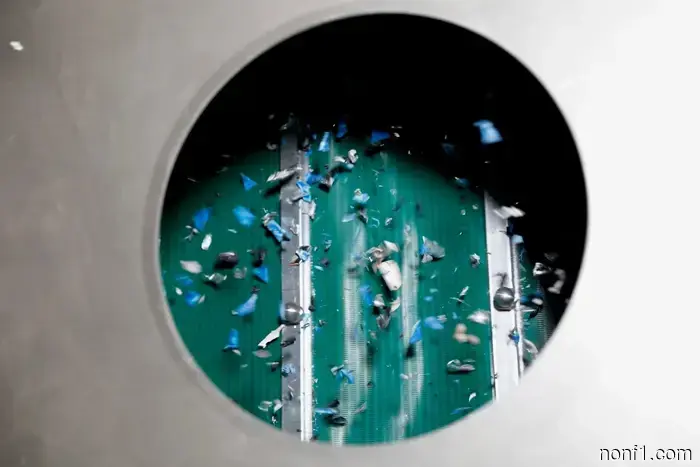
For batteries to be recycled, 90% of nickel and cobalt and 50% of lithium must be recovered in an intermediate form (with the latter rising to 80% by 2031) during the so-called "black mass" phase before the materials are fully separated. This effectively eliminates smelting, which generates higher emissions with lower material recovery, as noted by the UCS.
Automakers are also required to report to the state on the quantity of batteries recovered, the rates of materials retrieved from the recycling process, and various other metrics. Newly produced batteries will carry essential information regarding their chemistry, capacity, hazardous substances, and recall information to facilitate recycling. Additionally, battery health data will be shared with third parties for tracking, enabling users to make informed decisions about whether to repurpose or recycle a battery.
Securing an adequate supply of batteries is crucial for the feasibility of recycling. In 2021, research firm Wood Mackenzie projected that large-scale recycling wouldn’t be feasible until 2030 due to insufficient used battery availability, and declining EV sales linked to previous policies could delay this timeline even further. In recent years, several automakers—such as Audi, BMW, Ford, Toyota, and Volkswagen—have entered into recycling agreements with Redwood Materials, a company established by former Tesla CTO JB Straubel. If the supply of recyclable batteries remains low, the amount of recovered materials will not significantly alleviate the demand for raw materials needed for new battery production.
The Colorado law aims to maximize the availability of batteries. Although it isn’t the largest market for new cars, Colorado is relatively accommodating for EVs, meaning that a substantial number of battery packs will be accessible as more EVs reach the end of their lifecycle. The reporting requirements are also expected to provide clarity on whether recycling or repurposing is preferable by equipping individuals with the necessary information for informed decisions, rather than having advocates for either option compete for the same battery supply.
Typically, California leads in EV policy, but this time Colorado is taking the initiative. Similar legislation—Senate Bill 615—was approved by the state legislature in 2024 but vetoed by Governor Gavin Newsom. Efforts to pass battery-recycling bills have also failed in Florida, Massachusetts, Nevada, New Mexico, and Washington State. For the foreseeable future, it appears unlikely that there will be any progress at the federal level. For now, Colorado stands as a model for the rest of the country to emulate.
Other articles
 Barcelona Grand Prix: Tire change order during the race
After the finish of the Barcelona-Catalonia Grand Prix, Pirelli published information about the tire change order during the race...
Barcelona Grand Prix: Tire change order during the race
After the finish of the Barcelona-Catalonia Grand Prix, Pirelli published information about the tire change order during the race...
 New Colorado Legislation Correctly Mandates Responsible Recycling of EV Batteries
The state is requiring automakers to take responsibility for recycling any EV batteries that aren't reused—and is requesting receipts.
New Colorado Legislation Correctly Mandates Responsible Recycling of EV Batteries
The state is requiring automakers to take responsibility for recycling any EV batteries that aren't reused—and is requesting receipts.
 Peres: The weak spots of the car are clearly visible in Barcelona.
The best result for Cadillac in Barcelona was Sergio Perez's 14th place...
Peres: The weak spots of the car are clearly visible in Barcelona.
The best result for Cadillac in Barcelona was Sergio Perez's 14th place...
 The Toyota team won the race at Le Mans for the sixth time.
The Toyota factory team won the "24 Hours of Le Mans," marking its sixth such achievement at the legendary Sarthe circuit...
The Toyota team won the race at Le Mans for the sixth time.
The Toyota factory team won the "24 Hours of Le Mans," marking its sixth such achievement at the legendary Sarthe circuit...
 Unfortunately, several Chevy Corvette ZR1 owners have reported issues with paint chipping when driving at speeds of 180 MPH or higher.
GM covered the repair expenses for at least one owner, whose rear wing appeared to generate so much downforce that it caused damage to the paint.
Unfortunately, several Chevy Corvette ZR1 owners have reported issues with paint chipping when driving at speeds of 180 MPH or higher.
GM covered the repair expenses for at least one owner, whose rear wing appeared to generate so much downforce that it caused damage to the paint.
 Barcelona Grand Prix: All the quotes from the weekend
All materials of the Barcelona Grand Prix on one page – news, comments, articles, interviews, and results...
Barcelona Grand Prix: All the quotes from the weekend
All materials of the Barcelona Grand Prix on one page – news, comments, articles, interviews, and results...
New Colorado Legislation Successfully Mandates Responsible Recycling of EV Batteries
The state is holding automakers accountable for the recycling of any EV batteries that are not reused—and is requiring proof of recycling through receipts.