
How Toyota's First Le Mans Victory in Four Years Reflects the Spirit of Competition in the Race
NurPhoto via Getty
The latest updates and reviews on cars, straight to the point.
Subscribe to our free daily newsletter for the stories that truly matter, delivered to your inbox every weekday.
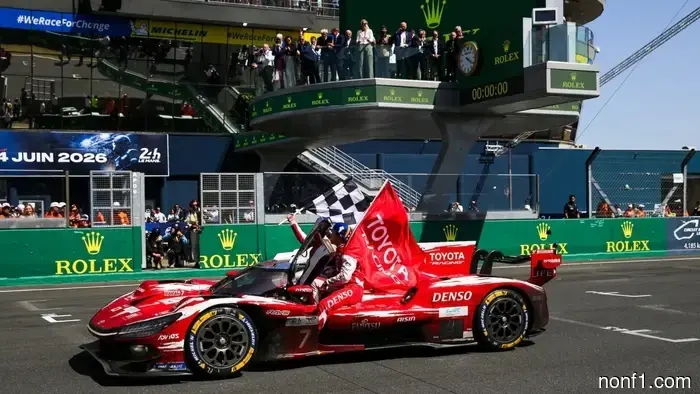
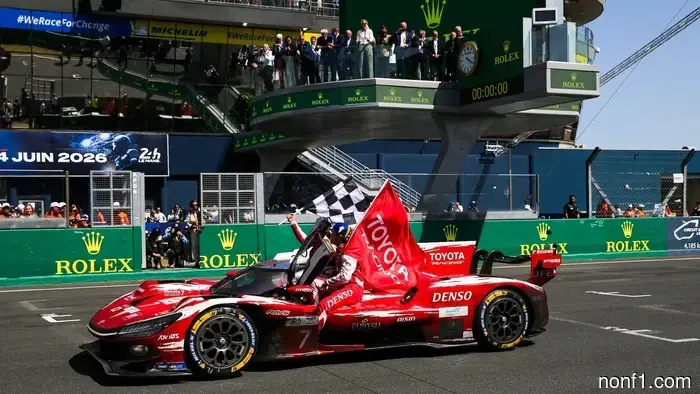
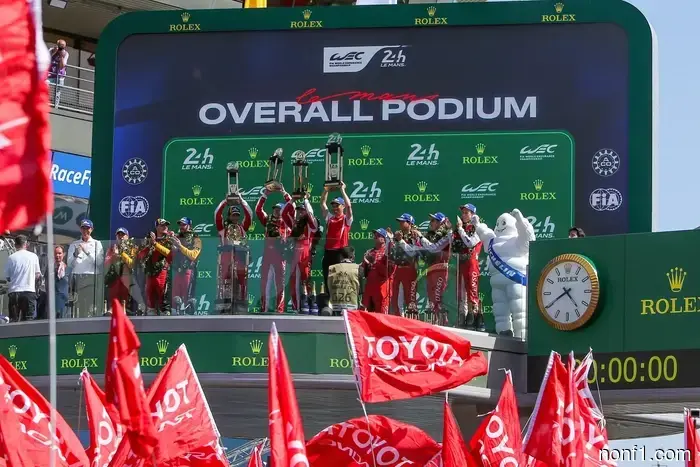
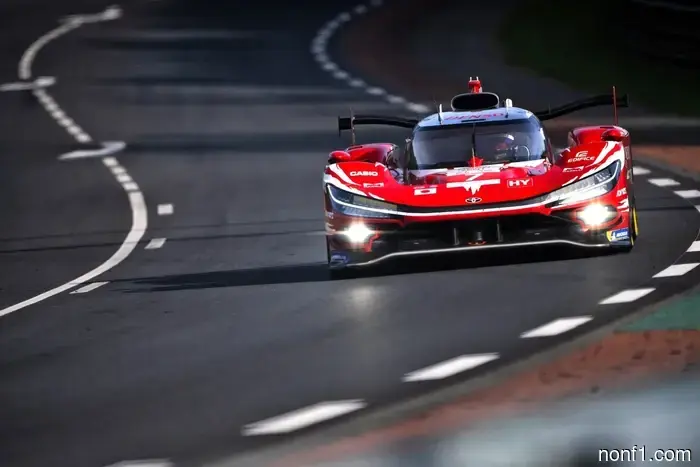
The No. 7 Toyota prototype, driven by Kamui Kobayashi, Mike Conway, and Nyck de Vries, clinched victory after a lengthy and intense 24 Hours of Le Mans. Ultimately, the red-and-white Hypercar finished just 10.6 seconds ahead of the second-place finisher, the No. 20 BMW M Hybrid V8, with the No. 8 Toyota completing the podium. This time gap between first and second is the fourth smallest in the race's history.
Toyota last triumphed in this prestigious race in 2022, marking the end of the Japanese automaker's five-year dominance at the Circuit de la Sarthe. This year, it was the second win for Kobayashi and Conway, while de Vries became only the third Dutch driver to secure an overall victory. Though it appeared to dominate compared to the Ferraris, who had won the previous three races, the No. 7 was not the top pick to win and faced numerous challenges throughout the event.
NurPhoto via Getty
After the race, Toyota's technical director, David Floury, informed Motorsport.com that the car had been struggling with intermittent issues that forced it into "safe mode." Consequently, the leading vehicle lost up to 8 km/h, or nearly 5 mph, compared to its teammate. Given Le Mans’ emphasis on top speed, that’s a significant shortfall that accumulates over multiple laps.
“The sensor wasn't entirely malfunctioning, but it was drifting and noisy,” Floury explained. “This disrupted all the FIA measurements, so we had to revert to default mode, after which the sensor returned. However, even once it was functioning again, we were still triggering a lot of alarms, prompting us to lower the power.”
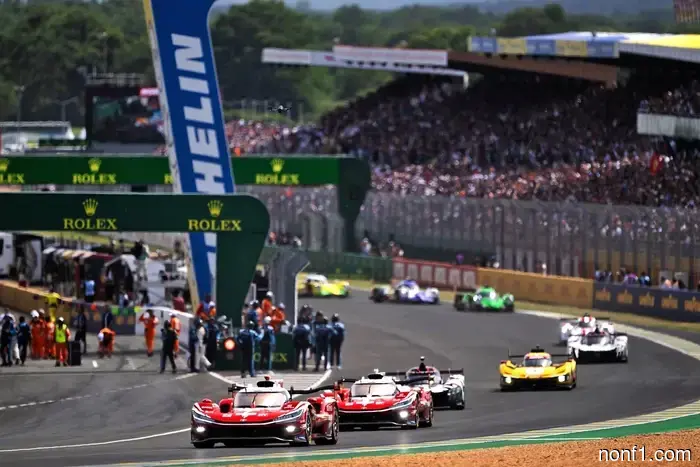
Before the sensor problems even emerged, the Toyota had started the race in 14th position, accepting that the No. 8 car had a much better chance of winning. From the start, they struggled with tire issues, a puncture, and poorly timed yellow flags and safety cars, complicating the drivers' efforts, all while the Cadillacs and BMWs exhibited strong performance.
"We faced a very demanding week, and even during the race, we struggled to find our rhythm. We had a puncture and a driveshaft sensor issue that resulted in power loss. It was incredibly challenging, but we made it through,” Kobayashi stated to the press post-race. “Robin made it extremely tense; I think Nyck was hiding from everyone and closing his eyes in his room during the last hour."
“I was pacing around in the drivers' room, making about 15 trips to the bathroom in the last half hour! But we persevered, and now we're here – we did it. I feel incredibly grateful, relieved, and happy,” de Vries added.
“The race was relentless. We encountered numerous challenges, yet somehow we kept pushing forward. To be honest, there were several moments I thought we were out of the race. But, they say Le Mans chooses its winners, and I believe that's what happened for us today. I'm thrilled to finally check that off my list,” Kobayashi remarked.
James Moy Photography via Getty
Ferrari’s endurance chief designer, Mauro Barbieri, stated that the Scuderia experienced an "unbalanced" performance without specifically mentioning Balance of Performance (BoP), as team members are prohibited from doing so per regulations. While BoP data remains confidential and undisclosed to the public or media, there is likely some truth to Barbieri’s comment. This was the first time the Ferraris struggled since the program's launch in 2023.
“It was evident from the test day, perhaps even earlier, that the field was unbalanced and we were not among the top performers,” Barbieri told the outlet.
Similarly, the Cadillacs were unable to take advantage of their strong performance throughout the week when it mattered most. The No. 12 team, including Will Stevens, Louis Deletraz, and Norman Nato, showcased promising speed during the race and seemed potentially in contention for a win, but they needed a stroke of luck that never materialized. Unfortunately, a full-course yellow disrupted their momentum.
"It’s disappointing not being on the podium,” Nato expressed to Motorsport.com. “We were quite unlucky with the full course yellow; the last one cost us around 40 seconds and forced an emergency pit stop. With just three hours left, it was the worst time to get that full course yellow.
"When I went into the pits, they went back to green, which resulted in us losing about 40 seconds. This severely affected our race because after that, there were no further full course yellows or safety cars. It really became a matter
Other articles
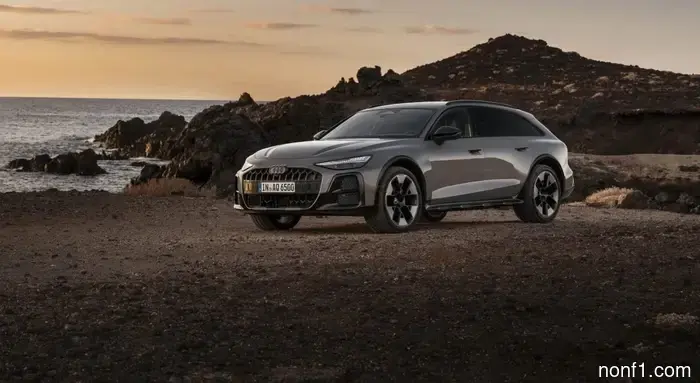 The new Audi A6 Allroad is larger, more aggressive, and a promising sign for the RS6 Avant.
Audi informed The Drive that the next-generation Allroad will be available in the U.S. next year, featuring a body that is 4.3 inches wider, flared fenders, and standard quattro.
The new Audi A6 Allroad is larger, more aggressive, and a promising sign for the RS6 Avant.
Audi informed The Drive that the next-generation Allroad will be available in the U.S. next year, featuring a body that is 4.3 inches wider, flared fenders, and standard quattro.
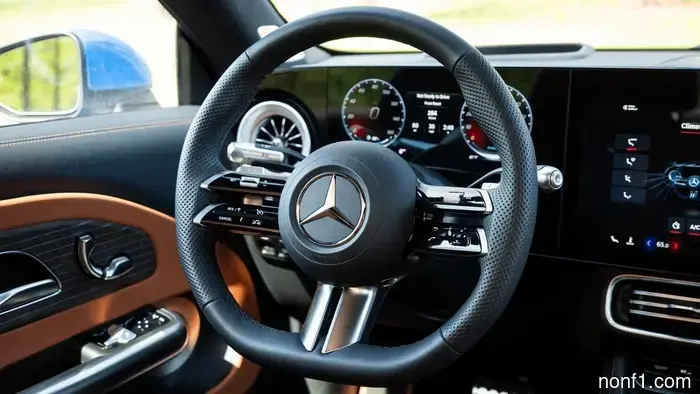 Mercedes Eliminated Steering Wheel Music Controls in Favor of Voice Commands for the New CLA.
The steering wheel of the new Mercedes CLA does not feature music controls, requiring you to use voice commands or touch the center screen to change songs.
Mercedes Eliminated Steering Wheel Music Controls in Favor of Voice Commands for the New CLA.
The steering wheel of the new Mercedes CLA does not feature music controls, requiring you to use voice commands or touch the center screen to change songs.
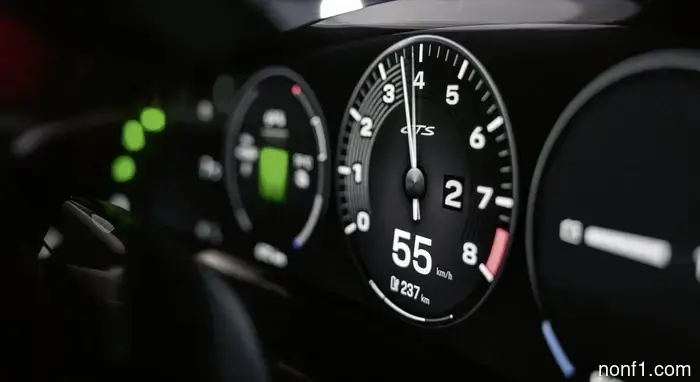 Porsche Observed Hyundai and Declared, ‘We Want What They’re Offering’
The 2027 Taycan includes simulated gear changes, artificial sound, and a feature that Porsche discreetly adopted from Hyundai.
Porsche Observed Hyundai and Declared, ‘We Want What They’re Offering’
The 2027 Taycan includes simulated gear changes, artificial sound, and a feature that Porsche discreetly adopted from Hyundai.
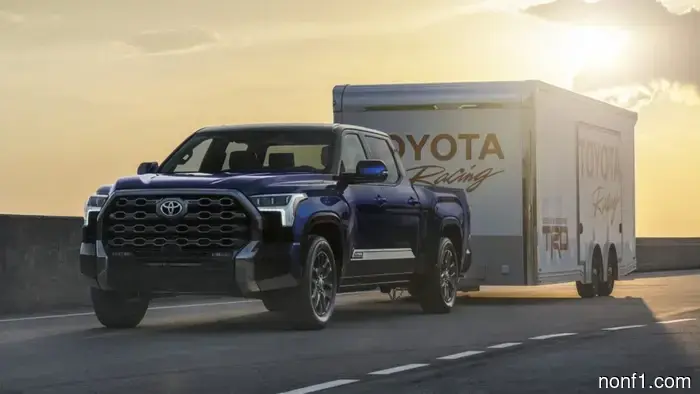 Toyota Won't Substitute Every Recalled Tundra V6, and Some Owners Are Growing Frustrated
Toyota will rely on software instead of wrenches to determine which recalled Tundra vehicles require new engines.
Toyota Won't Substitute Every Recalled Tundra V6, and Some Owners Are Growing Frustrated
Toyota will rely on software instead of wrenches to determine which recalled Tundra vehicles require new engines.
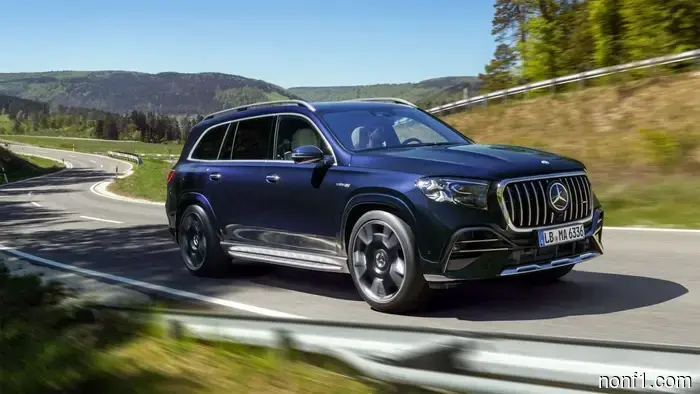 AMG Plans to Launch 27 New Vehicles Over the Next 3 Years, Beginning with V8 SUVs: TDS
The 2027 Mercedes-AMG GLS63 and GLE63S, both equipped with flat-plane V8 engines, herald a wave of new offerings from Germany's powerhouse of performance vehicles.
AMG Plans to Launch 27 New Vehicles Over the Next 3 Years, Beginning with V8 SUVs: TDS
The 2027 Mercedes-AMG GLS63 and GLE63S, both equipped with flat-plane V8 engines, herald a wave of new offerings from Germany's powerhouse of performance vehicles.
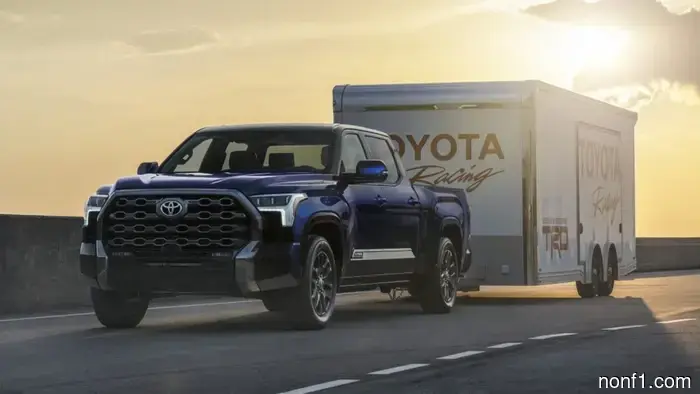 Toyota Will Not Substitute Every Recalled Tundra V6, and Some Owners Are Frustrated
Toyota will rely on software instead of wrenches to determine which recalled Tundras require new engines.
Toyota Will Not Substitute Every Recalled Tundra V6, and Some Owners Are Frustrated
Toyota will rely on software instead of wrenches to determine which recalled Tundras require new engines.
How Toyota's First Le Mans Victory in Four Years Reflects the Spirit of Competition in the Race
Despite Ferrari's claims of an uneven Balance of Performance and the misfortunes of other teams—along with previous disappointments for the Japanese manufacturer—Toyota returned to Le Mans and achieved a legitimate victory.