
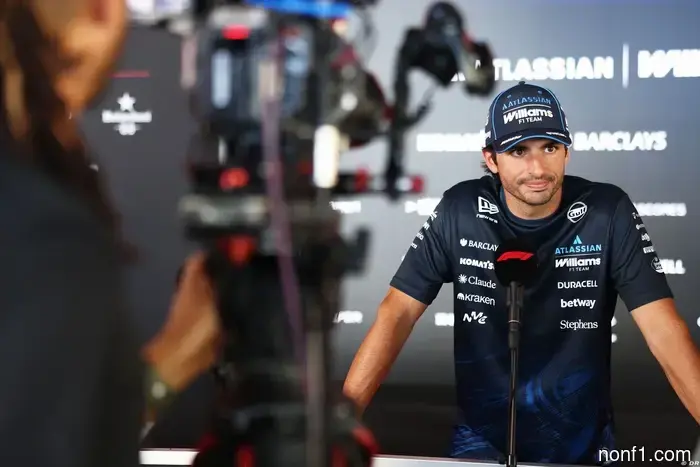
Sainz suggests penalty following Austria yellow flag controversy.
The repercussions from the handling of yellow flags during the qualifying session at the Austrian GP remain significant, with Carlos Sainz suggesting an automatic penalty for drivers who instigate such incidents. George Russell maintained his pole position after properly adhering to the regulations during a single yellow flag following Max Verstappen's crash, yet numerous drivers and commentators believed the FIA should have opted for double yellow flags or a red flag instead. Sainz, who serves as a director of the GPDA, now thinks that the rules need to be revised. "I have an idea of my own that has not yet been discussed within the GPDA," said the Williams driver. "I might bring it up, and we can explore its application. It's evident to me that the situation warranted a double yellow flag or a red flag." He emphasized that Russell was not at fault. "George handled it perfectly according to the regulations. He earned that pole position because he adhered to the rules flawlessly. It should never have been permissible for him to clock that lap in such a hazardous situation."
Sainz argued that any driver responsible for a qualifying yellow or red flag should automatically incur a three-place grid penalty. "I’m not suggesting that Max did it on purpose," the Spaniard noted. "He experienced a technical issue and wasn't even in pole position, so he had no motive to act that way, but we need to address these incidents." Verstappen concurred that changes are necessary, though he questioned Sainz’s suggested solution. "If someone crashes on purpose, I believe the penalty should be even more severe," he stated. "In my situation, I couldn't have avoided that crash." The Dutch driver instead highlighted a rule already in effect in other motorsport categories. "In other series, if you cause a yellow or red flag, you lose your best lap time. It's certainly something worth considering." He also acknowledged that the FIA's response to the Austrian situation was the primary concern. "Initially, it shouldn’t have been just a single yellow flag; it should have at least been a double yellow flag or a red flag," Verstappen remarked. "I likely would have done the same as Russell in finishing my lap, but it shouldn’t be permissible to complete your lap under those circumstances. That’s what’s troubling about this incident."
Ferrari's Charles Leclerc opposed the idea of an automatic penalty. "The driver who crashes already pays a significant price," he commented. "That driver misses out on finishing their lap, which might have been good enough for a favorable starting position. I don't believe this should be a blanket rule. However, we have discussed this issue as drivers at certain circuits." F1 legend Jean Alesi, on the other hand, criticized race control rather than Russell or Verstappen. "The fact that no red flag was displayed while a car was crashed at the side of the track gives me chills," he told Corriere della Sera. "It's a dreadful message to everyone in Formula 1, especially to younger drivers. It’s not about adapting to the mindset of race management, but about ensuring that situations like this never arise again, as if the tragedy involving Jules Bianchi never took place. It's unacceptable."
Other articles
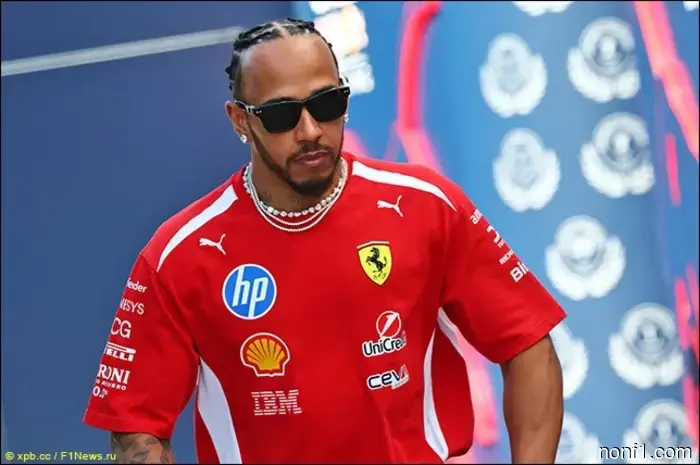 Hamilton: We are behind in the title race.
On Sky Sport News, Lewis Hamilton spoke about Ferrari's main problem – an insufficiently powerful power unit…
Hamilton: We are behind in the title race.
On Sky Sport News, Lewis Hamilton spoke about Ferrari's main problem – an insufficiently powerful power unit…
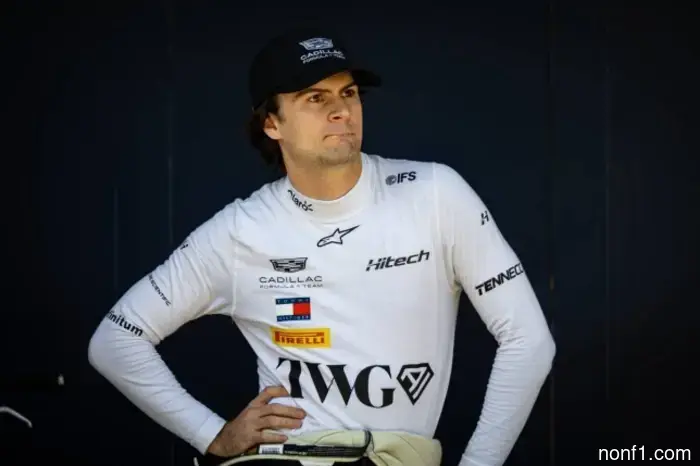 Colton Herta: The main task is to improve in qualifications.
Colton Herta acknowledged that his debut season in Formula 2 is not going well, and things can only improve if he steps up in qualifying...
Colton Herta: The main task is to improve in qualifications.
Colton Herta acknowledged that his debut season in Formula 2 is not going well, and things can only improve if he steps up in qualifying...
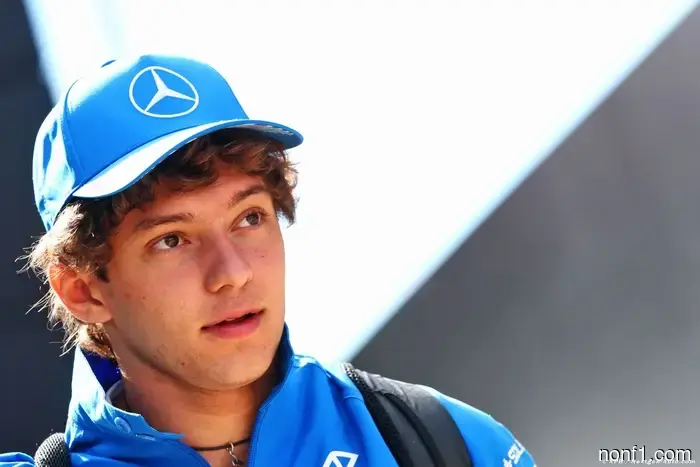 Antonelli acknowledges that Russell's 'stay calm' remark was directed toward him.
Formula 1 | Kimi Antonelli has acknowledged that George Russell's well-known "stai calmo" radio message following qualifying in Austria was, in fact, aimed at his Mercedes team.
Antonelli acknowledges that Russell's 'stay calm' remark was directed toward him.
Formula 1 | Kimi Antonelli has acknowledged that George Russell's well-known "stai calmo" radio message following qualifying in Austria was, in fact, aimed at his Mercedes team.
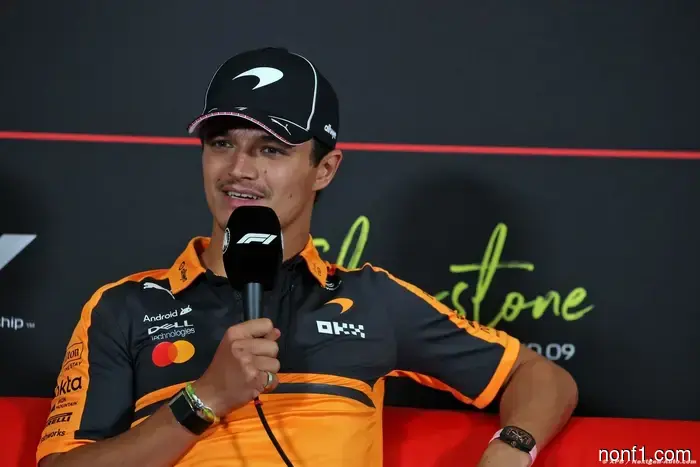 Norris indicates that Verstappen has a desire to switch to McLaren.
Formula 1 | The ongoing saga of Max Verstappen possibly joining McLaren remained the central topic of conversation at Silverstone on Thursday, involving the Dutch driver, Lando Norris, and Oscar Piastri (…)
Norris indicates that Verstappen has a desire to switch to McLaren.
Formula 1 | The ongoing saga of Max Verstappen possibly joining McLaren remained the central topic of conversation at Silverstone on Thursday, involving the Dutch driver, Lando Norris, and Oscar Piastri (…)
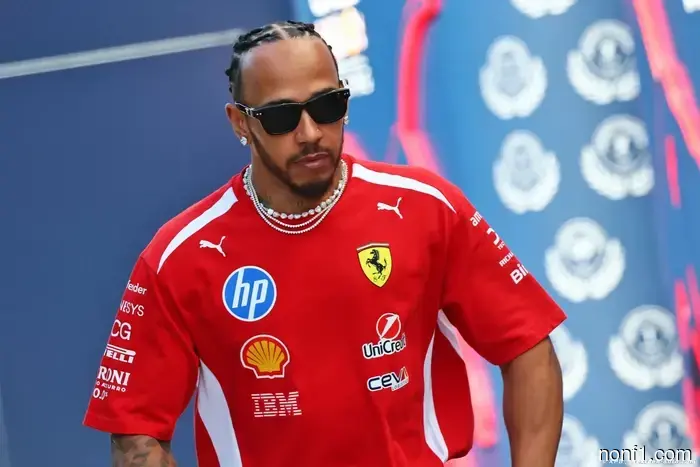 Hamilton stated that he should have the final decision regarding the Ferrari deal for 2027.
Formula 1 | There is growing anticipation that Lewis Hamilton will stay at Ferrari for 2027, although reports indicate that the ultimate decision may depend on the (…)
Hamilton stated that he should have the final decision regarding the Ferrari deal for 2027.
Formula 1 | There is growing anticipation that Lewis Hamilton will stay at Ferrari for 2027, although reports indicate that the ultimate decision may depend on the (…)
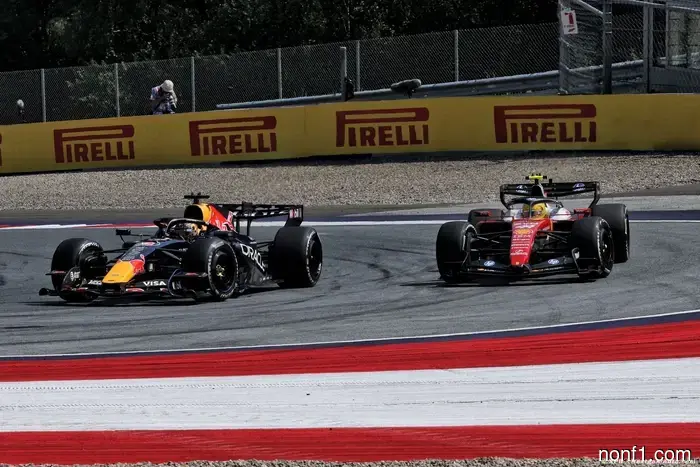 Marko participates in the discussion about the budget cap regarding continuous upgrades.
Formula 1 | Dr. Helmut Marko has added to the increasing inquiries regarding how certain Formula 1 teams manage to implement significant upgrades without seemingly facing any issues with the (…)
Marko participates in the discussion about the budget cap regarding continuous upgrades.
Formula 1 | Dr. Helmut Marko has added to the increasing inquiries regarding how certain Formula 1 teams manage to implement significant upgrades without seemingly facing any issues with the (…)
Sainz suggests penalty following Austria yellow flag controversy.
Formula 1 | The repercussions of Formula 1's contentious management of the yellow flags during the Austrian GP qualifying are ongoing, as Carlos Sainz suggests an automatic (…)