
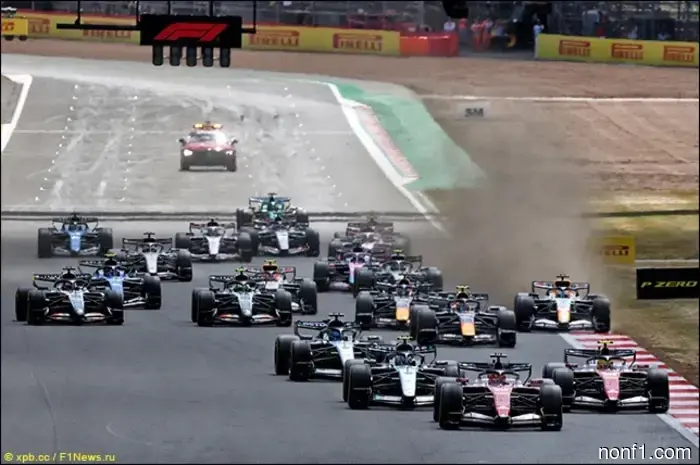
Martin Brundle on the results of the British Grand Prix
Former Formula 1 driver and Sky Sport F1 commentator Martin Brundle summarized the British Grand Prix...
The 2026 British Grand Prix at Silverstone was a grand event and could have been truly epic if not for one rule that I have been complaining about for many years.
Over four days, 564,000 spectators attended the circuit. Fans who were there all weekend were counted several times, but on race day, there were 175,000 people in the stands, and everyone I met or saw was happy. It was a real celebration.
Since this was a weekend with a Saturday sprint, all participants had to work at their limits, which is not easy but adds energy to each session.
Teams and drivers know that the championship can be won or lost due to a few points, as was the case last year. Every point matters, even if only eight are awarded for winning the sprint.
The sprint start was bright. Given that the distance was only 17 laps, all drivers eagerly used the Boost mode for overtaking. I remember the turbo cars of the 80s, when it was so nice to press the boost button on the steering wheel and think about fuel later.
When the initial battles calmed down, drivers needed a few laps to stabilize the battery charge situation. Ahead was a duel between Lewis Hamilton's Ferrari and Kimi Antonelli's Mercedes.
One cannot help but admire the lineup of today's Formula 1: a teenager taking the place of a seven-time champion behind the wheel of a Mercedes is battling this champion wheel to wheel with a 21-year age difference.
In the end, Antonelli, who always performs well in the second half of any stint on a single set of tires, cornered Hamilton at the exit of Turn 4 Loop Turn 4, down Wellington Straight and into Turn 6 Brooklands.
Lewis spent some battery charge on defense, while Kimi wisely waited for the right moment and, using the overtake mode and all available tools, surged into the lead on Hangar Straight. He sped past his rival with such a speed advantage that it was almost painful to watch. This was Antonelli's first sprint victory.
Lando Norris drove excellently and finished third in the sprint on a weekend when McLaren really lacked speed. George Russell finished fourth, while Charles Leclerc in the other Ferrari came in only fifth, with a significant gap.
Max Verstappen was dissatisfied with the speed and handling of his car all weekend but managed to show good times when it mattered. Isaac Hajar in the other Red Bull looked slightly faster and ultimately outqualified Max for the main race.
The guys from Racing Bulls — Liam Lawson and Arvid Lindblad — performed excellently. Their team is the fifth fastest, and they consistently earn points.
Lawson scored points in both races, while Lindblad finished seventh in his debut British Grand Prix on Sunday. Overall, impressive results for a team that is now just one point behind Alpine in the Constructors' Cup.
After the sprint, Leclerc seemed to have an epiphany regarding the settings and driving characteristics of the 2026 cars. In qualifying, he secured a spot in the front row of the main race, finishing only behind the unstoppable Antonelli.
A great start from both Ferraris put Leclerc in the lead, while Hamilton, starting third, moved up to second. Antonelli wisely stayed in third — he needed to defend his championship lead and had enough speed and confidence to rectify the situation over the next 52 laps.
Leclerc confidently led, while Hamilton was less satisfied with the behavior of the Ferrari with full tanks. Antonelli would have caught up and passed him again, but the gap to the leading Leclerc was closing very slightly.
On lap 23, Ferrari called Hamilton into the pits to put on a new set of Hard tires, while Mercedes serviced Russell on the same lap. The leading Leclerc pitted on lap 25, and Antonelli managed to maintain decent speed until Mercedes forced him to pit ten laps later, giving him a significant advantage in tire freshness compared to Leclerc. For comparison, Verstappen and Norris made their second pit stop just three laps after Kimi's first pit stop.
Antonelli quickly closed the gap to Leclerc, and it seemed inevitable that he would win the race, but on lap 41, he reported steering issues and lost pace. Part of the aerodynamic bodywork on the left front wheel of his car was damaged on the curb at the outside of the high-speed Copse corner.
It was unfortunate for him, but he learned an important lesson: he did not provide clear enough information about his problems when entering the pits. The team quickly changed the nose cone and tires, but the damaged bodywork still blocked the steering, and he had to return to the pits two laps later.
Kimi did not give up. In 10th place with an important single point in his pocket, he picked up impressive pace and continued the race. But due to the problems he encountered, he kept going off track, ultimately receiving a five-second penalty.
This rule needs adjustment: penalties for going off track are intended for cases where drivers gain an advantage by cutting corners to maintain higher speed. They should not be applied when a driver is trying to cope with a mechanical failure or yields the line to another car.
Nevertheless, Kimi's pace was so good that he would have served the penalty and still finished ahead of two Alpine drivers, until on lap 48, Verstappen's rear wing failed, failing to restore full downforce when closing the adjustable element. For the second time in eight days, albeit for slightly different reasons, Max went off track because of this.
He ended up in the gravel trap of the high-speed Stowe corner, leading to the deployment of the safety car. Ferrari called Leclerc and Hamilton into the pits to put on almost new sets of Soft tires before the restart.
Russell had to make an unscheduled pit stop on lap 34 due to a slow puncture. At that moment, it seemed that George was having too much bad luck this season, but that feeling did not last long. Mercedes decided not to call him into the pits behind the safety car; he ended up ahead of Hamilton and finished an astonishing second.
This happened because the race was not resumed. Some spectators rightfully booed the officials for this.
Given the immense power of modern cars, where there is no need to worry about having battery charge left after the finish, we would have seen an epic battle on the last lap. But that did not happen.
Provided that the situation is deemed safe — and on a dry sunny day, with no people, debris, or stranded cars on the track, it was — the race director can allow lapped drivers to overtake the leaders and continue the race.
I believe this practice was introduced so that lapped drivers do not affect the outcome. But this system unjustifiably prolongs the safety car period, especially on long tracks like Silverstone and Spa.
I often had sharp discussions on this topic with the late Charlie Whiting, as it makes no sense, especially considering that the rules state: the safety car must return to the pits on the next lap after allowing lapped drivers to pass. Does anyone remember what happened in Abu Dhabi 2021?
In this case, the announcement about lapped drivers came on lap 51, and despite numerous hints that the safety car would leave the pits at the end of this lap (which turned out to be a mistake), the race ended without a restart.
There are different solutions. For example, in IndyCar, if there are less than 10 laps to go, instead of simply allowing lapped drivers to pass, they are forced to pit and return at the end of the pack.
One could simply allow lapped drivers to drop back from the pack. A red flag could be waved, and a restart could be conducted from the spot, although this would take some time. But instead, we prioritize drivers who, for one reason or another, did not perform well that day over the leaders and, most importantly, over the fans.
One "but" is that it needs to be clearly defined who is considered lapped. According to the regulations, this depends on whether they "were lapped at the moment of crossing the finish line at the end of the lap during which they crossed the safety line for the second time."
This caught Williams and Carlos Sainz off guard, not least due to the location of the pit lane in Silverstone — after the race, he was penalized with a "penalty lap." Formula 1 does everything to ensure that fans understand nothing.
After the race, Hamilton faced an accusation of violating the rules under yellow flags, and he himself was sure he would receive a penalty, which — considering that all other drivers were driving closely behind the safety car — would have deprived him of points.
Instead, he received a warning, as upon reviewing the footage, it became clear that Lewis entered the yellow flag sector before the corresponding indication was shown on the track, and before the tenth corner, the green flag indication was already displayed. Seeing the panel with the green indication, the driver would naturally decide to continue racing. Therefore, in the end, it was limited to a warning.
Rejuvenated and at peace, Leclerc achieved his first victory since Austin '24, bringing Ferrari its 250th Grand Prix win at the same track where the team secured its first victory in 1951.
Luck helped Russell return to second place; he is now just 25 points behind championship leader Antonelli, while Hamilton, despite a five-second penalty for a false start and the yellow flag incident, finished third and
Other articles
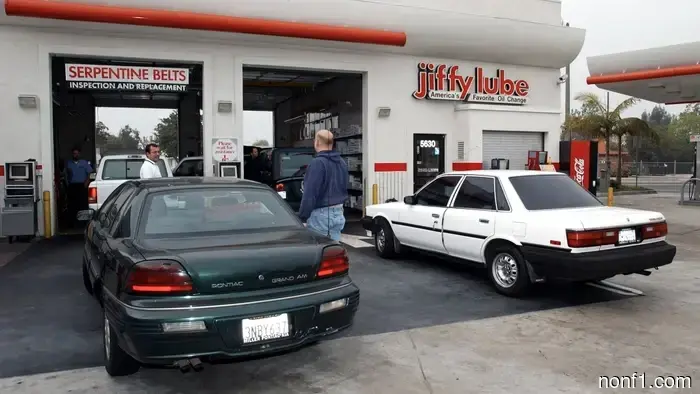 Jiffy Lube has been acquired by a private equity firm in a deal worth $1.3 billion.
Previously owned by Shell, the fast auto-service chain has been acquired by a firm named Monomoy Capital Partners in a deal worth ten figures.
Jiffy Lube has been acquired by a private equity firm in a deal worth $1.3 billion.
Previously owned by Shell, the fast auto-service chain has been acquired by a firm named Monomoy Capital Partners in a deal worth ten figures.
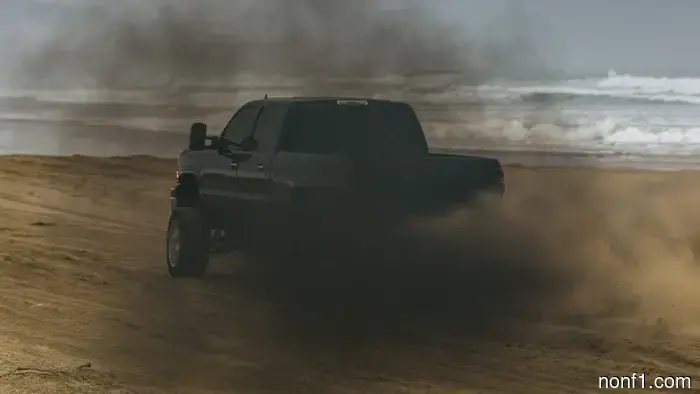 Trump Grants Pardons to 9 Diesel Tuners Accused of Removing Emissions Equipment
As the Trump administration steps back from enforcing regulations on diesel emissions, the president states that the pardons are simply a matter of common sense.
Trump Grants Pardons to 9 Diesel Tuners Accused of Removing Emissions Equipment
As the Trump administration steps back from enforcing regulations on diesel emissions, the president states that the pardons are simply a matter of common sense.
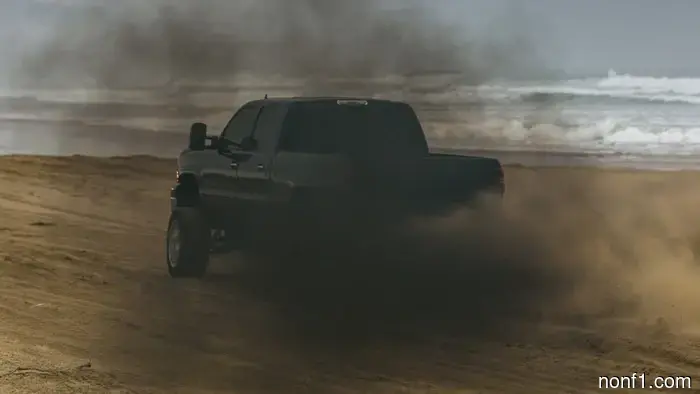 Trump Grants Pardons to 9 Diesel Tuners Accused of Removing Emissions Devices
As the Trump administration steps back from regulating diesel emissions laws, the president claims that the pardons are simply a matter of common sense.
Trump Grants Pardons to 9 Diesel Tuners Accused of Removing Emissions Devices
As the Trump administration steps back from regulating diesel emissions laws, the president claims that the pardons are simply a matter of common sense.
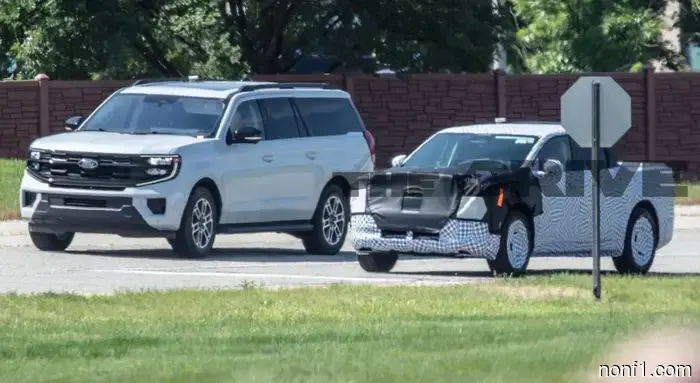 Spotted: Ford's $30,000 Electric Truck Seen Alongside an Expedition
Ford's upcoming electric truck includes authentic door handles and a large touchscreen display.
Spotted: Ford's $30,000 Electric Truck Seen Alongside an Expedition
Ford's upcoming electric truck includes authentic door handles and a large touchscreen display.
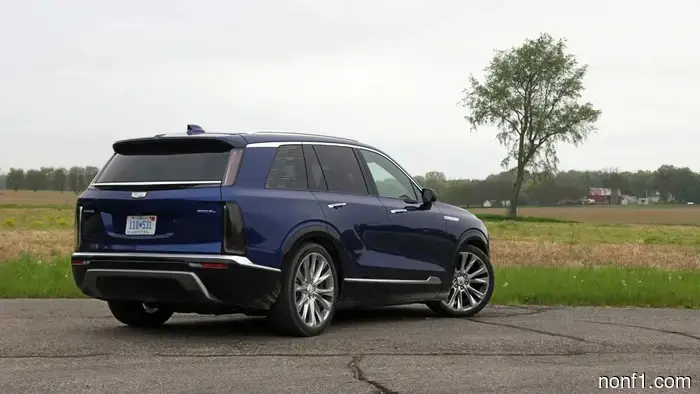 Cadillac Issues Recall for Vistiq EVs Due to Potential Child Entrapment in the Third-Row Seat
The third-row seat of the Vistiq has the potential to entrap passengers, leading to a recall and a stop-sale directive for all Cadillac dealerships.
Cadillac Issues Recall for Vistiq EVs Due to Potential Child Entrapment in the Third-Row Seat
The third-row seat of the Vistiq has the potential to entrap passengers, leading to a recall and a stop-sale directive for all Cadillac dealerships.
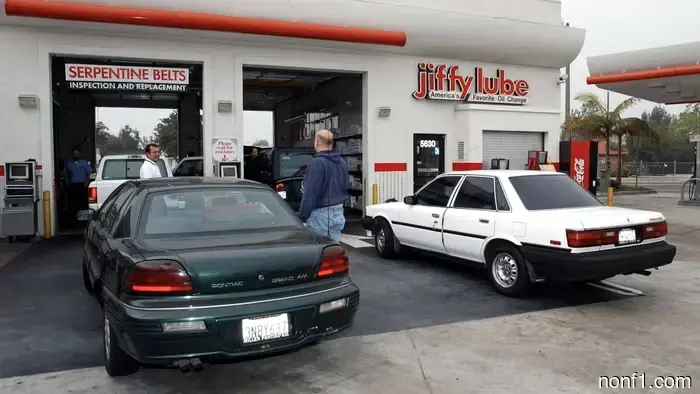 Jiffy Lube has been acquired by a private equity firm in a deal valued at $1.3 billion.
Previously owned by Shell, the fast auto-service chain has been acquired by a group known as Monomoy Capital Partners in a deal worth 10 figures.
Jiffy Lube has been acquired by a private equity firm in a deal valued at $1.3 billion.
Previously owned by Shell, the fast auto-service chain has been acquired by a group known as Monomoy Capital Partners in a deal worth 10 figures.
Martin Brundle on the results of the British Grand Prix
Former Formula 1 driver, Sky Sport F1 commentator Martin Brundle summarized the British Grand Prix...