
How This Rocket Scientist Transformed NASCAR Into an Unforgettable Audio Experience in the '90s and '00s
Stapleton42 via YouTube
The most significant news and reviews in the automotive world, no nonsense.
Our daily newsletter, delivered for free every weekday, brings you the stories that truly matter.
The late 1990s and early 2000s marked a peak period for NASCAR. The racing series enjoyed soaring popularity, featured a roster of memorable drivers, and the cars emitted a thrilling sound due to the widespread adoption of X-pipe exhaust systems, which produced a louder, sharper noise compared to the previous burbling systems. This innovation can be credited to a rocket scientist seeking a change in career.
In a recent interview with YouTuber Stapleton42, Boyd Butler, who previously worked at Hercules Aerospace producing solid-rocket motors for NASA and the military, transitioned into the exhaust-system industry. He founded a company called Dr. Gas, focusing on X-pipe systems, which are generally more efficient at expelling exhaust from combustion chambers and allowing fresh air for the next cycle. Butler’s advertisements in magazines drew the attention of Mark Giles, a fabricator at Morgan-McClure Motorsports.
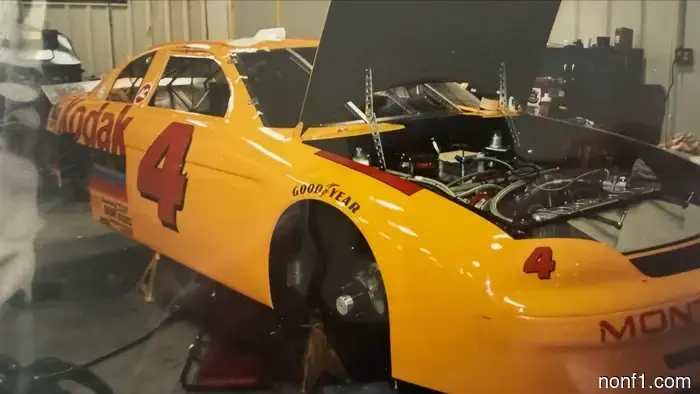
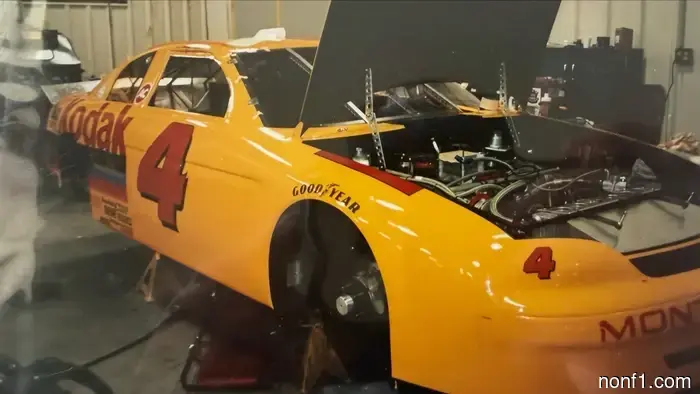
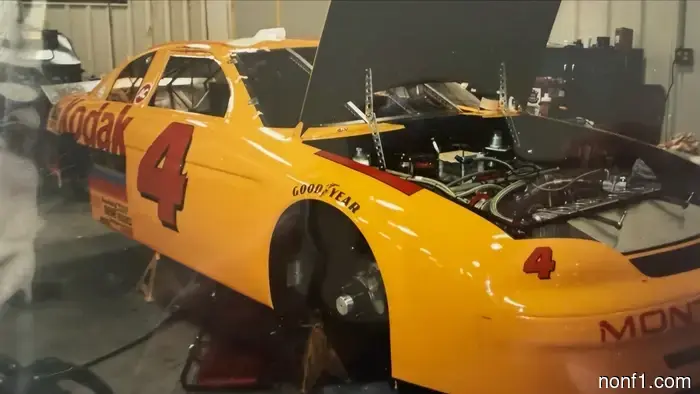
Located in Abingdon, Virginia, Morgan-McClure was experiencing a brief but notable period of success with driver Sterling Marlin and the vibrant yellow Kodak-sponsored No. 4 Chevrolet. Marlin won the Daytona 500 in 1994, but no competitive race team rests on past victories; thus, team owner Larry McClure sought every possible advantage for a repeat win in 1995. Giles and McClure were right in their instincts: the X-pipe system provided an additional 4.5 horsepower, which translated to an extra 1 mph of top speed at Daytona—significant over a 500-mile race predominantly run at full throttle. The distinct sound was merely a secondary benefit.
Butler initially sent several parts to the team's shop, but the fabricators struggled to reshape the round pipe into an oval form necessary for ground clearance. McClure requested Butler to fly from his home in Utah to Virginia to supervise the installation. Consequently, Butler packed exhaust tubing into scuba gear bags and boarded a flight. After two-and-a-half days of intense work, the team prepared for Daytona.
In racing, it's essential to keep any technical advancements confidential. Once other teams detect an unfair advantage, they will attempt to replicate it or have it banned. However, the X-pipe was no secret, as it made Marlin's car sound entirely unique on the track. Fortunately for Morgan-McClure, nobody fully understood it. Jack Roush speculated that the team was utilizing a specialized exhaust system but failed to identify the X-pipe as the key element.
Marlin eventually triumphed in the race, achieving back-to-back victories in the Daytona 500. Morgan-McClure secured Butler in a one-year exclusive agreement, but soon after, the floodgates opened and other teams began employing X-pipe exhausts. Their notable sound became synonymous with NASCAR (and the IROC series) until the early 2000s. NASCAR banned the X-pipe with the introduction of the Car of Tomorrow for the 2008 season, enforcing much stricter regulations on exhausts and other components in subsequent years. This shift has effectively relegated innovative engineering solutions, such as the X-pipe, to history.
Other articles
 Lawson: It's not easy to complete a lap cleanly at the Hungaroring.
On Friday at the Hungaroring, both Racing Bulls drivers made it into the top ten...
Lawson: It's not easy to complete a lap cleanly at the Hungaroring.
On Friday at the Hungaroring, both Racing Bulls drivers made it into the top ten...
 Wurz states that the GPDA is already modifying the unpopular rules set for 2026.
Formula 1 | GPDA chairman Alex Wurz states that the drivers of Formula 1 have already influenced modifications to the heavily criticized 2026 regulations, even though a more (...)
Wurz states that the GPDA is already modifying the unpopular rules set for 2026.
Formula 1 | GPDA chairman Alex Wurz states that the drivers of Formula 1 have already influenced modifications to the heavily criticized 2026 regulations, even though a more (...)
 Hamilton misses important FIA meeting regarding Spa penalties.
Formula 1 | It has been reported that multiple Formula 1 drivers missed a significant FIA meeting in Hungary, which was meant to address driving standards and contentious stewarding issues. (…)
Lawson: It's not easy to complete a lap cleanly at the Hungaroring.
On Friday at the Hungaroring, both Racing Bulls drivers made it into the top ten...
Hamilton misses important FIA meeting regarding Spa penalties.
Formula 1 | It has been reported that multiple Formula 1 drivers missed a significant FIA meeting in Hungary, which was meant to address driving standards and contentious stewarding issues. (…)
Lawson: It's not easy to complete a lap cleanly at the Hungaroring.
On Friday at the Hungaroring, both Racing Bulls drivers made it into the top ten...
 Nico Hülkenberg: Every little detail will matter
Audi worked without any issues on Friday, completing the planned program...
Nico Hülkenberg: Every little detail will matter
Audi worked without any issues on Friday, completing the planned program...
How This Rocket Scientist Transformed NASCAR Into an Unforgettable Audio Experience in the '90s and '00s
A new exhaust system increased the speed of the car that won the 1995 Daytona 500, with the impressive sound being a mere secondary benefit.