
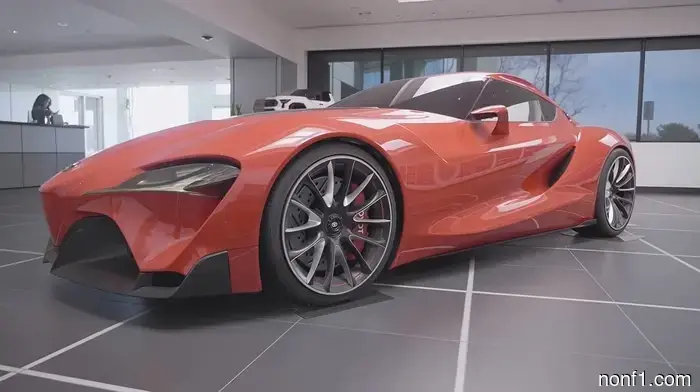
Lost in Translation: FT-1 Designer Discusses Why Toyota’s Production Supra Differed from the Concept Model
The most significant car news and reviews, no nonsense
Our free daily newsletter delivers the most important stories straight to your inbox every weekday.
The fifth-generation Toyota Supra has essentially come and gone, with no direct successor anticipated in the near future. It feels somewhat strange to say this, as Caleb noted a few months back, because it hardly seems like the car was around for very long.
We spoke with Alex Shen, the Studio Chief Designer at Calty Design. Calty is Toyota’s design studio located in California, known for various projects, including the concept car that eventually evolved into the MkV Supra. Shen shed light on the gap between concepts and their modern production counterparts, providing insight into how contemporary consumer preferences are influencing new design trends.
Calty engages in a lot of exploratory design work. Given this focus, it's expected that their concepts will stretch boundaries—often exceeding what’s practical for production. The team creates many “early studies,” which are vague designs aimed at suggesting stylistic features, not necessarily reflective of a final product.
“We're an advanced design studio, so much of what we do isn’t meant for public consumption,” Shen explained. “Perhaps those ideas aren’t fully developed yet, or are still in progress.”
Of course, not every design produced by the studio gets featured by the brand, let alone made into a car. Therefore, when something successfully navigates the entire pipeline—like the Toyota FT-1 did to become the new Supra—it often leads to introspection.
“Time ultimately reveals the quality of a product you’ve designed,” Shen remarked.
Each year, Calty’s designers select a project to delve into further. The project that would become the Supra wasn’t yet named at that time, and the team decided that the best way to present a new design was to allow the leadership to experience it firsthand.
At that point, Shen noted, sports cars were seen as financial burdens. He didn’t expect this project would gain approval, especially since Toyota wasn’t facing the usual appeal challenges that might encourage a manufacturer to take a risk on something more thrilling.
“We hadn’t received any word about potential production plans,” he stated. “We already had a fairly strong image back then.”
“What retained the Supra identity was the essence of what it was meant to represent. Over time, it transitioned from a Celica Supra to a true sports car,” Shen said.
This led the team to ponder an obvious question: “What should come next?”
The outcome was the FT-1. However, considering the challenges the segment faced, mere aesthetics wouldn’t convince the leadership. Calty opted for a more refined strategy.
“Sports cars are meant to be driven. They should evoke a strong emotional response,” Shen emphasized. “It’s insufficient just to launch a car, right?”
There was a significant challenge, though. At that time, Calty didn’t possess anything resembling an actual vehicle to demonstrate; all they had was a design concept. That’s where Polyphony Digital entered the picture.
“So we integrated it into the setup. We put it in Gran Turismo,” Shen recounted.
After just a few laps in the digital FT-1, Akio-san was convinced. Calty's leadership soon communicated that the team was authorized to create a show car—something manufacturers are increasingly hesitant to do nowadays—while production had not yet been officially approved.
Calty’s team wasn’t even considering the complexities of the shared platform with BMW. They would need to align their design with both the physical limitations of the shared hardware and the financial constraints of a project that, to put it mildly, wasn’t expected to be profitable.
Given all these challenges, it’s surprising they even managed to create the vehicle, right?
Have a story tip? Reach out to us at tips@thedrive.com!
Other articles
 Misunderstood in Translation: The FT-1 Designer Clarifies Why Toyota’s Production Supra Differed from the Concept Model.
The designer behind Toyota's FT-1 Concept spoke with us about the contemporary timeline from concept to production.
Misunderstood in Translation: The FT-1 Designer Clarifies Why Toyota’s Production Supra Differed from the Concept Model.
The designer behind Toyota's FT-1 Concept spoke with us about the contemporary timeline from concept to production.
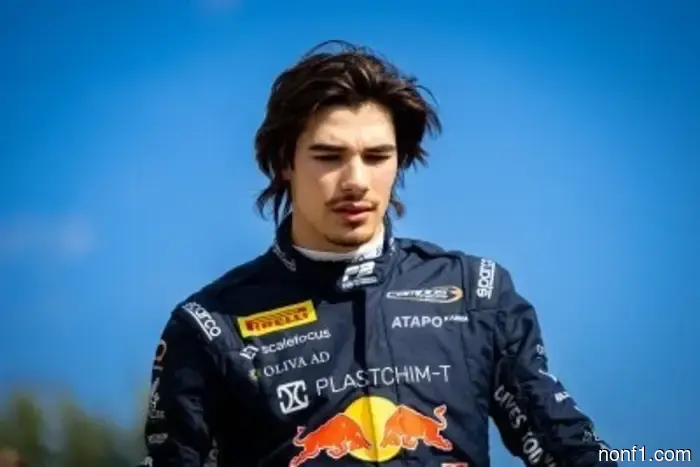 Report: Red Bull saved Tsolov from debt associated with Alonso.
Formula 1 | Red Bull's upcoming F1 talent Nikola Tsolov was allegedly saved from significant financial turmoil after Dr. Helmut Marko intervened to pull him out of a (…)
Report: Red Bull saved Tsolov from debt associated with Alonso.
Formula 1 | Red Bull's upcoming F1 talent Nikola Tsolov was allegedly saved from significant financial turmoil after Dr. Helmut Marko intervened to pull him out of a (…)
 Adrian Newey: We are on the right track!
Aston Martin has made some progress with the "specification B" of their car – Fernando Alonso reached the second part of qualifying for the first time this season...
Adrian Newey: We are on the right track!
Aston Martin has made some progress with the "specification B" of their car – Fernando Alonso reached the second part of qualifying for the first time this season...
 Lewis Hamilton will lose three places on the grid.
Considering the circumstances of the incident that occurred in the qualifying final, the stewards of the Hungarian Grand Prix found Lewis Hamilton at fault.
Lewis Hamilton will lose three places on the grid.
Considering the circumstances of the incident that occurred in the qualifying final, the stewards of the Hungarian Grand Prix found Lewis Hamilton at fault.
 Spare parts for the Stroll car will be delivered by plane.
On Friday, the mechanics were unable to repair the car due to a lack of spare parts, but everything should be ready by the start of the third practice...
Spare parts for the Stroll car will be delivered by plane.
On Friday, the mechanics were unable to repair the car due to a lack of spare parts, but everything should be ready by the start of the third practice...
 Windows: This is my best Friday in a long time.
Haas F1 drivers have different opinions about the results of Friday, but Oliver Berman had one less practice session – in the morning he gave up the cockpit to Rio Hirakawa…
Windows: This is my best Friday in a long time.
Haas F1 drivers have different opinions about the results of Friday, but Oliver Berman had one less practice session – in the morning he gave up the cockpit to Rio Hirakawa…
Lost in Translation: FT-1 Designer Discusses Why Toyota’s Production Supra Differed from the Concept Model
The designer behind Toyota's FT-1 Concept spoke with us about the current timeline from concept to production.