
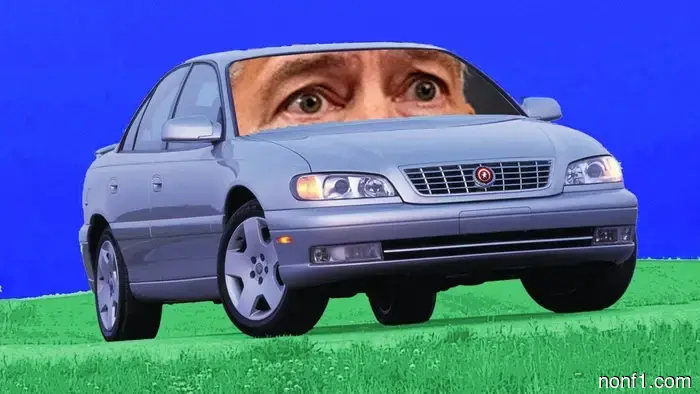
The ‘Freedom Car’ Targets the Correct Concept but Misidentifies the Real Culprit.
Andrew P. Collins
The most important car news and reviews, no nonsense
Our complimentary daily newsletter delivers the most significant stories directly to you, every weekday.
‘Freedom Car’ concept draws criticism. The initiative seeks to prevent mandates for automated and connected vehicles but lacks depth.
Noteworthy historical irony. The 2002 ‘FreedomCAR’ advocated for hydrogen technology, while the 2026 version is against technology mandates.
Automakers possess the authority. Without legislation, companies can dictate vehicle connectivity, restricting consumer options.
The influence of insurance companies. Insurers might render non-tracked vehicles unfeasible by advocating for data collection.
AI-assisted, editor reviewed
A letter from Transportation Secretary Sean Duffy to the six senators guiding the highway bill is circulating in news outlets this week. Hidden within it is a phrase that warrants discussion: “Freedom Car.” The Freedom Car concept is generally positive, but the way it's being presented is, at best, shortsighted and, at worst, regressive.
What Is the “Freedom Car”?
This is not a new Dodge variant or a proposal for a government-subsidized American equivalent of East Germany’s Trabant—though there is a degree of irony in Secretary Duffy’s presentation.
This does not involve a proposed law or specific regulation. It appears as a bullet point on a wish list of concepts. I’ll paste the precise wording from the document here.
In Appendix A, under the section titled Protecting Consumer Choice, Duffy stated:
“Freedom Car – Right to Drive Disconnected and Non-Automated: Prohibit any Federal, State, tribal, or local authority from mandating that vehicles sold or operated on public roads be fitted with automated driving systems or be capable of transmitting data wirelessly.”
It is referenced again in the text on page three:
“Protecting Consumer Choice: We must safeguard Americans' right to purchase and operate traditional vehicles by prohibiting any mandates requiring vehicles to be capable of wireless data transmission or automated driving.”
Republicans Also Introduced ‘FreedomCAR’ in 2002
Here’s the ironic point I referenced earlier. In 2002, then-Energy Secretary Spencer Abraham initiated the “FreedomCAR Partnership” concept. (CAR stood for Cooperative Automotive Research.) It was an R&D cost-sharing agreement between the Department of Energy and Detroit’s Big Three automakers (Ford, GM, and what was then known as DaimlerChrysler) aimed at advancing hydrogen fuel-cell technology.
Then-President Bush promoted it to the 2003 FreedomCAR and Fuel Initiative with the objective of reducing dependence on foreign oil. Spoiler alert: It didn’t really succeed, and we did not transition to hydrogen by 2010 as Secretary Abraham had envisioned.
In other words:
The 2002 FreedomCAR was a Republican-endorsed initiative focused on a technology mandate to encourage the adoption of hydrogen/fuel-cell technology, framed under the banner of “freedom,” including consumer choice.
Duffy’s 2026 Freedom Car represents a Republican-endorsed initiative aimed at blocking a technology mandate—preventing the government from requiring connected/automated technology, also framed as consumer freedom.
Same party, same slogan, same concept of “freedom”—contradictory policy. This type of catchphrase marketing is a bipartisan habit in Washington, but the “Freedom” + “car” combination has now made its second appearance under Republican influence. This time, the focus is on excluding technology rather than fostering it.
The Flaw in the 2026 ‘Freedom Car’ Reasoning
Duffy wrote about stopping the government from mandating autonomous or connected vehicles. At first glance, this appears to be a sensible idea. In the short term, a formal policy in that vein would protect your right to operate pre-Bluetooth cars. However, it doesn’t address what automakers will actually manufacture and sell.
Because, here’s the reality: There exists a limited number of non-digitally connected vehicles, and their availability is decreasing. Regularly driving a well-maintained 2005 Mazda3 might be reasonable in 2026, but what about in 2046?
If the U.S. government genuinely wanted to ensure Americans' rights to operate disconnected vehicles, it would need to enact legislation compelling automakers to ensure their ongoing availability. The framing of the “Freedom Car” concept in Duffy’s letter grants all the authority to the companies. If they collectively choose to make all their vehicles connected, by the time our children are driving, it will be impractical at best and impossible at worst to regularly drive a vehicle that does not actively collect user data.
Additionally, consider insurance companies. Currently, one prevalent car insurance tactic is to incentivize drivers to install their own car trackers, promising rate reductions if their driving patterns align with certain criteria. Insurance is mandatory in most states, so insurers could collectively decide to stop underwriting non-tracked vehicles, marketing it as a means to improve road safety, effectively rendering older cars illegal
Other articles
 Max Verstappen: Our Lily is my best reward
One of the main features of the latest issue of the Dutch magazine Formule1 is an interview with Max Verstappen, in which he talks not only about racing...
Max Verstappen: Our Lily is my best reward
One of the main features of the latest issue of the Dutch magazine Formule1 is an interview with Max Verstappen, in which he talks not only about racing...
 Lindblad: I want to try my hand in the Supercars series.
In three days, Arvid Lindblad will turn 19 years old. The British Racing Bulls driver is predicted to have a bright future, but he already knows what he wants to do after his career in Formula 1...
Lindblad: I want to try my hand in the Supercars series.
In three days, Arvid Lindblad will turn 19 years old. The British Racing Bulls driver is predicted to have a bright future, but he already knows what he wants to do after his career in Formula 1...
 Kulthard accused the FIA of a delayed reaction to the obvious.
David Coulthard is surprised that despite the obvious problems with the 2026 regulations, the FIA waited for the issues to manifest on the tracks before they started taking emergency measures...
Kulthard accused the FIA of a delayed reaction to the obvious.
David Coulthard is surprised that despite the obvious problems with the 2026 regulations, the FIA waited for the issues to manifest on the tracks before they started taking emergency measures...
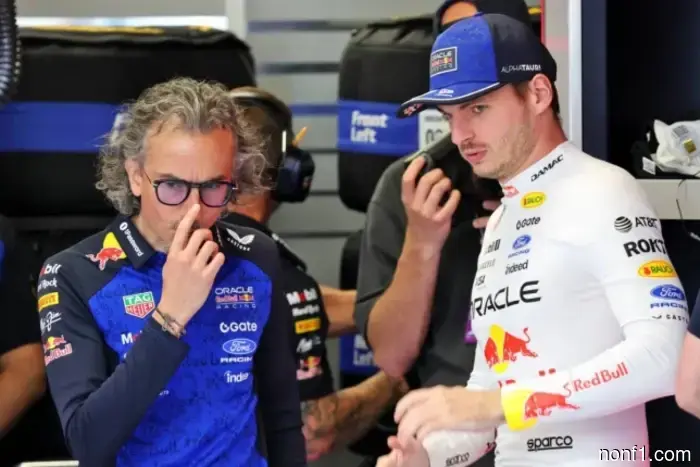 Verstappen: I've always been supported at Red Bull.
Although after 11 stages of the season Max Verstappen is only in 6th place in the individual standings, this does not prevent him from speaking highly of his team, which supports him in every way, including allowing him to work on other projects...
Verstappen: I've always been supported at Red Bull.
Although after 11 stages of the season Max Verstappen is only in 6th place in the individual standings, this does not prevent him from speaking highly of his team, which supports him in every way, including allowing him to work on other projects...
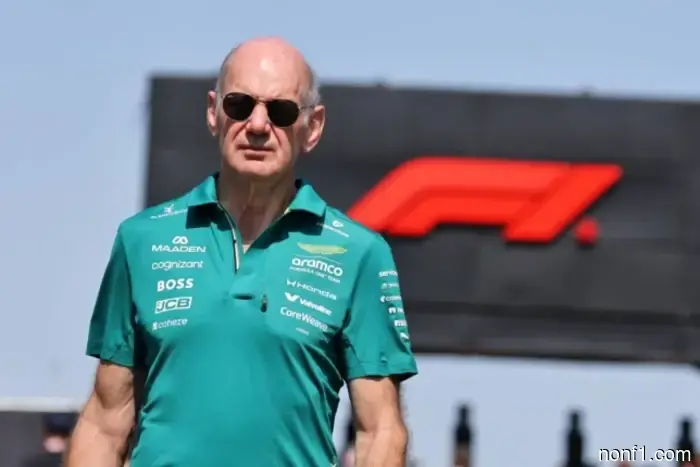 Newey: When relationships improve, results grow as well.
Adrian Newey fully agrees with Koji Watanabe's opinion that the difficulties experienced at the beginning of the season are in the past...
Newey: When relationships improve, results grow as well.
Adrian Newey fully agrees with Koji Watanabe's opinion that the difficulties experienced at the beginning of the season are in the past...
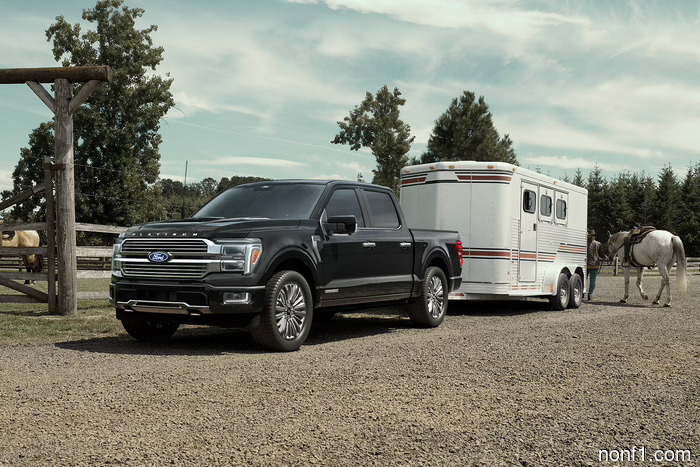 2027 Ford F-150 Removes 2.7L EcoBoost Engine and Reintroduces V8 for Higher Trim Levels
The King Ranch and Platinum trims are once more offered with the 5.0-liter Coyote engine, and Ford is introducing a new base engine for the F-150.
2027 Ford F-150 Removes 2.7L EcoBoost Engine and Reintroduces V8 for Higher Trim Levels
The King Ranch and Platinum trims are once more offered with the 5.0-liter Coyote engine, and Ford is introducing a new base engine for the F-150.
The ‘Freedom Car’ Targets the Correct Concept but Misidentifies the Real Culprit.
Sean Duffy's "Freedom Car" idea seems appealing, but it overlooks a significant gap in safeguarding the freedom of American motorists.