
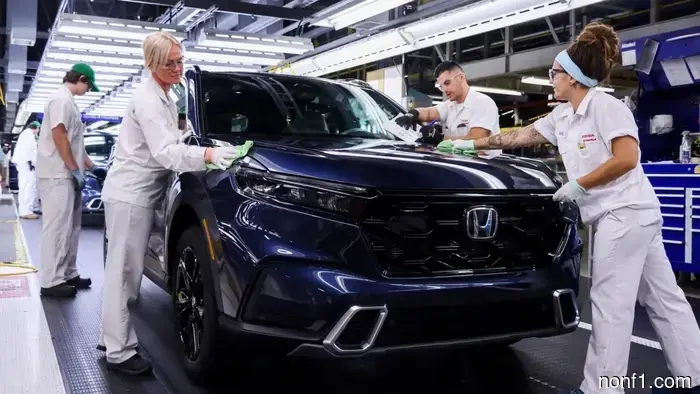
Inside Honda’s Strategy to Maintain Affordable Car Prices Without Burdening Buyers
Honda
The latest car news and reviews, without any fluff.
Our free daily newsletter delivers the most important stories straight to your inbox every weekday.
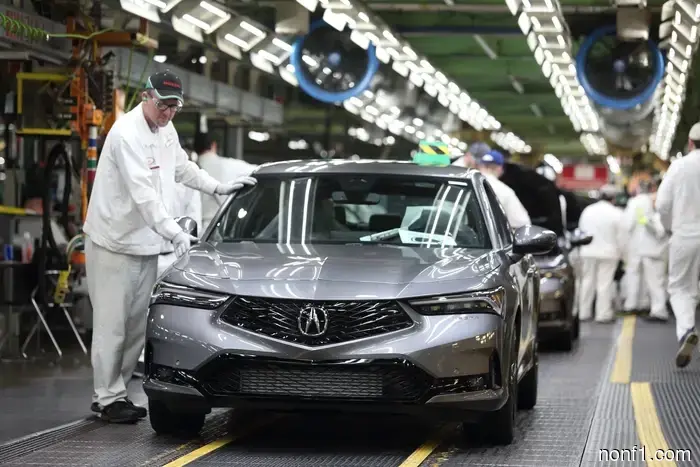
Everyone is feeling the impact of rising living costs these days, whether it's for everyday items like milk or purchasing a new vehicle. As modern cars grow more intricate, incorporating increased technology and often facing steep tariffs, prices have skyrocketed in recent years, making them less accessible for average consumers. As a result, major automakers such as Honda are actively seeking ways to cut costs and enhance efficiency.
In a recent discussion with The Drive, Noriya Kaihara, Executive Vice President of Honda Motor Company, elaborated on these strategies. Some tactics appear quite straightforward, like minimizing manufacturing complexities, streamlining product lines, and shortening time-to-market, while others are more innovative.
“Affordability is essential for future customers, particularly younger ones,” Kaihara stated to The Drive. “We are engaged in several projects, including the 'Triple Half' initiative. This means we aim to reduce development times by half, cut costs by half, and also limit resources by half [hence the name Triple Half]. By doing this, we can respond swiftly to shifts in market conditions.”
In May, Honda announced that its Triple Half plan would commence this year for “minor model change” efforts, with significant model changes starting in 2028. Regardless, the company aims to decrease development costs, timelines, and workload by up to 50%. It also seeks to boost production efficiency by around 20% over the next five years by optimizing resource investments in new models and equipment.
Kaihara also mentioned Honda's intentions to leverage AI to meet the three main goals noted above, beginning with crash testing, which is typically time-consuming and costly. The use of AI aims to derive better-informed conclusions more efficiently, conserving both time and resources. It's important to clarify that AI-assisted testing is not intended to replace mandatory testing and development required by law but to serve as a supplementary approach. The more virtual work that can be done before real-world testing, the more time and money saved later on.
“We’re leveraging AI in the development aspect of the business, particularly in testing technologies, such as crash tests,” said Kaihara. “For these processes, we've realized we can conduct them using AI without the need for actual preliminary tests, which could significantly impact model or technology development.”
When questioned about how Honda can remain competitive while providing advanced hardware and software, Kaihara highlighted the company's current project in China, where teams are being deployed to learn how to enhance efficiency.
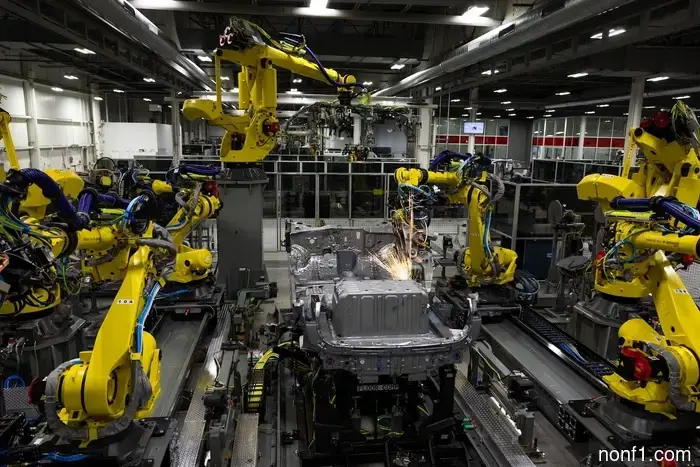
“We are also collaborating with the Chinese,” he explained. “In the auto sector, China is at the forefront of technology, I must say, so we have teams there studying their manufacturing technologies and scientific methods. Previously, we were teaching them how to manufacture car parts and learn our techniques. Now, we are adopting some of their expertise for our development, particularly in robotics that will soon be implemented.
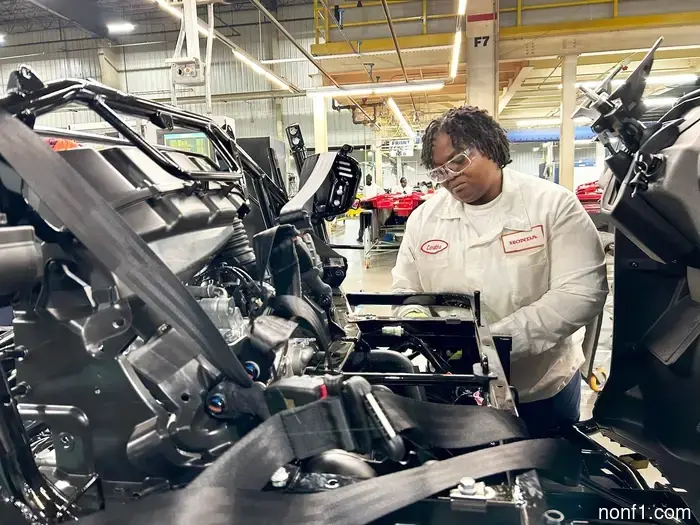
“The integration of these robotics in our factories will be crucial for making many products more appealing from a cost perspective,” Kaihara continued. “However, we must tread carefully, as this is also a political issue. Thus, we cannot simply utilize Chinese technologies in the U.S.—we avoid that. It means we need to learn but maintain a clear distinction between the U.S. and China, requiring us to develop our technologies.”
Earlier this year, Honda reported its first financial loss since 1957, with an operational deficit of approximately $2.7 billion largely attributed to the discontinuation of its global EV portfolio. However, the company will now redirect its former EV budget towards the development of hybrid vehicles that align better with its global offerings. It is currently developing a new two-motor hybrid system for upcoming models, including the Civic and Acura RDX.
American Honda CEO Eiji Fujimura supported Kaihara’s statements, emphasizing that affordability (and reliability) remains a priority for Honda. He noted that affordability is often best represented through value, rather than merely having the least expensive cars, asserting that meeting consumers' wants, needs, and expectations is crucial. This is evident in the brand’s entry-level models, such as the Civic LX, which starts at $25,890 (including destination), the popular $28,000 Civic Sport that I recently reviewed, and, on the Acura side, the Integra and ADX, which begin around $35,000.
“I would like to emphasize that affordability isn't solely about cutting costs, but also about delivering great value to customers,” Fujimura told The Drive. “The key is value, which is why I consistently encourage our leaders to focus on [enhancing] value for money [both for the company and consumers].”
Have a tip? Email us at tips@thedrive.com.
Other articles
 A unique first turn is being built on the track in Kiddia.
The construction of the Speed Park Track racetrack in Qiddiya continues in Saudi Arabia.
A unique first turn is being built on the track in Kiddia.
The construction of the Speed Park Track racetrack in Qiddiya continues in Saudi Arabia.
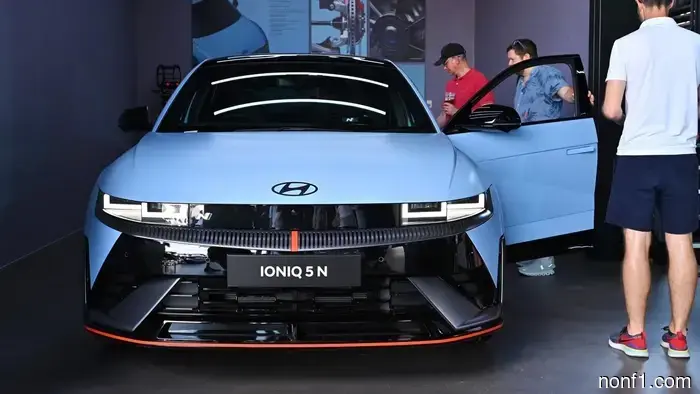 Hyundai is fully committing to 'Volume High-Performance' vehicles: TDS
Hyundai intends to develop a lineup of sporty vehicles that will be positioned beneath the full-fledged N models, yet will be more performance-oriented than its N Line offerings, which only feature cosmetic alterations.
Hyundai is fully committing to 'Volume High-Performance' vehicles: TDS
Hyundai intends to develop a lineup of sporty vehicles that will be positioned beneath the full-fledged N models, yet will be more performance-oriented than its N Line offerings, which only feature cosmetic alterations.
 Lewis Hamilton admitted that he got carried away in Zandvoort.
During the race in Zandvoort, Lewis Hamilton expressed his dissatisfaction with the team's slowness in radio communications, as they did not immediately instruct Charles Leclerc to let him pass. However, by Monday evening, Lewis Hamilton posted a message on social media acknowledging that he had overreacted and promised to be more restrained in his comments in the future.
Lewis Hamilton admitted that he got carried away in Zandvoort.
During the race in Zandvoort, Lewis Hamilton expressed his dissatisfaction with the team's slowness in radio communications, as they did not immediately instruct Charles Leclerc to let him pass. However, by Monday evening, Lewis Hamilton posted a message on social media acknowledging that he had overreacted and promised to be more restrained in his comments in the future.
 Real Madrid has become the sponsor of the Spanish Grand Prix.
Real Madrid Football Club has become the sponsor of the Spanish Grand Prix and will act as a local partner.
Real Madrid has become the sponsor of the Spanish Grand Prix.
Real Madrid Football Club has become the sponsor of the Spanish Grand Prix and will act as a local partner.
 Dutch Grand Prix: Curious Statistics
Several curious statistical findings from the Dutch Grand Prix...
Dutch Grand Prix: Curious Statistics
Several curious statistical findings from the Dutch Grand Prix...
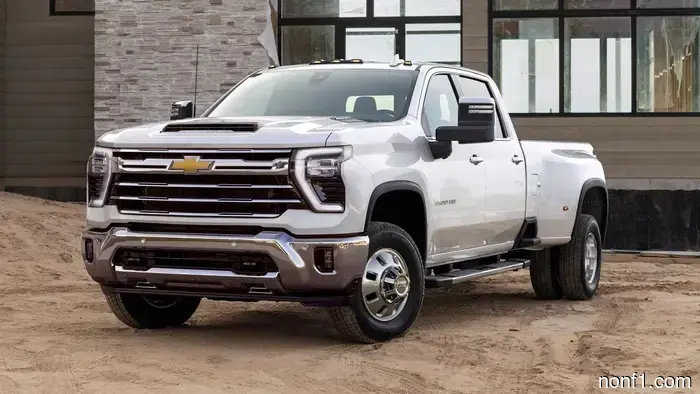
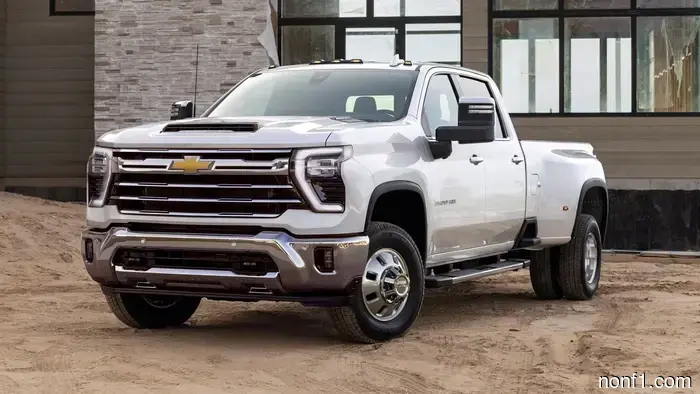 Diesel Prices Are Poised to Set New Records. Here’s the Reason Behind the Continued Increases.
The national average price for diesel stands at $5.62 per gallon, which is about 20 cents below its record high. However, it is unlikely that prices will stop rising in the near future.
Diesel Prices Are Poised to Set New Records. Here’s the Reason Behind the Continued Increases.
The national average price for diesel stands at $5.62 per gallon, which is about 20 cents below its record high. However, it is unlikely that prices will stop rising in the near future.
Inside Honda’s Strategy to Maintain Affordable Car Prices Without Burdening Buyers
With car prices on the rise, Honda executives have stated that the company is utilizing AI for crash testing and drawing insights from robot factories in China to manage expenses.