

Brown tendrá que cumplir la promesa que le hizo a Norris.
Lando Norris se convirtió en el undécimo piloto británico que logró conquistar el título de campeón en la Fórmula 1, y como premio por su logro debe recibir no solo el ansiado trofeo, en el que ahora también está grabado su nombre, sino también la recompensa económica prevista en su contrato con McLaren.
Ya en 2024, cuando también tenía posibilidades teóricas de ganar el campeonato mundial, en una entrevista con The Telegraph Norris confesó: «Tengo un trato con Zak Brown: si gano el campeonato, él tendrá que comprarme un coche. También dije cuál. Sellamos el acuerdo con un apretón de manos, pero eso es todo lo que estoy dispuesto a decir».
El sueño de Lando por el título se hizo realidad solo en 2025, y ahora se ha sabido de qué coche se trataba. Según el sensacionalista londinense The Mirror, se trata del raro superdeportivo italiano Pagani Zonda.
Estos coches estaban equipados con potentes motores V12 fabricados por Mercedes. Dependiendo de la versión, estos motores pueden tener una cilindrada de 6,0 o 7,3 litros, y su potencia alcanza aproximadamente 550 CV.
Los vehículos del modelo Zonda se produjeron hasta 2019; en total se fabricaron 140 unidades, y según la versión y el equipamiento su precio puede variar desde 1,5 millones de euros hasta 10 millones. En cualquier caso, al director ejecutivo de McLaren Racing le tocará desembolsar una suma considerable.
En la colección personal de Norris ya hay no solo deportivos McLaren, sino también raros ejemplares italianos como el Ferrari F40 y el Lamborghini Miura.
En su momento Lewis Hamilton también tuvo una Pagani Zonda, hasta que en 2021 la vendió por 10 millones de euros. Pero el destino posterior de ese coche fue desgraciado: un par de años después el nuevo propietario la destrozó en un accidente.
Por supuesto, la habilidad al volante de los pilotos de Fórmula 1 no es comparable con las destrezas incluso de conductores aficionados avanzados, y se puede suponer que Lando cuidará un coche así si y cuando Zak Brown cumpla la promesa que le hizo.

Другие статьи
 Бортолето: Приятно осознавать, что Фернандо может гордиться мной.
Габриэль Бортолето уже продемонстрировал свои способности за рулём гоночного автомобиля, когда настройки соответствуют его предпочтениям, и вполне естественно, что в Sauber этим довольны, поэтому он продолжит выступления за команду из Хинвиля в 2026 году...
 A recent pilot program in an EU country has seen AI cameras issue fines to thousands of drivers, with further developments on the horizon as authorities enhance surveillance efforts.
Greece has introduced AI cameras in key areas of central Athens.
Within just four days of implementation, these cameras recorded 2,500 traffic violations.
The initial rollout included monitoring in eight designated zones.
Artificial intelligence is becoming increasingly prevalent in various sectors, including traffic enforcement. Greece has adopted a new, efficient, and cost-effective approach to monitor driving behavior with AI-enabled cameras.
During the initial trial across eight sites in Athens, almost 2,500 significant violations were detected over just four days, underscoring that many drivers do not adhere strictly to traffic laws.
Critics argue that if every minor infraction is reported, even the most careful drivers, and police officers, might appear to be violators.
What Violations Are These Smart Cameras Detecting?
In addition to speeding and ignoring traffic signals, the AI cameras can identify multiple infractions, including not wearing seatbelts, using mobile phones while driving, and improperly utilizing emergency lanes.
When a violation occurs, the camera captures a time-stamped video and a still image, both encrypted to maintain the evidence’s integrity.
Fines are not issued by on-site police officers; instead, offenders receive notifications via SMS, email, or through a government portal, allowing them to pay the penalties directly. An appeals process is available, but the video evidence rarely leaves room for dispute.
One Camera, One Thousand Violations
As reported by authorities, a single AI camera on Syngrou Avenue, a major road connecting Athens and the port of Piraeus, recorded over 1,000 violations within just four days, representing nearly half of all infractions detected during the pilot phase.
Other locations have revealed similar patterns. At the busy intersection of Mesogeion and Halandriou avenues in Agia Paraskevi, 480 drivers were documented running red lights. Another 285 violations were noted at the junction of Vouliagmenis Avenue and Tinou Street in Kalithea, indicating that this issue is widespread.
Those not wearing seatbelts or using a phone while driving face fines of €350 (approximately $410), while speeding fines range from €150-750 ($180-880) depending on the severity. With such potential penalties, it's estimated that one AI camera could generate up to €750,000 ($880,000) in fines within just three days. Whether this is viewed as a deterrent or a sign of systemic issues remains subjective, but the revenue possibilities are significant.
From Pilot Initiative to Nationwide Monitoring
At present, only eight AI camera locations are operational, all managed by the Ministry of Digital Governance. However, plans are in place to expand the network to 2,000 fixed cameras across the country, alongside 500 mobile units that will be installed on public buses to oversee illegal use of bus lanes.
Officials aim for this expanded system to reduce traffic accidents and fatalities, relieve pressure on police resources, and ensure consistent funding for public services. The state's commitment to using automation seems unwavering, regardless of its impact on driver behavior.
Digital Governance Minister Dimitris Papastergiou expressed to Kathimerini that the government's goal is not punitive but protective. “This is a political choice with a clear social goal: reducing traffic accidents and saving lives,” he stated. “We are not adopting a punitive stance. We want citizens to understand that the rules are applicable to everyone and enforced in a fair and modern manner.”
An Expanding Global Trend
Greece is not the only country leveraging technology for traffic control. AI cameras are operational in nations such as the UK, Germany, France, Spain, Australia, India, China, Japan, and across the Middle East and the United States. Moving forward, many roads will be under constant surveillance.
Льюис Хэмилтон с большим ожиданием надеется, что в 2026 году, когда Формула 1 внедрит совершенно новые технологии, не возникнут те же трудности, которые были присущи машинам предыдущего поколения...
Маленький ураган. Глава 7. Часть 2
Глава 7. Дорогостоящая Покупка. Часть вторая...
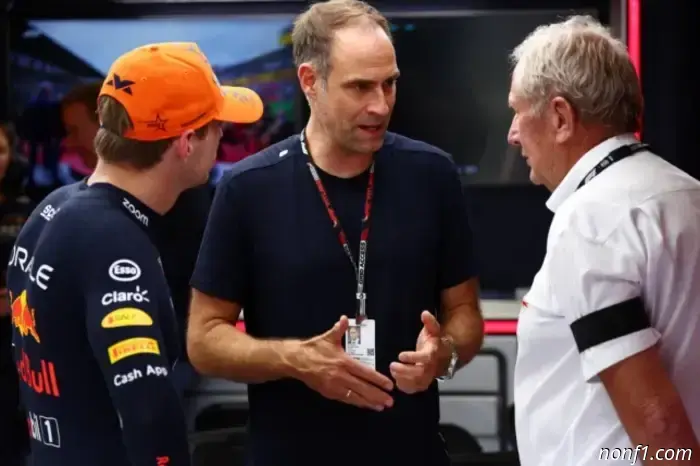 Будковски: Конфликты внутри Red Bull достигли крайней точки.
Марцин Будковски, который в настоящее время работает экспертом на телеканале Viaplay, озвучил свою точку зрения на причины увольнения Хельмута Марко из компании Red Bull...
 Шовлин: Благодаря Расселлу работа над шасси проходит успешно.
Джордж Расселл, став новым капитаном команды Mercedes, взял на себя все усилия по оптимизации автомобиля...
 Рашбрук: Ведутся работы по улучшению характеристик двигателя.
Директор Ford Performance Motorsport рассказал о текущем состоянии силовой установки, произведенной Red Bull Powertrains, и его комментарии внушают оптимизм...
Brown tendrá que cumplir la promesa que le hizo a Norris.
Lando Norris se convirtió en el undécimo piloto británico en conquistar el título de campeón en la Fórmula 1, y como premio por su logro debe recibir no solo la codiciada copa...