
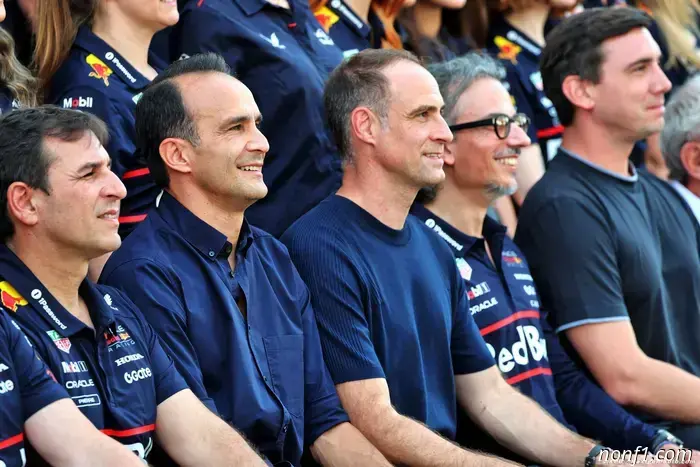
Mintzlaff backs Horner's departure, downplays Verstappen's contract clause.
"It was a well-known fact that there was too much happening within the team."
Red Bull's CEO, Oliver Mintzlaff, has staunchly defended the decision to part ways with Christian Horner, asserting that the team had to "move forward" while dismissing claims that Max Verstappen has excessive influence within the organization. In an interview with Dutch newspaper De Telegraaf, Mintzlaff emphasized that the choice regarding Horner was not made lightly.
"We recognized the need for action," Mintzlaff explained. "I’m not merely a manager who hires and fires. Relying on the past is not a viable long-term strategy; it was time for a new chapter. It was challenging, but we did not approach it lightly."
The German executive acknowledged that the mood within Red Bull Racing had become tense but argued that a renewed focus resulted in immediate improvements on the track. "It was an open secret that there was too much happening within the team," he stated. "In recent months, we saw performance levels rise when everyone was fully concentrated. Max even came close to clinching the title and won more races than anyone else."
Mintzlaff refrained from engaging with Dr. Helmut Marko’s recent criticisms of Horner, making it clear that those remarks were Marko's personal opinions. "Those comments are Helmut’s responsibility," he said. "I can't speak negatively about Christian; he has been vital to Red Bull. Changes happen in companies, and sometimes they are necessary to invigorate operations."
In response to ongoing speculation surrounding Max Verstappen’s contract and potential performance stipulations, Mintzlaff was clear. "I have no fear of any clauses," he remarked. "What matters most for an athlete is to see the entire team putting forth their best effort. I believe Max appreciates the unity in results and atmosphere."
Mintzlaff went on to predict a lasting relationship between Red Bull and four-time world champion Max Verstappen. "I feel a tremendous sense of appreciation and loyalty from both sides. I'm certain Max will retire with Red Bull," he asserted. "He isn’t a diva. If he ever stops racing - which I hope isn’t soon - I hope he remains with us in another capacity."
He also dismissed assertions that Verstappen effectively manages the team. "That’s nonsense," Mintzlaff stated frankly. "He has never made a single request of me. He’s clear about what he wants from the car - and he has the right to be, as he is the world’s best driver. But the ultimate authority lies with me, and that’s the brand we represent."
Looking ahead to the new regulations, Mintzlaff acknowledged existing uncertainties, particularly regarding the new in-house Red Bull-Ford initiative. "No one knows where we will end up - it could be second or third," he noted. "It involves not just the engine, but also the chassis."
Nonetheless, he expressed confidence in Red Bull’s engine project, crediting Horner for assembling the program prior to his departure. "I remember Dietrich Mateschitz telling me we’d create our own engine, and I wondered what that meant," Mintzlaff recalled. "Now, it’s nearly complete. Christian deserves praise for identifying the right talent. I hope we can fulfill Dietrich's grand vision."
Mintzlaff concluded on a positive note, underlining Red Bull’s two-team structure and youth development as they enter a new era. "We will succeed again and write fresh success stories," he stated. "That’s the essence of Red Bull."

Other articles
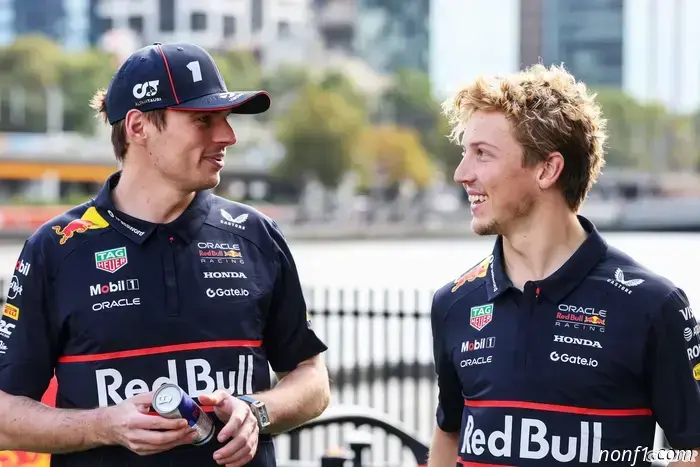 Verstappen: Red Bull made a mistake by letting Lawson go in '25.
Formula 1 | Max Verstappen believes that Red Bull Racing moved too hastily in letting go of Liam Lawson after only two races at the beginning of the 2025 season. Two (...)
Verstappen: Red Bull made a mistake by letting Lawson go in '25.
Formula 1 | Max Verstappen believes that Red Bull Racing moved too hastily in letting go of Liam Lawson after only two races at the beginning of the 2025 season. Two (...)
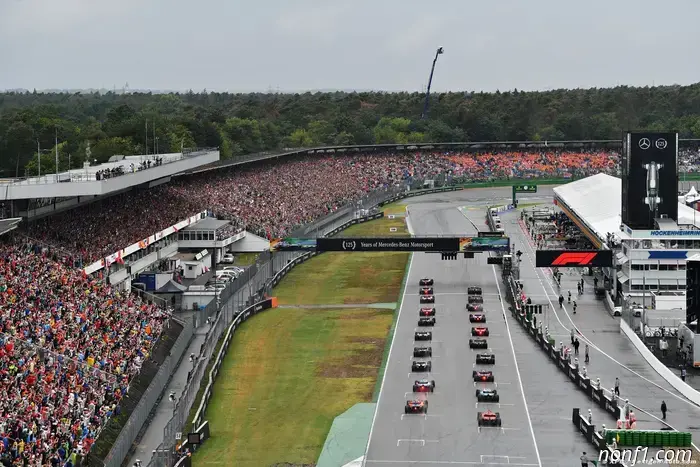 Germany remains in anticipation as Domenicali dampens hopes for a return.
Formula 1 | The CEO of Formula 1, Stefano Domenicali, has tempered hopes for a quick return of the German Grand Prix, cautioning that the event will not be rushed back.
Germany remains in anticipation as Domenicali dampens hopes for a return.
Formula 1 | The CEO of Formula 1, Stefano Domenicali, has tempered hopes for a quick return of the German Grand Prix, cautioning that the event will not be rushed back.
 Verstappen clarifies the 'number 2' position within Red Bull's hierarchy.
Formula 1 | As Isack Hadjar prepares for his debut season with Max Verstappen at Red Bull, the four-time world champion has made it clear what he (...)
Verstappen clarifies the 'number 2' position within Red Bull's hierarchy.
Formula 1 | As Isack Hadjar prepares for his debut season with Max Verstappen at Red Bull, the four-time world champion has made it clear what he (...)
 Vasseur contemplating engineer change for Hamilton.
Formula 1 | Ferrari chief Frederic Vasseur has candidly recognized that the Scuderia underestimated the extent of Lewis Hamilton's challenges during his difficult (…)
Vasseur contemplating engineer change for Hamilton.
Formula 1 | Ferrari chief Frederic Vasseur has candidly recognized that the Scuderia underestimated the extent of Lewis Hamilton's challenges during his difficult (…)
 Colletta downplays speculation regarding changes in Ferrari F1.
Formula 1 | Antonello Colletta, the head of Ferrari's World Endurance Championship, has categorically rejected rumors suggesting he might be in line to take over Frederic's position.
Colletta downplays speculation regarding changes in Ferrari F1.
Formula 1 | Antonello Colletta, the head of Ferrari's World Endurance Championship, has categorically rejected rumors suggesting he might be in line to take over Frederic's position.
 It appears that car prices continue to increase, yet one legendary roadster has quietly become more affordable than ever when considering inflation.
According to reports, the prices of the NA and NB generations now exceed $39,000 when adjusted for inflation, while the ND generation remains the least expensive option when adjusted.
It's well-known that car prices typically don't decrease, and the Mazda MX-5 Miata has certainly followed this trend. When the Miata debuted in 1989 as a 1990 model, it had a starting price of $13,800. Today, purchasing a new model will set you back at least $29,830.
Upon closer examination, however, the data suggests a different narrative. A recent study indicates that when adjusted for inflation, the cost of owning a Miata has actually declined over time.
Analysis of historical pricing shows that during the NA generation's presence in the U.S. from 1989 to 1997, the price increased gradually from $13,800 to $19,125.
The second-generation NB was introduced in 1998 and carried the model into the early 2000s, ultimately reaching a price of $22,098 before transitioning to the NC. The NC started with a base price of $20,435 and concluded its production years at $25,595.
Similarly, the current fourth-generation ND began at $25,735 in 2015, with prices rising since then. Nevertheless, when Hagerty adjusted the base price for inflation, it became clear that Miata prices have varied significantly.
When adjusted for inflation, the costs of the NA and NB generations exceed $39,000 in today's currency. In contrast, the NC ranges between $32,000 and $36,000, depending on the model year and inflation rates.
The latest ND generation is significantly more affordable and has been cheaper than all preceding Miata models in real terms since 2022. This is quite surprising, especially considering that many enthusiasts regard the current ND as the best Miata ever produced.
To gain a clearer understanding beyond Hagerty's statistics, we created our own list of original Manufacturer's Suggested Retail Prices (MSRPs) and adjusted them using the official U.S. Bureau of Labor Statistics inflation calculator.
Using the introductory price from the actual debut production year of each generation (not the model year), we adjusted everything to reflect November 2025 dollars. The resulting table facilitates a more straightforward comparison of how the real-world cost of the base model has evolved.
What's on the horizon for the MX-5?
Mazda is reportedly developing a new generation of the Miata, expected to launch in 2027. Although official information is limited, early reports indicate it will be equipped with the company’s 2.5-liter SkyActiv Z engine, likely producing just over 200 horsepower.
Additionally, an interesting aspect is Mazda's target weight. The company aims to keep the next-generation vehicle under 2,205 pounds (1,000 kg), making it lighter than the current ND. It remains to be seen if they can achieve this goal while maintaining the price.
Waymo's self-driving taxis are engineered to handle unexpected situations, but the recent power outage in San Francisco proved to be overwhelming for them.
It appears that car prices continue to increase, yet one legendary roadster has quietly become more affordable than ever when considering inflation.
According to reports, the prices of the NA and NB generations now exceed $39,000 when adjusted for inflation, while the ND generation remains the least expensive option when adjusted.
It's well-known that car prices typically don't decrease, and the Mazda MX-5 Miata has certainly followed this trend. When the Miata debuted in 1989 as a 1990 model, it had a starting price of $13,800. Today, purchasing a new model will set you back at least $29,830.
Upon closer examination, however, the data suggests a different narrative. A recent study indicates that when adjusted for inflation, the cost of owning a Miata has actually declined over time.
Analysis of historical pricing shows that during the NA generation's presence in the U.S. from 1989 to 1997, the price increased gradually from $13,800 to $19,125.
The second-generation NB was introduced in 1998 and carried the model into the early 2000s, ultimately reaching a price of $22,098 before transitioning to the NC. The NC started with a base price of $20,435 and concluded its production years at $25,595.
Similarly, the current fourth-generation ND began at $25,735 in 2015, with prices rising since then. Nevertheless, when Hagerty adjusted the base price for inflation, it became clear that Miata prices have varied significantly.
When adjusted for inflation, the costs of the NA and NB generations exceed $39,000 in today's currency. In contrast, the NC ranges between $32,000 and $36,000, depending on the model year and inflation rates.
The latest ND generation is significantly more affordable and has been cheaper than all preceding Miata models in real terms since 2022. This is quite surprising, especially considering that many enthusiasts regard the current ND as the best Miata ever produced.
To gain a clearer understanding beyond Hagerty's statistics, we created our own list of original Manufacturer's Suggested Retail Prices (MSRPs) and adjusted them using the official U.S. Bureau of Labor Statistics inflation calculator.
Using the introductory price from the actual debut production year of each generation (not the model year), we adjusted everything to reflect November 2025 dollars. The resulting table facilitates a more straightforward comparison of how the real-world cost of the base model has evolved.
What's on the horizon for the MX-5?
Mazda is reportedly developing a new generation of the Miata, expected to launch in 2027. Although official information is limited, early reports indicate it will be equipped with the company’s 2.5-liter SkyActiv Z engine, likely producing just over 200 horsepower.
Additionally, an interesting aspect is Mazda's target weight. The company aims to keep the next-generation vehicle under 2,205 pounds (1,000 kg), making it lighter than the current ND. It remains to be seen if they can achieve this goal while maintaining the price.
Waymo's self-driving taxis are engineered to handle unexpected situations, but the recent power outage in San Francisco proved to be overwhelming for them.
Mintzlaff backs Horner's departure, downplays Verstappen's contract clause.
Mintzlaff backs Horner's departure, downplays Verstappen's contract clause.