
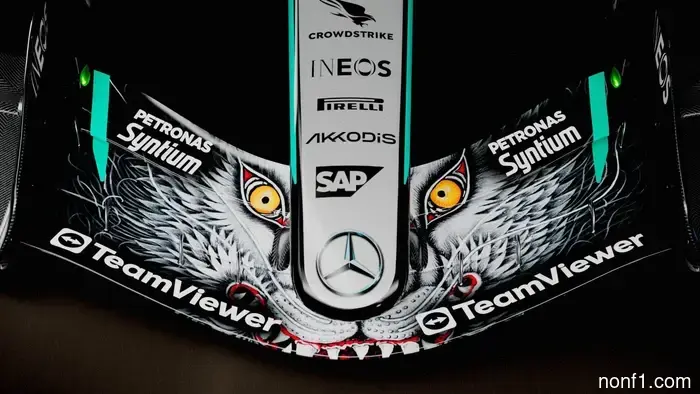
Ferrari questions Mercedes' 'two-phase' front wing design.
Ferrari has sought clarification from the FIA regarding the controversial behavior of Mercedes' front wing, which competitors feel may not function as the regulations intended. The system, known as a "two-phase" wing, drew attention during the Chinese GP. Italian sources suggest that Ferrari suspects the switch from ‘straight mode’ to ‘cornering mode’ occurs not in one fluid motion but rather in two separate phases.
While sensors indicate that the movement is within the regulatory limit of 400 milliseconds, Ferrari believes that this may not provide the complete picture. Their concern is that the initial phase of the movement is very quick—sufficient to meet the sensors' requirements—while a subsequent, slower phase finishes the closure beyond what is being monitored. Consequently, the wing may not be entirely closed when the system indicates it is.
Ferrari's engineers are reported to have thoroughly analyzed the design, utilizing both open-source actuator data and high-resolution images before bringing up the matter. The possible advantage could be seen during braking, where a more gradual transition might enhance weight transfer and improve the balance of the car. The FIA has reportedly stated it will keep a closer eye on the system, with its interpretation likely influencing whether other teams will try to imitate the concept.
Notably, Mercedes is set to debut a distinct version of the front wing design in Suzuka, which includes a stylized wolf graphic as part of its collaboration with Adidas’ Y-3 sub-label created by Yohji Yamamoto, despite some humorously associating the wolf with team principal Toto Wolff.
Other articles
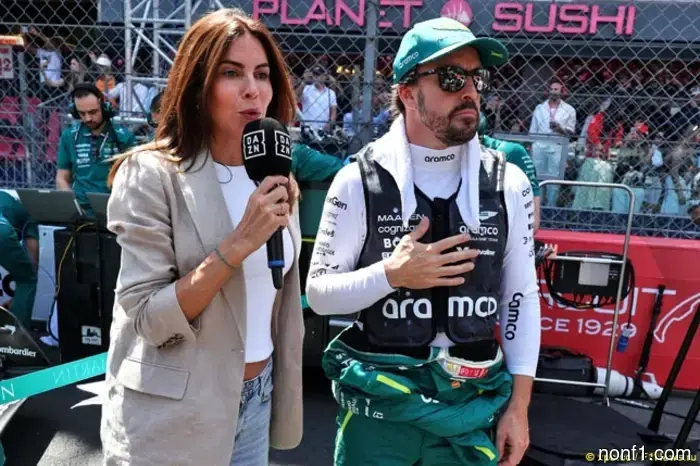 Alonso will arrive in Japan later due to the birth of a child.
The race weekend in Suzuka will begin on Thursday with the official FIA press conference and driver interactions with the media. However, Fernando Alonso will not be in the paddock tomorrow – the Aston Martin driver will arrive in Japan later.
Alonso will arrive in Japan later due to the birth of a child.
The race weekend in Suzuka will begin on Thursday with the official FIA press conference and driver interactions with the media. However, Fernando Alonso will not be in the paddock tomorrow – the Aston Martin driver will arrive in Japan later.
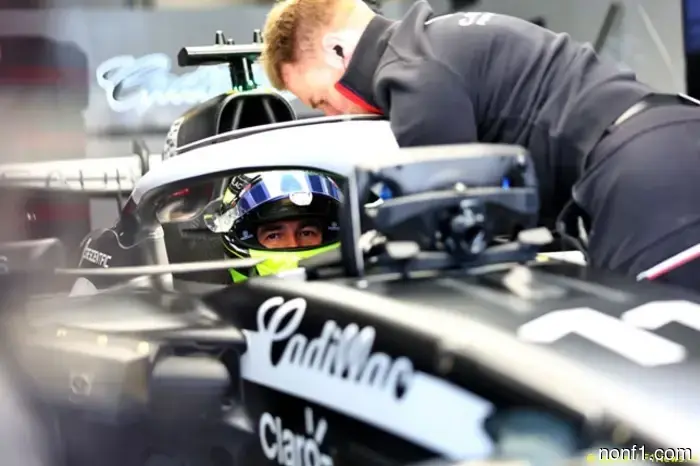 Sergio Perez: A more challenging weekend awaits us in Suzuka.
At the Japanese Grand Prix, Cadillac hopes to take the next step forward, although they acknowledge that there will be more challenges, as the car needs to be set up for high downforce in Suzuka.
Sergio Perez: A more challenging weekend awaits us in Suzuka.
At the Japanese Grand Prix, Cadillac hopes to take the next step forward, although they acknowledge that there will be more challenges, as the car needs to be set up for high downforce in Suzuka.
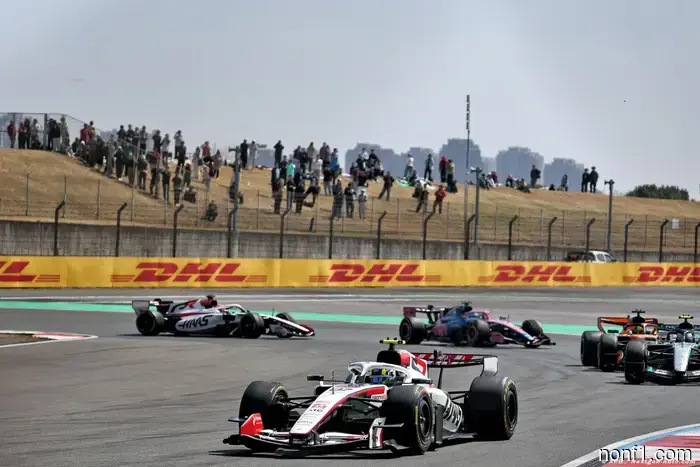 Domenicali acknowledges that a modification to the 2026 regulations is a possibility.
Formula 1 | Stefano Domenicali, the CEO of Formula 1, has recognized that modifications to the contentious 2026 regulations might be necessary—however, he emphasizes that any changes (…)
Domenicali acknowledges that a modification to the 2026 regulations is a possibility.
Formula 1 | Stefano Domenicali, the CEO of Formula 1, has recognized that modifications to the contentious 2026 regulations might be necessary—however, he emphasizes that any changes (…)
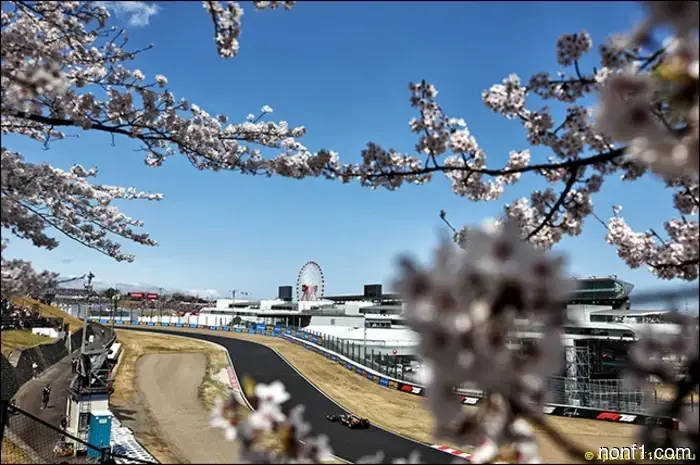 Mark Temple on the features of the track in Suzuka...
McLaren's Technical Director for chassis performance, Mark Temple, on the characteristics of the track in Suzuka...
Mark Temple on the features of the track in Suzuka...
McLaren's Technical Director for chassis performance, Mark Temple, on the characteristics of the track in Suzuka...
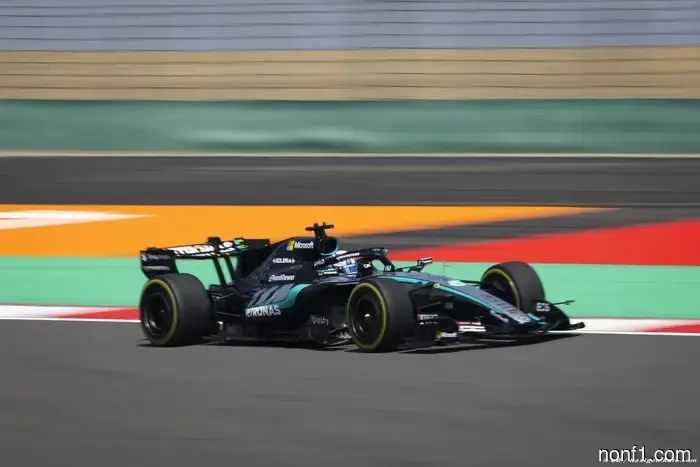 Wolff brushes off the latest Verstappen rumors.
Formula 1 | Toto Wolff has dismissed new rumors connecting Max Verstappen to a transfer to Mercedes, asserting that he sees no reason to contemplate a driver (…)
Wolff brushes off the latest Verstappen rumors.
Formula 1 | Toto Wolff has dismissed new rumors connecting Max Verstappen to a transfer to Mercedes, asserting that he sees no reason to contemplate a driver (…)
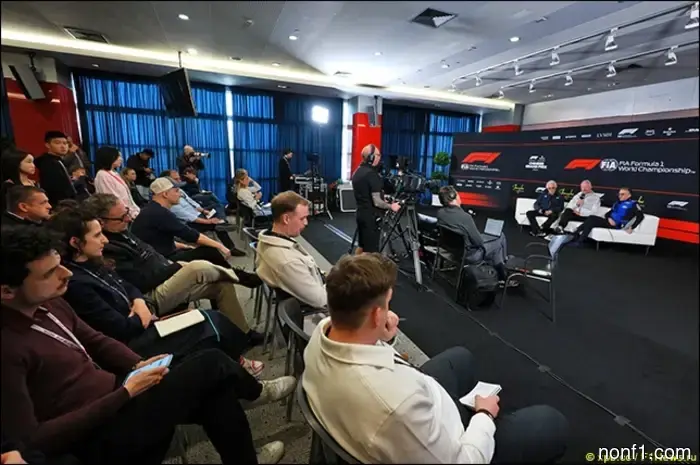 Japanese Grand Prix: Press Conference Schedule
The FIA announced the participants of the official press conferences for the Japanese Grand Prix.
Japanese Grand Prix: Press Conference Schedule
The FIA announced the participants of the official press conferences for the Japanese Grand Prix.
Ferrari questions Mercedes' 'two-phase' front wing design.
Formula 1 | Ferrari has sought clarification from the FIA regarding the contentious front wing actions of Mercedes, which competitors suspect may not function as (…)