

How Should a New Camaro Appear in a World After Pony Cars?
Chevrolet
The latest in car news and reviews, no nonsense
Subscribe to our free daily newsletter to receive the important stories directly in your inbox every weekday.
This week, rumors about GM are swirling. There are reports that we are not only close to the reveal of the next Chevy Camaro, but it will also share its foundation with new sedans that will be available elsewhere in the GM lineup. While we first learned about a gasoline-powered CT5 replacement last fall, this isn't entirely new information. The previous-generation Camaro shared its platform and production line with the Cadillac CT4/5 at GM’s Lansing Grand River facility in Michigan. However, there’s a new twist: this time, we may also see a Buick version (according to Automotive News). This development is intriguing, especially in light of GM president Mark Reuss's comments about reusing Chevy’s pony car branding.
I'm eager to see what Chevy has planned for the upcoming Camaro, but even if it turns out to be an outstanding sports coupe with a V8 and a manual transmission, it doesn't change the basic truth that the pony car, as we have known it, is essentially gone.
Yes, the Mustang still exists. Technically, the Camaro is just mostly gone—absent from dealerships but still present in the hearts of enthusiasts, or something along those lines. Dodge offers a two-door Charger, but like the Challenger before it, it is much more focused on the muscle car genre. It’s large, wide, and heavy, equipped with standard all-wheel drive, designed for straight-line performance. But it doesn’t fit the pony car mold.
Those who wish to debate can argue the nitty-gritty, but the pony car concept originated from a tried-and-true recipe that has yielded great results: it paired a relatively lightweight, compact chassis with a respectable engine and a few practical features for everyday use. Not quite as limited as a two-seater yet not as practical as a four- or five-door vehicle. And when it offered some practicality, it was marketed as something cool. It’s not a cramped four-seater; it’s a 2+2! It’s not just an economical hatch; it’s a fastback!
This approach is consistent because it mirrors the foundational idea that created the hot hatchback and sport sedan: take something practical and spice it up with a hint of fun. There you have it—an enthusiast vehicle.
As products of their era, pony cars have also inherited a characteristic that they haven't been able to shake: rear-wheel drive. Ford learned this lesson with the Probe, just as Chrysler did with the revived Dodge Charger in the 1980s. While the former is still valued today for qualities that differ greatly from a Mustang, the L-Body Charger is not as fondly remembered.
However, another significant trait has been lost. Primarily, traditional pony cars used to be affordable, even when opting for the V8. Sure, it cost more, but it was still reasonable. There was a time when you could purchase a Mustang GT for the same price as a base Miata. Unfortunately, the V8 pony car’s standing as an affordable gateway into automotive enthusiasm is a thing of the past.
The last-generation Camaro was a remarkable driver's car and undoubtedly a highlight for the nameplate, but a decent SS spec was already expensive (compared to a Mustang GT) when it launched for the 2016 model year. In my view, the Mustang reached its peak with the S550 introduction in 2015. At that time, you could snag one with a 5.0-liter V8 for less than the cost of a base Subaru WRX in 2026.
And if you aim to do more than just cruise around enjoying the V8 sounds, things become even more complicated. Within just that one generation, an enthusiast-spec Coyote Mustang (featuring Recaro seats and performance-package suspension) jumped from a $35,000 price tag to a $55,000 one. Sure, the car improved, but was it enough to warrant nearly a 60% increase in price? Not at all.
There are factors at play beyond mere corporate greed. Using the Mustang as an example, one might think Ford's main aim is to sell as many higher-margin V8 models as possible, which is somewhat true. However, high performance cars faced challenges during the CAFE era; selling many thirsty V8s brought down the company’s overall fuel economy. Ford needed to counterbalance that by selling more fuel-efficient alternatives or face penalties. By raising the GT's price point, Ford increased its profit per sale while also reducing the quantity it needed to sell to maintain profitability.
This same dynamic contributed to the scarcity of V8s (and other fuel-inefficient models) in midsize pickups. The penalties made it more logical to direct V8 customers towards half-ton models, which the regulations accommodated better (and were also more profitable). It

Other articles
 John Deere Agrees to $99 Million Settlement in Major Right-to-Repair Case
The large agricultural manufacturing company will offer digital diagnostic, maintenance, and repair tools to external parties for a period of 10 years.
John Deere Agrees to $99 Million Settlement in Major Right-to-Repair Case
The large agricultural manufacturing company will offer digital diagnostic, maintenance, and repair tools to external parties for a period of 10 years.
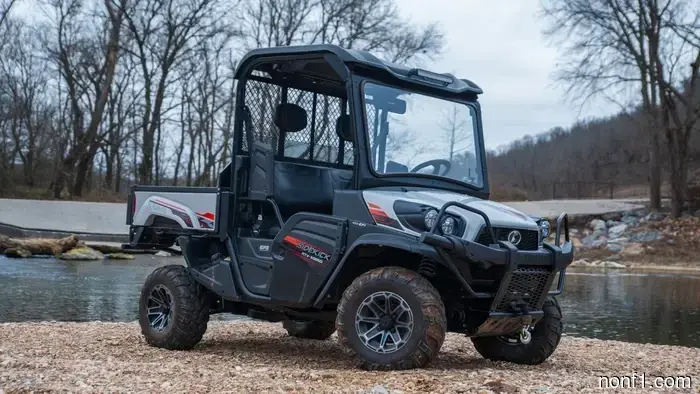 Kubota Sidekick UTV Review: Functions Like a Tractor, and That's Beneficial
It may not be flashy like a luxury Polaris, but it gets the job done. That's really what you expect from one of these, right?
Kubota Sidekick UTV Review: Functions Like a Tractor, and That's Beneficial
It may not be flashy like a luxury Polaris, but it gets the job done. That's really what you expect from one of these, right?
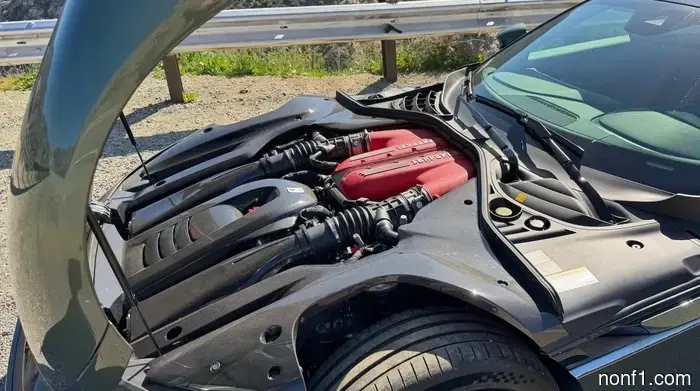 If the Ferrari 12Cilindri marks the conclusion of naturally aspirated V12 engines, it serves as a remarkable finale.
The NA V12 of the 12Cilindri accelerates to its redline as swiftly as that of a race car, reaching up to 9500 rpm. Moreover, it's the final example of its type...
If the Ferrari 12Cilindri marks the conclusion of naturally aspirated V12 engines, it serves as a remarkable finale.
The NA V12 of the 12Cilindri accelerates to its redline as swiftly as that of a race car, reaching up to 9500 rpm. Moreover, it's the final example of its type...
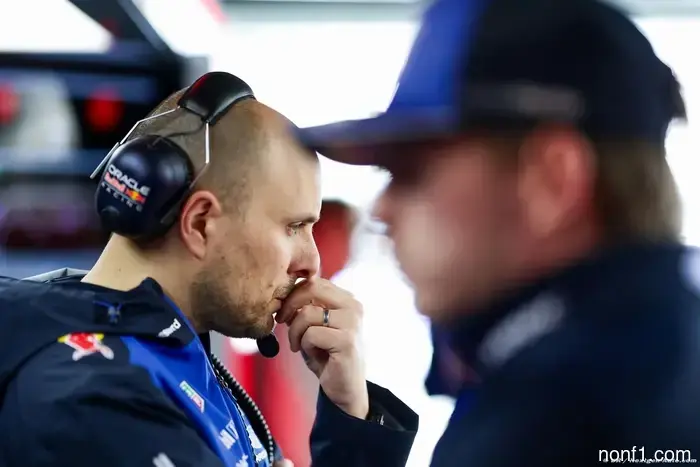 GianPiero Lambiase is set to join the McLaren Formula 1 Team as Chief Racing Officer.
Formula 1 | McLaren Racing is happy to declare that GianPiero Lambiase will be joining the McLaren Mastercard Formula 1 Team as Chief Racing Officer, reporting to (…)
GianPiero Lambiase is set to join the McLaren Formula 1 Team as Chief Racing Officer.
Formula 1 | McLaren Racing is happy to declare that GianPiero Lambiase will be joining the McLaren Mastercard Formula 1 Team as Chief Racing Officer, reporting to (…)
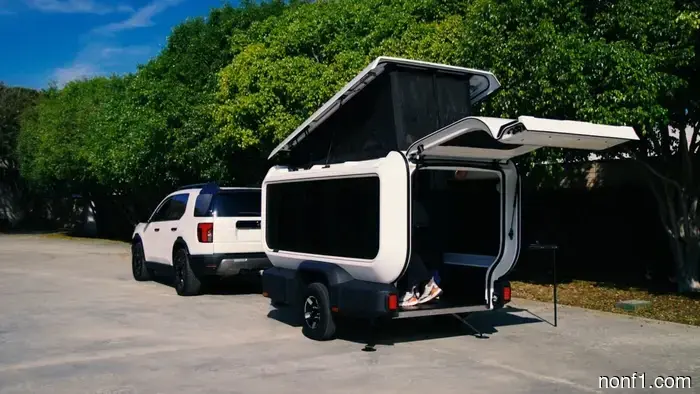 Honda Remains Committed to the Camper It Created for Its Discontinued EVs.
The Base Station was designed to resemble an SUV that Honda no longer intends to manufacture. However, the camper still appears to be on track for production.
Honda Remains Committed to the Camper It Created for Its Discontinued EVs.
The Base Station was designed to resemble an SUV that Honda no longer intends to manufacture. However, the camper still appears to be on track for production.
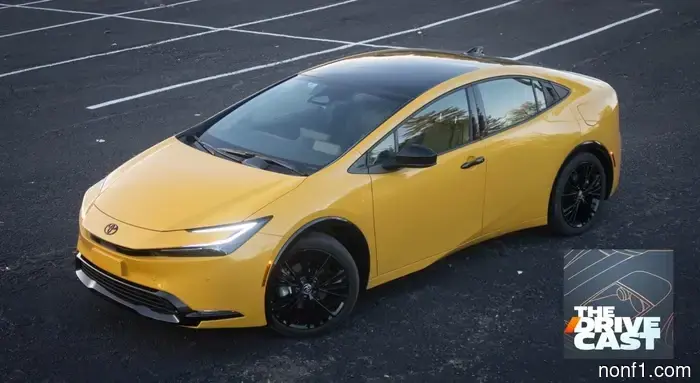 Toyota Transitioned Most of Its Lineup to Hybrids. Now, Prius Sales Are Plummeting.
As sales continue to decline, it's time to confront the tough question: Is the Toyota Prius still relevant?
Toyota Transitioned Most of Its Lineup to Hybrids. Now, Prius Sales Are Plummeting.
As sales continue to decline, it's time to confront the tough question: Is the Toyota Prius still relevant?
How Should a New Camaro Appear in a World After Pony Cars?
The revival of the Chevy Camaro seems likely, but what form will it take? Will it be an SUV, a sedan, or a "conventional" pony car?