
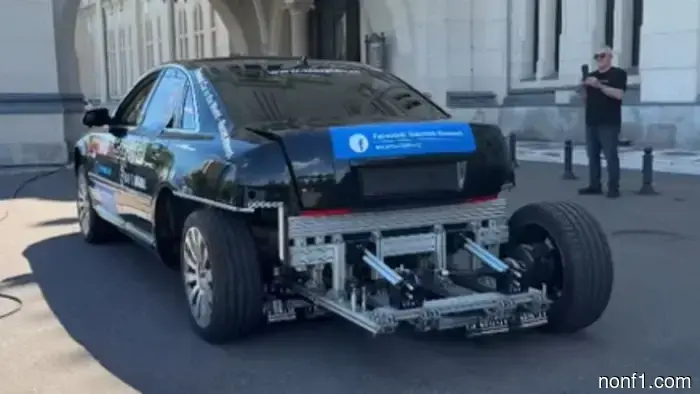
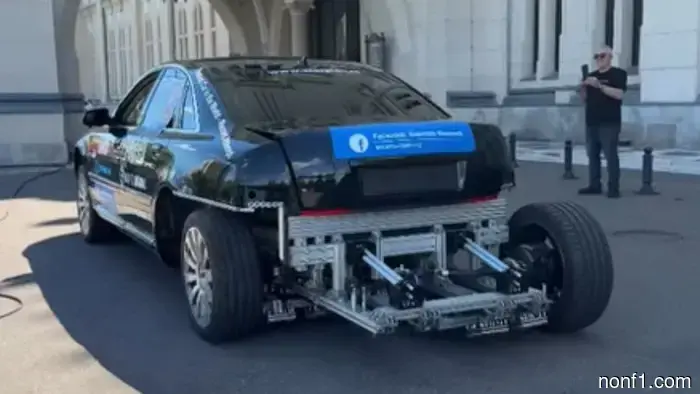
This Audi Moves Like a Crazy Zombie Since It Runs on Compressed Air.
Rosmar H
The most important car news and reviews, straight to the point.
Our free daily newsletter delivers the headlines that truly matter to you every weekday.
Remember those spring-loaded toy cars you would pull back to set them off? Did you ever ponder as a kid why adults fiddled with gasoline or diesel when all you needed to do was pull the car back far enough for it to travel long distances without any fuel? No? Just me and Adrian Roșca from Rosmar H? Alright, moving on.
Now, I’m not an engineer, and this Audi prototype doesn’t rely on steel springs but uses compressed air instead. Indeed, the legendary air-powered car. I’ve heard that concept a few times before. It typically runs into issues with that troublesome first law of thermodynamics. It can’t succeed, can it?
Rosmar H disagrees and has even applied for (and been granted?) a patent for “a motor vehicle and a method for moving the same when blocked or stuck on a surface covered with mud, snow, ice, sand, or when it is supposed to climb or descend a slope of over 45°.”
So, you aimed to create a superior alternative to all-wheel drive. I’m intrigued. So what in the world is this?
FINALLY! The technology we’ve all been yearning for is HERE AT LAST! The future is upon us! This is a compressed air-powered Audi from a Romanian company. According to their website, it could go from 0 to 100 in 0.3 seconds and has a maximum speed of 600 km/h… Seems like it might cause an injury at… pic.twitter.com/Gv3rgV2YPx— Gavin Shoebridge (@KiwiEV) May 30, 2026
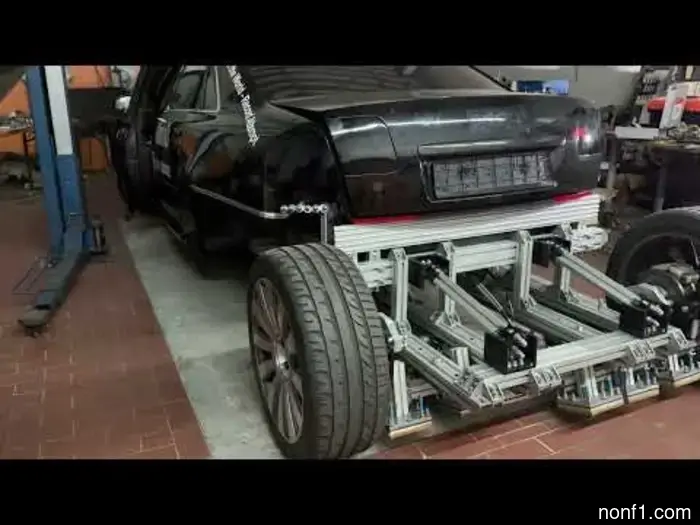
In attempting to revolutionize how cars achieve and maintain traction, Rosmar H might have lost touch with reality. The company’s characterization of its (again, possibly patented) technology could generously be labeled as “high-altitude,” but the core concept appears to be that a car could be driven using only compressed air released sequentially from large, longitudinal pistons that effectively pull the car down the road. Theoretically, the car’s inertia could also help recover energy during the return stroke, similar to how regenerative braking uses deceleration to recharge a hybrid or electric vehicle battery.
From the translated patent information mentioned earlier, Rosmar H developed this technology from a somewhat unique standpoint: If the primary hurdle to freeing a car from low-traction situations is a tire’s mobility, then rather than moving the tire, focus on moving the car itself. This led them to create this pneumatic invention that can at least move under its own power. However, the practical application of this concept remains uncertain.
As we noted earlier, it seems to recapture kinetic energy from the car’s momentum to “recharge” its main air tank with each return stroke, but each time it does, it sacrifices forward speed in the process. If you’re familiar with parasitic losses, you understand that every time motion is converted from one form to another, some energy is lost and isn’t recoverable.
Where does the initial energy to set the car in motion come from? Well, there’s no battery, no engine, and no mention of magical sources, leaving only one probable option: Thin air.
Rosmar H
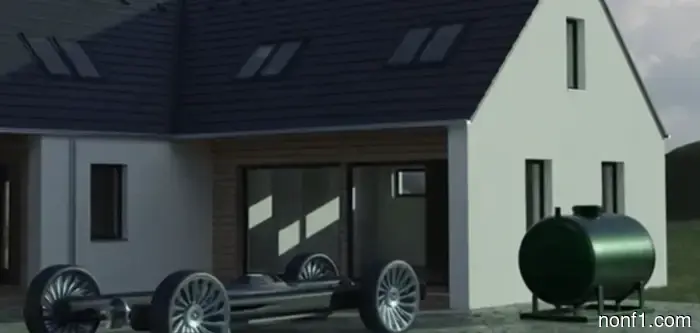
Yes, that was a joke, but it seems to be quite accurate too. The car may lack a battery, but it has a reserve of kinetic energy stored in that compressed air tank. This is visible on the scale model the company utilizes for demonstrations. This tank's reserve would then be enhanced by energy recaptured from the driveline. Like an electric vehicle, it’s something that could be replenished at home using an adequate compressed air source (as indicated in the screenshot above). There’s a better view in this acceleration demo. They claim the real deal should accelerate from 0 to 60 in 0.3 seconds.
The essential question is how much energy can be stored in a compressed air tank. Here’s some rough calculations: A 25-gallon tank containing air compressed to what Google estimates as a typical room-temperature pressure (2,000 psi) holds about 0.65-1.3 kilowatt hours of potential energy (depending on the release method, but this isn’t a chemistry class)—or roughly equivalent to the capacity of a small, traditional hybrid battery.
For context, the GM Hummer EV’s battery has a usable capacity of around 170 kWh. Again, I’m not an engineer, but that sounds like… less?
Have a news tip? Send it to us at tips@thedrive.com!
Other articles
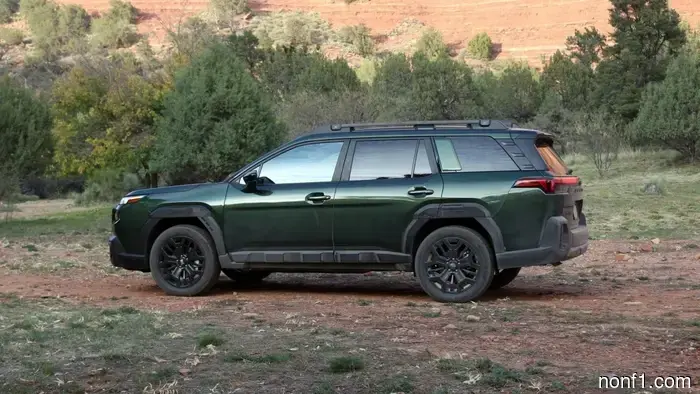 Subaru Outback Sales Surpass Last Year’s Figures for the First Time Following the Love-Hate Redesign
The Subaru Outback has overcome its initial sales downturn for 2026, and the WRX is also gaining traction.
Subaru Outback Sales Surpass Last Year’s Figures for the First Time Following the Love-Hate Redesign
The Subaru Outback has overcome its initial sales downturn for 2026, and the WRX is also gaining traction.
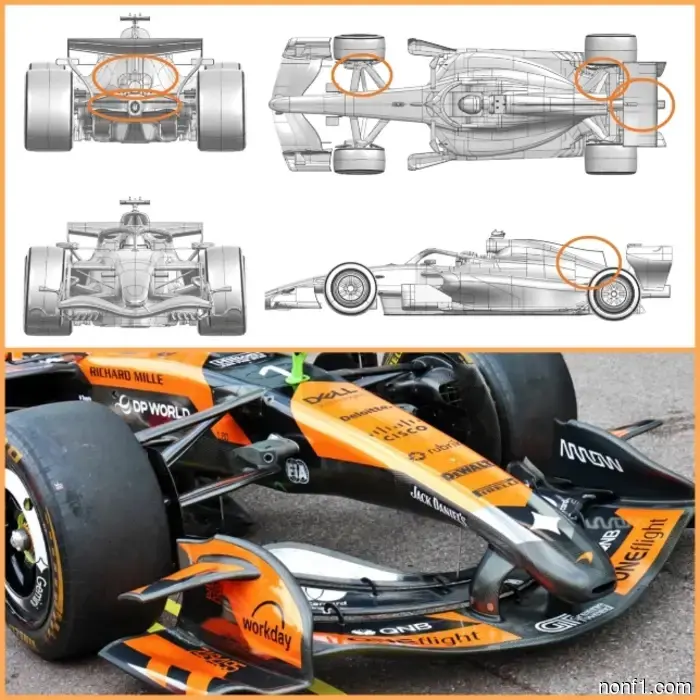 Technical innovations presented by teams in Monaco
The Monaco Grand Prix was the first stage of the season for which all championship teams prepared various innovations, which is not surprising, as this is primarily related to the characteristics of the famous city circuit...
Technical innovations presented by teams in Monaco
The Monaco Grand Prix was the first stage of the season for which all championship teams prepared various innovations, which is not surprising, as this is primarily related to the characteristics of the famous city circuit...
 2026 Lexus RX500h Advantages and Disadvantages Review: For Optimal Performance, Avoid the F Sport
For an authentic RX experience, choose the more upscale and comfortable RX350h. The F Sport's aggressive styling elements, orange brake pads, and excessively bright red interior do not enhance this SUV's appeal.
2026 Lexus RX500h Advantages and Disadvantages Review: For Optimal Performance, Avoid the F Sport
For an authentic RX experience, choose the more upscale and comfortable RX350h. The F Sport's aggressive styling elements, orange brake pads, and excessively bright red interior do not enhance this SUV's appeal.
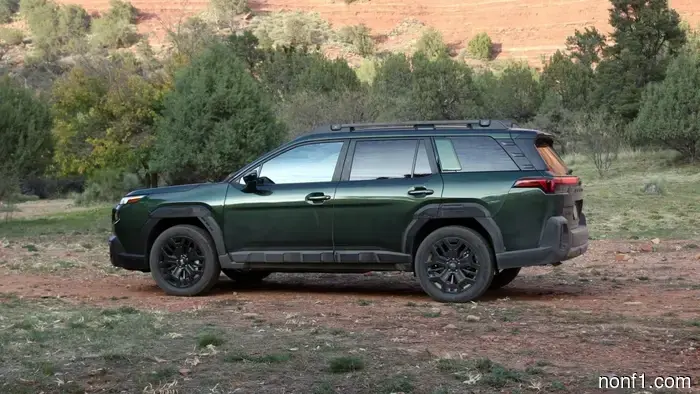 Subaru Outback Sales Surpass Last Year's Figures for the First Time Since the Controversial Redesign.
The Subaru Outback has overcome its early sales slump for 2026, and the WRX is also gaining traction.
Subaru Outback Sales Surpass Last Year's Figures for the First Time Since the Controversial Redesign.
The Subaru Outback has overcome its early sales slump for 2026, and the WRX is also gaining traction.
 Lewis Hamilton is the fastest on Friday.
The best time was shown by Lewis Hamilton, completing a lap in 1:13.026...
Lewis Hamilton is the fastest on Friday.
The best time was shown by Lewis Hamilton, completing a lap in 1:13.026...
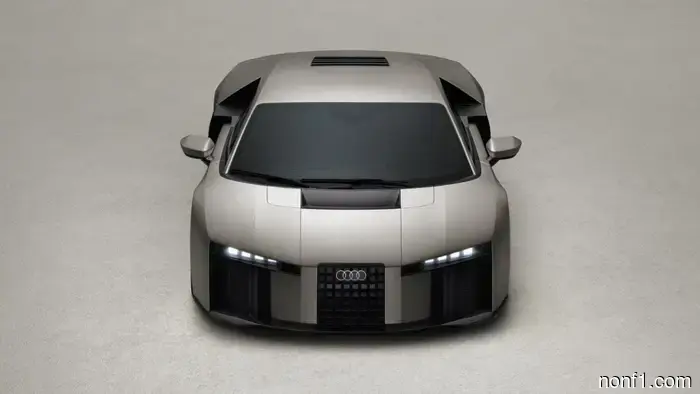 Audi Astonishes with 1,000-HP V8 Nuvolari Supercar, and Its Appearance is Truly Impressive.
A new supercar release featuring a V8 engine rather than an electric powertrain in 2026? Thank you, Audi, we’ve always recognized your coolness.
Audi Astonishes with 1,000-HP V8 Nuvolari Supercar, and Its Appearance is Truly Impressive.
A new supercar release featuring a V8 engine rather than an electric powertrain in 2026? Thank you, Audi, we’ve always recognized your coolness.
This Audi Moves Like a Crazy Zombie Since It Runs on Compressed Air.
This Audi "operates" on compressed air, if you can refer to this as "operating."