

F1 Power Unit Modifications Represent Progress. But Is It Sufficient?
Dom Gibbons via Getty
The latest updates in car news and reviews, no nonsense
Our complimentary daily newsletter delivers the most significant stories directly to you each weekday.
Yesterday, the FIA revealed the latest modifications to the Formula 1 power unit regulations—the second update in five weeks. This will change the current combustion-to-MGUK power distribution from the desired 50/50 (more accurately 53/47) to 60/40. However, this new distribution won’t take effect this year or next year; it will occur in 2028. Is this satisfactory?
The phased implementation is as follows: 53/47 in 2026, 58/42 in 2027, and 60/40 in 2028. The maximum power for the Internal Combustion Engine (ICE) will be 400kW, 420kW, and 450kW, while the MGUK’s maximum power will decrease from 350kW this year to 300kW in 2027 and 2028. Additionally, there will be a 5% increase in fuel flow next year and a significant 13% in 2028.
All teams and the FIA reached a unanimous agreement on these changes; however, according to Motorsport.com, teams like Mercedes and Red Bull Ford were open to more substantial modifications to next year’s rules, but not all teams supported this. It is unclear which teams would have agreed, but reports indicate that Audi and Ferrari opposed the notion, citing the time and resources required for more extensive adjustments.
The main concern for those teams seems to be the increase in fuel flow rate. A higher flow results in greater consumption and necessitates more fuel to finish a race. With no refueling permitted in F1, this also means starting the race with a heavier fuel load, potentially affecting performance. Many teams were not keen on the idea of adapting to a larger fuel tank in 2027, as it would require significant alterations to the chassis or even a completely new design—unfortunate for those wishing to use the same chassis from this year to the next. A preferred solution? Reducing race distance by cutting a few laps where feasible, among other less drastic adjustments.
“The proposed changes aim to tackle issues related to energy management and fuel energy flow characteristics and make qualifying more aggressive, without diminishing the thrilling and engaging racing sparked by the new regulations,” stated the FIA. “The governing body also mentioned that the package includes specific adjustments to internal combustion engine output, fuel energy flow, and energy recovery system deployment, along with increased flexibility in energy management. Additional measures concerning power unit supply conditions, race operations, and relevant financial regulations are also part of the updates.”
To begin with, it's commendable to recognize F1 and the FIA's efforts to enhance the existing formula. Last month, The Drive provided exclusive insights into the V8 engines that FIA President Mohammed Ben Sulayem plans to introduce in 2031—unless it's feasible to implement them in 2030—but that's still a way off. The suggested hybrid V8s would feature an energy distribution of 80/20, indicating a significant shift even from these revised regulations.
Do you believe the minor adjustments planned for the next two years will truly affect racing, or will their influence be minimal for the average F1 fan? Are these changes sufficient, or should they reconsider their approach?
Have a tip? Email us at tips@thedrive.com

Other articles
 Jeep Will Offer 100 Wranglers If America Unexpectedly Excels at Soccer
A group of George Washingtons (plural) will earn a Jeep if America triumphs against its 60:1 odds in the World Cup.
Jeep Will Offer 100 Wranglers If America Unexpectedly Excels at Soccer
A group of George Washingtons (plural) will earn a Jeep if America triumphs against its 60:1 odds in the World Cup.
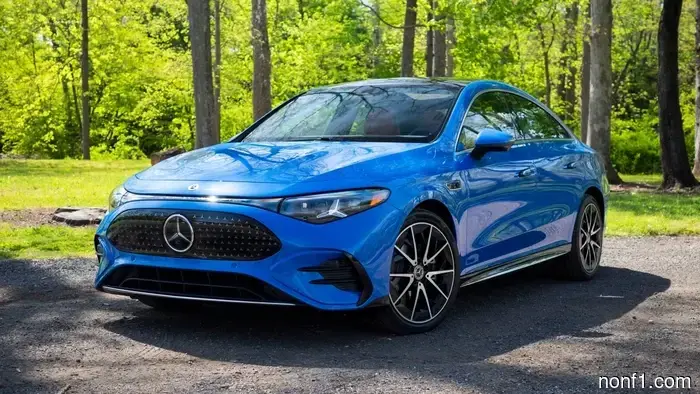 2027 Mercedes-Benz CLA350 EV Brief Review: At the Very Least, It's Efficient
Mercedes maximized both performance and efficiency from the powertrain of the electric CLA, but also made several notable unforced errors in the process.
2027 Mercedes-Benz CLA350 EV Brief Review: At the Very Least, It's Efficient
Mercedes maximized both performance and efficiency from the powertrain of the electric CLA, but also made several notable unforced errors in the process.
 Wurz cautions that the Mercedes title battle might get messy.
Formula 1 | GPDA chairman Alex Wurz expresses doubt that the relationship between Kimi Antonelli and George Russell can withstand a lengthy title battle. (…)
Wurz cautions that the Mercedes title battle might get messy.
Formula 1 | GPDA chairman Alex Wurz expresses doubt that the relationship between Kimi Antonelli and George Russell can withstand a lengthy title battle. (…)
 Fast and Furious Supra, Back to the Future DeLorean, and other iconic movie cars merge into a single nostalgic universe here.
The new 'Stuntman' game brings to life Hollywood's iconic cars in an impressive trailer.
Fast and Furious Supra, Back to the Future DeLorean, and other iconic movie cars merge into a single nostalgic universe here.
The new 'Stuntman' game brings to life Hollywood's iconic cars in an impressive trailer.
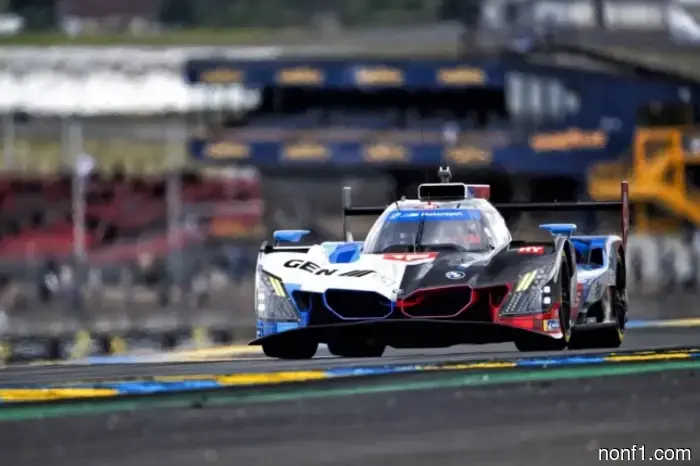 Le Mans: BMW starts from pole after Cadillac's penalty
Jack Aitken, the driver of the Cadillac factory team, set the best time but was penalized, after which the pole was inherited by Belgian Dries Vanthoor, competing for BMW M Team WRT...
Le Mans: BMW starts from pole after Cadillac's penalty
Jack Aitken, the driver of the Cadillac factory team, set the best time but was penalized, after which the pole was inherited by Belgian Dries Vanthoor, competing for BMW M Team WRT...
 Alonso acknowledges that Barcelona might be his last Spanish Grand Prix.
Formula 1 | Fernando Alonso has acknowledged that this weekend's Spanish Grand Prix might be his last Formula 1 race in Barcelona. The two-time world champion, who will turn (…)
Alonso acknowledges that Barcelona might be his last Spanish Grand Prix.
Formula 1 | Fernando Alonso has acknowledged that this weekend's Spanish Grand Prix might be his last Formula 1 race in Barcelona. The two-time world champion, who will turn (…)
F1 Power Unit Modifications Represent Progress. But Is It Sufficient?
F1 is enhancing the existing energy distribution to prioritize combustion power more than electric power; however, the complete implementation of this change won't occur until 2028. Will it be too late?