
Technical innovations presented in Barcelona
After a rather wide range of updates prepared by the teams for the three previous stages of the season, the list of technical improvements presented in Barcelona is clearly more modest. Ferrari has the most new features, but we will get to the Italian team later.
McLaren
The championship team reported a single modification: the MCL40 has not exactly a new front wing, but the endplates on this wing have a different configuration.
As explained, "the endplates of the front wing have been redesigned, resulting in improved airflow parameters, which has increased overall aerodynamic efficiency."
Mercedes
The championship leaders also presented only one improvement, which pertains to the rear wing: additional "small wings" have been installed in the middle of this crucial aerodynamic component.
Of course, they contribute to its more effective performance on the track, where properly tuned aerodynamics is crucial.
Red Bull Racing
Max Verstappen's and Isaac Hadjar's cars have also seen upgrades to their front wings. Firstly, the geometry of the planes has been adjusted – in the area where these planes connect with the endplates.
The aim of the changes is to increase local aerodynamic load "while maintaining flow stability."
Secondly, the Milton Keynes team has developed updated planes for the active aerodynamic system: these front wing elements have a modified profile – they have become slightly wider, allowing for greater downforce generation. The explanations state that such planes can be used if there is a need to increase aerodynamic load in this area of the car.
Ferrari
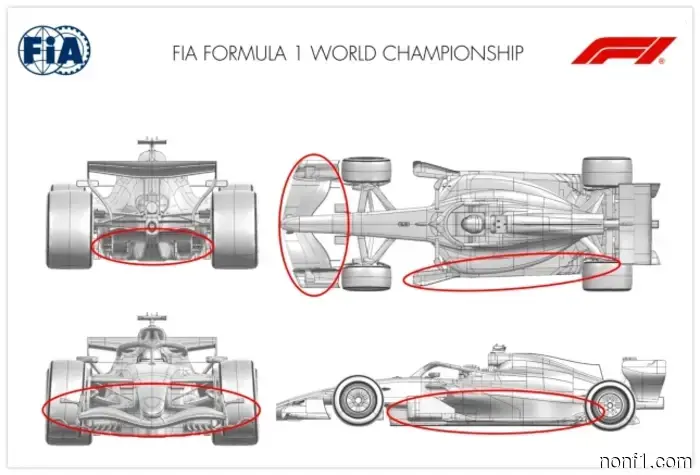
The list of new features presented by the Italian team includes 8 items. First and foremost, it concerns the front wing and nose cone, with the provided explanation being quite verbose, detailing aspects that only a specialist in racing car aerodynamics could fully understand. But the essence is that the geometry of the endplates on the SF-26 has been altered, including their lower part – what is referred to as the footplate. Literally, this element's name can be translated as "lower plate."
These improvements are intended to promote a more balanced distribution of aerodynamic load. Changes have also been made to the design of the mechanism responsible for the active aerodynamic system – the one that activates Straight Mode (SM).
As a result, the geometry of the nose cone has been revised, with its lower surface now positioned slightly higher.
The next four items on the list pertain to the car's floor. The profile of its front part has been altered, optimizing both horizontal and vertical elements located in this area. The rear part of the floor has also been modified, particularly the profile of the diffuser's side walls, with other elements undergoing changes as well.
All of this is done to increase aerodynamic load overall across the entire range of the car's working settings, as well as to improve airflow parameters around the rear of the chassis.
The updated side pods and engine cover also serve these same goals, with their geometry adjusted in accordance with the upgraded floor of the SF-26.
Williams
The rear wing of the FW-48 has received fairings for the active aerodynamic elements responsible for SM – additional wings have been installed on them, which allows for increased downforce on a track like the Catalan circuit, where a high level of downforce is required.
The British team also reports that "the third element of the rear wing has become wider in certain areas," which is also done to increase aerodynamic load.
Racing Bulls
The front wing of the VCARB 03 has additional Gurney flaps, aimed at creating additional downforce – on a track like Barcelona, this is never excessive.
As explained by the team from Faenza, "this provides balance over a wider range of settings."
The profile of the rear safety structure, which absorbs energy during collisions, has also been adjusted, improving airflow control in the rear area of the car.
Haas F1
The American team also reported a change in the geometry of the rear safety structure, aimed at "achieving target setup parameters" required by the Barcelona track.
Cadillac F1
On the upper surface of the side pods closer to their rear part, additional cooling system louvres have appeared, and on the rear wing – new fairings for the SM activation mechanism.
The Aston Martin, Audi F1, and Alpine teams reported no technical innovations.
Other articles
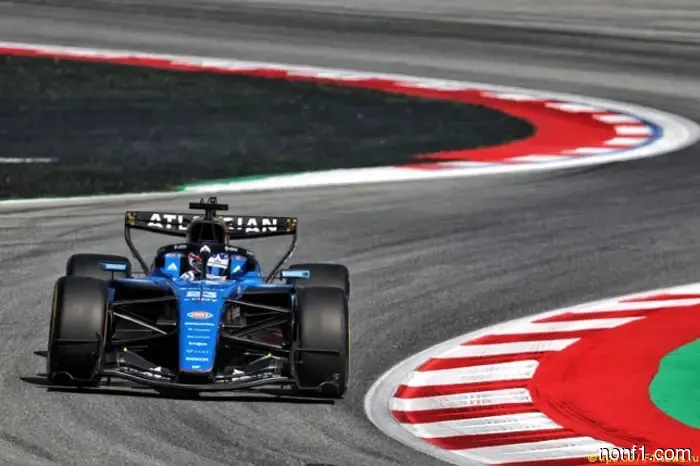 Alex Albon's power unit components were replaced.
On Friday in Barcelona, between the first and second practice, the power unit components were replaced on Alex Albon's car at Williams.
Alex Albon's power unit components were replaced.
On Friday in Barcelona, between the first and second practice, the power unit components were replaced on Alex Albon's car at Williams.
 Vowles states that there are no openings for top teams for Sainz and Albon.
Formula 1 | Williams team principal James Vowles is growing more assured that Carlos Sainz and Alex Albon will stay dedicated to the long-term vision of the Grove-based team (…)
Vowles states that there are no openings for top teams for Sainz and Albon.
Formula 1 | Williams team principal James Vowles is growing more assured that Carlos Sainz and Alex Albon will stay dedicated to the long-term vision of the Grove-based team (…)
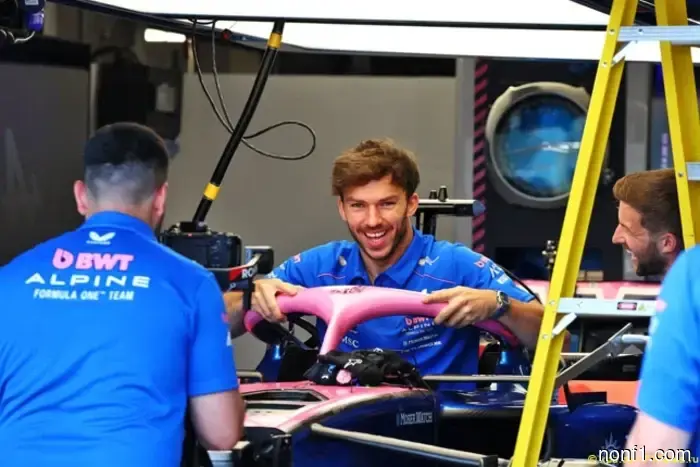 Alpine thanked the FIA for reviewing Gasly's penalties.
Alpine released a statement after the stewards canceled two penalties for Pierre Gasly for speeding in Monaco. The team thanked the FIA for the decision made.
Alpine thanked the FIA for reviewing Gasly's penalties.
Alpine released a statement after the stewards canceled two penalties for Pierre Gasly for speeding in Monaco. The team thanked the FIA for the decision made.
 Technical innovations presented in Barcelona
After a rather wide range of updates prepared by the teams for the three previous stages, the list of improvements presented in Barcelona is clearly more modest...
Technical innovations presented in Barcelona
After a rather wide range of updates prepared by the teams for the three previous stages, the list of improvements presented in Barcelona is clearly more modest...
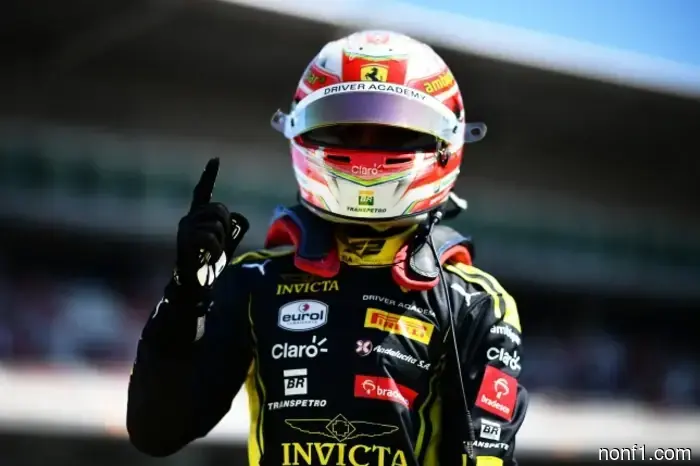 Formula 2: Kamara starts from the pole in Barcelona.
The F2 qualification in Barcelona, just like in Monaco, was won by Rafael Kamara, the Brazilian driver of Invicta Racing, earning two bonus points for this...
Formula 2: Kamara starts from the pole in Barcelona.
The F2 qualification in Barcelona, just like in Monaco, was won by Rafael Kamara, the Brazilian driver of Invicta Racing, earning two bonus points for this...
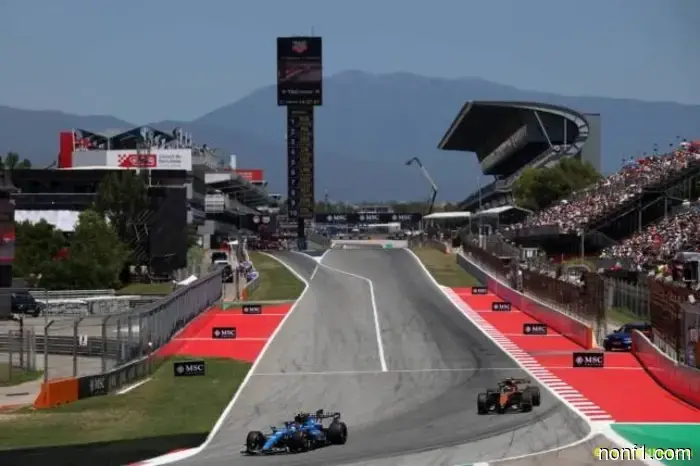 Photo gallery: 12/06. Grand Prix of Barcelona-Catalonia, Friday
© F1News.Ru Editorial 1997-2026. Media registration certificate El No. FS77-29173. Registered with the Federal Service for Supervision of Communications, Information Technology and Mass Media.
Photo gallery: 12/06. Grand Prix of Barcelona-Catalonia, Friday
© F1News.Ru Editorial 1997-2026. Media registration certificate El No. FS77-29173. Registered with the Federal Service for Supervision of Communications, Information Technology and Mass Media.
Technical innovations presented in Barcelona
After a rather wide range of updates prepared by the teams for the three previous stages, the list of improvements presented in Barcelona is clearly more modest...