
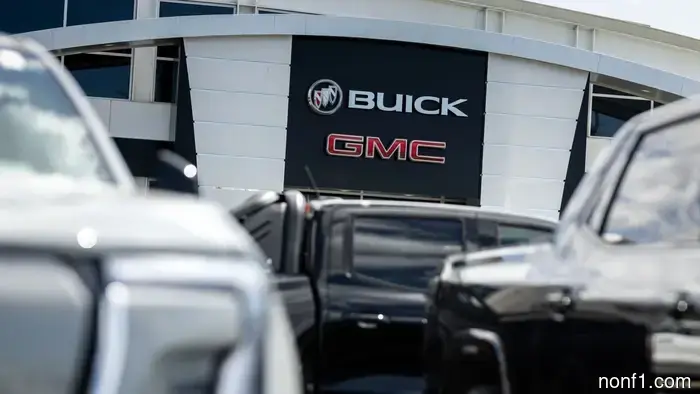
A GMC dealer has sold 99% of its vehicles, yet GM still deems it a failure and refuses to provide additional stock.
Jay L Clendenin/Getty Images
The most significant automotive news and reviews, no nonsense
Our free daily newsletter delivers the important stories straight to you every weekday.
Dealership files lawsuit against GM over lack of inventory. Sun GMC alleges GM is depriving it of cars, jeopardizing its business.
Allocation system puts pressure on dealers. Automakers utilize allocations to manage dealership performance and behavior.
Sun GMC's inventory has sharply decreased. From 1,200 vehicles in 2017 to only 501 in 2025.
Dealers encounter a difficult cycle. Reduced inventory leads to fewer sales, further damaging their relationship with automakers.
In summary: Sun GMC is suing GM for $15 million, asserting that unfair inventory practices are severely affecting its operations.
AI-assisted, editor-reviewed
Imagine managing a McDonald's. It might not be the top performer in your region, but you sell enough items to maintain a solid profit and pay your staff. Over time, however, you notice that your warehouse is sending fewer burger patties and chicken products. The person responsible for the shake machine hasn't shown up in years. When you inform corporate about your food shortages, they suggest that you buy Happy Meals from a store across town to provide for your customers instead.
When customers express dissatisfaction with the quality and service, everyone blames you. You'd likely be quite upset, right? Perhaps even angry enough to file a lawsuit for, say, $15 million? That’s what a GMC dealership in Long Island, New York, is doing.
As reported by Automotive News, Sun GMC in Wantagh, N.Y., alleges that GM is “wrongfully depriving it of inventory to sell, causing irreparable harm and damage to Sun’s business and reputation,” endangering the dealer's continued operation.
Sure, GMC vehicles aren't cheeseburgers, and this analogy is somewhat simplistic, but it's not entirely inaccurate. While consumers often express frustration with dealers—an entitlement in a capitalist market—the relationship between dealers and automakers can be even more strained.
When customers feel shortchanged by a dealership, they take their business elsewhere, effectively voting with their wallets. However, dealers are also customers in their own right; they need to purchase cars to sell them, and unlike consumers, they can't simply switch to a different manufacturer if they feel mistreated—and like consumers, they are frequently at a disadvantage. The culprit? The allocation system.
Ideally, automakers would anticipate every consumer's needs and distribute a perfect number of vehicles across the country. In reality, dealers receive allocations based on their individual performance from the automaker's total annual production, and once those units are allocated, supplies are cut off, regardless of demand.
On the surface, it seems straightforward: increased sales should mean more cars. Similarly, selling higher-end models should theoretically lead to more allocations of such vehicles in the future. If it were that simple in practice, everyone would likely be somewhat satisfied with the system. But of course, it isn’t.
Since a new-car dealership cannot survive without inventory, automakers can leverage this allocation system to push dealers who they view as underperforming. A series of negative experience scores or customer complaints could lead to consequences. Ever wonder why salespeople are so keen on those satisfaction surveys? Trust me; their focus isn’t on your happiness but rather on accumulating five stars to secure more vehicle supplies.
In theory, that’s how it should work. However, automakers often use the allocation as a means to coerce dealers into compliance. Is your signage outdated? Has your building gone without renovation? Are the windows insufficiently clean or is your lot cluttered? You may not be meeting the standards of your franchise agreement. Upset the automaker, and you might find yourself cut off from the very resources critical for your sustainability.
Sun GMC alleges this is exactly what GM is doing. Their lawsuit claims that the dealership received an allocation of approximately 1,200 vehicles in 2017, which has since dwindled. By 2025, they only received 501 vehicles. When Sun raised concerns about insufficient inventory, GM purportedly advised the dealership to source cars from another location, likely at a higher cost to customers.
Despite selling 99% of its allocated vehicles, GM still considers Sun to be underperforming.
To cope, the dealership has begun displaying used cars in its new vehicle showroom just to maintain some level of inventory. Compounding the issue, the dealer’s reduced inventory creates a detrimental cycle. With fewer cars arriving, sales decrease, which further undermines their standing with corporate.
So, next time you shop for a car, keep in mind that the individuals behind the desk may be facing similar challenges as you. While this knowledge may not save you money, it might provide some comfort regarding your potential expenditure.
Have a news tip? Contact us at tips@thedrive.com!
Other articles
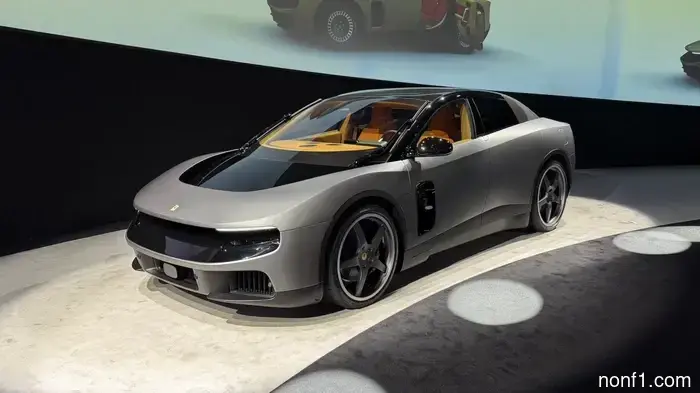 No, Ferrari will not compel you to purchase a Luce EV in order to be eligible for their higher-end models.
A Bloomberg report indicates that buyers are being encouraged to acquire a Luce to win favor with Maranello. The chief marketing officer of Ferrari expressed his anger over this rumor, stating that it is entirely false.
No, Ferrari will not compel you to purchase a Luce EV in order to be eligible for their higher-end models.
A Bloomberg report indicates that buyers are being encouraged to acquire a Luce to win favor with Maranello. The chief marketing officer of Ferrari expressed his anger over this rumor, stating that it is entirely false.
 Stuck on the Side of a Mountain? Rivian’s CEO Promises They’ll Reach You.
RJ Scaringe, the CEO of Rivian, informed The Drive that the company has a mobile service fleet consisting of approximately 800 vehicles, including specialized trucks that can come to your location.
Stuck on the Side of a Mountain? Rivian’s CEO Promises They’ll Reach You.
RJ Scaringe, the CEO of Rivian, informed The Drive that the company has a mobile service fleet consisting of approximately 800 vehicles, including specialized trucks that can come to your location.
 A GMC dealership sold 99% of its vehicles, yet GM considers it a failure and refuses to provide additional inventory.
In 2024, Sun GMC sold 99% of its assigned inventory, but GM provided them with less than half the vehicles required to meet its sales goals.
A GMC dealership sold 99% of its vehicles, yet GM considers it a failure and refuses to provide additional inventory.
In 2024, Sun GMC sold 99% of its assigned inventory, but GM provided them with less than half the vehicles required to meet its sales goals.
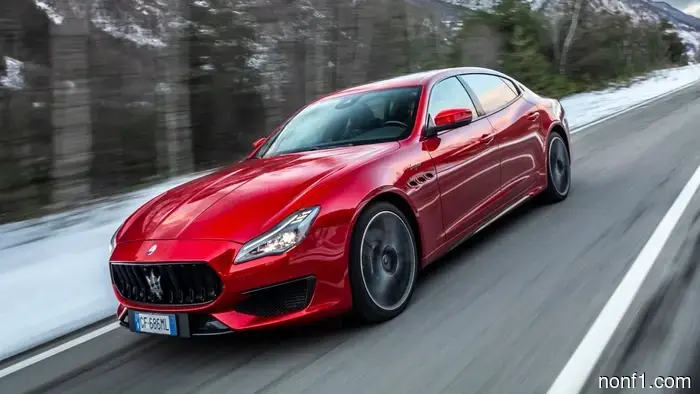 Maserati Envisions a Future for Sedans and V8 Engines, but Not for Plug-In Hybrids.
The Quattroporte remains significant in Maserati's thoughts, and there might be another four-door model similar to it down the line. However, don’t expect it to be a PHEV.
Maserati Envisions a Future for Sedans and V8 Engines, but Not for Plug-In Hybrids.
The Quattroporte remains significant in Maserati's thoughts, and there might be another four-door model similar to it down the line. However, don’t expect it to be a PHEV.
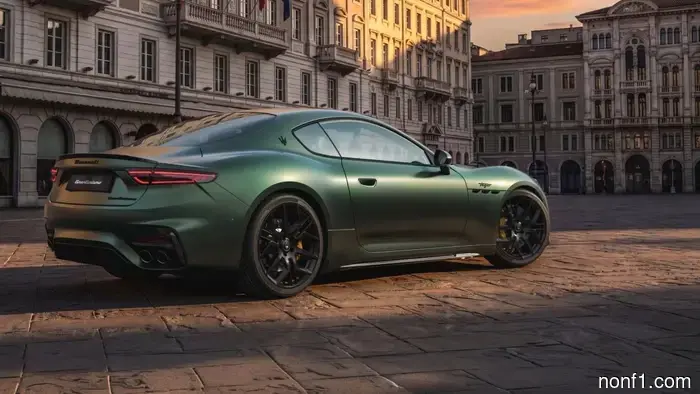 An executive has indicated that there is still an opportunity for manual transmissions at Maserati.
Maserati plans to offer the manual transmission option for as long as it can to cater to its niche clientele.
An executive has indicated that there is still an opportunity for manual transmissions at Maserati.
Maserati plans to offer the manual transmission option for as long as it can to cater to its niche clientele.
 A Lamborghini for just $23? Turo is offering Italian car rentals at unbelievable prices as a promotion for the World Cup.
Italy will not participate in the 2026 World Cup. However, the "Turo Takes Italy to the Game" promotion offers a selection of Italian cars for rent at just $23 per day this weekend.
A Lamborghini for just $23? Turo is offering Italian car rentals at unbelievable prices as a promotion for the World Cup.
Italy will not participate in the 2026 World Cup. However, the "Turo Takes Italy to the Game" promotion offers a selection of Italian cars for rent at just $23 per day this weekend.
A GMC dealer has sold 99% of its vehicles, yet GM still deems it a failure and refuses to provide additional stock.
In 2024, Sun GMC sold 99% of its designated inventory, but GM provided less than half the vehicles required to meet its sales goals.