
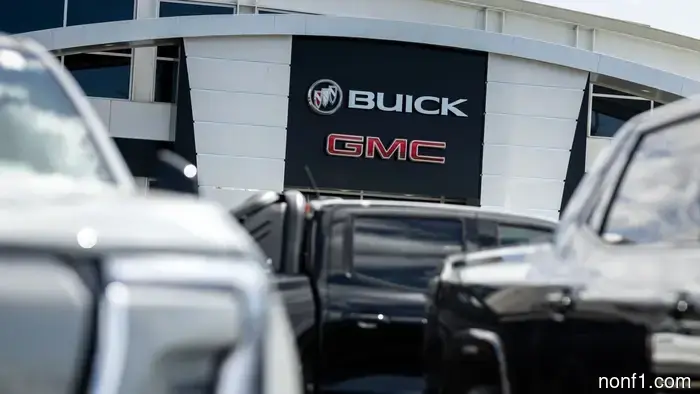
A GMC dealership sold 99% of its vehicles, yet GM considers it a failure and refuses to provide additional inventory.
Jay L Clendenin/Getty Images
The latest in car news and reviews, no nonsense
Subscribe to our free daily newsletter to receive the most important stories directly in your inbox every weekday.
Dealership sues GM over inventory issues. Sun GMC alleges that GM is withholding vehicles, jeopardizing its operations.
Allocation system puts pressure on dealers. Automakers utilize allocations to manage dealer performance and behavior.
Sun GMC's inventory has sharply declined. It decreased from 1,200 vehicles in 2017 to just 501 in 2025.
Dealers are caught in a tough feedback loop. Reduced inventory results in fewer sales, deteriorating their relationship with automakers.
In summary, Sun GMC is suing GM for $15 million, asserting that unfair inventory policies are damaging its business.
AI assisted, editor reviewed
Imagine you own a McDonald’s. It might not be the top performer in your area, but you manage to serve enough customers to earn a decent profit and ensure your staff is paid each night. However, you gradually observe fewer burger patties and chicken portions arriving from your warehouse. Plus, the person responsible for maintaining your shake machine hasn’t shown up in years. Then, when you reach out to corporate about the food shortages affecting your ability to serve customers, they suggest you order Happy Meals from a store across town to sell instead.
When customers then express dissatisfaction with the quality and service, everyone blames you. You’d probably be pretty irate, right? Perhaps even frustrated enough to file a lawsuit—for $15 million? That's exactly what a GMC dealership in Long Island, New York is doing.
As reported by Automotive News, Sun GMC in Wantagh, N.Y. claims that GM is “wrongfully starving it of inventory to sell, causing irreparable harm and damage to Sun's business and reputation,” and jeopardizing the dealer’s operations.
While GMC vehicles are not cheeseburgers, this analogy isn't too far from the truth. People often complain about dealerships—it’s our right as consumers in a capitalist society. Yet, if you think there’s tension between buyers and dealers, just wait until you see the issues between dealers and automakers.
When customers feel wronged by a dealership, they take their business elsewhere. However, dealers are also customers; they need to purchase cars to sell them, and unlike individual consumers, they can't easily switch to a different manufacturer if they feel mistreated—and similar to customers, they often face unfair treatment. The reason for this? It's the allocation system.
In an ideal world, automakers would perfectly anticipate consumer needs, manufacture all the necessary vehicles each year, and distribute them flawlessly across the country. In reality, dealers receive allocations based on the automaker’s annual production, tied to each dealer's performance. Once allocations are assigned, the flow of vehicles halts, regardless of how many customers are interested or how loud they are.
Theoretically, this system is simple and merit-based: sell more cars, get more cars. The same principle applies to vehicle quality. If you sell higher-end, better-equipped models, you should receive a greater quantity of similar vehicles during future allocations. If it truly functioned this way, everyone would likely accept the process begrudgingly. However, it is far more complicated than that.
As a new-car dealership franchise cannot survive without inventory, automakers leverage the allocation system to discipline dealers they deem underperforming. Accumulated poor customer experiences or complaints can have significant consequences. Ever wonder why salespeople are fixated on customer satisfaction surveys? They only care about those five stars because it translates to more inventory.
Yet, in practice, automakers can manipulate the allocation system to pressure dealers into compliance. Have outdated signage? Failed to renovate your building recently? Is your lot cluttered, or your windows not spotless? You might not be meeting the standards of your franchise agreement. Upset the automaker, and you could find yourself deprived of the very assets needed for your survival.
This is the situation Sun GMC claims to be facing with GM. The dealership states that it received an allocation of approximately 1,200 vehicles in 2017, but this total has been steadily decreasing. By 2025, it was down to only 501 vehicles. When Sun brought its inventory issues to GM's attention, the automaker allegedly suggested they buy cars from other dealerships at higher prices.
Despite selling 99% of its allocated vehicles, GM still views Sun as an underperforming dealership.
To compensate for its dwindling new car inventory, Sun GMC has begun displaying used cars in its new vehicle showroom. This situation exacerbates the issue, as having fewer cars leads to decreased sales, which further damages its relationship with the automaker.
So, the next time you're shopping for a car, remember that the people you're dealing with at the dealership are facing their own struggles and frustrations. While this insight may not save you money, it might help you feel a little
Other articles
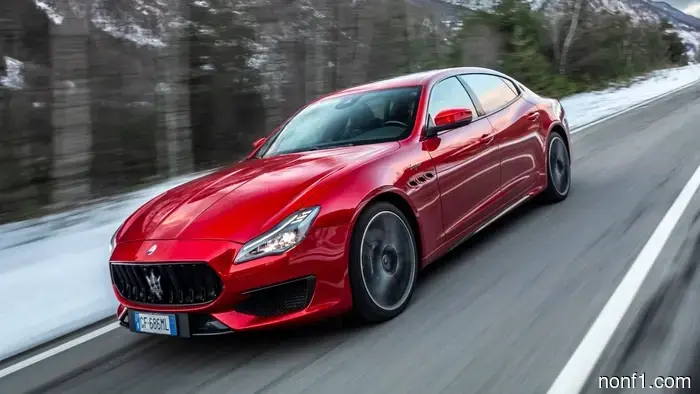 Maserati Envisions a Future for Sedans and V8 Engines, Yet Not for Plug-In Hybrids.
The Quattroporte remains significant in Maserati's vision, and there might be another four-door model like it on the horizon. However, don’t expect it to be a PHEV.
Maserati Envisions a Future for Sedans and V8 Engines, Yet Not for Plug-In Hybrids.
The Quattroporte remains significant in Maserati's vision, and there might be another four-door model like it on the horizon. However, don’t expect it to be a PHEV.
 A GMC dealer has sold 99% of its vehicles, yet GM still deems it a failure and refuses to provide additional stock.
In 2024, Sun GMC sold 99% of its designated inventory, but GM provided less than half the vehicles required to meet its sales goals.
A GMC dealer has sold 99% of its vehicles, yet GM still deems it a failure and refuses to provide additional stock.
In 2024, Sun GMC sold 99% of its designated inventory, but GM provided less than half the vehicles required to meet its sales goals.
 A Lamborghini for just $23? Turo is offering Italian cars at unbelievably low prices as part of a World Cup promotion.
Italy will not participate in the 2026 World Cup. However, the "Turo Takes Italy to the Game" promotion allows for certain Italian cars to be rented for just $23 a day this weekend.
A Lamborghini for just $23? Turo is offering Italian cars at unbelievably low prices as part of a World Cup promotion.
Italy will not participate in the 2026 World Cup. However, the "Turo Takes Italy to the Game" promotion allows for certain Italian cars to be rented for just $23 a day this weekend.
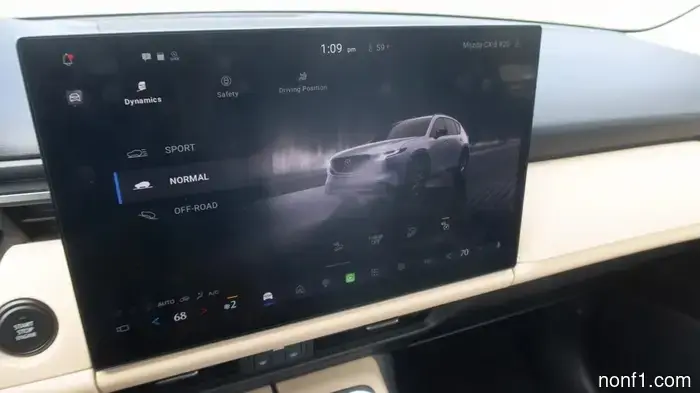 Mazda, which was previously the most vocal opponent of touchscreens, now claims that they are safer than buttons, according to TDS.
Mazda program manager Koichiro Yamaguchi stated that a cluster of 15 switches that appear similar makes it necessary for drivers to divert their gaze downward for a longer duration compared to a touchscreen.
Mazda, which was previously the most vocal opponent of touchscreens, now claims that they are safer than buttons, according to TDS.
Mazda program manager Koichiro Yamaguchi stated that a cluster of 15 switches that appear similar makes it necessary for drivers to divert their gaze downward for a longer duration compared to a touchscreen.
 A Lamborghini for just $23? Turo is offering Italian car rentals at unbelievable prices as a promotion for the World Cup.
Italy will not participate in the 2026 World Cup. However, the "Turo Takes Italy to the Game" promotion offers a selection of Italian cars for rent at just $23 per day this weekend.
A Lamborghini for just $23? Turo is offering Italian car rentals at unbelievable prices as a promotion for the World Cup.
Italy will not participate in the 2026 World Cup. However, the "Turo Takes Italy to the Game" promotion offers a selection of Italian cars for rent at just $23 per day this weekend.
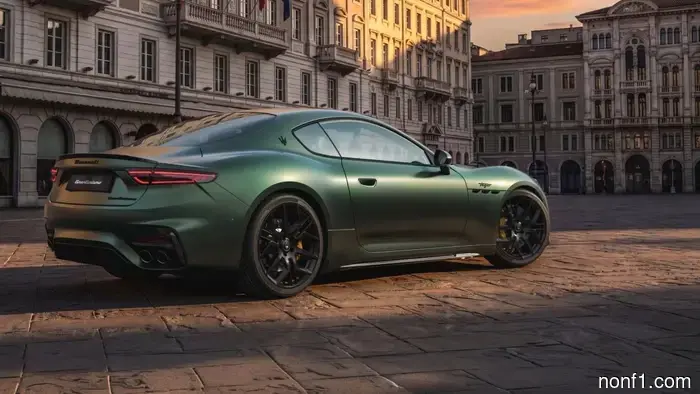 An executive has indicated that there is still an opportunity for manual transmissions at Maserati.
Maserati plans to offer the manual transmission option for as long as it can to cater to its niche clientele.
An executive has indicated that there is still an opportunity for manual transmissions at Maserati.
Maserati plans to offer the manual transmission option for as long as it can to cater to its niche clientele.
A GMC dealership sold 99% of its vehicles, yet GM considers it a failure and refuses to provide additional inventory.
In 2024, Sun GMC sold 99% of its assigned inventory, but GM provided them with less than half the vehicles required to meet its sales goals.