

If phones are posing a danger to pedestrians, why is it that this issue seems to be occurring only in America?
**IIHS**
The most important car news and reviews, without the fluff.
Our daily newsletter delivers the critical stories straight to you, every weekday.
Pedestrian deaths in the U.S. are increasing. While smartphone usage is common globally, only America experiences a notable rise in fatalities.
In contrast, Europe and Japan are seeing declines, maintaining safer roads despite similar technology use.
Distracted driving isn't the only factor; data indicates other elements are contributing to the U.S.'s distinct issue.
Global comparisons emphasize the problem. Countries like Canada and Australia do not reflect U.S. trends.
In summary: The pedestrian safety crisis in America is unique, with rising fatalities not completely attributed to smartphone usage.
AI assisted, editor reviewed
Recently, the New York Times released a concerning study regarding America's ongoing pedestrian safety crisis. You may have seen our reporting or discovered it elsewhere, and perhaps you hold strong views on the matter. We've certainly encountered numerous opinions. As I write this, that article has accumulated over 260 comments just on our site.
Many of those comments echo similar sentiments: “It’s the cell phones, stupid!”
But is that really the case? At first glance, it seems like a valid argument. The iPhone launched in 2007; pedestrian deaths in the U.S. began to rise around two years later, peaking during the pandemic. I understand; I was frequently on my phone during that time as well.
There's even data to support this widely held belief. One user on Reddit went as far as to create a visual combining charts of pedestrian deaths, vehicle weight, and U.S. cell phone usage. It all fits well if not for one small detail: smartphones are used outside the United States too.
What’s the implication? If cell phones are the cause of the rise in pedestrian fatalities, we should see that trend in other nations with similar smartphone penetration and car ownership—meaning the world’s leading economies. If you’ve followed my reasoning this far, you’ve likely anticipated my conclusion: The numbers don’t add up.
Data sourced from https://w3.unece.org/PXWeb/en/Table?IndicatorCode=59 and visualized using Google Sheets; enhanced visualization by Gemini.
Since we appreciate visual data, here’s another one. The preceding information is based on public data from the UN Economic Commission for Europe (with U.S. figures corroborated by NHTSA) and reveals a clear pattern.
If you don’t like my rough trend lines, don’t worry; others have thoroughly examined the same data. Regardless of whose visual representation you view, they all lead to the same conclusion, and it’s not a positive one.
In 2013, the total number of pedestrian fatalities in the U.S. and Western Europe were nearly the same. This was four years into the reported rise in pedestrian deaths in America, and as illustrated, Europe has continued its steady decrease, with a minor increase in 2016. By 2021, pedestrian fatalities in the U.S. were more than double those in Western Europe; according to IIHS, this trend hasn’t changed much since then.
The situation remains similar outside of Europe. Japan, which has historically faced challenges with pedestrian safety due to its dense urban environments, has experienced a decline in fatalities during this same timeframe, fostering a pedestrian-first safety culture. Australia saw an increase in pedestrian deaths since the pandemic but does not exhibit the same trend as the U.S. Canada shows a similar situation.
China presents a complex scenario. An estimate suggested the country’s pedestrian fatality rate may be as high as 17 per 100,000, which might not sound alarming in isolation, but indicates that pedestrians and cyclists are being killed at rates reminiscent of urban America in the 1920s, where the rate reached 12 per 100,000; current numbers for the U.S. are about 2.3. These figures highlight rapid industrialization and are likely not directly connected to the number of Chinese users on TikTok.
Is distracted driving (and walking/cycling) a concern? Definitely. However, can it solely explain why America’s roads are becoming increasingly hazardous for pedestrians and cyclists? You can draw your own conclusions, but the statistics often tell the truth.
Do you have a story tip? Reach out to us at tips@thedrive.com!


Другие статьи
 Ферстаппен: Нам не устраивает быть четвёртой командой.
В четверг у Макса Ферстаппена поинтересовались, скажется ли эффективность новинок на его решение остаться в команде или покинуть её.
Ферстаппен: Нам не устраивает быть четвёртой командой.
В четверг у Макса Ферстаппена поинтересовались, скажется ли эффективность новинок на его решение остаться в команде или покинуть её.
 Форд убирает V8 из топовых комплектаций F-150 King Ranch и Platinum
Если вы ищете высококлассный Ford полутонник, вам придется смириться с EcoBoost V6.
Форд убирает V8 из топовых комплектаций F-150 King Ranch и Platinum
Если вы ищете высококлассный Ford полутонник, вам придется смириться с EcoBoost V6.
 Колапинто: Я многого научился благодаря Флавио Бриаторе.
Недавно Флавио Бриаторе положительно высказался о Франко Колапинто, и в четверг в паддоке автодрома Red Bull Ring аргентинского пилота Alpine F1 спросили о его мнении по этому поводу…
Колапинто: Я многого научился благодаря Флавио Бриаторе.
Недавно Флавио Бриаторе положительно высказался о Франко Колапинто, и в четверг в паддоке автодрома Red Bull Ring аргентинского пилота Alpine F1 спросили о его мнении по этому поводу…
 Колапинто: Я многому научился благодаря Флавио Бриаторе.
На днях Флавио Бриаторе положительно высказался о Франко Колапинто, и в четверг в паддоке автодрома Red Bull Ring у аргентинского гонщика Alpine F1 поинтересовались его мнением по этому поводу…
Колапинто: Я многому научился благодаря Флавио Бриаторе.
На днях Флавио Бриаторе положительно высказался о Франко Колапинто, и в четверг в паддоке автодрома Red Bull Ring у аргентинского гонщика Alpine F1 поинтересовались его мнением по этому поводу…
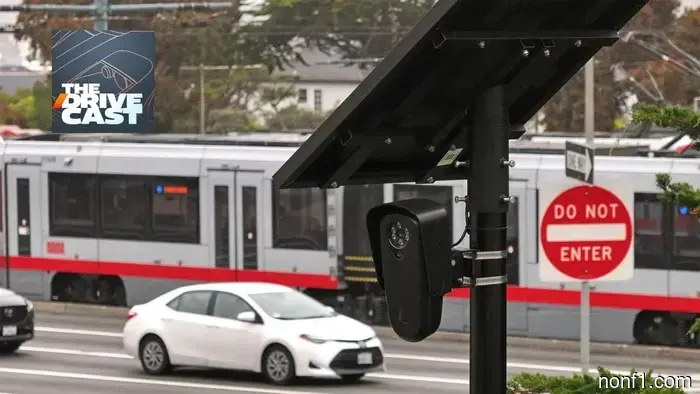 Камеры номерных знаков отслеживают вашу жизнь без ордера
Камеры уже находятся на улице, уже собирают данные, и нет ни настроек, ни законов, ни выключателя, который мог бы их остановить.
Камеры номерных знаков отслеживают вашу жизнь без ордера
Камеры уже находятся на улице, уже собирают данные, и нет ни настроек, ни законов, ни выключателя, который мог бы их остановить.
 Карлос Сайнс готовится к трудному уикенду в Австрии.
Гонщик команды Williams Карлос Сайнс готовится к непростому гоночному уикенду в Шпильберге. Команда не привезла в Австрию значительных обновлений для автомобиля, а высокая температура усугубит проблемы с износом шин.
Карлос Сайнс готовится к трудному уикенду в Австрии.
Гонщик команды Williams Карлос Сайнс готовится к непростому гоночному уикенду в Шпильберге. Команда не привезла в Австрию значительных обновлений для автомобиля, а высокая температура усугубит проблемы с износом шин.
If phones are posing a danger to pedestrians, why is it that this issue seems to be occurring only in America?
The increase in smartphone usage aligns closely with the rise in pedestrian fatalities in the United States. The issue is that other nations also have smartphones.