
Russian Engineers Innovate Turbo-Style Alternator Powered by Exhaust Gases
Garage 54 via YouTube
The most prominent car news and reviews, without the nonsense
Subscribe to our free daily newsletter to receive the most important stories directly to your inbox every weekday.
Alternators rely on the engine's rotation to produce electricity for various components, from lights to seat heaters. However, this additional load affects both power output and fuel efficiency. Some car manufacturers have experimented with 48-volt electrical systems that utilize a larger battery for power, but that increases weight and still requires recharging. The inventive team at Garage 54 has proposed a different solution.
These are the same mechanics known for transforming a Subaru boxer engine into an inline-four and creating a V16 from chainsaw engines, so they think outside the box. They developed an alternative to the alternator that operates on exhaust gases, similar to how a turbocharger works, rather than through a conventional belt. The rotational motion is maintained to generate electricity, making this device akin to a smaller version of the turbines found in power plants. To ensure sufficient electricity generation, the Garage 54 team measured the rpm of a standard alternator, which served as a benchmark for their design.
Garage 54 via YouTube
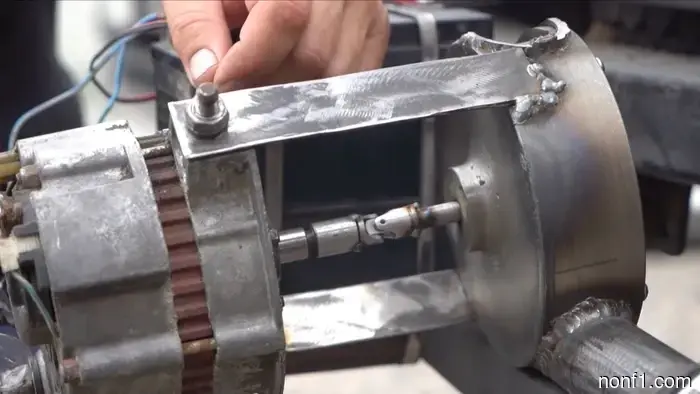
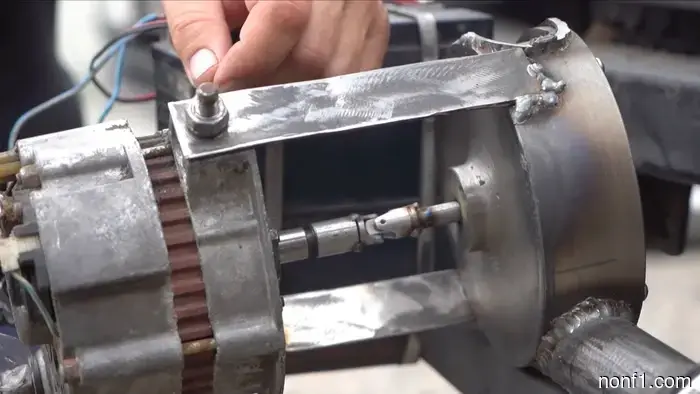
The turbine alternator features a round casing and a fan-like wheel composed of flat steel blades that spin from the engine's exhaust gases. These gases enter and exit through precisely placed ports to allow them to effectively turn the wheel. If the ports were directly opposite each other, for instance, the gases wouldn't disperse sufficiently. The gap between the wheel and the casing needed to be minimized to maximize the energy extracted from the exhaust gases, while the entry port and overall chamber volume—defined by the casing's diameter and the quantity and arrangement of the blades—were kept as small as possible to maintain pressure. This process involved some experimentation.
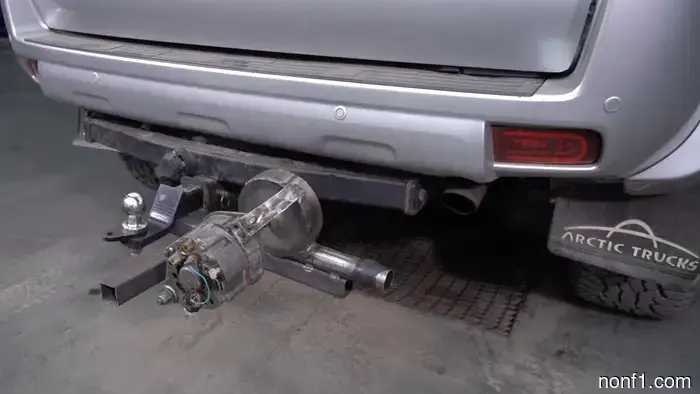
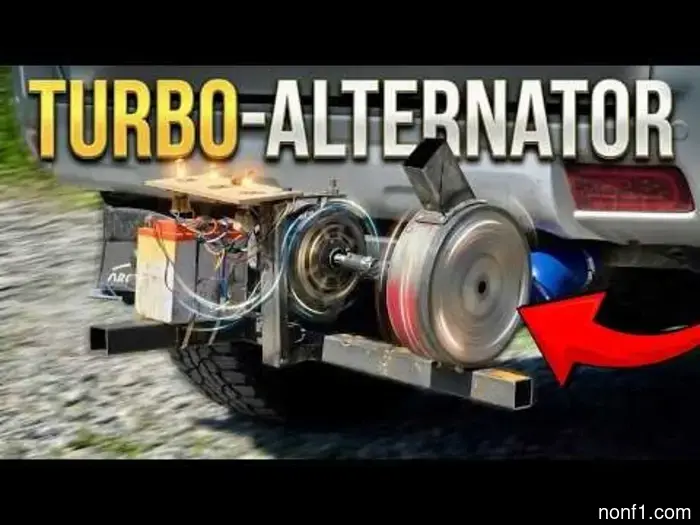
The final product is relatively compact, but its installation is not what would be considered OEM-approved. The turbine connects to a standard alternator via a small driveshaft and is directly attached to the tailpipe. Consequently, rather than being placed under the hood, the entire assembly hangs from the back bumper on a modified trailer hitch. This is merely an experiment, after all.
Exhaust powered turbo-generator for a car – will it work?
But did the experiment succeed? To some extent. The expectations were minimal; instead of powering the entire electrical system of a car, the objective was simply to keep three light bulbs lit. The turbo-alternator managed to do that at around 2,500 rpm from the engine, producing a rather unsettling noise in the process. The hosts were worried that too much throttle could cause it to disassemble, while reducing the throttle dimmed the light bulbs.
This is the challenge with turbines. They require steady, typically high speeds to perform effectively. Those familiar with cars know about turbo lag, and while modern turbines and engine management systems have significantly reduced this issue, achieving similar results for electricity generation is more complex. This is why Jaguar ultimately abandoned its turbine range extender for the C-X75 supercar (before canceling the car entirely). Using a belt remains a more efficient method to utilize an engine's rotational power, which is why belt-driven alternators function at much lower engine speeds. Nevertheless, the Garage 54 team deserves commendation for their innovative efforts.
Other articles
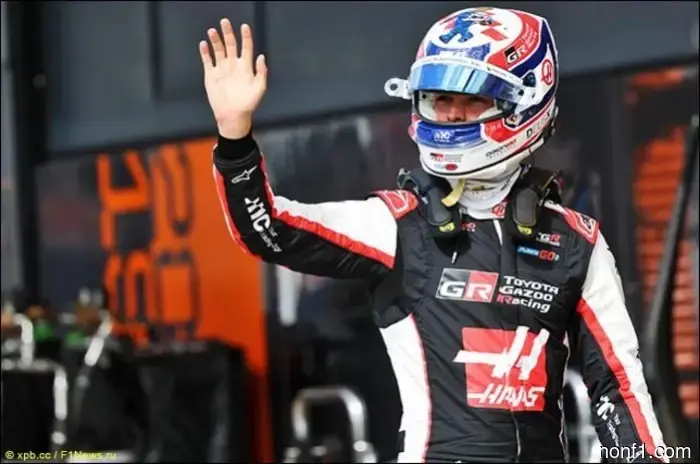 Berman: Achieving more would still not have been possible.
The best result for Haas F1 in Silverstone was Oliver Berman's 14th place, while his teammate Esteban Ocon was out of the race in the very first session...
Berman: Achieving more would still not have been possible.
The best result for Haas F1 in Silverstone was Oliver Berman's 14th place, while his teammate Esteban Ocon was out of the race in the very first session...
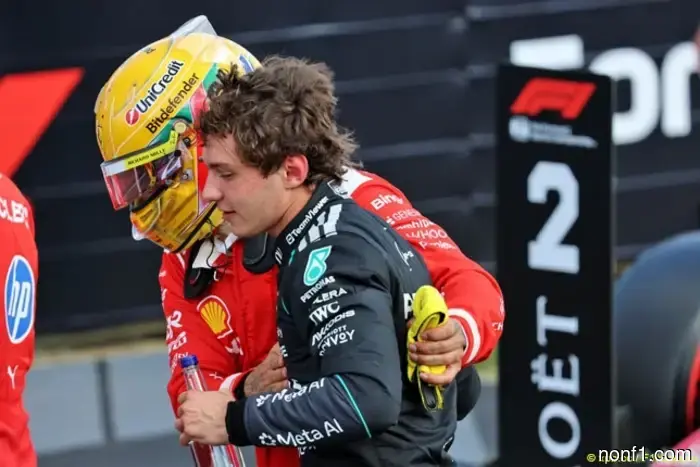 Hamilton: We are gradually closing the gap to Mercedes.
Charles Leclerc and Lewis Hamilton qualified second and third in Silverstone. Both Scuderia drivers are pleased to start in the top three but acknowledged that Kimi Antonelli was too fast to challenge him for pole position.
Hamilton: We are gradually closing the gap to Mercedes.
Charles Leclerc and Lewis Hamilton qualified second and third in Silverstone. Both Scuderia drivers are pleased to start in the top three but acknowledged that Kimi Antonelli was too fast to challenge him for pole position.
 Kimi Antonelli: We did everything right
Kimi Antonelli will start from pole position for the fifth time this season – in qualifying at Silverstone, he was the fastest of all...
Kimi Antonelli: We did everything right
Kimi Antonelli will start from pole position for the fifth time this season – in qualifying at Silverstone, he was the fastest of all...
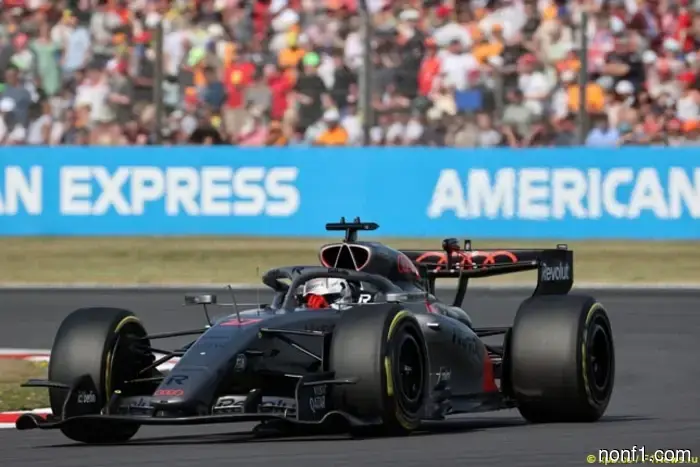 Hülkenberg fined, Lawson received a warning.
After the sprint finish in Silverstone, the stewards of the British Grand Prix reviewed two different incidents involving Nico Hülkenberg and Liam Lawson.
Hülkenberg fined, Lawson received a warning.
After the sprint finish in Silverstone, the stewards of the British Grand Prix reviewed two different incidents involving Nico Hülkenberg and Liam Lawson.
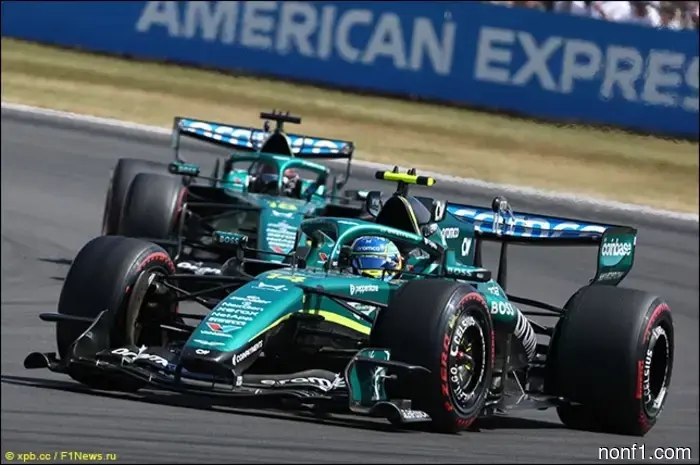 Fernando Alonso: Another difficult qualifying session
In the fourth consecutive qualification and for the fifth time this season, the Aston Martin drivers occupied the last two positions in the session's protocol...
Fernando Alonso: Another difficult qualifying session
In the fourth consecutive qualification and for the fifth time this season, the Aston Martin drivers occupied the last two positions in the session's protocol...
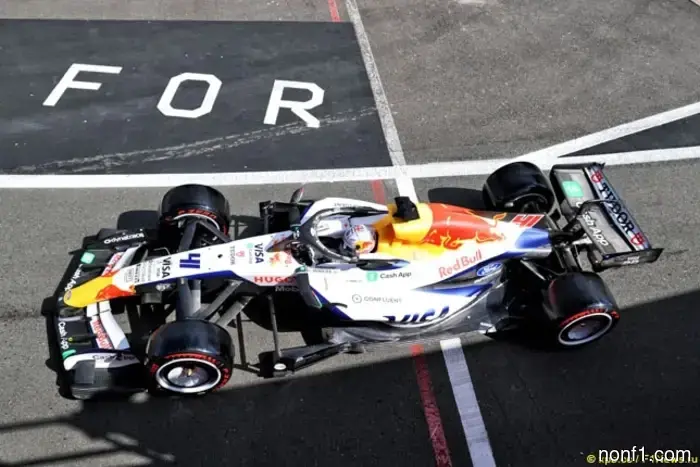 Racing Bulls fined five thousand euros
During the final qualifying session of the British Grand Prix, the Racing Bulls team released Arvid Lindblad onto the pit lane right in front of Oscar Piastri's wheels.
Racing Bulls fined five thousand euros
During the final qualifying session of the British Grand Prix, the Racing Bulls team released Arvid Lindblad onto the pit lane right in front of Oscar Piastri's wheels.
Russian Engineers Innovate Turbo-Style Alternator Powered by Exhaust Gases
Is the alternator drawing too much power from your engine? Give this a try.