
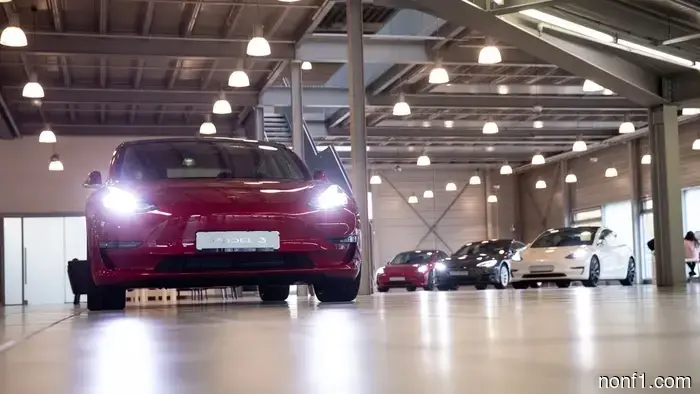
Automakers believe they shouldn’t be responsible for addressing the issue of excessively bright headlights.
Christian Charisius/Picture Alliance via Getty Images
The most significant car news and reviews, no nonsense
Our free daily newsletter delivers the most important stories directly to you every weekday.
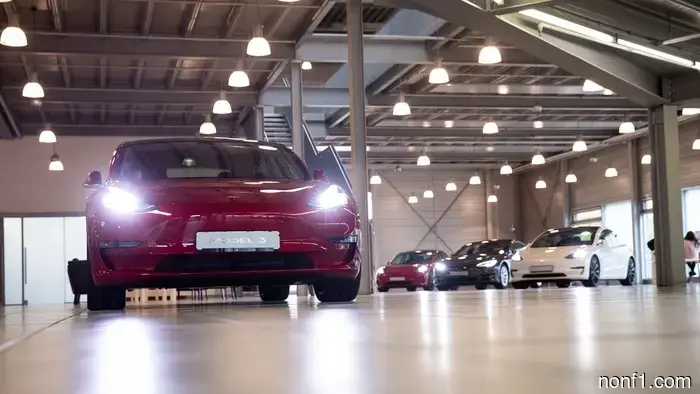
In the spring of 2024, Tesla informed the National Highway Traffic Safety Administration (NHTSA) that the headlights on approximately 19,900 Model 3 and Model Y vehicles were nearly twice as bright as the maximum legal limit in some extreme instances. Instead of addressing the issue with these excessively bright electric vehicles, the company subsequently filed a petition claiming it shouldn't be required to make repairs, arguing that the defect was “inconsequential” to safety.
After a two-year deliberation, federal authorities returned a decisive “nice try” to Tesla's appeal.
The vehicles in question span model years 2017 to 2023. A core element of Tesla’s defense, as detailed in the NHTSA's record of the petition, was that the headlights were overly bright in certain areas, which the company argued were “positioned off the roadway both horizontally and vertically, keeping [them] outside of the driver’s or other road users’ natural line of sight.” Tesla attempted to substantiate this claim with its own study, examining how the beam appeared to an oncoming driver and concluding that other motorists “would not experience glare or distraction from them.”
Additionally, Tesla noted that there had been no formal complaints about the headlights prior to the agency's findings. Indeed, NHTSA had no records of complaints, much less reports of harm or injury. That changed, however, when the agency opened the comment period to the public, leading to two individuals coming forward. Furthermore, as stated in the decision (see Page 8), “The absence of complaints does not mean vehicle occupants have not experienced a safety issue, nor does it mean that there will not be safety issues in the future.”
Returning to Tesla’s justification for why these headlights are not an issue, they are deemed too bright only at specific angles that the automaker posits “fall outside the driver’s line of vision.” However, a driver’s line of vision varies based on their surroundings. Approaching one of these Teslas from a different elevation, whether at a hilltop or in a valley, around a curve or on a straight stretch, will eventually reveal angles that could cause issues.
This concern is compounded by challenging weather conditions. “Certain weather conditions such as rain, snow, and fog could result in light from the noncompliant lamps causing veiling glare to the driver or other road users driving in the vicinity of the vehicle with the noncompliant lamp(s),” warns the regulator.
Therefore, Tesla's attempt to bypass this issue was unsuccessful. The company will now be required to inform affected owners and arrange for free repair or replacement of the faulty components. Moreover, Tesla is not the only manufacturer to face this setback.
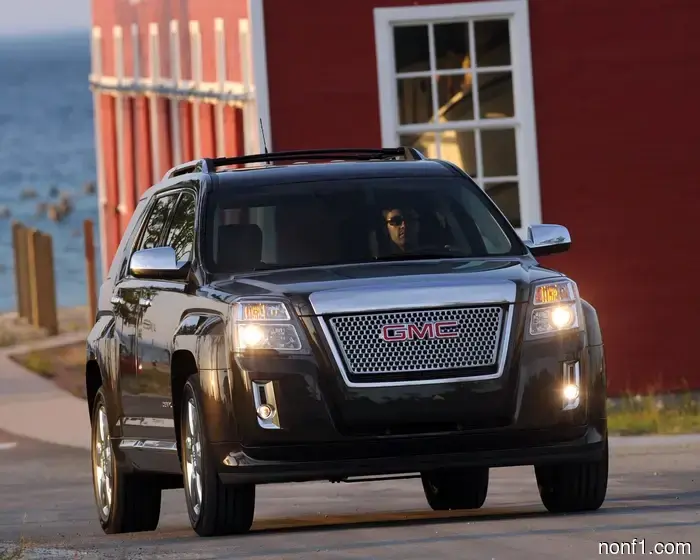
Tesla isn’t the only carmaker to contend that it shouldn’t be required to fix excessively bright headlights. GM made a similar argument regarding 725,000 Terrain SUVs in 2022.
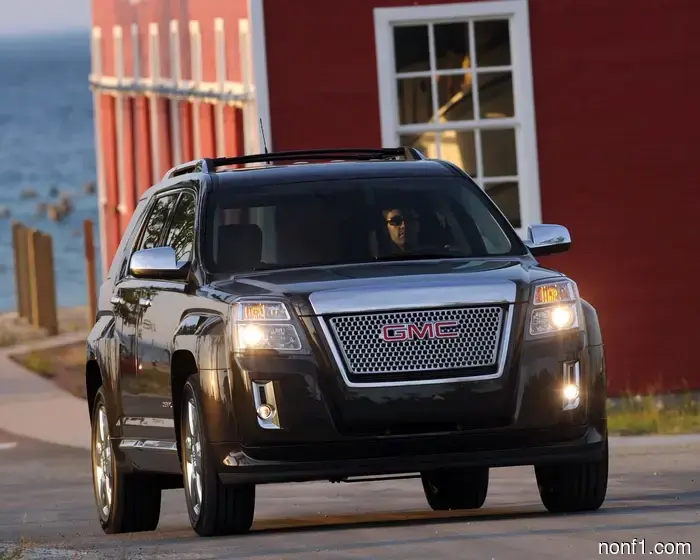
In 2022, GM attempted to put forth a comparable case for a much larger set of vehicles—specifically about 725,000 GMC Terrain SUVs. The headlights on those SUVs exceeded the brightness limit even more than Tesla’s models (a point Tesla likely highlighted to the federal authorities in its appeal), yet GM also argued unsuccessfully that the issue was “inconsequential.”
As someone who has voiced concerns about sharing the road with modern LED-equipped vehicles, I recognize my bias, but I believe many share my view. A Reuters report regarding Tesla’s failed appeal mentioned a recent survey indicating that 6 out of 10 drivers in the U.S. agreed that “glare is a problem after dark,” with three-quarters believing the issue has worsened over the past decade.
Automakers will do everything possible to avoid a recall and the associated costs or time required for repairs. However, what is particularly frustrating about cases like this is the defense employed: that being blinded while driving is “inconsequential,” especially as more people are speaking out against such claims.
Have a tip? Contact tips@thedrive.com
Other articles
 Max Verstappen: I don't know where we stand compared to the others.
Max Verstappen showed the third fastest time in the second practice of the Belgian Grand Prix, trailing leader Kimi Antonelli by almost half a second. Nevertheless, the Red Bull Racing driver is quite satisfied with how Friday went.
Max Verstappen: I don't know where we stand compared to the others.
Max Verstappen showed the third fastest time in the second practice of the Belgian Grand Prix, trailing leader Kimi Antonelli by almost half a second. Nevertheless, the Red Bull Racing driver is quite satisfied with how Friday went.
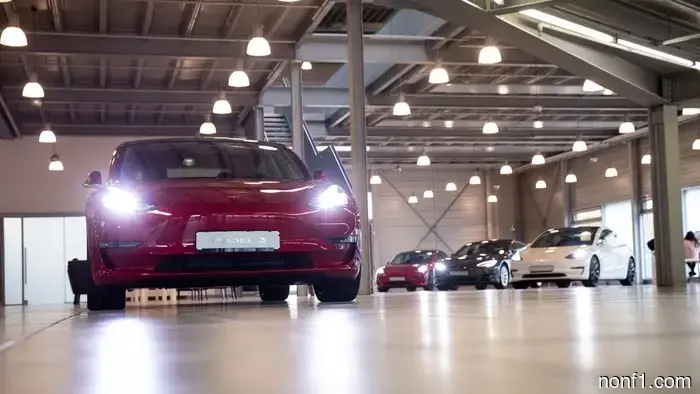 Automakers believe they shouldn't be responsible for addressing excessively bright headlights.
Over the last four years, GM and now Tesla have attempted to avoid recalls by claiming that excessively bright headlights are "insignificant" to safety. However, the public disagrees.
Automakers believe they shouldn't be responsible for addressing excessively bright headlights.
Over the last four years, GM and now Tesla have attempted to avoid recalls by claiming that excessively bright headlights are "insignificant" to safety. However, the public disagrees.
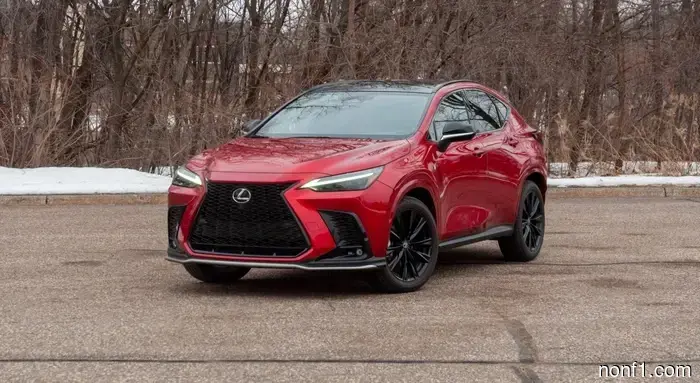 2026 Lexus NX Hybrid Quick Review: I Understand Now Why These Are Popular Choices
Not every vehicle needs to provide an exhilarating driving experience to be successful, and the Lexus NX embodies that philosophy.
2026 Lexus NX Hybrid Quick Review: I Understand Now Why These Are Popular Choices
Not every vehicle needs to provide an exhilarating driving experience to be successful, and the Lexus NX embodies that philosophy.
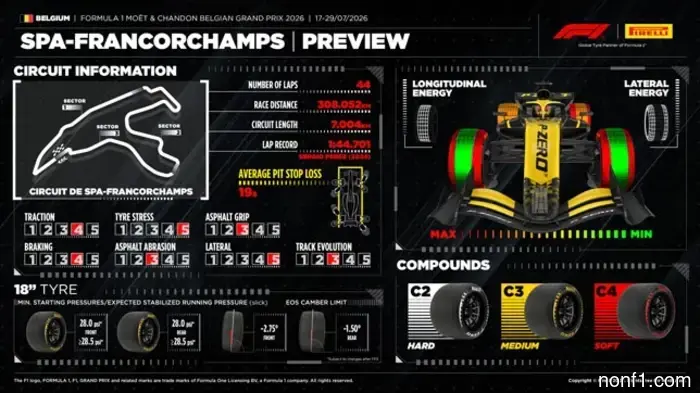 Pirelli: The stage in Belgium will be a test for the teams.
At the Belgian Grand Prix, Pirelli will bring the medium hardness compounds C2, C3, and C4. In terms of tire loads, Spa is among the most challenging tracks on the calendar, although it is surpassed in this regard by Suzuka and Silverstone.
Pirelli: The stage in Belgium will be a test for the teams.
At the Belgian Grand Prix, Pirelli will bring the medium hardness compounds C2, C3, and C4. In terms of tire loads, Spa is among the most challenging tracks on the calendar, although it is surpassed in this regard by Suzuka and Silverstone.
 The stewards are investigating the Ferrari violation.
The stewards of the Belgian Grand Prix are investigating a violation committed by the Ferrari team after the first session of free practice.
The stewards are investigating the Ferrari violation.
The stewards of the Belgian Grand Prix are investigating a violation committed by the Ferrari team after the first session of free practice.
Automakers believe they shouldn’t be responsible for addressing the issue of excessively bright headlights.
Over the last four years, both GM and Tesla have attempted to evade recalls by claiming that headlights that are illegally bright are "insignificant" to safety. The public, however, disagrees.