
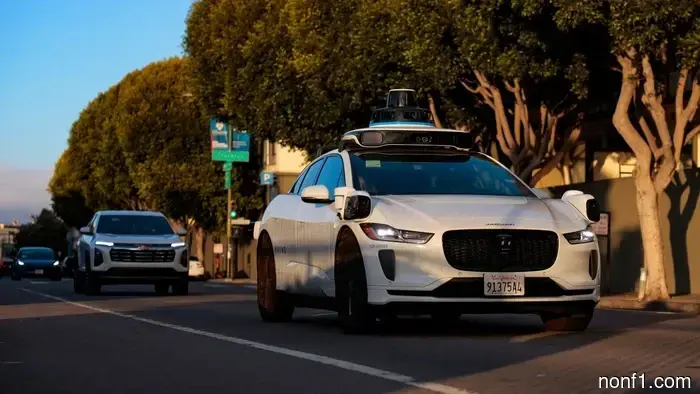
Study Finds Waymo's Self-Driving Cars Have Fewer Crashes Compared to Human Drivers.
Heather Diehl/Getty Images
The most significant updates and reviews on vehicles, without the fluff
Subscribe to our free daily newsletter to receive the most important stories directly to you every weekday.
Since Waymo launched as Google's self-appointed autonomous-driving initiative nearly two decades ago, the expectation that self-driving cars would significantly reduce accidents has remained just that—an expectation. A few companies offer autonomous ride-hailing services in select cities (San Francisco, in particular, has a high concentration of autonomous vehicles), but notable incidents highlight the challenges in achieving genuine advancement. However, Waymo might be making progress, according to the Insurance Institute for Highway Safety (IIHS).
The nonprofit organization, which is funded by the insurance sector and recognized for its comprehensive crash testing, recently evaluated Waymo's safety performance. In a study released this week, researchers discovered that Waymo vehicles experience fewer crashes per vehicle mile traveled (VMT) compared to human drivers. This conclusion was derived from an analysis of crash data across the cities where Waymo operates—San Francisco, Phoenix, Los Angeles, and Austin—with available information. The limitations of these data are the key takeaway.
Waymo
During the studied period, Waymo vehicles autonomously covered approximately 50 million miles, in contrast to about 222 billion miles for human drivers in the same regions over the same duration. Overall, the crash rate for Waymo vehicles was 68% lower per VMT than that of human drivers, with consistent results across different cities. In Phoenix, the crash rate for Waymo self-driving cars was 76% lower; in San Francisco, it was 35% lower, and in Los Angeles, 71% lower. In Austin, the Waymo fleet had a 4% higher crash rate than human drivers, but the sample size was relatively limited. Additionally, Waymo vehicles were involved in 85% fewer single-vehicle crashes and 81% fewer injury-related crashes per VMT than human drivers overall.
However, as the IIHS points out in an accompanying press release, deriving a meaningful comparison between human and autonomous driving proved challenging. Although companies must report accidents involving self-driving cars to the National Highway Traffic Safety Administration (NHTSA) and the State of California, they are not obliged to disclose the mileage these vehicles cover or the extent of their autonomous operation. This lack of data makes it difficult to determine the true frequency of crashes involving self-driving cars.
Waymo discloses VMT data that other companies do not, which is why it was the only company included in this study. Even with this information, researchers needed to consider discrepancies in the reporting standards for crashes involving self-driving cars compared to those for human drivers. Most states only require reporting of crashes that result in injuries or at least $1,000 in property damage, and even then, many drivers fail to report incidents to authorities. The IIHS estimates that about half of crashes and a third of injuries go unreported.
Waymo
Moreover, prior to a 2025 amendment to its reporting regulations, the NHTSA mandated that companies report minor accidents involving self-driving cars, as the expensive and sensitive sensors in these vehicles often surpass the $1,000 damage threshold when compromised. Researchers also encountered duplicate reports and instances where a vehicle may not have been operating in autonomous mode. After removing these extraneous reports, they attempted to assess whether a crash would have been reported to the police had a human driver been present to establish an accurate comparison.
The researchers determined that only 22% of the 736 autonomous car accidents recorded during the study period were likely “police-reportable.” Of this total, 89 incidents involved Waymo vehicles (the largest for a single operator), but only 64 of those occurred while in autonomous mode. This sample size is limited, and the intricate process of analyzing it illustrates the challenges in drawing definitive conclusions regarding the safety of self-driving cars.
“Those are promising indicators for the future of driverless vehicles,” said Eric Teoh, lead author of the study, in a statement regarding the findings. “Now we must refine the data collection system to ensure that this level of safety is maintained as these technologies become more widespread.”
Other articles
 Domenicali acknowledges that Imola could be a contender for the 2026 replacement.
Formula 1 has announced that this year's delayed Bahrain Grand Prix will take place at Malaysia's Sepang circuit instead. Meanwhile, Stefano Domenicali acknowledges (…)
Domenicali acknowledges that Imola could be a contender for the 2026 replacement.
Formula 1 has announced that this year's delayed Bahrain Grand Prix will take place at Malaysia's Sepang circuit instead. Meanwhile, Stefano Domenicali acknowledges (…)
 Only three of these International Harvester hit-and-miss engines are still in existence today.
This particular relic was stored for 70 years in a planing mill, covered in sawdust and oil.
Only three of these International Harvester hit-and-miss engines are still in existence today.
This particular relic was stored for 70 years in a planing mill, covered in sawdust and oil.
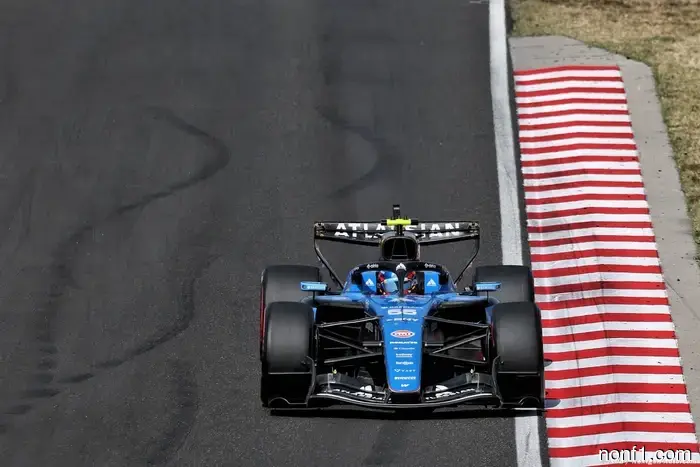 Sainz will make a 'calm' decision regarding his future during the summer break.
Formula 1 | Carlos Sainz stated that he will take advantage of the summer break to thoughtfully evaluate his future in Formula 1, after referring to Williams' season as quite poor and significantly below expectations.
Sainz will make a 'calm' decision regarding his future during the summer break.
Formula 1 | Carlos Sainz stated that he will take advantage of the summer break to thoughtfully evaluate his future in Formula 1, after referring to Williams' season as quite poor and significantly below expectations.
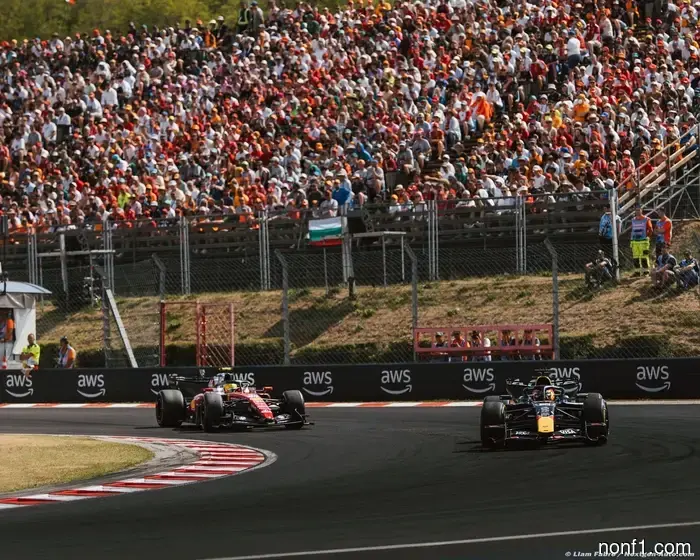 Hadjar remains, while Verstappen has been presented with a more lucrative offer.
Formula 1 | It has been reported that Red Bull has proposed Max Verstappen a more extended and financially rewarding contract that would eliminate his current release clause. According to (…)
Hadjar remains, while Verstappen has been presented with a more lucrative offer.
Formula 1 | It has been reported that Red Bull has proposed Max Verstappen a more extended and financially rewarding contract that would eliminate his current release clause. According to (…)
 Only three of these International Harvester hit-and-miss engines are known to exist today.
This particular relic was stored for 70 years at a planing mill, covered in sawdust and oil.
Only three of these International Harvester hit-and-miss engines are known to exist today.
This particular relic was stored for 70 years at a planing mill, covered in sawdust and oil.
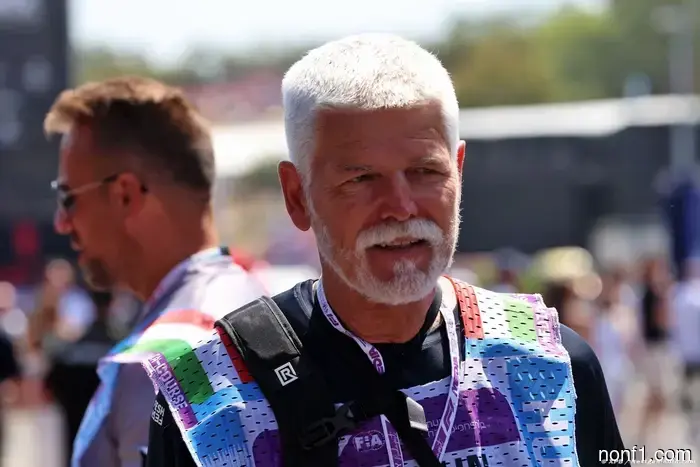 The president of the Czech Republic serves as an accredited photographer for Formula 1.
Formula 1 | Czech President Petr Pavel worked as a regular accredited photographer at the Hungarian GP held at the Hungaroring. The 64-year-old motorsport (…)
The president of the Czech Republic serves as an accredited photographer for Formula 1.
Formula 1 | Czech President Petr Pavel worked as a regular accredited photographer at the Hungarian GP held at the Hungaroring. The 64-year-old motorsport (…)
Study Finds Waymo's Self-Driving Cars Have Fewer Crashes Compared to Human Drivers.
It's a promising indication for a technology that has thus far produced more excitement than tangible outcomes, but the authors of the study assert that additional data is necessary.