

Orihara: We need to significantly improve the manageability.
Fernando Alonso, speaking about Aston Martin's progress, stated that the AMR26 car has become noticeably more efficient during the Hungarian and Dutch stages of the season and now completes a lap on the track three-tenths of a second faster. This is also confirmed by the fact that in Zandvoort, the two-time world champion earned points for the second time this season.
However, this is not the whole truth. According to Lance Stroll, the car still behaves quite unpredictably, and this is agreed upon not only by Alonso but also by Adrian Newey, the team principal. Their complaints mainly relate to the characteristics of the engine's handling.
Shintaro Orihara, the head of the racing team and chief engineer of Honda Racing Corporation (HRC), agrees that not all the shortcomings of the power unit have been addressed yet, but he acknowledges that taking the next step in the right direction will not be easy.
"During the stand tests, we achieved the goal we set for ourselves, after which these same improvements were confirmed on the track," Orihara said in an interview with The Race. "But we are still quite far behind other engine manufacturers and need to eliminate one more serious problem.
We understand that a lot needs to be done in terms of improving handling; this important task must be solved before the next races."
As explained in The Race, the overall issue is that the engine must respond correctly to the actions of the drivers. But it's not just about predictable responses to throttle input—it's also about engine braking when entering corners.
In the case of the new generation cars, things are complicated by the fact that when a driver lifts their foot off the throttle or presses the brake pedal, the MGU-K motor-generator kicks in, and the engine switches to battery recharge mode.
This process is quite complex, as the power unit must simultaneously recharge the battery, provide engine braking, interact with the brake-by-wire system, and regulate the intensity of the rear brakes' activation. Additionally, it is necessary to consider how the transition to lower gears affects the deceleration process.
But that's not all: when the battery is fully charged, or the energy recovery limit for a specific corner has been reached, and the team does not want to exceed it, then the recharging process must stop instantly, but the intensity of deceleration sharply decreases.
"If the driver lifts off the throttle, engine braking begins. But when the MGU-K starts working in recharge mode, storing about 350 kW of energy, at some point the intensity of deceleration increases almost twofold," Orihara explained. "Then the power of the MGU-K decreases, the torque also reduces, but the driver needs the car's behavior to remain neutral, which is very difficult to achieve.
The problem is related to the interaction between the internal combustion engine (ICE) and the MGU-K—this is one of the areas where we need to improve."
When one of the elements of this system does not work as it should, difficulties arise, which Aston Martin drivers regularly complain about when discussing the unpredictability of the power unit's behavior.
Engine braking can occur too abruptly, destabilizing the car, the battery recharging process happens less intensively than needed, and due to sudden changes in engine operating modes while cornering, signs of understeer can suddenly appear.
Sometimes, the gearbox refuses to shift to a lower gear due to a synchronization failure. A significant portion of these difficulties can be eliminated through better software configuration, as well as improving the performance characteristics of the ICE to avoid sudden increases in RPM when the driver is not pressing the accelerator pedal.
As Orihara admits, "Sometimes our ICE operates unstably. We are working on this issue, but it's not enough for the drivers yet."
He also emphasized that no miracles can be expected, and achieving an instant improvement in handling characteristics related to the power unit is impossible, but HRC's engineers are actively working on this during the break between the stages in Zandvoort and Monza.
According to Alonso, if the task is successfully solved, it will allow for "a couple more tenths" of improvement. Then it will be possible to talk about regularly fighting for places in the top ten, and another important and quite likely consequence is that Alonso will decide to continue his collaboration with Aston Martin in 2027.
After the Dutch Grand Prix, he had a long conversation with Adrian Newey in the team's motorhome, which will likely be followed by a meeting with Lawrence Stroll, the owner of Aston Martin F1, regarding the same issues. Thus, much depends on Honda's progress.
Other articles
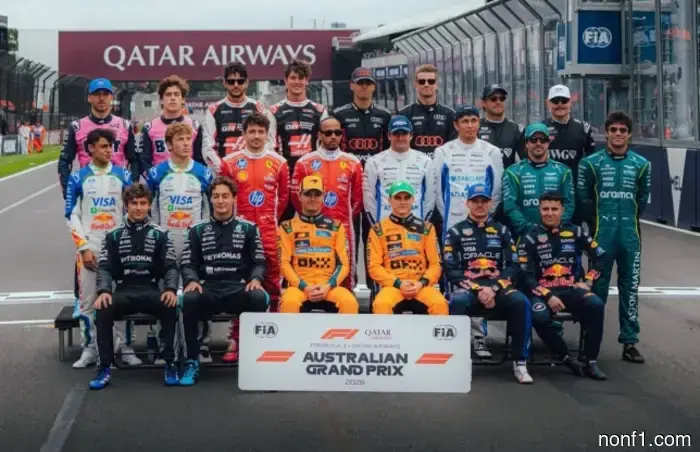 Norris: There is no team other than McLaren where I want to compete.
McLaren has chosen a very opportune moment to announce the new contract for Lando Norris, the reigning world champion, as today is the "open house" day at the team's base in Woking...
Norris: There is no team other than McLaren where I want to compete.
McLaren has chosen a very opportune moment to announce the new contract for Lando Norris, the reigning world champion, as today is the "open house" day at the team's base in Woking...
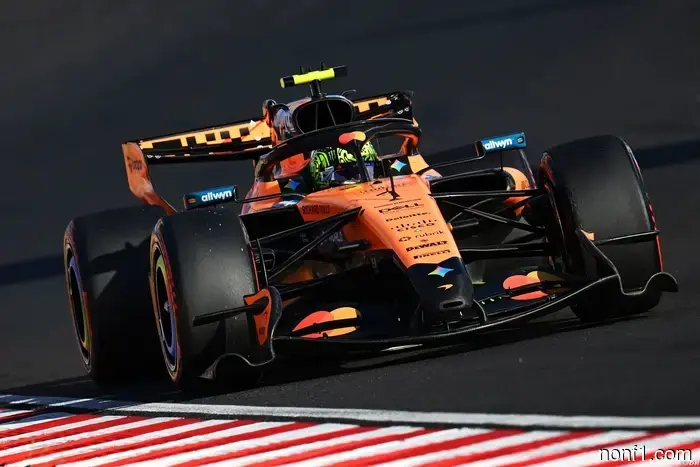 Official: Norris has renewed his contract with McLaren, extending it until the conclusion of 2030.
Formula 1 | Lando Norris, the reigning 2025 Formula 1 Drivers' World Champion, has renewed his contract with the McLaren Mastercard Formula 1 Team for a period of at least (…)
Official: Norris has renewed his contract with McLaren, extending it until the conclusion of 2030.
Formula 1 | Lando Norris, the reigning 2025 Formula 1 Drivers' World Champion, has renewed his contract with the McLaren Mastercard Formula 1 Team for a period of at least (…)
 Most Terrible Workday Ever: Semi-Truck Crashes Into Pipeline, Area Declared No-Fly Zone
A piece of advice: If you're parking close to a natural-gas pipeline, be sure to engage the parking brake.
Most Terrible Workday Ever: Semi-Truck Crashes Into Pipeline, Area Declared No-Fly Zone
A piece of advice: If you're parking close to a natural-gas pipeline, be sure to engage the parking brake.
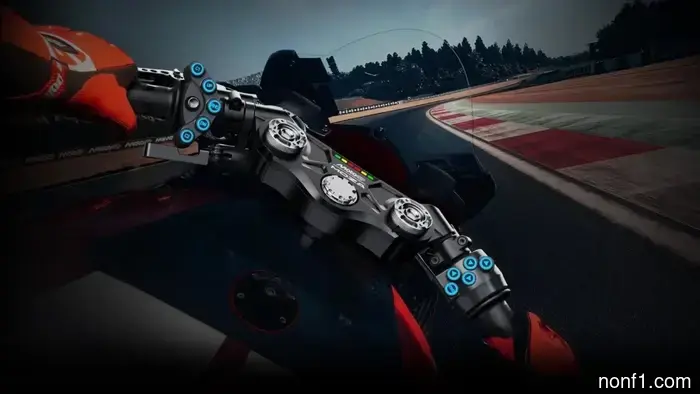 Authentic MotoGP Handlebar Sim Controller Promises a More Immersive Gaming Experience Without Being Completely Unenjoyable
More than just a toy, this could serve as the core of an incredible two-wheeled simulation setup.
Authentic MotoGP Handlebar Sim Controller Promises a More Immersive Gaming Experience Without Being Completely Unenjoyable
More than just a toy, this could serve as the core of an incredible two-wheeled simulation setup.
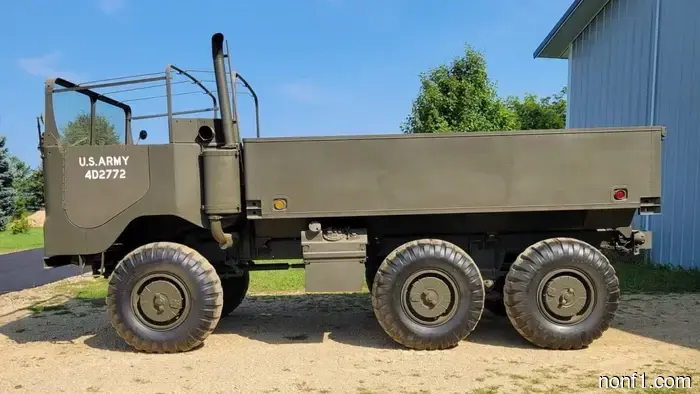 For Sale: 6×6 Ford Truck Designed as an Amphibious Military Prototype Around 1960
The U.S. Army chose not to adopt this aluminum-bodied cargo truck, opting for more traditional designs instead. However, that doesn't imply you need to follow suit.
For Sale: 6×6 Ford Truck Designed as an Amphibious Military Prototype Around 1960
The U.S. Army chose not to adopt this aluminum-bodied cargo truck, opting for more traditional designs instead. However, that doesn't imply you need to follow suit.
 Nico Rosberg: I would be very hurt in Russell's place.
On the 66th lap of the Dutch Grand Prix, George Russell let Kimi Antonelli pass, following team orders. 2016 world champion Nico Rosberg understands why Mercedes made that decision, but he is sure it was very painful for the British driver.
Nico Rosberg: I would be very hurt in Russell's place.
On the 66th lap of the Dutch Grand Prix, George Russell let Kimi Antonelli pass, following team orders. 2016 world champion Nico Rosberg understands why Mercedes made that decision, but he is sure it was very painful for the British driver.
Orihara: We need to significantly improve the manageability.
The chief engineer of Honda Racing Corporation agrees that not all the shortcomings of the power unit have been addressed yet, but acknowledges that taking the next step will not be easy...