
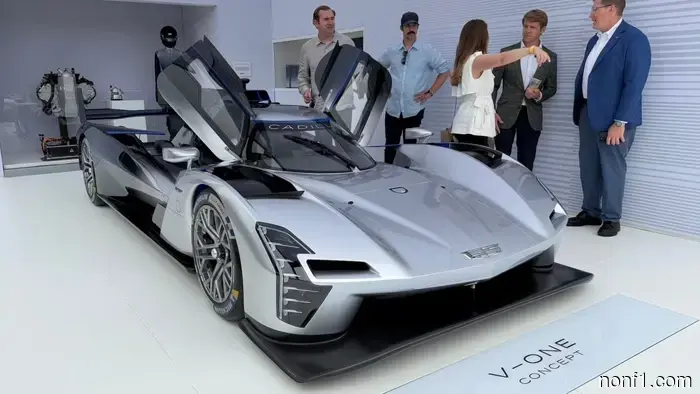
Cadillac V-One Concept Engineer Reveals Insights on a Customer-Specified Le Mans Hypercar
Jerry Perez
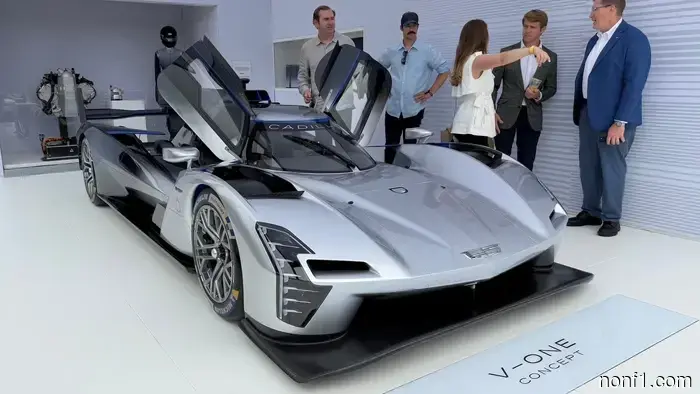
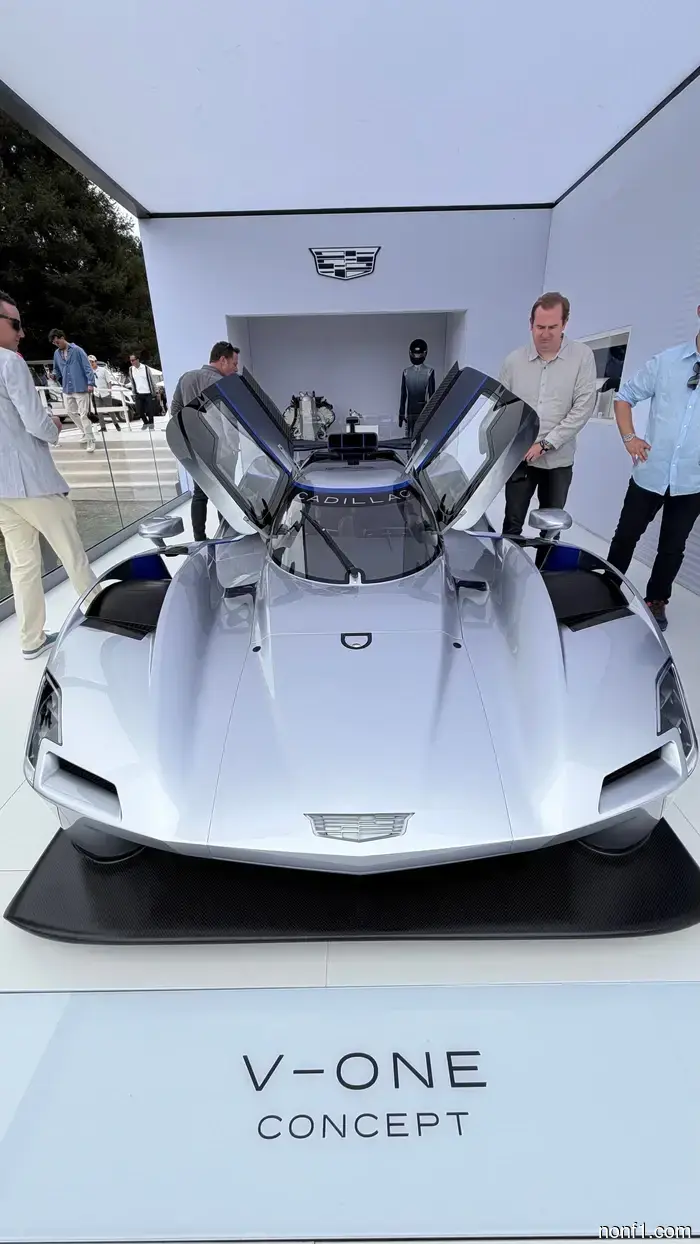
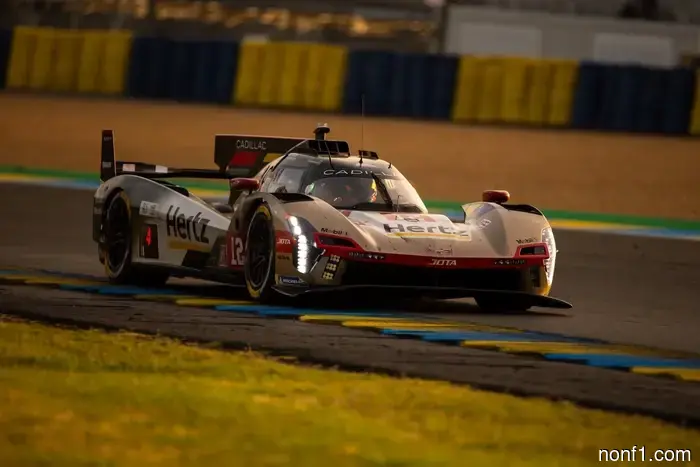
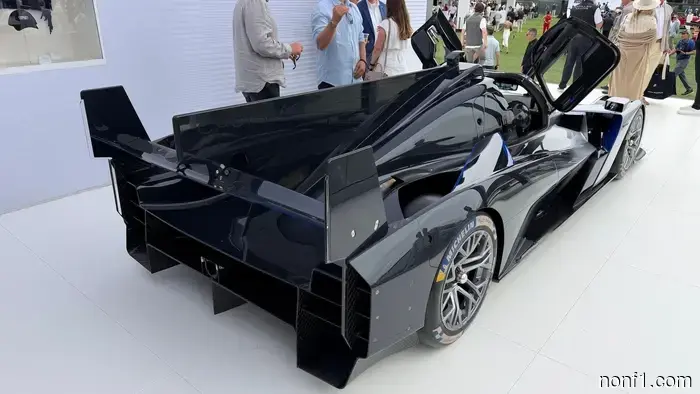
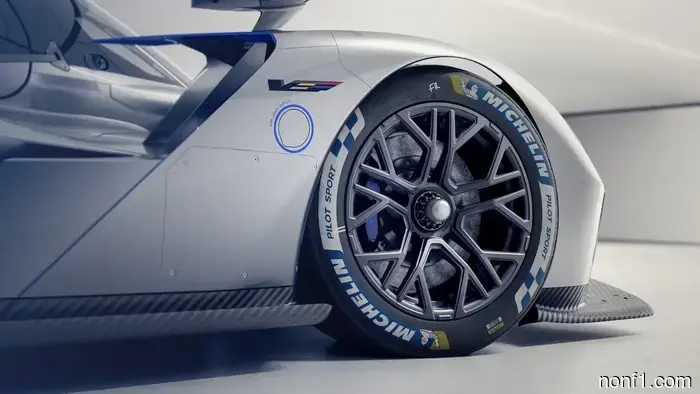
If you inquire with the Cadillac representatives about the sleek prototype race car showcased at The Quail during Monterey Car Week, they will consistently refer to it as merely a “design study,” a “concept,” or a “race car project.” However, those who are attuned to the paddocks worldwide will inform you that the initiative to market these streamlined Le Mans racers to customers is nearing completion.
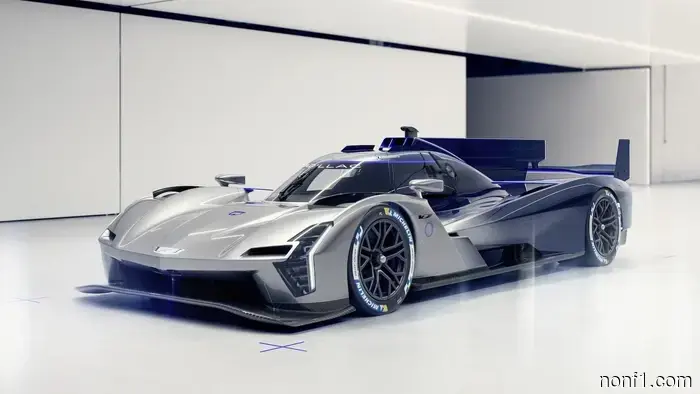
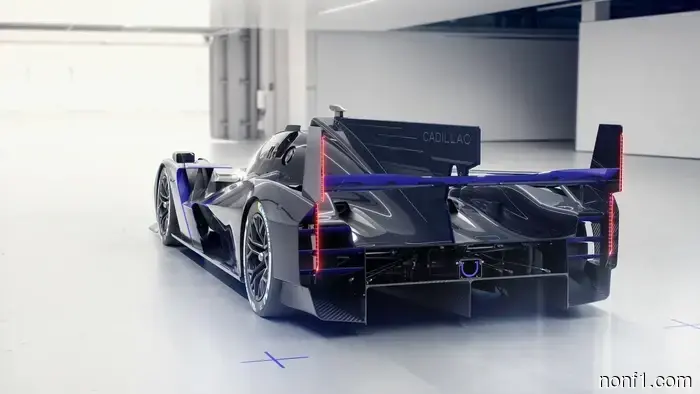
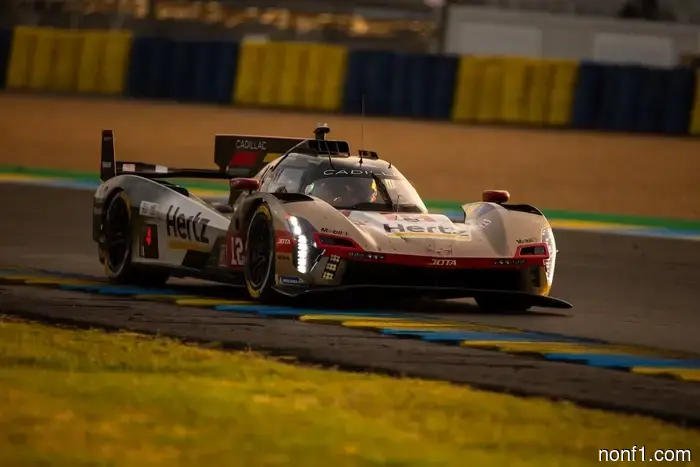
This is the best way to characterize this stunning vehicle that Cadillac names the V-One: an 830-horsepower, simplified Le Mans Hypercar—an uppercase "H" signifies that it competes in the WEC’s Hypercar class (as well as IMSA’s GTP). Regardless of whether General Motors intends to sell these more widely or to just a select few—or even to just one individual like Porsche did for Roger Penske—simplifying one of the most advanced race cars globally is no trivial undertaking.
Cadillac
There are various aspects to consider, including the engine, hybrid technology, electronics, suspension, downforce, maintenance schedules that could quickly become costly for even wealthy buyers, and of course, the challenge of selling a vehicle that 99.9% of people aren’t equipped to drive. For those who do have the necessary skills, the questions arise about where to drive it, how many engineers are needed to operate it, where to store it, and how to prepare it to ensure it starts again later.
I spoke with Sean O’Shea, the chief propulsion engineer for Cadillac Racing and GM Motorsport’s hybrid powertrains, to gain insight into these questions and more. We had the opportunity to examine the V-One closely and discuss what makes this project both ambitious and thrilling.
Here’s how Cadillac is developing a Le Mans Hypercar that anyone can drive:
Jerry Perez, Cadillac
Jerry Perez: I recognize that the official stance is that this is just a concept, but what is Cadillac truly aiming for? Is it merely to create a concept that will never materialize, or is there potential for it to come to fruition? And what is your role in this?
Sean O’Shea: As the engineering link between design and the racing program, my focus is on ensuring that the V-One remains closely aligned with the race car aspects and that it has the potential to become a reality. Currently, it is a concept, but everything you see here is quite feasible and could realistically be produced.
I am passionate about racing; I’ve been involved in it since childhood, racing go-karts, cars, dirt bikes—everything. I wanted to create a track car that simplifies our race car while still providing the same tools and experience a pro driver enjoys, without unnecessary complexity.
Race cars are notorious for their complexity, so how do you simplify a Le Mans racer?
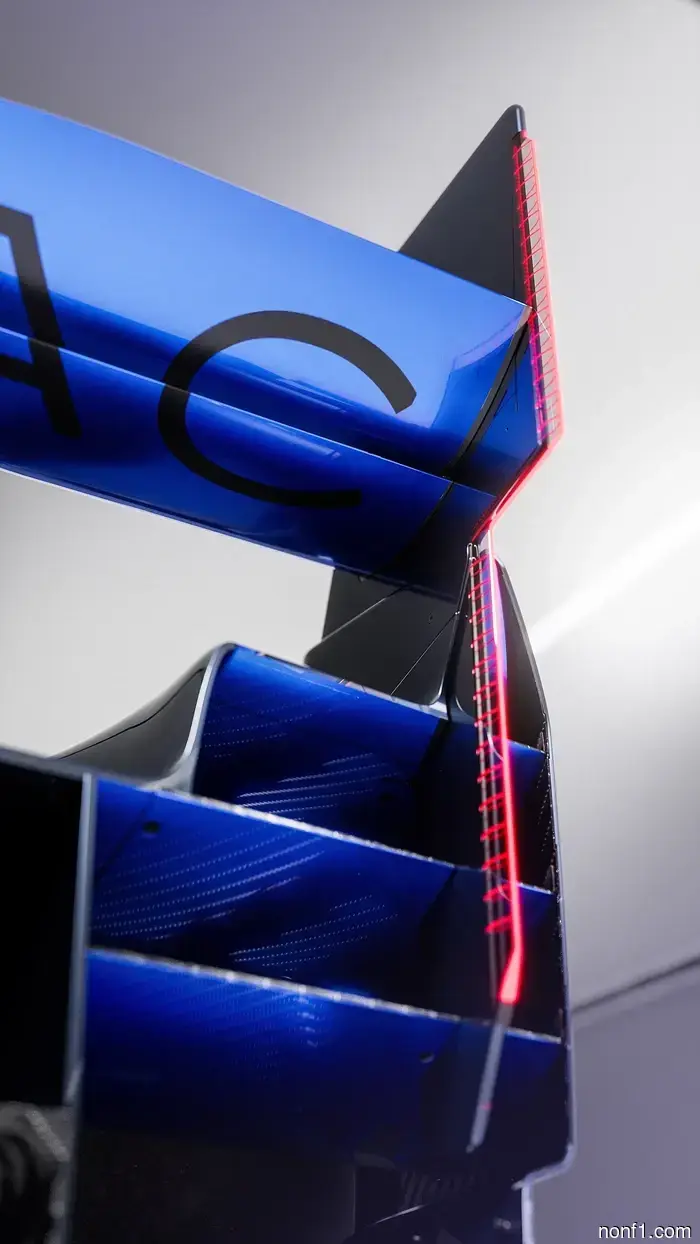
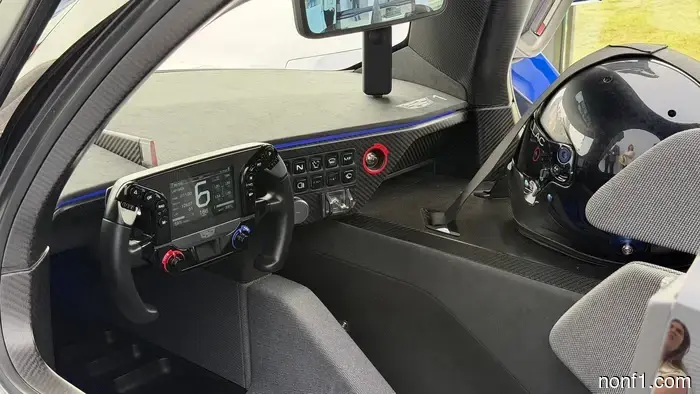
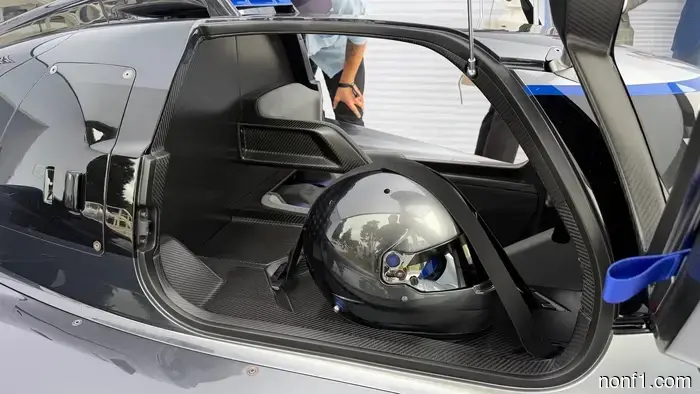
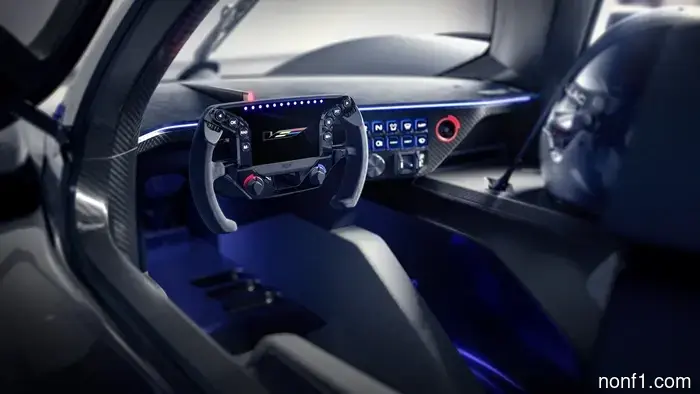
Primarily, I wanted it to be an enjoyable track car, and a key feature was that it should be an “ambient start car.” This allows it to start at 70 degrees and warm itself up without needing pre-warming equipment like in F1 cars. Additionally, all the differential, traction control, and suspension systems are simplified versions of the actual car. This means that anyone can get in, drive it, and have fun. However, I wanted to retain the sound, power, and downforce characteristics of a true race car. This way, when you sit in it, you have the same view as our professional drivers like Earl Bamber, Jack Aitken, or Delatraz. You would also find similar buttons in the cockpit but perhaps without all 12 control variations. By “simplified,” I refer to creating something that we regular folks can learn to navigate, work with, and enjoy.
Jerry Perez
I once had a conversation with Jenson Button while he was competing in the Acura ARX at the Rolex 24, and he candidly mentioned that the steering wheel and some controls of the GTP car were more intricate than those in an F1 car from his time. If he finds it complicated, I can only imagine how an average person would feel.
We had Jenson drive the WEC car, and yes, the race car project is very complex based on its ambitions. I collaborated with our pro drivers and asked what they would like to simplify to enhance enjoyment. They provided a plethora of ideas, so if you look at the interior, you'll see that it's just a simplified version of an LMDh car. We still include traction control with two settings—X and Y for lateral and longitudinal grip—and we really wanted to integrate ABS into the car, although it's not typically present in racing cars. I wanted ABS to help avoid issues related to brake-in temperatures and tire warm-up, allowing the driver to focus on steering, shifting, and speed.
We worked closely with our professional drivers to comprehend how we could streamline complexity. On both the propulsion and differential sides, we liaised with our performance engineers to figure out how
Other articles
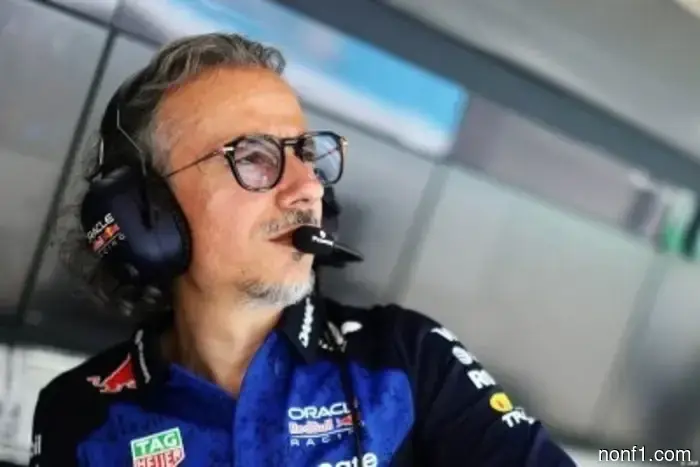 Gasly states that the battle in Monaco "isn't over yet."
Formula 1 | Pierre Gasly and Flavio Briatore have suggested that the legal repercussions from the Monaco GP may not be over for Alpine, despite the FIA (…)
Gasly states that the battle in Monaco "isn't over yet."
Formula 1 | Pierre Gasly and Flavio Briatore have suggested that the legal repercussions from the Monaco GP may not be over for Alpine, despite the FIA (…)
 Gran Turismo 7’s major Spec IV update demonstrates that it is attentive to player feedback.
The recently announced free update for GT7 will introduce 12 new cars, two additional tracks, and several highly sought-after features and modes as the game approaches its fifth anniversary.
Gran Turismo 7’s major Spec IV update demonstrates that it is attentive to player feedback.
The recently announced free update for GT7 will introduce 12 new cars, two additional tracks, and several highly sought-after features and modes as the game approaches its fifth anniversary.
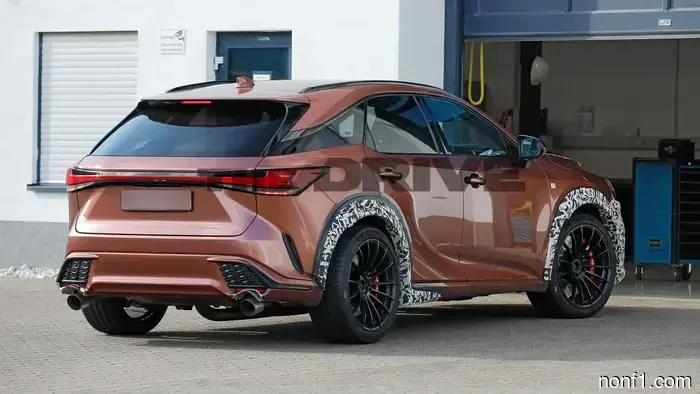 Lexus RX is set to become much more exciting.
The Lexus RX RR 'Morizo' transforms the bulky crossover into a larger version of a performance hatchback.
Lexus RX is set to become much more exciting.
The Lexus RX RR 'Morizo' transforms the bulky crossover into a larger version of a performance hatchback.
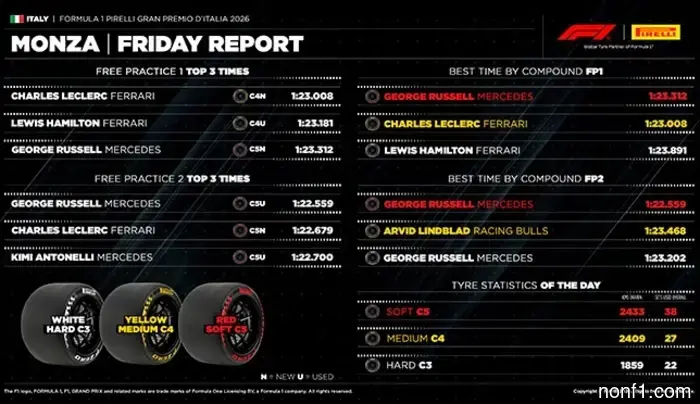 Berra: The difference between the compositions corresponds to the calculations.
Despite the hot weather, Pirelli had no issues with the tires on Friday...
Gasly states that the battle in Monaco "is not over yet."
Formula 1 | Both Pierre Gasly and Flavio Briatore have suggested that Alpine may still face legal repercussions from the Monaco GP, despite the FIA's involvement (…)
Berra: The difference between the compositions corresponds to the calculations.
Despite the hot weather, Pirelli had no issues with the tires on Friday...
Gasly states that the battle in Monaco "is not over yet."
Formula 1 | Both Pierre Gasly and Flavio Briatore have suggested that Alpine may still face legal repercussions from the Monaco GP, despite the FIA's involvement (…)
 Piastri at ease regarding his future with extended F1 contracts.
Formula 1 | Oscar Piastri states that the increasing trend of longer contracts in Formula 1 does not affect his perspective on his own future, despite the growing clarity regarding (…)
Piastri at ease regarding his future with extended F1 contracts.
Formula 1 | Oscar Piastri states that the increasing trend of longer contracts in Formula 1 does not affect his perspective on his own future, despite the growing clarity regarding (…)
Cadillac V-One Concept Engineer Reveals Insights on a Customer-Specified Le Mans Hypercar
The Cadillac V-One is more than just a race car with a special paint job. Here’s what truly distinguishes it from Cadillac's factory Le Mans prototypes. Hint: it involves a lot of engineering challenges.