Bortoletto: I'm glad that Fernando can be proud of me.

Bortoletto: I'm glad that Fernando can be proud of me.

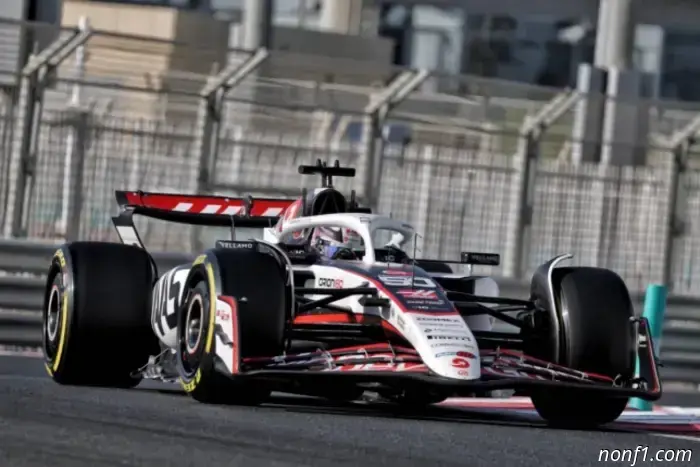
      Gabriel Bortoleto finished his debut Formula 1 season in the penultimate position in the drivers' standings, scoring 19 points, while Nico Hülkenberg, his far more experienced Sauber teammate, had 51. But it should be borne in mind that the German driver has competed in Formula 1 since 2010 and has started 250 Grands Prix, whereas the 21-year-old Brazilian has only 24.

      But Gabriel has already shown what he is capable of behind the wheel when the car’s setup suits him more or less, and it’s quite logical that Sauber are happy with him, so he will continue to race for the Hinwil-based team in 2026, when it becomes the factory Audi F1 Team.

      “I think I achieved a lot this year,” Bortoleto said in an interview with the championship’s official website. “At the start of the year our car was completely ineffective and, of course, did not allow us to fight for points. In the first race of the season many people were involved in incidents, and I was a rookie, so I probably couldn’t take advantage of all the opportunities I had then (he crashed the car after 15 laps of the race).

      At the same time we knew that the car’s true pace didn’t allow us to fight for points until the Barcelona round. After that, of course, during the summer part of the season we performed very confidently and managed to score quite a few points for the team. I felt I was delivering great results, but then we stopped development of the C45 and switched focus to preparing for next year.

      Meanwhile some teams continued to refine their chassis — perhaps that’s why we dropped back a little. Even so, every weekend we continued to fight for points.”

      Bortoleto finished in the top ten at five rounds, including sixth place in Hungary, for which he was voted “Driver of the Day” by the fans. Naturally, he earned the respect not only of his team — rivals also recognise his talent.

      “It’s great that I’ve gained recognition in the paddock, within the team, among the fans, because at the end of the day I know my job,” Gabriel continued. “Sometimes the car’s capabilities limit you, and even if you do the job very well, it’s not visible from the outside. It’s important that the team understands that; they see the effort I put in and how hard I work.

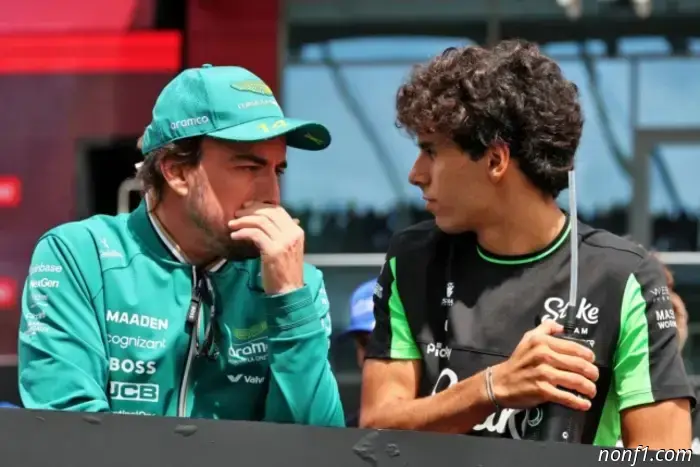
      I talk a lot with Fernando Alonso, my manager, and he teaches me a lot when it comes to track work. I think he can be proud of me, which makes me very happy.

      I believe I’ve learned a lot, including how to manage my time better. But I think I haven’t changed as a person. I love being able to make people happy when they’re pleased — to me that’s very important. I try to stay true to myself. I think that because in Formula 1 you become a known figure, people start to change, to become not what they were before. But I don’t see any reason for that kind of change yet and I always jokingly tell friends and even people in our team, ‘If I ever start to change, give me a slap.’ But it hasn’t come to that so far!

      I’m very happy that a new project is starting together with Audi, and I’m fully focused on preparing for next year…”

Другие статьи

Рашбрук: Ведутся работы по улучшению характеристик двигателя. Рашбрук: Ведутся работы по улучшению характеристик двигателя. Директор Ford Performance Motorsport рассказал о текущем состоянии силовой установки, произведенной Red Bull Powertrains, и его комментарии внушают оптимизм... Шовлин: Благодаря Расселлу работа над шасси проходит успешно. Шовлин: Благодаря Расселлу работа над шасси проходит успешно. Джордж Расселл, став новым капитаном команды Mercedes, взял на себя все усилия по оптимизации автомобиля... Брауну нужно будет сдержать обещание, данное Норрису. Брауну нужно будет сдержать обещание, данное Норрису. Ландо Норрис стал 11-м британским пилотом, которому удалось выиграть чемпионский титул в Формуле 1, и в качестве награды за своё достижение он получит не только желанный кубок... A recent pilot program in an EU country has seen AI cameras issue fines to thousands of drivers, with further developments on the horizon as authorities enhance surveillance efforts. 

Greece has introduced AI cameras in key areas of central Athens.

Within just four days of implementation, these cameras recorded 2,500 traffic violations.

The initial rollout included monitoring in eight designated zones.

Artificial intelligence is becoming increasingly prevalent in various sectors, including traffic enforcement. Greece has adopted a new, efficient, and cost-effective approach to monitor driving behavior with AI-enabled cameras.

During the initial trial across eight sites in Athens, almost 2,500 significant violations were detected over just four days, underscoring that many drivers do not adhere strictly to traffic laws.

Critics argue that if every minor infraction is reported, even the most careful drivers, and police officers, might appear to be violators.

What Violations Are These Smart Cameras Detecting?

In addition to speeding and ignoring traffic signals, the AI cameras can identify multiple infractions, including not wearing seatbelts, using mobile phones while driving, and improperly utilizing emergency lanes.

When a violation occurs, the camera captures a time-stamped video and a still image, both encrypted to maintain the evidence’s integrity.

Fines are not issued by on-site police officers; instead, offenders receive notifications via SMS, email, or through a government portal, allowing them to pay the penalties directly. An appeals process is available, but the video evidence rarely leaves room for dispute.

One Camera, One Thousand Violations

As reported by authorities, a single AI camera on Syngrou Avenue, a major road connecting Athens and the port of Piraeus, recorded over 1,000 violations within just four days, representing nearly half of all infractions detected during the pilot phase.

Other locations have revealed similar patterns. At the busy intersection of Mesogeion and Halandriou avenues in Agia Paraskevi, 480 drivers were documented running red lights. Another 285 violations were noted at the junction of Vouliagmenis Avenue and Tinou Street in Kalithea, indicating that this issue is widespread.

Those not wearing seatbelts or using a phone while driving face fines of €350 (approximately $410), while speeding fines range from €150-750 ($180-880) depending on the severity. With such potential penalties, it's estimated that one AI camera could generate up to €750,000 ($880,000) in fines within just three days. Whether this is viewed as a deterrent or a sign of systemic issues remains subjective, but the revenue possibilities are significant.

From Pilot Initiative to Nationwide Monitoring

At present, only eight AI camera locations are operational, all managed by the Ministry of Digital Governance. However, plans are in place to expand the network to 2,000 fixed cameras across the country, alongside 500 mobile units that will be installed on public buses to oversee illegal use of bus lanes.

Officials aim for this expanded system to reduce traffic accidents and fatalities, relieve pressure on police resources, and ensure consistent funding for public services. The state's commitment to using automation seems unwavering, regardless of its impact on driver behavior.

Digital Governance Minister Dimitris Papastergiou expressed to Kathimerini that the government's goal is not punitive but protective. “This is a political choice with a clear social goal: reducing traffic accidents and saving lives,” he stated. “We are not adopting a punitive stance. We want citizens to understand that the rules are applicable to everyone and enforced in a fair and modern manner.”

An Expanding Global Trend

Greece is not the only country leveraging technology for traffic control. AI cameras are operational in nations such as the UK, Germany, France, Spain, Australia, India, China, Japan, and across the Middle East and the United States. Moving forward, many roads will be under constant surveillance. A recent pilot program in an EU country has seen AI cameras issue fines to thousands of drivers, with further developments on the horizon as authorities enhance surveillance efforts. Greece has introduced AI cameras in key areas of central Athens. Within just four days of implementation, these cameras recorded 2,500 traffic violations. The initial rollout included monitoring in eight designated zones. Artificial intelligence is becoming increasingly prevalent in various sectors, including traffic enforcement. Greece has adopted a new, efficient, and cost-effective approach to monitor driving behavior with AI-enabled cameras. During the initial trial across eight sites in Athens, almost 2,500 significant violations were detected over just four days, underscoring that many drivers do not adhere strictly to traffic laws. Critics argue that if every minor infraction is reported, even the most careful drivers, and police officers, might appear to be violators. What Violations Are These Smart Cameras Detecting? In addition to speeding and ignoring traffic signals, the AI cameras can identify multiple infractions, including not wearing seatbelts, using mobile phones while driving, and improperly utilizing emergency lanes. When a violation occurs, the camera captures a time-stamped video and a still image, both encrypted to maintain the evidence’s integrity. Fines are not issued by on-site police officers; instead, offenders receive notifications via SMS, email, or through a government portal, allowing them to pay the penalties directly. An appeals process is available, but the video evidence rarely leaves room for dispute. One Camera, One Thousand Violations As reported by authorities, a single AI camera on Syngrou Avenue, a major road connecting Athens and the port of Piraeus, recorded over 1,000 violations within just four days, representing nearly half of all infractions detected during the pilot phase. Other locations have revealed similar patterns. At the busy intersection of Mesogeion and Halandriou avenues in Agia Paraskevi, 480 drivers were documented running red lights. Another 285 violations were noted at the junction of Vouliagmenis Avenue and Tinou Street in Kalithea, indicating that this issue is widespread. Those not wearing seatbelts or using a phone while driving face fines of €350 (approximately $410), while speeding fines range from €150-750 ($180-880) depending on the severity. With such potential penalties, it's estimated that one AI camera could generate up to €750,000 ($880,000) in fines within just three days. Whether this is viewed as a deterrent or a sign of systemic issues remains subjective, but the revenue possibilities are significant. From Pilot Initiative to Nationwide Monitoring At present, only eight AI camera locations are operational, all managed by the Ministry of Digital Governance. However, plans are in place to expand the network to 2,000 fixed cameras across the country, alongside 500 mobile units that will be installed on public buses to oversee illegal use of bus lanes. Officials aim for this expanded system to reduce traffic accidents and fatalities, relieve pressure on police resources, and ensure consistent funding for public services. The state's commitment to using automation seems unwavering, regardless of its impact on driver behavior. Digital Governance Minister Dimitris Papastergiou expressed to Kathimerini that the government's goal is not punitive but protective. “This is a political choice with a clear social goal: reducing traffic accidents and saving lives,” he stated. “We are not adopting a punitive stance. We want citizens to understand that the rules are applicable to everyone and enforced in a fair and modern manner.” An Expanding Global Trend Greece is not the only country leveraging technology for traffic control. AI cameras are operational in nations such as the UK, Germany, France, Spain, Australia, India, China, Japan, and across the Middle East and the United States. Moving forward, many roads will be under constant surveillance. Льюис Хэмилтон с большим ожиданием надеется, что в 2026 году, когда Формула 1 внедрит совершенно новые технологии, не возникнут те же трудности, которые были присущи машинам предыдущего поколения... Будковски: Конфликты внутри Red Bull достигли крайней точки. Будковски: Конфликты внутри Red Bull достигли крайней точки. Марцин Будковски, который в настоящее время работает экспертом на телеканале Viaplay, озвучил свою точку зрения на причины увольнения Хельмута Марко из компании Red Bull... Штайнер: Макс играет совершенно на другом уровне. Штайнер: Макс играет совершенно на другом уровне. Штайнер: Макс играет совершенно на другом уровне.

Bortoletto: I'm glad that Fernando can be proud of me.

Gabriel Bortoleto has already shown what he is capable of behind the wheel of a racing car when the car's setup suits him, and it's only natural that Sauber are pleased with him, so he will continue to race for the Hinwil-based team in 2026...