
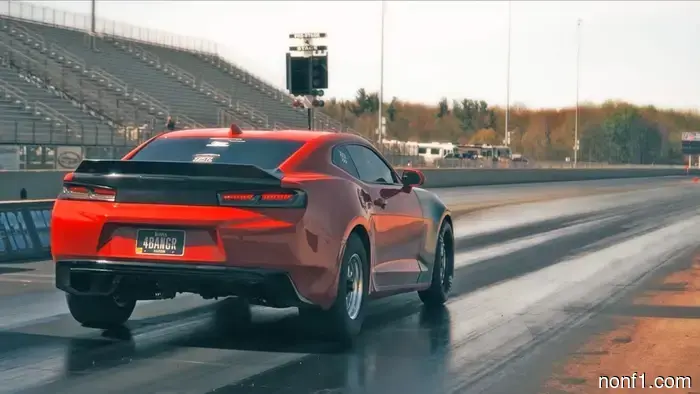
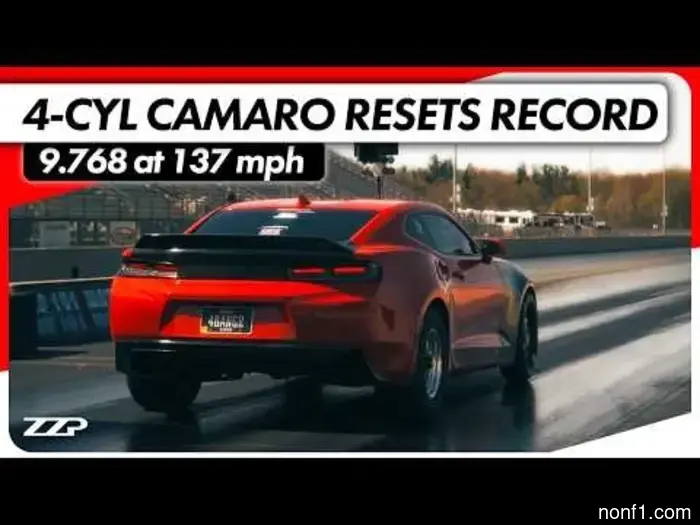
This Four-Cylinder Chevy Camaro Achieves a New Record with a 9.768-Second Quarter-Mile.
ZZPerformance via YouTube
The latest automotive news and reviews, minus the nonsense
Subscribe to our free daily newsletter to receive the most important stories straight to your inbox, every weekday.
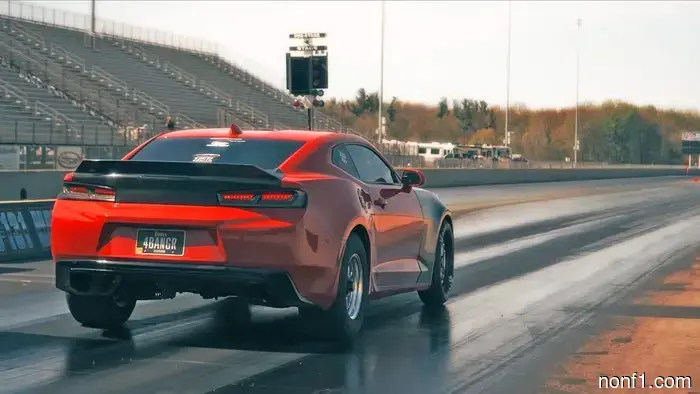
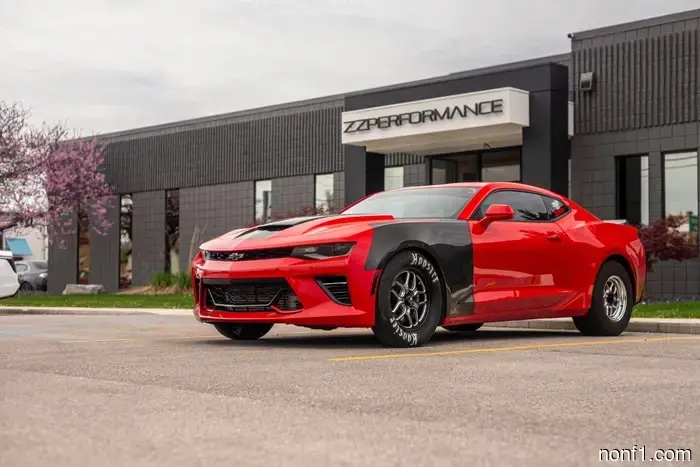
I often forget that Chevy produced a four-cylinder Camaro. Perhaps that’s why I was particularly surprised to see this video from ZZPerformance. The Michigan-based shop is well-regarded for its work on small-displacement General Motors platforms, embodying the motto “Go Fast, Not Broke.” It’s fitting, therefore, that ZZP played a role in this record-breaking run, where an Iowa customer propelled their turbo Camaro down the track in 9.768 seconds at 137 miles per hour.
Owner Jake Starr previously held the record for the fastest quarter-mile in a four-cylinder Camaro, completing it in 9.92 seconds during an earlier attempt. This run at US 131 Motorsports Park was significantly faster, partly due to an impressive 60-foot time of just 1.36 seconds. Occasionally, everything aligns perfectly with a prepared surface, sticky Mickey Thompsons in the back, and an excellent reaction at the Christmas tree.
4-Cylinder Camaro Achieves 9.768 Quarter Mile
In October, ZZPerformance tested Starr’s Camaro on the dyno, achieving peak numbers of 593 horsepower near 6,500 rpm and 511 lb-ft of torque around 5,500 rpm. Upgrades include a new Xona Rotor 7164 turbo coupled with a 3D-printed exhaust manifold and Tial 38-millimeter wastegate, while the Camaro is equipped with XDI injectors, ZZP sixth port injection, an SMG auxiliary pump, and a ZL1 low-pressure fuel pump. Fisher Built enhanced the 8L45 transmission for drag racing—reportedly a first for that platform—and the limited-slip differential distributes power to Camaro SS axles.
The engine has undergone a minor bore increase of .25mm to accommodate ZZP’s forged 86.25mm pistons, and the valvetrain has been upgraded with new valve springs and stage two cams. Starr has installed more robust head studs, along with stronger balance shafts and an ATI dampener.
For wheels, Starr utilizes 17-by-4.5-inch skinnies at the front and 15-by-10-inch Billet Win Lite rears with 275/60 Mickey Thompson Type R tires. He also has carbon fiber doors ready for installation to match the front fenders.
Factory specs for GM’s LTG four-cylinder were adequate, with 275 hp and 295 lb-ft of torque. This setup offered an 11 lb-ft torque advantage over the V6 Camaro before it was phased out, although it lagged 60 hp behind the larger engine. The General’s 2.0-liter also fell short of the Ford Mustang EcoBoost’s 315 hp and 350 lb-ft of torque.
Since then, GM has introduced a larger 2.7-liter turbo four in vehicles like the Colorado ZR2 and full-size Silverado, generating up to 310 hp and 430 lb-ft of torque in those models. There’s minimal similarity between the LTG and the current “TurboMax” four-cylinder. I would be interested to see what the latter could achieve in a Camaro, and if Chevy opts to revive the model for a seventh generation, there’s a strong chance we’ll find out.
Have a tip or a question for the author? Reach out directly at caleb@thedrive.com.
Other articles
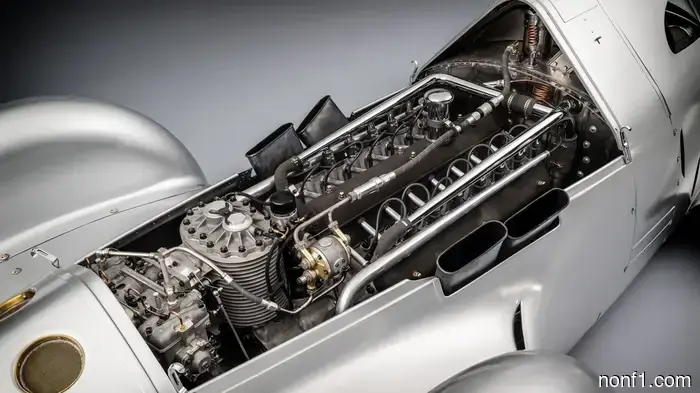 Audi has recently reconstructed a V16 speed-record vehicle that was forgotten over time: TDS.
The Auto Union Lucca first reached 203 mph nearly a hundred years ago. A replica will be showcased at the Goodwood Festival of Speed this summer.
Audi has recently reconstructed a V16 speed-record vehicle that was forgotten over time: TDS.
The Auto Union Lucca first reached 203 mph nearly a hundred years ago. A replica will be showcased at the Goodwood Festival of Speed this summer.
 The Turkish Grand Prix may return in 2026.
The president of the FIA hinted at the possible return of the Turkish Grand Prix this season if a number of conditions are met...
The Turkish Grand Prix may return in 2026.
The president of the FIA hinted at the possible return of the Turkish Grand Prix this season if a number of conditions are met...
 The Turkish Grand Prix may return in 2026.
The president of the FIA hinted at the possible return of the Turkish Grand Prix this season if a number of conditions are met...
The Turkish Grand Prix may return in 2026.
The president of the FIA hinted at the possible return of the Turkish Grand Prix this season if a number of conditions are met...
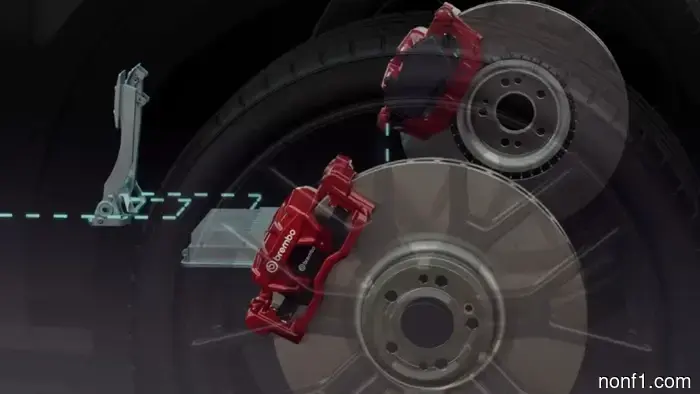 The first contemporary car lacking hydraulic brakes is set to enter production.
Brembo's "Sensify" brake system, which operates without fluid, is set to be implemented in a production vehicle.
The first contemporary car lacking hydraulic brakes is set to enter production.
Brembo's "Sensify" brake system, which operates without fluid, is set to be implemented in a production vehicle.
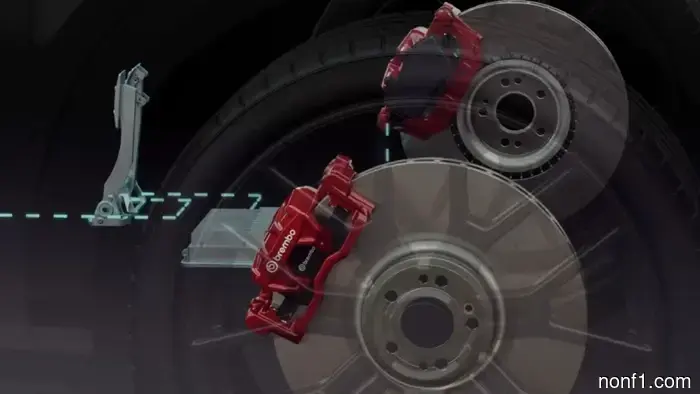 The first contemporary car without hydraulic brakes is set to enter production.
Brembo's "Sensify" brake system, which operates without fluid, is set to be incorporated into a production vehicle.
The first contemporary car without hydraulic brakes is set to enter production.
Brembo's "Sensify" brake system, which operates without fluid, is set to be incorporated into a production vehicle.
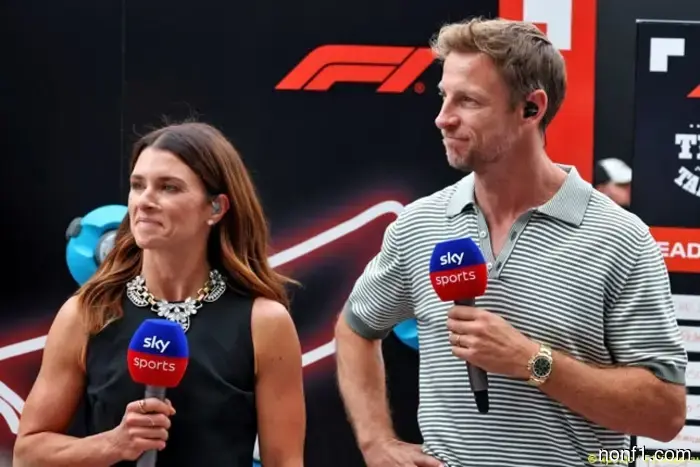 Formula 1 has extended its contract with Sky for one billion pounds.
The British channel Sky Sports F1 has been broadcasting Formula 1 since 2012, and according to the Daily Mail, a new agreement to purchase broadcasting rights was signed a few weeks ago.
Formula 1 has extended its contract with Sky for one billion pounds.
The British channel Sky Sports F1 has been broadcasting Formula 1 since 2012, and according to the Daily Mail, a new agreement to purchase broadcasting rights was signed a few weeks ago.
This Four-Cylinder Chevy Camaro Achieves a New Record with a 9.768-Second Quarter-Mile.
It more than doubles the factory power output of the 2.0-liter engine, reaching 593 horsepower, and the modifications continue beyond that.