
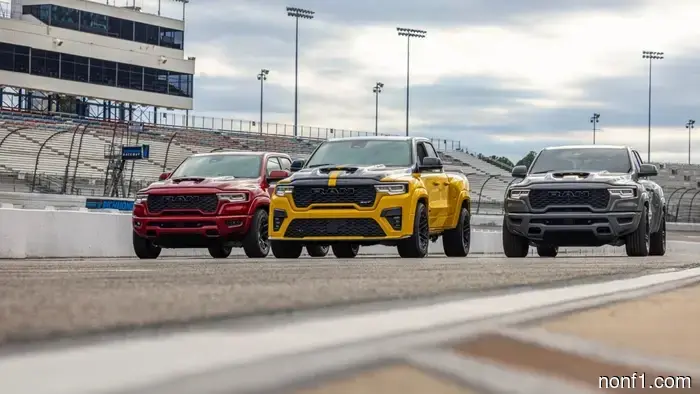
Stellantis Unveils Major Turnaround Strategy, Aiming for 60 New Vehicles and 50 Updates by 2030.
The most significant automotive news and reviews, without any nonsense.
Our daily newsletter, provided free of charge, delivers the key stories directly to you every weekday.
The $13 billion investment in the U.S. announced by Stellantis in October was merely the beginning. The automotive giant, now facing challenges, is preparing to take decisive action.
On Thursday, Stellantis revealed a new five-year strategic turnaround plan called FaSTLAne 2030, with a budget exceeding $69 billion. This initiative will result in a comprehensive revamp of the company’s extensive global product lineup, featuring more than 60 new vehicles and 50 updates across all brands.
The plan reportedly includes 29 electric vehicles, 15 plug-in hybrid or range-extended EVs, 24 hybrids, and 39 gasoline-powered models. However, specific details about which brands will receive what number of these vehicles were not disclosed at the time of writing.
In the U.S. market, Stellantis intends to increase its coverage by 50% with 11 new vehicles and a 35% rise in volume. The lineups are expected to introduce seven new products priced under $40,000 and two below $30,000. The U.S. region will see an investment of $41 billion, accounting for 60% of the total global investment over the five years.
Stellantis confirmed that it now consists of four global brands: Jeep, Ram, Peugeot, and Fiat. Chrysler, Dodge, Citroen, Opel, and Alfa Romeo have been designated as regional brands.
Maserati's future remains uncertain as it has been labeled a “pure luxury brand,” and two new midsize models will be added to its range. A future roadmap for the historic brand is expected to be unveiled in December.
The product development cycle is set to decrease from the current 40 months to 24 months.
Over the next five years, Stellantis plans to invest more than $27 billion, or 40% of its total R&D and capital expenditures during this period, into global platforms, powertrains, and technology.
Globally, the company will transition to a new modular multi-energy platform called STLA One.
Stellantis aims to enhance capacity utilization across regions with its upcoming product offensive. While production capacity in Europe is projected to decline by 80,000 units, factory utilization is anticipated to rise from 60% to 80% by 2030. In the United States, production is expected to grow and achieve 80% capacity utilization by 2030.
Have a tip on future products? Reach out to us at tips@thedrive.com.
Other articles
 Alonso unsure about 2027 due to challenges with Aston-Honda.
Formula 1 | Fernando Alonso acknowledges that he has yet to make a decision regarding his future in Formula 1 after this season. The nearly 45-year-old's contract (…)
Alonso unsure about 2027 due to challenges with Aston-Honda.
Formula 1 | Fernando Alonso acknowledges that he has yet to make a decision regarding his future in Formula 1 after this season. The nearly 45-year-old's contract (…)
 Russell emphasizes 'no panic' as Antonelli's influence expands.
Formula 1 | George Russell maintains that he is not feeling anxious despite the increasing pressure from his teenage teammate Kimi Antonelli at Mercedes. Antonelli, who is just 19 years old (…)
Russell emphasizes 'no panic' as Antonelli's influence expands.
Formula 1 | George Russell maintains that he is not feeling anxious despite the increasing pressure from his teenage teammate Kimi Antonelli at Mercedes. Antonelli, who is just 19 years old (…)
 Hamilton responds to retirement speculation in Montreal.
Formula 1 | Lewis Hamilton has strongly dismissed mounting rumors suggesting he might retire from Formula 1 at the conclusion of the season. The seven-time world (…)
Hamilton responds to retirement speculation in Montreal.
Formula 1 | Lewis Hamilton has strongly dismissed mounting rumors suggesting he might retire from Formula 1 at the conclusion of the season. The seven-time world (…)
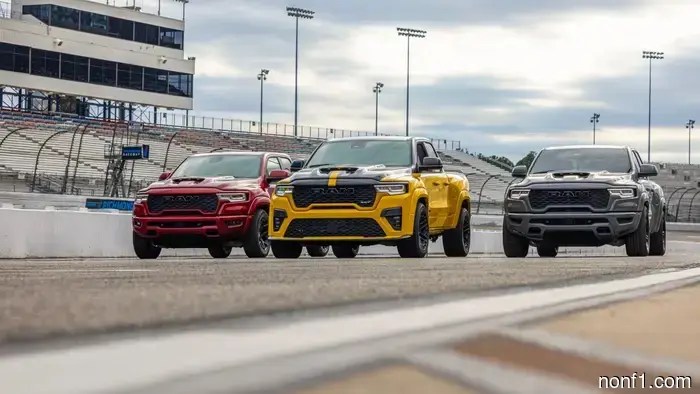
 Stellantis Unveils Major Revitalization Strategy, Introducing 60 New Models and 50 Updates by 2030.
Jeep, Ram, Peugeot, and Fiat will now take center stage globally, while Chrysler, Dodge, Citroen, Opel, and Alfa Romeo will be scaled back to regional initiatives.
Stellantis Unveils Major Revitalization Strategy, Introducing 60 New Models and 50 Updates by 2030.
Jeep, Ram, Peugeot, and Fiat will now take center stage globally, while Chrysler, Dodge, Citroen, Opel, and Alfa Romeo will be scaled back to regional initiatives.
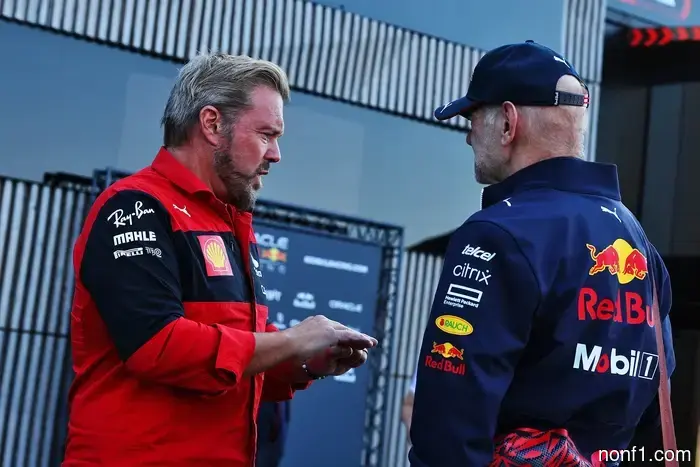 Red Bull employs longtime Ferrari insider Rosato.
Formula 1 | Red Bull Racing has subtly enhanced its off-track organization by bringing in Gino Rosato, a veteran Ferrari insider, as a consultant. This decision follows (…)
Red Bull employs longtime Ferrari insider Rosato.
Formula 1 | Red Bull Racing has subtly enhanced its off-track organization by bringing in Gino Rosato, a veteran Ferrari insider, as a consultant. This decision follows (…)
 Verstappen expresses greater satisfaction as F1 steps back from an electric future.
Formula 1 | Max Verstappen states that Formula 1 is finally heading back in the right direction following the agreement in principle on significant engine changes for 2027. (…)
Verstappen expresses greater satisfaction as F1 steps back from an electric future.
Formula 1 | Max Verstappen states that Formula 1 is finally heading back in the right direction following the agreement in principle on significant engine changes for 2027. (…)
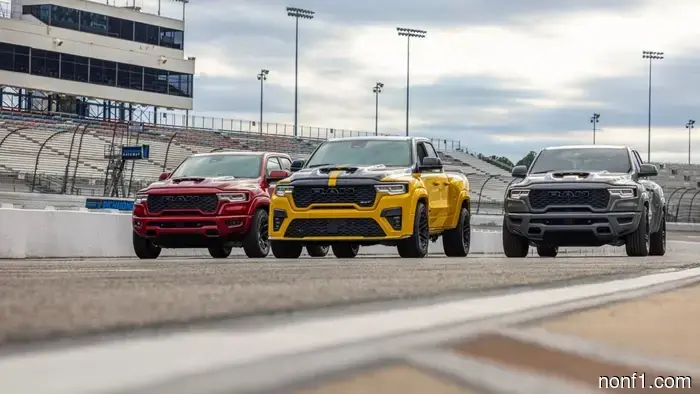
Stellantis Unveils Major Turnaround Strategy, Aiming for 60 New Vehicles and 50 Updates by 2030.
Jeep, Ram, Peugeot, and Fiat will now be the main global priorities, while Chrysler, Dodge, Citroen, Opel, and Alfa Romeo will be limited to regional initiatives.