
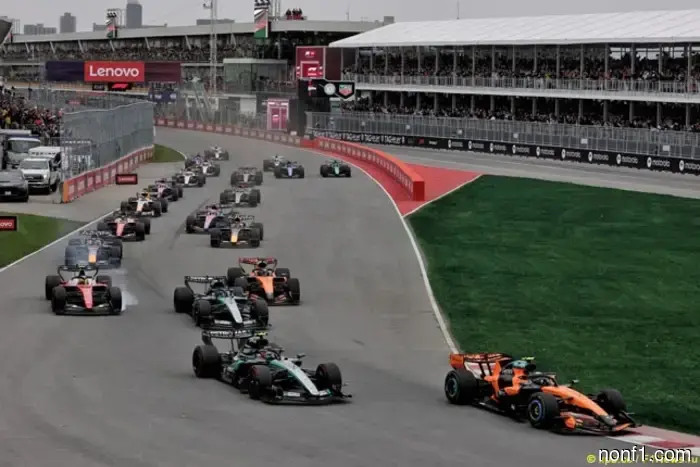
Analysis of the Canadian Grand Prix by Martin Brundle
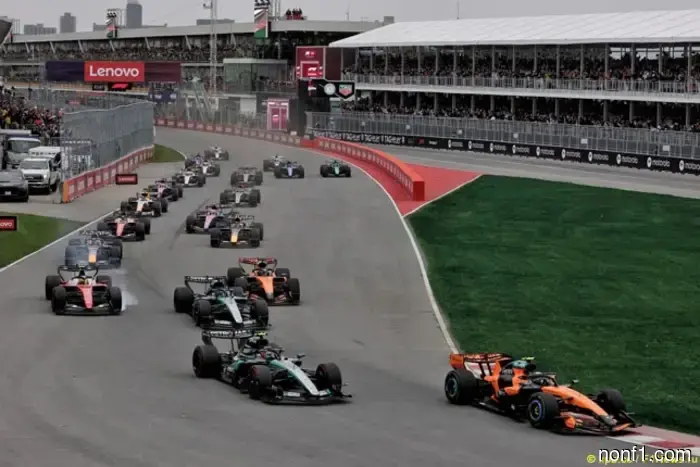
British Sky Sports expert Martin Brundle summarized the Canadian Grand Prix, analyzing the intense battles, strategic errors, and key moments of the weekend that determined the course of the race and the competitive landscape in Montreal.
What an amazing Formula 1 weekend it was, with tight competition in every session from start to finish. This is an old-school track – slippery, narrow, uneven in places, with long straights, hard braking zones, tricky chicanes, and closely positioned walls. Almost always, the Canadian stage turns into a real thriller with plenty of surprises.
There were concerns that the new power units for 2026 would perform worse on this track than on most others due to the many long straights and few opportunities to properly recharge the battery. But teams and drivers, as expected, quickly adapt and learn to extract the maximum from the power unit in qualifying, at the start, and after safety car restarts, as well as in attack and defense.
There are still opportunities for improvement, but we have already seen a huge amount of close wheel-to-wheel racing. There were many overtakes where the maneuver had to be completed under braking and at the corner entry, or conversely – fiercely and to the last defending on the straights.
It is gradually becoming easier to understand and explain the new "overtaking mode," which provides about three-tenths of a second per lap. Frankly, this mode may turn out to be even more honest and genuine than DRS, because now overtaking requires effort, calculation, and the ability to maintain position, rather than just passing by.
Qualifying was also unusually competitive, especially before the main race. A true old-school experience: exchanging blows, counterattacks, and a climax literally in the final seconds as the last driver crosses the finish line.
Mercedes' updates clearly brought them back into the leading group, albeit with a small but noticeable advantage. And although in both the sprint and the main race the top five finished in the same order, the entire top seven were separated by just three-tenths of a second. Honestly, I didn't expect McLaren, Ferrari, Red Bull Racing, and Mercedes to be so close to each other so soon.
The main surprise of the weekend for us, but certainly not for them, was that Mercedes seems to have finally figured out their starts. And it was George Russell, starting from pole in the sprint, who got off the line the best.
Next, we had the first of two powerful duels between him and the championship leader, his teammate Kimi Antonelli. George looked a bit more composed and held his position better, but Kimi seemed faster in pure speed. We saw this again in the main race.
In the first corner, what is almost inevitable in such situations happened – Antonelli tried to overtake on the outside line. He was very close to getting the necessary space, but in a battle for victory, especially for the title, no one will simply concede the track. Anyone in George's position would have done the same.
After that, Kimi lost his cool for a while. So much so that even Toto Wolff intervened over the radio. In such moments, it's good to have experienced people like Bono and Toto around. Most of us would have had a post-race debrief in such a situation, not during the race.
McLaren used a new set of Medium tires in the sprint against Mercedes' scrubbed tires, which slightly improved their picture, and Lando Norris and Oscar Piastri looked very strong, especially in the second half of the sprint.
Lewis Hamilton looked completely different throughout the weekend – he felt comfortable behind the wheel, confidently attacked, and enjoyed it. He completely outplayed his teammate Charles Leclerc, who traditionally struggles on this track.
Let's be honest – multiple champions don't have "favorite" or "uncomfortable" tracks. There is only level "A," and it must always be demonstrated.
Lando Norris managed to squeeze onto the podium in the sprint between George Russell and Kimi Antonelli, although Kimi had too many adventures and wheel lock-ups. In any case, it was worth seeing. If someone still prefers the third practice over the sprint after this, it's hard to understand.
McLaren and the bet on intermediate tires – a painful miscalculation
All forecasts promised rain during the race, and many teams clearly accounted for this in their setups during qualifying. But in reality, the rain came earlier than expected, and other weather anomalies bypassed Montreal.
On the starting grid on Sunday, it was dry, but the atmosphere felt extremely tense. No one really knew what to expect next. Many simply lacked normal experience working with these cars on wet or intermediate tires. And so, seven drivers, including both McLarens, decided to start on intermediate tires, confident that those who chose slicks would either not hold on or make a mistake.
But the rain quickly stopped. Then Arvid Lindblad's car had a grip issue, the start was delayed, and an additional formation lap was added, followed by another one. By the time of the actual start, it became clear that McLaren's bet was collapsing instantly, as the track had dried.
Oscar Piastri had a particularly tough time, as he immediately requested to switch to slicks, and then collided with Alex Albon in the tenth corner. Later, Lando Norris also retired there. For McLaren, this was already the eighth race in the last 10 years without points on this track. Clearly not their place. It's a shame they dropped out of the fight, but the duel between Mercedes and the powerful performances of Lewis Hamilton and Max Verstappen more than compensated for it.
There is now virtually no difference between Russell and Antonelli
Now there is virtually no difference between George Russell and Kimi Antonelli. The experience and composure of one perfectly balance the speed and audacity of the other. That’s why they constantly find themselves side by side in the same corners.
This was especially noticeable in the tight turn of the tenth corner, where one of them almost always slightly overbraked. This continued until Russell had a rare technical issue with the power unit, and he retired. In his emotions, he even threw the headrest onto the track, for which he received a penalty. But, frankly, this is just a human reaction after such a hit.
After that, Kimi Antonelli calmly brought the race to his fourth consecutive victory. Lewis Hamilton finished second, having been reborn. This is his best result behind the wheel of Ferrari in a long time. Moreover, he made an impressive overtake on Max Verstappen closer to the finish.
Three different teams on the podium – while this is not a race for the ages, we saw a very solid and memorable Grand Prix.
George Russell is now trailing his teammate by 43 points, which is equivalent to the sum of points for first and second places, but the season is long, and there are still many races ahead.
Isaac Hadjar received a 30-second penalty for moving under braking and violating double yellow flags, but still finished fifth. He is clearly improving, much like Franco Colapinto in the Alpine team, who now looks like a completely different driver. He finished sixth – his best result in Formula 1.
Ahead is Monaco. There will be no issues with battery charging there – on the contrary, there will be plenty of it, and the cars will be overflowing with power. I truly admire how drivers cope with this increasingly complex modern Formula 1.
Other articles
 Aston Martin and Smythson have joined forces.
The Aston Martin team and the British brand Smythson of Bond Street have joined forces to implement a new collaborative project.
Aston Martin and Smythson have joined forces.
The Aston Martin team and the British brand Smythson of Bond Street have joined forces to implement a new collaborative project.
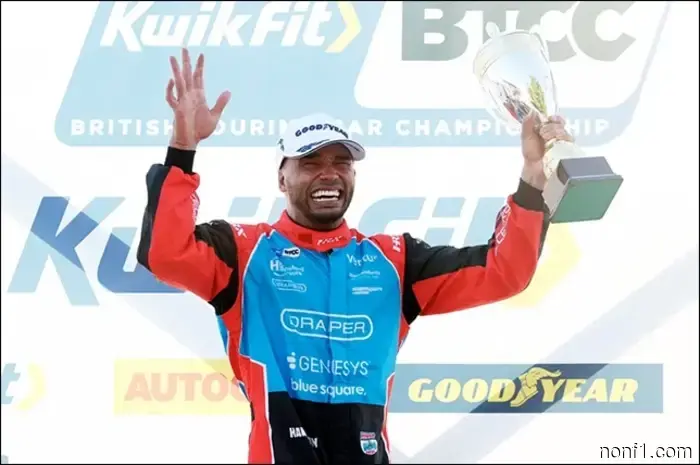 Lewis congratulated his brother on his first podium.
Last weekend, Nicholas Hamilton climbed onto the podium in the BTCC for the first time in his career...
Lewis congratulated his brother on his first podium.
Last weekend, Nicholas Hamilton climbed onto the podium in the BTCC for the first time in his career...
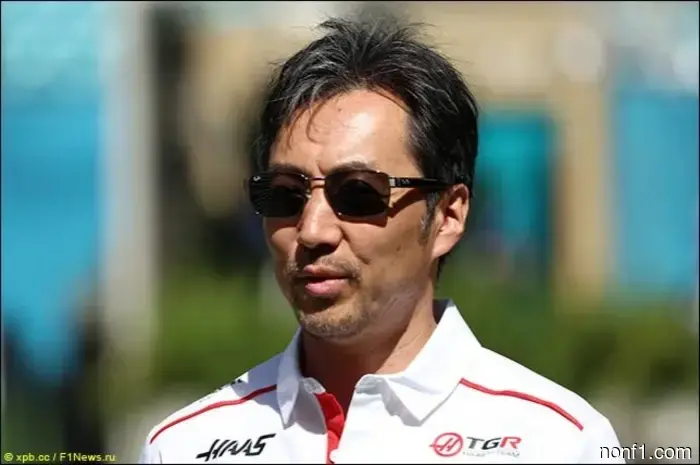 Komatsu: The FIA and Formula 1 should listen to the teams.
Haas F1 team principal Ayumu Komatsu urges Formula 1 to approach the upcoming changes in regulations with caution...
Komatsu: The FIA and Formula 1 should listen to the teams.
Haas F1 team principal Ayumu Komatsu urges Formula 1 to approach the upcoming changes in regulations with caution...
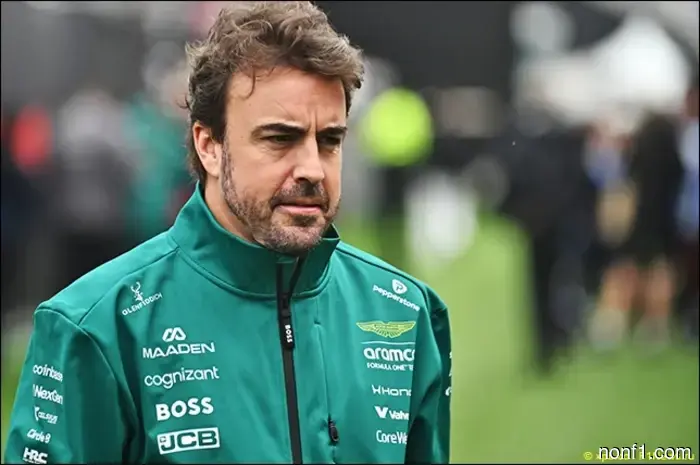 Alonso spoke about the issues with the seat in the Aston Martin.
Explaining the reason for Fernando Alonso's retirement in Canada, the press service attributed it to a seat issue, but later the Spaniard shared the details.
Alonso spoke about the issues with the seat in the Aston Martin.
Explaining the reason for Fernando Alonso's retirement in Canada, the press service attributed it to a seat issue, but later the Spaniard shared the details.
 Analysis of the Canadian Grand Prix by Martin Brundle
Sky Sports expert Martin Brundle summarized the Canadian Grand Prix, analyzing the intense battles, strategic mistakes, and key moments of the weekend that determined the course of the race and the standings in Montreal.
Analysis of the Canadian Grand Prix by Martin Brundle
Sky Sports expert Martin Brundle summarized the Canadian Grand Prix, analyzing the intense battles, strategic mistakes, and key moments of the weekend that determined the course of the race and the standings in Montreal.
 Will Bottas be replaced during the season?
According to Sky Italia, the management of the Cadillac team is dissatisfied with Valtteri Bottas's performances...
Will Bottas be replaced during the season?
According to Sky Italia, the management of the Cadillac team is dissatisfied with Valtteri Bottas's performances...
Analysis of the Canadian Grand Prix by Martin Brundle
Sky Sports expert Martin Brundle summarized the Canadian Grand Prix, analyzing the intense battles, strategic mistakes, and key moments of the weekend that determined the course of the race and the dynamics in Montreal.