

Since 2018, Formula 1 has reduced its carbon footprint by 35%.
Formula 1 has published another report on its environmental impact, which states that it has managed to reduce its own carbon footprint by 35% compared to the baseline level of 2018. Formula 1 also confirmed that it is maintaining its course towards achieving net zero emissions by 2030.
Since the baseline was established in 2018, Formula 1 has achieved significant reductions in emissions in the areas of logistics, freight transport, broadcasting, and organizing race weekends. Over eight years, various championship divisions have managed to reduce emissions by nearly 80,000 tons in CO2 equivalent.
One of the key areas remains logistics. Formula 1 intends to stick to its plan to gradually phase out air transport in favor of sea transport and regional logistics centers. By 2030, more than half of the equipment used for broadcasting will be delivered without the use of aviation.
Emissions related to travel have decreased by more than 21,000 tons in CO2 equivalent, which corresponds to a reduction of 27% compared to 2018. Significant contributions to this were made by teams' investments in sustainable aviation fuel, which allows for a reduction in emissions of about 80% compared to traditional aviation kerosene.
The report also notes progress in logistics. For the first time, emission reduction solutions have been implemented across all three main modes of transport: road, sea, and air. Additionally, work continues to further expand such programs.
Teams have made a notable contribution by switching to renewable energy sources at their bases, production facilities, and offices. As a result, emissions have been reduced by more than 37,000 tons in CO2 equivalent, which is 64% less than the 2018 level and 14% less than the 2024 figures.
Starting in 2024, Formula 1, teams, and the FIA will double their annual investments in sustainable aviation fuel. According to the report, this has already allowed for a reduction in emissions from charter flights by approximately 40%, equivalent to more than 20,000 tons in CO2 equivalent.
In 2025, Formula 1 invested for the first time in sustainable marine fuel, which will be used for cargo transport by sea.
Special attention is given to the organization of championship stages. In 2025, alternative energy sources were implemented at all European Grands Prix, including hydrotreated vegetable oil (HVO), solar installations, and battery systems. This allowed for a 17% reduction in emissions related to organizing stages per race, which corresponds to more than 1,000 tons in CO2 equivalent.
Formula 1 emphasized that the progress achieved was made despite the expansion of the championship calendar from 21 stages in 2018 to 24 races last season.
Stefano Domenicali, President and CEO of Formula 1: "In Formula 1, we prefer to confirm our achievements not with words, but with concrete results. I am very proud that we continue to stay on track to achieve our goal of net zero emissions by 2030. This has been made possible by the joint efforts of all championship participants aimed at reducing the sport's impact on the environment.
Thanks to the optimization of the calendar, increased investments in sustainable fuel and alternative energy sources, we have managed to reduce our own carbon footprint, even as Formula 1 continues to grow and attract new audiences worldwide.
I want to thank the FIA, all teams, our broadcasters, partners, event organizers, and of course, the championship staff for their collective commitment to this goal and for working together to achieve it."
Other articles
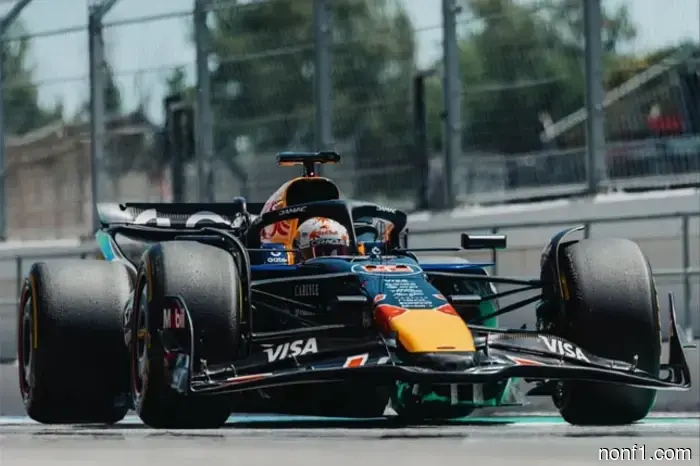 Yuki Tsunoda returned to the wheel of Red Bull during the tests.
On Wednesday in Barcelona, Pirelli continued testing the 2027 tire prototypes with the participation of Ferrari and Cadillac. The day before, Aston Martin also took part, but in fact, four teams were working on the track.
Yuki Tsunoda returned to the wheel of Red Bull during the tests.
On Wednesday in Barcelona, Pirelli continued testing the 2027 tire prototypes with the participation of Ferrari and Cadillac. The day before, Aston Martin also took part, but in fact, four teams were working on the track.
 A statue of Mika Hakkinen has been installed in Woking.
A bronze statue of two-time world champion Mika Hakkinen has been unveiled at the McLaren team's base in Woking...
A statue of Mika Hakkinen has been installed in Woking.
A bronze statue of two-time world champion Mika Hakkinen has been unveiled at the McLaren team's base in Woking...
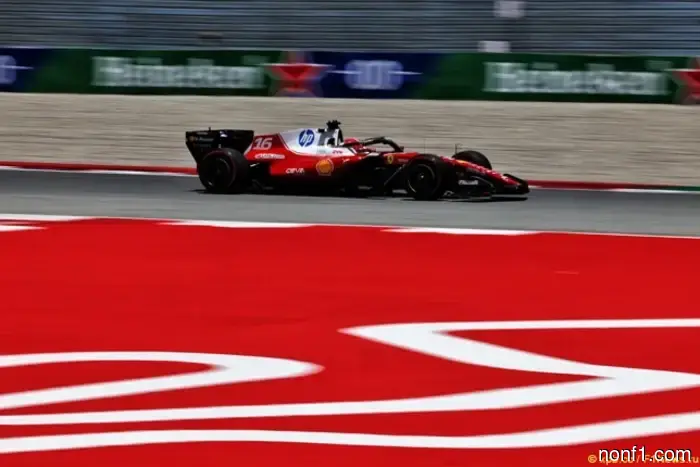 The Ferrari engine for Monza will be five horsepower stronger.
The refinement of the internal combustion engine under the ADUO program and the new Shell fuel will allow Ferrari to gain five horsepower in the second third of the season.
The Ferrari engine for Monza will be five horsepower stronger.
The refinement of the internal combustion engine under the ADUO program and the new Shell fuel will allow Ferrari to gain five horsepower in the second third of the season.
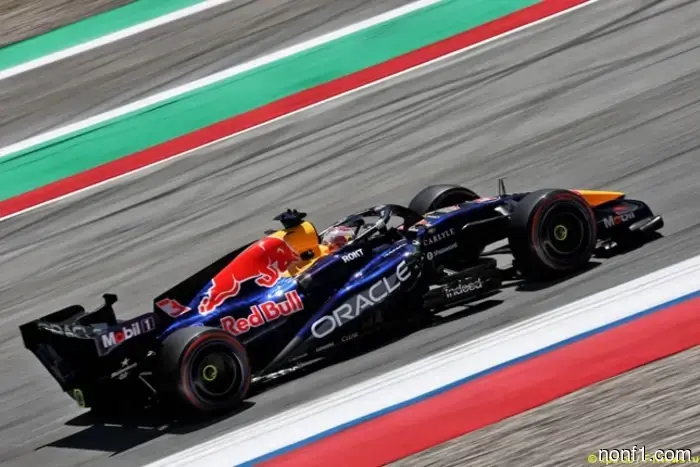 Max Verstappen: The Red Bull car is the fourth fastest.
After the race in Barcelona, four-time world champion Max Verstappen assessed the power dynamics among the leaders. The Red Bull Racing driver believes that his team is fourth in terms of speed.
Max Verstappen: The Red Bull car is the fourth fastest.
After the race in Barcelona, four-time world champion Max Verstappen assessed the power dynamics among the leaders. The Red Bull Racing driver believes that his team is fourth in terms of speed.
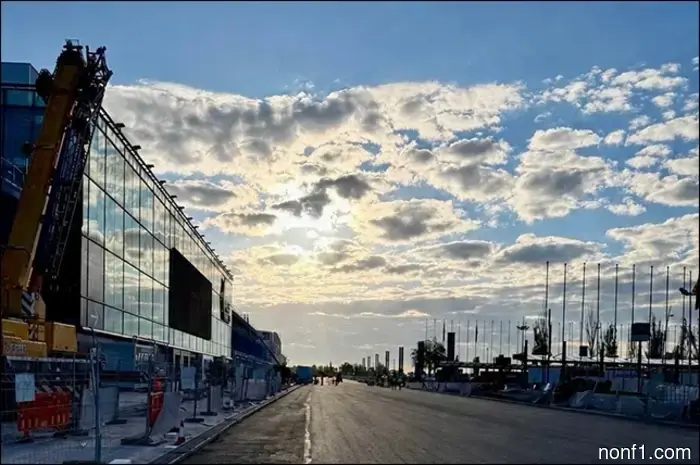 In Madrid, they promise to complete all work on time.
The Spanish Grand Prix this year will take place on September 13, and two weeks before that, a state inspection will be held on the new city circuit in Madrid...
In Madrid, they promise to complete all work on time.
The Spanish Grand Prix this year will take place on September 13, and two weeks before that, a state inspection will be held on the new city circuit in Madrid...
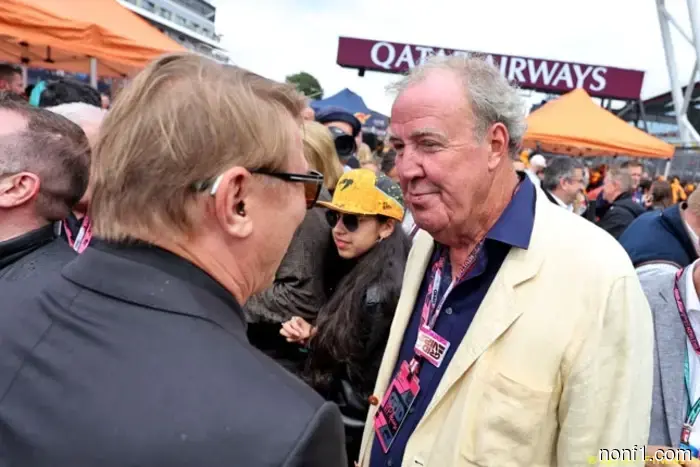 Jeremy Clarkson has been diagnosed with cancer.
Big Formula 1 fan and television presenter Jeremy Clarkson has announced that he has been diagnosed with an "aggressive" form of prostate cancer. Clarkson made this revelation in the final episodes of the fifth season of the TV show "Clarkson's Farm," which aired the day before.
Jeremy Clarkson has been diagnosed with cancer.
Big Formula 1 fan and television presenter Jeremy Clarkson has announced that he has been diagnosed with an "aggressive" form of prostate cancer. Clarkson made this revelation in the final episodes of the fifth season of the TV show "Clarkson's Farm," which aired the day before.
Since 2018, Formula 1 has reduced its carbon footprint by 35%.
Formula 1 has published another report on its environmental impact, according to which it has managed to reduce its carbon footprint by 35% compared to the baseline level of 2018.